Author: Nana Muazin

  • The Comprehensive Guide to Modern SEO Audits in an AI-Driven Search Landscape

    The Comprehensive Guide to Modern SEO Audits in an AI-Driven Search Landscape

    An SEO audit is a methodical examination of a website’s overall search engine performance, encompassing its technical foundation, content quality, and visibility within search results. Historically, these audits primarily focused on identifying and rectifying issues that hindered traditional "blue-link" rankings in Google Search. However, the advent of artificial intelligence (AI) in search engines has profoundly reshaped how users discover brands and interact with information online. Consequently, modern SEO audits have evolved to include critical new dimensions, such as evaluating entity signals, assessing brand visibility in AI-generated answers, and analyzing content performance within generative AI platforms.

    This guide delves into the contemporary approach to conducting an effective SEO audit, providing clear steps, practical examples, and a comprehensive checklist designed to empower SEO professionals across all skill levels to drive measurable traffic growth and achieve business objectives in this new era of search.

    Understanding the Core of an SEO Audit and Its Evolving Significance

    At its fundamental level, an SEO audit is a structured review designed to pinpoint technical, on-page, content, and link-related issues that impede a website’s performance in search engines. These findings are then translated into a prioritized action plan to unblock traffic, improve rankings, and, most importantly, boost conversions. For businesses and their SEO teams, conducting regular audits is not merely a best practice; it is a strategic imperative for identifying growth opportunities that align directly with overarching business goals.

    Traditionally, an audit would scrutinize elements like crawlability, indexability, metadata optimization, and backlink profiles. While these remain foundational, the landscape of search has undergone a transformative shift with the integration of AI. Major search engines like Google are increasingly relying on sophisticated AI models to understand context, intent, and entities, moving beyond simple keyword matching. This necessitates a broader audit scope that considers how content is interpreted by these advanced algorithms and how brands appear in AI-generated summaries, conversational interfaces, and answer boxes—a practice now often referred to as Answer Engine Optimization (AEO) and Generative Engine Optimization (GEO).

    SEO audits: How to conduct one that drives traffic growth [+ checklist]

    SEO specialists typically conduct these audits at regular intervals—quarterly or annually—or engage third-party consultants for an objective "fresh pair of eyes." The ultimate goal is to transform audit findings into a strategic roadmap that directly supports key performance indicators such as traffic growth, lead generation, and pipeline acceleration.

    A comprehensive audit now includes:

    • Technical Health: Evaluating crawlability, indexability, page speed, Core Web Vitals, structured data implementation, and overall site architecture. These elements form the bedrock of search engine accessibility and user experience.
    • On-Page SEO: Scrutinizing metadata, heading structures, internal linking strategies, URL optimization, and the effective clustering of topics and keywords.
    • Content Quality & Depth: Assessing E-E-A-T (Experience, Expertise, Authoritativeness, Trustworthiness) signals, topical authority, content freshness, identification of duplication or thin pages, and pinpointing content gaps relative to user intent and competitive offerings.
    • Top-Performing Pages Analysis: Identifying pages that consistently generate high traffic or impressions, with a focus on opportunities to enhance click-through rates (CTR) and improve rankings further.
    • Revenue-Generating Pages: Concentrating on product, service, or conversion-oriented pages that have the highest commercial impact, and diagnosing factors that prevent them from achieving higher rankings.
    • Highest-Conversion Pages: Analyzing pages with strong conversion rates to identify scalable elements, replicable strategies, or areas for further optimization.
    • CRO Recommendations: Providing insights into layout friction, user experience (UX) issues, clarity of calls-to-action (CTAs), messaging effectiveness, and engagement metrics.
    • Backlink Profile & Gaps: Assessing the authority and quality of inbound links, identifying toxic links, and uncovering opportunities to acquire valuable links that competitors leverage.
    • Brand and Entity Signals: A crucial modern component, evaluating how clearly a brand is understood and categorized by both traditional search engines and advanced AI models. This ensures accurate representation in knowledge panels and AI-generated responses.
    • AI Search Visibility: Directly examining how a site’s content appears in AI-generated answers, using specialized tools to gauge performance in generative search environments.

    The Evolving Landscape: AI’s Impact on Search and the Audit Process

    The rise of generative AI, exemplified by models like ChatGPT and the integration of features like Google’s Search Generative Experience (SGE), marks a pivotal shift in information retrieval. No longer are users solely presented with a list of ten blue links; they often receive direct, synthesized answers or conversational responses. This fundamentally changes the objective of SEO.

    For instance, Google’s introduction of Core Web Vitals in 2021 underscored the importance of user experience, but the current wave of AI integration goes deeper. It demands that content not only be technically sound and user-friendly but also inherently authoritative, contextually rich, and structured in a way that AI can easily understand and trust as a reliable source for its generated answers. Analysts predict that an increasing percentage of search queries will be answered directly by AI, bypassing traditional organic results for many informational queries. This trend necessitates that SEO audits move beyond merely optimizing for keyword rankings to optimizing for "answerability" and "entity recognition."

    The Strategic Imperative: Why Modern SEO Audits Matter More Than Ever

    SEO audits: How to conduct one that drives traffic growth [+ checklist]

    In a competitive digital marketplace, a static website is a dying one. Regular, comprehensive SEO audits provide a dynamic mechanism for continuous improvement and competitive advantage. Neglecting audits can lead to declining traffic, missed conversion opportunities, and a gradual erosion of brand visibility.

    • Risk Mitigation: Audits identify critical issues like security vulnerabilities, broken checkout processes, or incorrect product information that can have immediate and severe business consequences beyond just SEO.
    • Competitive Edge: By analyzing competitor backlink profiles, content strategies, and AI visibility, audits reveal untapped opportunities and allow businesses to adapt proactively. The market for SEO services is projected to continue its significant growth, reflecting the increasing recognition of its importance in digital strategy.
    • Resource Optimization: A well-prioritized audit helps allocate limited marketing and development resources to tasks that yield the highest impact, preventing wasted effort on low-value activities.

    A Systematic Approach: The Five-Step SEO Audit Framework

    An effective SEO audit is not a haphazard collection of checks but a carefully orchestrated process. The following five-step framework ensures focus and translates data into actionable strategy, explicitly incorporating the demands of AI-driven search. It’s important to remember that while this is called an "SEO audit," it intrinsically includes AEO (Answer Engine Optimization) and GEO (Generative Engine Optimization) to reflect how modern users interact with brands.

    Step 1: Outline Business Goals and Audit Intent
    The foundational step involves defining why the audit is being conducted and what specific business problem(s) it aims to solve. Every audit must be rooted in business goals, not just a list of technical checks. While improving website traffic and conversions are universal SEO objectives, the specific underlying issues must be clarified. This might involve recovering from a traffic drop, boosting conversions for a new product, or establishing authority in a nascent market segment.

    • How to do it: Engage stakeholders (marketing, sales, product teams) to understand current challenges, upcoming campaigns, and overall business priorities. Ask probing questions: "What metrics have declined?" "Are there new product launches struggling to gain visibility?" "Which audience segments are we failing to reach?" The audit’s scope should then be shaped around these defined objectives.

    • Chronological Context: This initial alignment ensures that all subsequent data gathering and analysis are focused and relevant, preventing the audit from becoming a purely academic exercise. It acts as the guiding star for the entire process.

      SEO audits: How to conduct one that drives traffic growth [+ checklist]

    Step 2: Research and Comprehensive Data Gathering
    This phase is dedicated to collecting all quantitative signals that illustrate the website’s performance. It forms the empirical layer of the audit. This is where the "cookie-cutter SEO" phase takes place, with tools doing the heavy lifting.

    • Data Sources:

      • Google Search Console (GSC): Provides critical data on crawl errors, indexing status, search queries, impressions, clicks, and Core Web Vitals.
      • Google Analytics (GA4): Offers insights into user behavior, traffic sources, conversion paths, and engagement metrics.
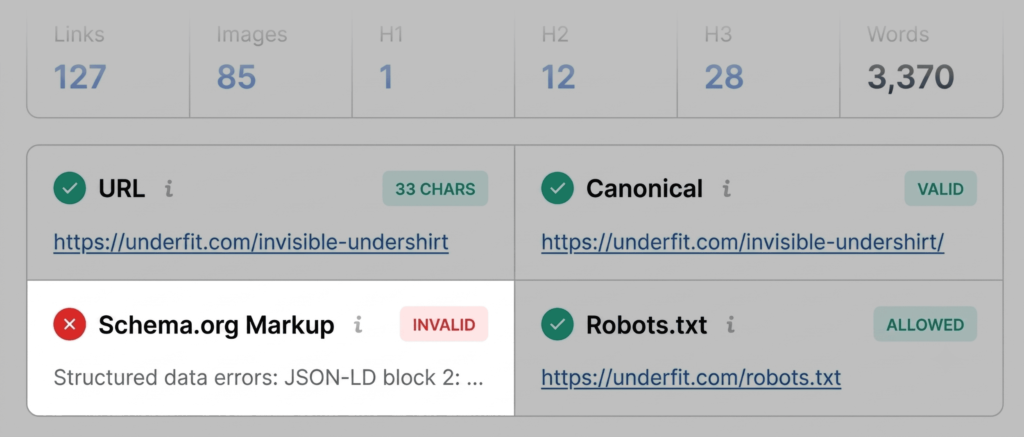
      • Website Crawlers (e.g., Screaming Frog, Semrush Site Audit): Identify technical issues like broken links, redirect chains, duplicate content, missing metadata, and site architecture problems.
      • Backlink Analysis Tools (e.g., Semrush, Ahrefs): Reveal backlink profiles, domain authority, toxic links, and competitor link strategies.
      • Keyword Research Tools (e.g., Semrush, Ahrefs): Uncover ranking keywords, search volume, keyword gaps, and topic opportunities.
      • AI Search Graders (e.g., HubSpot AEO Grader): Specifically analyze brand and entity visibility within AI-generated search results and generative engines.
    • Pro Tip: Consolidate all data into a central repository, such as a Google Sheet or dedicated dashboard. This serves as a vital benchmark for future audits, allowing for easy comparison and measurement of progress in metrics like rankings, traffic, and AI visibility.

    Step 3: In-Depth Human Analysis of Research
    This is where raw data transforms into actionable insights, moving beyond what automated tools can provide. It’s the strategic layer where an experienced SEO professional "reads between the lines," connecting patterns, understanding the root causes of issues, and anticipating their impact on traffic, rankings, conversions, and AI visibility.

    • Analytical Process:

      • Identify Trends & Anomalies: Look for significant drops or spikes in traffic, indexing issues, unexpected content performance, or unusual backlink activity.
      • Connect the Dots: For example, a sudden drop in rankings might correlate with a Google algorithm update or a recent site migration.
      • Evaluate Against Goals: Always refer back to the business goals defined in Step 1. How do these data points affect those objectives?
      • Assess AI Readiness: Analyze content through the lens of E-E-A-T and entity clarity. Is the brand’s expertise clearly signaled? Is content structured for easy AI consumption?
      • Competitive Analysis: Compare the site’s performance across all audit areas against key competitors, especially regarding AI visibility and entity recognition.
    • Critical Aspect: Align SEO insights with the broader business strategy, including product priorities, revenue-driving pages, seasonal demand, marketing campaigns, and sales goals. This ensures the audit remains grounded in commercial reality.

      SEO audits: How to conduct one that drives traffic growth [+ checklist]

    Step 4: Huddle with Stakeholders for Alignment
    This phase bridges SEO insights with the operational realities of the business. It’s an opportunity to collaborate with stakeholders, validate assumptions, fill knowledge gaps, and ensure that the recommendations are practical within the context of existing strategy, team capacity, and upcoming initiatives.

    • Purpose: The SEO specialist, having gained a deep understanding of the site’s performance, presents preliminary findings. This meeting is not about delivering the final plan but about discussing the implications of the data. It’s a moment to confirm or adjust initial priorities based on newfound insights or evolving business needs. For instance, the data might reveal an untapped audience segment or a high-potential content cluster not previously considered.

    • How to do it: Prepare a concise summary of key findings and potential implications. Facilitate an open discussion to gain buy-in and refine the strategic direction. Crucially, secure stakeholder agreement on the overall strategic direction before proceeding to build the detailed action plan.

    Step 5: Refine the Audit and Build an Actionable Plan
    This is the culmination of the audit process, transforming insights into a concrete, executable strategy. It’s not enough to merely list issues; the true value of an audit lies in translating those findings into structured actions with assigned owners, realistic timelines, and clear expected outcomes.

    • Plan Components:

      • Prioritized Recommendations: Categorize issues by impact (high, medium, low) and effort (quick win, moderate, significant).
      • Detailed Action Items: Each recommendation should specify what needs to be done, how it should be done, and why it matters (linking back to business goals).
      • Assigned Ownership: Clearly designate who is responsible for each task (e.g., content team, development team, SEO specialist).
      • Timelines & Deadlines: Establish realistic deadlines for completion.
      • Expected Outcomes: Quantify the anticipated results for each major action (e.g., "increase organic traffic by X%," "reduce bounce rate by Y%," "improve AI answer box visibility for Z keywords").
      • Measurement Plan: Outline how the success of implemented changes will be tracked and reported.
    • Outcome: A well-structured plan makes the audit a living document, a weekly roadmap for action rather than a report filed away. For long-term implementation, managing these actions within a project management tool like Asana or Jira can significantly improve efficiency and accountability.

      SEO audits: How to conduct one that drives traffic growth [+ checklist]

    Prioritizing for Impact: Interpreting Your SEO Report and Fixing Issues

    Once audit findings are compiled, the critical next step is to prioritize them strategically based on impact, effort, and business alignment.

    1. Unblock Crawling and Indexing: Top priority must be given to any issues preventing search engines from accessing or indexing key pages. These fundamental technical errors (e.g., accidental noindex tags, broken internal links, faulty robots.txt rules) can instantly suppress visibility. Fixing them often yields the fastest and most significant traffic recovery. This aligns with the "Maslow’s Hierarchy of Needs for SEO," where crawlability and indexability form the base.

    2. Flag Issues with True Business Risk: Certain findings demand immediate attention due to direct revenue or reputational implications. Security vulnerabilities, broken checkout flows, incorrect pricing, or inaccessible forms are non-negotiable priorities that directly affect conversions and customer trust.

    3. Align Tasks with Business Goals: Prioritize content clusters and pages that directly support the company’s specific, SMART (Specific, Measurable, Attainable, Relevant, Time-bound) goals—whether it’s targeting a new audience, promoting a flagship product, or expanding into a new region. An SEO audit must always reflect and serve the business’s strategic direction.

    4. Identify Content Updates for Multiple Channels: Prioritize content that offers compounding value by serving multiple marketing channels (SEO, email nurturing, sales enablement, product education). A single high-quality asset, especially when part of a defined content cluster, can address gaps across various touchpoints. Tools like HubSpot’s free AI content writer can assist in this content amplification.

      SEO audits: How to conduct one that drives traffic growth [+ checklist]
    5. Tackle High-Impact, Low-Effort Wins First: Look for actions that require minimal time (e.g., under 30 minutes) but deliver measurable improvements. Updating a title tag, adding a favicon, compressing images, or deleting an irrelevant, outdated page can quickly build momentum and demonstrate early success, motivating the team.

    6. Cluster Recommendations into Sprints: Group related issues into thematic "sprints" (e.g., "page speed sprint," "schema sprint," "content refresh sprint"). This approach enhances team focus, reduces context switching, and streamlines implementation, allowing for faster delivery of improvements and easier reporting on completed initiatives.

    7. Focus Developer Time on Sitewide, Template-Level Issues: Developer resources are often limited, making strategic allocation crucial. Prioritize fixes that affect the entire site or specific templates, such as sitewide speed optimizations, comprehensive schema improvements, navigation restructuring, or JavaScript cleanup. These changes can positively impact hundreds or thousands of URLs simultaneously. For teams looking to enhance their capabilities, HubSpot Academy’s SEO Course offers comprehensive training.

    Essential Tools for the Modern SEO Auditor

    The right toolkit significantly enhances the speed, accuracy, and prioritization capabilities of an SEO audit.

    • HubSpot AEO Grader: This free tool is indispensable for modern audits, specifically assessing brand and entity visibility in AI search results. It evaluates how a brand appears in generative engines, answer boxes, and conversational interfaces, directly addressing the AEO/GEO components. It measures entity strength, content signals, structured data, and authority markers—all crucial for AI-generated responses.

      SEO audits: How to conduct one that drives traffic growth [+ checklist]
      • Best for: Marketers seeking to move beyond traditional rankings and understand AI’s perception of their brand.
      • Pricing: Free.
    • HubSpot Website Grader: A free, user-friendly tool offering a quick snapshot of a site’s SEO health, performance, mobile usability, and security. It aligns perfectly with identifying "quick wins" by surfacing immediate fixes related to speed, metadata, and basic technical hygiene.

      • Best for: Marketers needing a simple, high-level overview before delving into more complex analyses.
      • Pricing: Free.
    • Semrush: A comprehensive SEO platform widely regarded for its depth in keyword research, competitive analysis, backlink auditing, content insights, and site auditing. It now includes AI/LLM-driven recommendations.

      • Best for: Marketers and consultants requiring extensive data for keyword analysis, competitor insights, and robust reporting across various SEO facets.
      • Pricing: Plans typically start around $165/month (billed annually).
    • Screaming Frog SEO Spider: A must-have for technical audits, this fast, locally installed crawler scans websites to uncover major technical issues like orphan pages, broken links, redirect chains, thin content, and missing metadata.

      • Best for: Technical SEOs who need precise, crawl-based insights and have the expertise to interpret raw data.
      • Pricing: Free version available; licensed version for $279/year.
    • HubSpot Marketing Hub & Content Hub: These integrated platforms empower marketers to implement audit findings efficiently.

      • HubSpot Content Hub: A CMS with built-in AI-powered SEO recommendations, content suggestions, and intelligent content tools. It’s ideal for optimizing metadata, improving on-page signals, and managing content clusters, especially with features like Breeze AI for automated content production.
      • HubSpot Marketing Hub: A comprehensive marketing platform that integrates SEO tools directly with website data, content strategy, and reporting. It facilitates tracking performance, analyzing SEO growth, managing content clusters, assigning tasks, and measuring the impact of audit implementations on traffic and conversions.
      • Best for: Teams seeking an integrated platform to not only identify issues but also to directly implement and track their SEO strategy within a unified ecosystem.
      • Pricing: Marketing Hub offers a free plan; Starter ($9 per seat/month), Professional ($800/month), and Enterprise ($3,600/month).

    Frequently Asked Questions About Modern SEO Audits

    How long does an SEO audit typically take?
    Most SEO audits range from two to eight weeks, depending on the website’s size, complexity, and the desired depth of coverage. Smaller sites might be completed in a few days, while enterprise-level sites with thousands of URLs and intricate technical structures naturally require more time. The analysis and stakeholder alignment phases are often the most time-consuming and crucial, as they demand critical thinking and creative problem-solving. Rushing these stages risks overlooking significant opportunities or misinterpreting data.

    SEO audits: How to conduct one that drives traffic growth [+ checklist]

    Is a developer necessary to complete an SEO audit?
    SEO specialists are responsible for running the audit—diagnosing and documenting technical issues. However, developers are frequently essential for implementing many of the identified fixes. Complex technical adjustments, such as template-level changes, Core Web Vitals improvements, structured data implementation, or JavaScript cleanup, typically require development expertise. The audit identifies the work; the development team executes it.

    How often should an SEO audit be conducted?
    Most businesses benefit from regular audits: quarterly, biannual, or at least annually. Consistent audits are vital for maintaining and growing search performance over time. Companies in rapidly evolving industries, those with frequent content updates, or businesses significantly impacted by AI search shifts may require more frequent checks. At a minimum, a full audit once per year is recommended to benchmark performance and detect any unexpected declines.

    What tools are available for a free SEO audit?
    A basic audit can be performed using several free tools:

    • Google Search Console: For crawlability, indexing, and core web vitals.
    • Google Analytics: For traffic and user behavior data.
    • HubSpot Website Grader: For a quick overview of technical and on-page issues.
    • HubSpot AEO Grader: For insights into AI search visibility.
    • Google PageSpeed Insights: To analyze and improve page loading performance.
      These tools collectively cover essential areas: crawlability, indexability, content quality, and AI search visibility.

    What distinguishes an SEO audit from a general website audit?
    An SEO audit is highly specialized, focusing specifically on elements that influence search engine rankings, organic visibility, and conversions. This includes technical health, content quality, backlink profiles, and AI search visibility. A website audit, conversely, is a broader evaluation that might encompass user experience (UX) design, overall accessibility, conversion rate optimization (CRO), branding consistency, site navigation, and general site performance. Essentially, an SEO audit can be considered a specialized component within a more comprehensive website audit. Both can be combined, but the SEO audit is directly tied to improving search performance and driving traffic growth.

    Modern SEO Audits Go Beyond Blue Links

    A meticulously executed SEO audit is far more than a problem-spotting exercise; it transforms a website into a potent growth engine. By comprehensively reviewing technical health, content quality, authority signals, and critically, AI search visibility, businesses can uncover immediate "quick wins," formulate robust long-term strategies, and construct an actionable roadmap that directly fuels traffic, conversions, and pipeline growth.

    SEO audits: How to conduct one that drives traffic growth [+ checklist]

    It is paramount to remember that contemporary audits transcend the traditional focus on "blue links." They rigorously evaluate how effectively a brand appears in generative search results and whether its content is accurately understood and categorized as a distinct entity by sophisticated AI models. For businesses seeking a swift, precise assessment of their current standing, tools such as HubSpot Website Grader and HubSpot AEO Grader offer convenient ways to gauge both SEO fundamentals and crucial AI visibility within minutes.

    From the perspective of seasoned practitioners, the most impactful audits are those deeply rooted in specific business objectives and executed through collaborative effort. The moment when data unequivocally aligns with stakeholders’ intuitive understanding—or, conversely, reveals something entirely unexpected—is often the most energizing. A truly successful audit leaves teams feeling focused, confident, and invigorated, armed with a clear path forward. This is the hallmark of an exceptional audit: one that not only diagnoses issues but inspires decisive action and delivers tangible, measurable results.

  • Threads Enhances User Experience with Indented Replies and a Redesigned Web Interface Featuring Direct Messaging

    Threads Enhances User Experience with Indented Replies and a Redesigned Web Interface Featuring Direct Messaging

    Meta’s microblogging platform, Threads, has officially initiated the rollout of two significant updates designed to streamline navigation and improve the conversational flow for its growing global user base. The platform is introducing indented replies to help users better track complex discussions and is simultaneously overhauling its web interface to include long-awaited features such as a dedicated navigation sidebar and integrated direct messaging (DM) capabilities. These updates represent a strategic effort by Meta to bridge the functional gap between its mobile application and desktop experience, positioning Threads as a more robust competitor to X, formerly known as Twitter.

    The introduction of indented replies addresses one of the primary critiques regarding the platform’s readability since its launch in July 2023. Previously, Threads utilized a linear response format that often made it difficult for users to distinguish between direct responses to a primary post and secondary conversations occurring within a larger thread. Under the new system, responses are visually nested, creating a logical hierarchy that allows participants to follow specific branches of a conversation with greater ease. This UI enhancement is currently rolling out to all iOS users, with testing for Android devices underway and a wider release expected in the near future.

    Structural Overhaul of the Threads Web Experience

    Beyond the mobile interface, the Threads web application is undergoing a comprehensive redesign. For months, the desktop version of Threads has been criticized for being a simplified extension of the mobile app rather than a fully optimized desktop tool. The new UI introduces a layout that mirrors the traditional professional social media dashboard, featuring a main content feed on the right and a functional navigation bar on the left. This sidebar provides quick access to the home feed, search, notifications, and profile settings, significantly reducing the number of clicks required to navigate the site.

    Threads updates reply format and web UI

    A pivotal addition to the web interface is the integration of direct messaging. While Threads has historically lacked a standalone DM system—relying instead on Instagram’s infrastructure—the new web update brings messaging capabilities directly into the desktop browser. Users will soon be able to view and respond to messages without switching to their mobile devices or navigating to the Instagram website. According to Meta, while web-based messaging is not yet available for general public testing, it is slated to appear for users globally over the coming weeks.

    Chronology of Threads’ Rapid Evolution

    The development of these features marks the latest chapter in what has been an accelerated growth trajectory for Threads. Launched by Meta on July 5, 2023, the platform was positioned as a "sanitized" and more stable alternative to X, which was undergoing significant management and policy shifts at the time. The timeline of Threads’ evolution highlights Meta’s reactive and iterative development strategy:

    • July 2023: Threads launches as an invite-only extension of Instagram, reaching 100 million sign-ups in just five days, making it the fastest-growing consumer software application in history.
    • August 2023: Meta releases the first version of the Threads web app, allowing users to view and post from desktops, though it lacked many search and engagement features.
    • December 2023: The platform expands to the European Union after navigating complex regulatory requirements regarding data privacy and cross-platform integration.
    • Early 2024: Meta begins testing "Fediverse" integration, allowing Threads posts to be viewed on decentralized platforms like Mastodon via the ActivityPub protocol.
    • Mid-2024: The platform introduces "Trending Topics" and an improved search algorithm to facilitate real-time news discovery.
    • Late 2024: The current rollout of indented replies and the revamped web UI with DMs begins, focusing on power users and professional creators who utilize desktop environments.

    Supporting Data and Market Performance

    Meta’s commitment to refining the Threads UI is backed by strong performance metrics. In Meta’s Q2 2024 earnings call, CEO Mark Zuckerberg revealed that Threads had surpassed 175 million monthly active users. While this is still below X’s reported 550 million monthly active users, the growth rate suggests a steady migration of users looking for a different social experience.

    Data from third-party analytics firms indicates that while initial retention was a challenge following the record-breaking launch, engagement has stabilized. The introduction of desktop-specific features is particularly aimed at increasing "time spent on site" among journalists, marketers, and researchers—demographics that traditionally rely on desktop platforms for content curation and community management. Furthermore, internal Meta data suggests that users who engage in threaded conversations are 30% more likely to return to the app within 24 hours, justifying the technical investment in indented replies.

    Threads updates reply format and web UI

    Official Responses and Strategic Vision

    Adam Mosseri, the Head of Instagram and Threads, has been vocal about the platform’s philosophy regarding user feedback. In a recent post on the platform, Mosseri emphasized that the goal is to create a "productive and positive space for public conversation." He noted that the team is focused on "closing the feature gap" with competitors while maintaining a unique identity that prioritizes community safety and creator tools.

    Regarding the new web UI, Meta spokespeople have stated that the goal was to provide a "more familiar and efficient experience for those who use Threads for work or during their workday." The inclusion of DMs on the web is seen as a direct response to one of the most requested features from the community. By centralizing communication, Meta aims to make Threads a self-sustaining ecosystem that no longer feels like a secondary attachment to Instagram.

    Analysis of Implications for the Social Media Landscape

    The shift toward a more organized, desktop-friendly interface has several implications for the broader social media industry. First, it signals that Meta is no longer content with Threads being a "mobile-first" experiment. By adopting a UI that closely resembles the layout of X, Meta is making it easier for "power users" to switch platforms without having to relearn navigation habits.

    The introduction of indented replies is more than a visual tweak; it is a fundamental change in how information is consumed. In the "attention economy," the clarity of information determines how long a user stays engaged. Linear feeds often lead to "context collapse," where replies become untethered from their original meaning. Indentation preserves the context of the conversation, which is essential for healthy debate and nuanced discussion.

    Threads updates reply format and web UI

    Furthermore, the integration of DMs on the web is a tactical move to increase "stickiness." When a platform becomes a primary communication tool, user churn decreases significantly. If Threads can successfully transition from a place where people merely "post" to a place where they "talk," it will secure its position as a permanent fixture in the social media landscape.

    Future Outlook and Fediverse Integration

    As Threads continues to roll out these UI updates, the next major frontier for the platform is its integration with the Fediverse. Meta has already begun allowing users in certain regions to share their posts to other servers using the ActivityPub protocol. This decentralized approach is a departure from Meta’s historically "walled garden" strategy and suggests a long-term vision where Threads acts as a primary hub for a broader, interconnected internet.

    In the coming months, industry analysts expect Threads to focus on improving its "Live" capabilities and real-time data feeds. While the current updates improve the "look and feel" of the platform, the next challenge will be capturing the "breaking news" energy that still largely resides on X. The combination of a refined web UI, better conversation tracking through indentation, and the convenience of desktop DMs provides the necessary foundation for Threads to move beyond its "alternative" status and become a primary destination for digital discourse.

    With these updates, Meta is demonstrating a disciplined approach to product development—listening to user grievances, analyzing engagement data, and systematically deploying features that enhance the utility of the platform. For the 175 million active users, these changes represent a more mature, professional, and accessible version of Threads that is better equipped to handle the complexities of modern social interaction.

  • AEO vs. GEO explained: What marketers need to know now

    AEO vs. GEO explained: What marketers need to know now

    The Paradigm Shift in Search: Defining AEO and GEO

    The fundamental shift in search behavior, largely propelled by advancements in artificial intelligence, necessitates a clear understanding of specialized optimization strategies. At its core, Answer Engine Optimization (AEO) is dedicated to structuring content to facilitate its appearance as direct answers within search results. This encompasses optimizing for features such as Google’s featured snippets, "People Also Ask" sections, and the concise, short answers provided by AI systems in response to specific queries. The goal of AEO is to be the authoritative, succinct source that directly resolves a user’s question, often negating the need for a click-through to the original website.

    AEO vs. GEO explained: What marketers need to know now

    Conversely, Generative Engine Optimization (GEO) focuses on enhancing brand citations and references within AI-generated summaries and conversational chatbot responses. Platforms like Google AI Overviews, Perplexity, and ChatGPT frequently synthesize information from various sources to provide comprehensive answers. GEO aims to ensure that when these generative AI models compile summaries or offer recommendations, a brand’s products, services, or expertise are credibly cited and highlighted. In the simplest terms, AEO optimizes for direct answers, while GEO optimizes for authoritative citations within AI-synthesized content. This distinction is crucial because while both aim for visibility, their mechanisms and desired outcomes differ, demanding tailored strategic approaches.

    The Evolution of Search: From Blue Links to AI Overviews

    The trajectory of online search has been one of continuous evolution, moving from a list of "10 blue links" to an increasingly sophisticated ecosystem powered by AI. Initially, Search Engine Optimization (SEO) primarily focused on achieving high organic rankings for websites, driving traffic through direct clicks on these traditional links. The subsequent rise of rich snippets, knowledge panels, and "People Also Ask" boxes marked an early phase of "answer engine" functionality, where search engines began extracting direct answers from web pages to serve users more efficiently. This period laid the groundwork for what we now identify as AEO, emphasizing content clarity, structure, and directness.

    AEO vs. GEO explained: What marketers need to know now

    The advent of large language models (LLMs) and conversational AI tools like ChatGPT in late 2022, followed by Google’s integration of Generative AI (e.g., AI Overviews, formerly Search Generative Experience), ushered in the current, more profound transformation. These generative engines go beyond extracting snippets; they synthesize information, provide comprehensive summaries, and often act as a conversational interface for users. This development gave birth to GEO, recognizing the new imperative of being cited within these AI-generated narratives, even if no direct click occurs.

    Consumer behavior data underscores the significance of this shift. According to the HubSpot Consumer Trends Report, a substantial 72% of surveyed consumers indicated their intention to rely more heavily on AI-powered search for their shopping decisions. This statistic highlights a growing comfort and preference for AI-assisted discovery, positioning AI overviews and chatbot responses as critical touchpoints in the customer journey. While direct click-through rates to AI tools currently hover around 1.3% of total search activity, as reported by Datos’ "State of Search Q3 2025," this seemingly modest figure belies the profound influence these tools exert on pre-click brand perception and decision-making. The influence of AI extends far beyond direct clicks, shaping user perceptions and guiding subsequent search or purchasing actions.

    A Detailed Comparison: AEO, GEO, and Traditional SEO

    AEO vs. GEO explained: What marketers need to know now

    To fully grasp the contemporary digital marketing landscape, it is essential to understand the unique characteristics and overlapping functions of AEO, GEO, and traditional SEO. While all three fall under the broader umbrella of improving online visibility, their primary objectives, manifestations, and optimization focuses vary significantly.

    Traditional SEO remains foundational, primarily aiming to earn organic rankings and drive traffic to websites via the traditional "blue links" in search engine results pages (SERPs). Its core pillars include:

    • Relevance: Ensuring content aligns with user queries.
    • Authority: Building credibility through backlinks and domain reputation.
    • Technical Performance: Optimizing site speed, mobile-friendliness, and crawlability.
    • Best Use Case: Long-term acquisition and sustained organic traffic growth.

    Answer Engine Optimization (AEO) specifically targets direct answers in search results. Its goal is to position website content as the definitive, extracted response to a user’s query.

    AEO vs. GEO explained: What marketers need to know now
    • Primary Goal: Deliver direct answers in search.
    • How It Shows Up: Featured snippets, "People Also Ask" sections, voice search results, and AI short answers.
    • What It Optimizes For: Clarity, structured formatting, comprehensive question coverage, and conciseness.
    • Best Use Case: High-intent, question-driven queries where users seek immediate information.

    Generative Engine Optimization (GEO) focuses on earning brand citations and mentions within AI-generated summaries and conversational responses. This strategy acknowledges that users may receive comprehensive answers without ever visiting a website.

    • Primary Goal: Earn brand citations in AI summaries.
    • How It Shows Up: Google AI Overviews, ChatGPT responses, Perplexity AI summaries, and other conversational AI platforms.
    • What It Optimizes For: Authority, entity clarity, unique and quotable insights, and verifiable data.
    • Best Use Case: Research queries and informational discovery where AI synthesizes information from multiple sources.

    The interplay between these three is crucial. A strong SEO foundation—technical health, relevant content, and backlinks—enhances a website’s overall authority, making it a more credible source for both answer engines and generative AI. AEO then refines this content for direct extractability, improving its chances of appearing in snippets and short answers. Finally, GEO builds upon this by ensuring the brand’s unique value propositions and data points are consistently presented and widely corroborated, increasing the likelihood of being cited by generative AI models. Neglecting any one of these pillars risks incomplete visibility in the multifaceted modern search landscape.

    The Indispensable Dual Strategy: Why Brands Need Both AEO and GEO

    AEO vs. GEO explained: What marketers need to know now

    In the current digital ecosystem, where AI-powered search is rapidly becoming a primary mode of information discovery, relying solely on traditional SEO is no longer sufficient. Brands that wish to maintain competitive visibility and influence consumer decisions must strategically integrate both AEO and GEO. The data from the HubSpot Consumer Trends Report, indicating that 72% of consumers plan to increase their reliance on AI search for shopping, underscores this urgent need.

    The necessity for both AEO and GEO stems from the distinct roles they play in the AI-driven buyer’s journey. AEO ensures that when a user poses a direct question, the brand’s content is precisely structured to provide the most accurate and readily extractable answer. This directness positions the brand as an immediate authority. For instance, if a user asks "What is Answer Engine Optimization?", an AEO-optimized page would immediately define it clearly and concisely, making it eligible for a featured snippet or an AI’s short answer.

    GEO, on the other hand, addresses the more complex, research-oriented queries where AI models synthesize information from numerous sources to create comprehensive summaries or recommendations. In these scenarios, the goal is not just to provide an answer but to be recognized as a credible, quotable source. When a user asks "What are the best CRM tools for small businesses?", a brand optimized for GEO would have its features, benefits, and positive mentions consistently structured across its own site and external sources, increasing its chances of being cited within Google AI Overviews or ChatGPT’s recommendations.

    AEO vs. GEO explained: What marketers need to know now

    From a strategic perspective, this dual approach ensures comprehensive brand visibility. Without AEO, a brand risks being overlooked for direct, high-intent queries that AI systems are designed to answer instantly. Without GEO, a brand may miss out on being part of the generative AI’s curated knowledge base, thereby losing influence during critical research and comparison phases, even if users don’t click directly. Personal experience, as noted by industry experts, confirms that leads originating from generative tools like ChatGPT often result from a brand’s visibility across both answer and generative engines. These leads tend to be warmer and more qualified because the AI has already pre-vetted the information, aligning it with the user’s specific needs. Therefore, AEO and GEO are not optional enhancements but essential layers for future-proofing a brand’s digital presence.

    Core Tactics for AI-Powered Visibility

    Achieving success in both AEO and GEO requires a concerted effort grounded in several foundational content and technical practices. While their manifestations differ, the underlying strategies often overlap, reinforcing each other to build robust AI-friendly content.

    1. Answer-First Content Structuring: This tactic involves prioritizing the most direct and concise answer to a user’s question at the very beginning of a content section, before delving into supporting details, examples, or broader context. This mirrors the journalistic "inverted pyramid" style, where the most critical
  • Vitra Scout Workstation: Grcic’s Mobile Desk for Modern Work

    Vitra Scout Workstation: Grcic’s Mobile Desk for Modern Work

    Launched by Vitra in March 2026, the Scout represents a significant evolution in office furniture, specifically addressing the dynamic needs of contemporary work environments. This innovative desk is part of a broader five-piece collection, encompassing both stationary and mobile variants, all conceived to complement and enhance existing office infrastructures rather than replace them. The Vitra Scout workstation directly confronts a long-standing challenge in the open-plan office era: the persistent need for a personal work surface that adapts to the individual’s movement and tasks, liberating them from the confines of a fixed location. Its timely arrival coincides with an era where hot-desking, hybrid work models, and activity-based working have rendered the traditional, static desk increasingly impractical, if not an outright liability, for many organizations striving for agility and efficiency.

    The Genesis of a New Work Paradigm: Responding to Evolving Workspaces

    The development of the Vitra Scout workstation by Konstantin Grcic is deeply rooted in decades of evolving workplace dynamics. Historically, office environments transitioned from rigid, hierarchical private offices and cubicle farms to the more collaborative, open-plan layouts prevalent from the late 20th century onwards. While open-plan designs aimed to foster communication and teamwork, they often inadvertently created challenges related to privacy, concentration, and personal ownership of space. This era frequently left employees feeling tethered to a single spot, regardless of the diverse demands of their day-to-day tasks.

    The early 2010s saw the rise of hot-desking, driven by economic pressures to optimize real estate and a burgeoning interest in agile methodologies. This model, where employees do not have assigned desks, promised flexibility but often fell short in providing the necessary tools for individuals to personalize their temporary workspace or easily transition between different tasks requiring varied setups. The global events of 2020 irrevocably accelerated the shift towards remote and subsequently hybrid work models. Companies and employees alike rapidly adapted to working from anywhere, necessitating a re-evaluation of the physical office’s purpose. The office transformed from a mandatory daily destination into a hub for collaboration, focused work, and social connection, used flexibly and often intermittently. This fundamental shift created an urgent demand for furniture solutions that could support a fluid workforce, capable of moving seamlessly between individual concentration, team collaboration, and even different physical locations within an office or beyond. Vitra, a company with a rich history of pioneering design in office furniture, recognized this imperative, commissioning Grcic to conceptualize a solution that embodied adaptability and user empowerment.

    Konstantin Grcic’s Design Philosophy: "Severely Simple" Functionality

    Konstantin Grcic, renowned for his minimalist yet highly functional approach to industrial design, brought his signature philosophy of "severely simple" to the Scout project. This ethos is evident in every aspect of the workstation’s construction and operation. Rather than adding complex technological features, Grcic focused on stripping away non-essentials to achieve maximum utility and durability.

    The desk’s distinctive trapezoidal silhouette is not merely an aesthetic choice but a functional one, built around a robust tubular steel frame that wraps the work surface on all sides. This frame is a masterclass in multi-functionality, serving three critical purposes simultaneously. Firstly, it provides intuitive grab points, allowing users to easily roll the Vitra Scout workstation between different spaces, whether it’s from a quiet zone to a team meeting area or simply reconfiguring a personal setup. The ergonomic placement of these grab points ensures effortless mobility, reducing physical strain and encouraging dynamic movement throughout the workday.

    Vitra Scout Workstation: Grcic's Mobile Desk for Modern Work

    Secondly, the tubular frame acts as a versatile mounting rail for privacy screens. In an open or hybrid office, the ability to quickly establish a temporary boundary for focused work or virtual meetings is invaluable. These screens, presumably available in various materials and opacities, offer both visual and, to some extent, acoustic privacy, transforming an open space into a more personal, conducive work zone. This feature directly addresses one of the persistent complaints about open-plan offices: the lack of individual refuge.

    Thirdly, the frame doubles as a convenient hanging point for bags, coats, and other personal accessories. This simple addition helps keep the main work surface clear and uncluttered, promoting better organization and a more focused environment. It also prevents personal items from occupying valuable floor space, contributing to a cleaner, safer workspace.

    Crucially, the Scout workstation incorporates height adjustment and a tilting function, both operated manually. The deliberate omission of electrical components is a cornerstone of Grcic’s "severely simple" approach. This decision significantly enhances the workstation’s durability, reduces its environmental footprint, and simplifies maintenance. Without complex electronics, there are fewer points of failure, making the Scout a more resilient and long-lasting product. Furthermore, it supports Vitra’s broader commitment to sustainability, as manual mechanisms typically consume less energy during production and eliminate the need for electrical waste disposal at end-of-life. The manual adjustments also empower the user, giving them direct control over their ergonomic setup, allowing them to easily switch between sitting and standing postures or adjust the tilt for drawing, writing, or interacting with digital devices.

    Strategic Integration and Space Optimization

    Beyond its individual features, the Vitra Scout workstation is designed with systemic integration in mind. Its unique nesting capability allows multiple units to fit snugly together when not in use. This feature is particularly advantageous for hot-desking environments, co-working spaces, or project clusters where floor space is at a premium and efficient storage is essential. The ability to "nest" ensures that the Scout scales cleanly, allowing organizations to maximize their spatial resources and maintain an uncluttered aesthetic. This design foresight prevents the common issue of flexible furniture becoming an obstacle when not actively deployed, transforming potential clutter into an organized, space-saving configuration.

    Vitra explicitly positions the Scout collection not as a replacement for existing office furniture, but as a vital complement. As Grcic articulated, the system is "an extension or complementary offering that responds to different levels and styles of work." This strategic approach acknowledges the significant investments companies have already made in their office infrastructure. Instead of requiring a complete overhaul, the Scout seamlessly integrates into diverse office landscapes, enhancing flexibility and catering to a spectrum of work modes – from deep, focused individual tasks to dynamic, impromptu team collaborations. It empowers companies to evolve their workspaces incrementally, addressing specific pain points related to mobility and personalization without disrupting their entire setup.

    Supporting Data and Market Insights: The Hybrid Imperative

    The launch of the Vitra Scout workstation in March 2026 is impeccably timed to meet the demands of a permanently altered work landscape. Recent industry surveys consistently highlight the widespread adoption and preference for hybrid work models. For instance, a 2023 report by Gartner indicated that 82% of companies surveyed plan to implement a hybrid work model, with employees spending a portion of their week in the office and a portion working remotely. Similarly, a 2024 study by PwC found that 75% of employees desire a hybrid work arrangement, citing improved work-life balance and increased productivity.

    Vitra Scout Workstation: Grcic's Mobile Desk for Modern Work

    These statistics underscore a fundamental shift: the office is no longer the sole place of work, but a destination for specific activities. This necessitates furniture that can support fluid transitions between tasks and locations. The economic implications are substantial. Companies adopting hybrid models often seek to optimize their real estate footprint, reducing fixed costs associated with large, underutilized office spaces. Flexible furniture solutions like the Scout directly contribute to this optimization, allowing offices to be reconfigured rapidly to meet varying occupancy levels and functional needs. Furthermore, employee well-being and retention are increasingly linked to the flexibility offered by employers. Providing ergonomic, adaptable tools like the Scout can significantly enhance job satisfaction and reduce burnout, making companies more attractive to top talent.

    The "work from anywhere" trend, amplified by advancements in cloud computing and connectivity, also finds a tangible enabler in the Scout. While primarily designed for office use, its inherent mobility and simplicity allow it to adapt to various professional settings, blurring the lines between traditional office, home office, and third spaces. This fluidity supports a more integrated and less restrictive approach to professional life.

    Official Responses and Industry Reception (Inferred)

    While specific verbatim statements beyond Grcic’s are yet to be widely published following the 2026 launch, the strategic positioning of the Vitra Scout suggests clear intentions from all parties involved.

    Konstantin Grcic, elaborating on his "severely simple" design philosophy, likely emphasizes the profound impact of minimal intervention for maximum utility. He would underscore that true innovation often lies in simplification, stating, "My aim was to create a tool, not a monument. A tool that is intuitive, robust, and adaptable, reflecting the true nature of contemporary work – which is inherently fluid. The Scout is about empowering the individual to define their workspace on their terms, without unnecessary complexity or technological dependencies."

    A Vitra spokesperson, perhaps the Head of Office Systems or a senior executive, would undoubtedly highlight the Scout as a testament to Vitra’s enduring commitment to design excellence and its proactive response to global shifts in work culture. "Vitra has always been at the forefront of shaping how people work," a representative might state. "The Scout workstation, developed in close collaboration with Konstantin Grcic, represents our vision for the agile office of tomorrow. It’s about providing solutions that enhance productivity, foster collaboration, and prioritize employee well-being in a hybrid world. This collection doesn’t just adapt to change; it actively enables it, offering a seamless blend of mobility, functionality, and timeless design that integrates effortlessly into any modern workspace."

    Industry critics and workspace strategists are expected to laud the Scout for its thoughtful design and timely relevance. An industrial design critic might observe, "Grcic’s Scout is a masterclass in responsive design. It sidesteps the trap of over-engineering, instead focusing on fundamental human needs within dynamic environments. Its aesthetic clarity and functional rigor will likely make it a benchmark for future mobile workstation design, demonstrating that sustainability and advanced ergonomics don’t require complex electronics, but rather intelligent, honest design." A workspace strategist could add, "The Scout directly addresses the core tension in hybrid offices: the need for both communal interaction and individual focus. Its mobility and nesting capabilities offer unprecedented flexibility for organizations to reconfigure spaces on demand, making the office a truly dynamic and adaptive ecosystem. This product is a crucial piece of the puzzle for companies aiming to create truly agile and employee-centric environments."

    Vitra Scout Workstation: Grcic's Mobile Desk for Modern Work

    Broader Impact and Implications for the Future of Work

    The introduction of the Vitra Scout workstation carries significant implications for the future of office design and the broader professional landscape. Firstly, it reinforces the ongoing paradigm shift from fixed, prescriptive office layouts to fluid, user-centric environments. The office is increasingly becoming a curated collection of tools and spaces, rather than a monolithic structure. Products like the Scout embody this philosophy, offering a modular approach that allows companies to build and rebuild their physical spaces with unprecedented agility. This flexibility extends beyond mere aesthetics, impacting operational efficiency, employee morale, and ultimately, organizational success.

    Secondly, the Scout’s emphasis on manual adjustments and durable materials aligns perfectly with the growing demand for sustainable and long-lasting furniture. In an era of heightened environmental consciousness, products that minimize electronic waste, consume less energy, and are built to withstand years of rigorous use will gain increasing prominence. Vitra and Grcic are setting a standard for responsible design that prioritizes longevity and environmental stewardship, demonstrating that high design and sustainability can go hand-in-hand.

    Thirdly, the collection’s focus on individual empowerment through mobility directly contributes to employee well-being and productivity. By allowing workers to choose where and how they work, the Scout fosters a sense of autonomy and control, which are critical factors in reducing stress and enhancing job satisfaction. The ability to shift postures, move to different zones for varied tasks, and personalize one’s immediate surroundings can lead to improved concentration, reduced physical discomfort, and a more dynamic, engaging workday.

    Finally, the Vitra Scout workstation further solidifies Vitra’s position as a visionary leader in the global furniture market, capable of anticipating and responding to fundamental shifts in how people live and work. It also reinforces Konstantin Grcic’s legacy as a designer who consistently challenges conventions, delivering solutions that are both intellectually rigorous and profoundly practical. As companies continue to navigate the complexities of hybrid work, the Scout offers a tangible, elegant, and highly functional answer to the perennial question of how to design spaces that truly serve the flexible, always-mobile worker of today and tomorrow. The workstation is available now through Vitra and its authorized retailers, marking a pivotal moment in the evolution of adaptable office solutions.

Grafex Media
Privacy Overview

This website uses cookies so that we can provide you with the best user experience possible. Cookie information is stored in your browser and performs functions such as recognising you when you return to our website and helping our team to understand which sections of the website you find most interesting and useful.