

A groundbreaking exploratory user research study has highlighted the profound impact of including participants with cognitive disabilities in user experience (UX) testing, revealing they identify 1.8 times more usability issues and offer 1.8 times more practical recommendations than the general population. Conducted in collaboration between Fable, a leader in digital accessibility, and the University of California, Irvine, this research underscores a critical imperative for the tech industry: designing for cognitive accessibility not only enhances inclusivity but also significantly improves digital products for a broader user base, from older adults to those experiencing temporary cognitive load. The findings challenge conventional UX research methodologies, advocating for a more comprehensive approach that considers the diverse ways individuals process information and ultimately fosters more robust, universally accessible, and user-friendly digital environments.
The Growing Imperative for Cognitive Inclusion
Cognitive disability, an expansive umbrella term encompassing conditions that affect memory, focus, and learning, represents the most prevalent disability in the U.S., impacting an estimated 13.9% of the population, according to the Centers for Disease Control and Prevention (CDC). This figure is not static; a Yale study indicates a rapid increase in reported cognitive disabilities, signaling a demographic shift that digital product developers can no longer afford to overlook. This diverse segment includes individuals with specific learning disabilities like dyslexia, attention-deficit/hyperactivity disorder (ADHD), and autism spectrum disorder, collectively termed neurodivergent. These individuals’ brains process information and learn in distinct ways, often leading to unique interactions with digital interfaces that can either be empowering or profoundly frustrating.
Beyond diagnosed conditions, cognitive challenges also extend to a vast spectrum of users whose cognitive functions may be temporarily or situationally impaired. This includes older adults experiencing age-related cognitive decline, individuals under acute or chronic stress, those multitasking across various digital platforms, and non-native speakers navigating complex linguistic and interface barriers. The collective experience of these groups highlights a universal need for digital products that are clear, predictable, and minimize cognitive load. Neglecting these needs can lead to significant user frustration, decreased engagement, and ultimately, lost revenue for businesses.
Recognizing this growing demographic and the prevailing gaps in accessibility testing, Fable, a company at the forefront of inclusive design, initiated a concerted effort in the summer of 2024. The VP of Innovation at Fable spearheaded a working group of expert researchers. Their primary objective was to establish and refine best practices for conducting accessibility testing specifically with people with cognitive disabilities, aiming to unravel how digital environments could be made more intuitive and less taxing for this crucial user group. This initiative was born from a strategic vision to embed cognitive accessibility at the core of UX research, transforming it from a niche compliance consideration into a foundational principle for universal design and market expansion.
A Systematic Approach to Inclusive Research: The Study’s Genesis
The working group embarked on its mission with four clearly defined goals, centered on understanding and effectively engaging this audience. Their initial phase involved a meticulous review of published studies involving cognitive testers, focusing on identifying existing best practices related to participant recruitment, interview facilitation, task design, and data analysis in the context of cognitive accessibility. This literature review helped identify techniques such as using plain language in instructions, providing clear visual cues, reducing distractions during sessions, and offering ample time for task completion. Simultaneously, a tailored screener was developed to recruit participants who self-identified with challenges related to memory, focus, and learning, ensuring the study engaged individuals directly affected by cognitive processing differences and could provide authentic feedback.

Following this preparatory stage, the refined methodologies were put to the test in a pilot study involving an initial group of 25 testers. This pilot served as a crucial iterative phase, allowing researchers to fine-tune their approach based on real-world interactions. During this phase, interview techniques were adapted to better accommodate varying processing speeds and communication styles, and data collection instruments were refined for clearer insights. The insights gleaned from this foundational work led to the creation of a comprehensive guide for conducting user interviews with cognitive testers and a specialized survey designed to quantify their experiences with digital products, known as the Accessible Usability Scale (AUS). This systematic documentation of learnings from the pilot study was crucial, setting the stage for the broader exploratory investigation.
The pilot study results sparked a compelling hypothesis for the research lead: participants with cognitive disabilities might uncover a richer vein of usability insights than general population (gen pop) participants. This hunch, rooted in observations from past research and the pilot’s promising outcomes, became the driving force behind the subsequent, more extensive investigation. The premise was clear: by designing for the most cognitively challenged users, UX teams would inherently create more robust, universally accessible, and user-friendly digital products that benefit everyone.
The Cognitive Usability Study: Design and Execution
To validate this critical hypothesis, Fable partnered with the University of California, Irvine, embarking on a joint study. Key researchers including Syed Fatiul Huq from UC Irvine, alongside Fable’s Pranav Pidathala, Ali Brown, and Michael Fagan, contributed their expertise to design and execute a rigorous comparative analysis. The collaborative nature of the study brought together academic rigor and industry-specific insights, aiming for findings that were both scientifically sound and practically applicable.

The study employed three distinct websites, each rapidly generated using an AI prototyping tool. This innovative approach allowed the research team to quickly create diverse digital environments, ensuring a comprehensive evaluation across various user goals, content types, and functionalities. The chosen websites were:
- Strong Snacks: A minimalist website featuring three-ingredient high-protein recipes, with functionalities for category browsing, blog posts, and contact information. Its design was simple, brutalist, bright, and image-heavy, primarily testing basic navigation and content consumption.
- Turning Pages: A more complex bookstore website offering an extensive catalog, advanced filtering capabilities, a "book swiping" feature for profile building, custom book lists, a shopping cart, and a checkout process. Its moody, classic, dark design with numerous book cover images tested intricate interactions and multi-step processes.
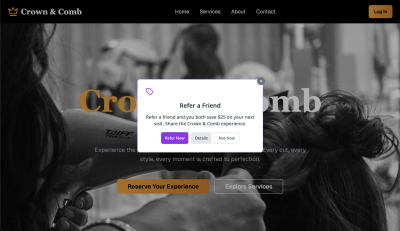
- Crown & Comb: A hair salon website designed for online appointment booking and consultations, offering a VIP program and various special packages. Characterized by a bold, clean, black-and-white aesthetic with bursts of color, this site intentionally presented complex tasks, particularly finding specific service packages, to stress-test user navigation and information processing.
Participant recruitment leveraged a single screener with questions focused on self-identified challenges in memory, focus, and learning. This self-identification approach was critical for recruiting individuals who genuinely experienced cognitive difficulties in daily digital interactions. Based on their responses, participants were divided into two distinct groups: those self-identifying with cognitive challenges and a general population control group. It’s crucial to note that the "cognitive challenges" group included individuals identifying as neurodivergent, acknowledging that neurodiversity encompasses a broad spectrum of ways brains process information and learn, commonly including dyslexia, ADHD, and autism.
Thirty user interviews were meticulously conducted, with 10 participants assigned to each website, maintaining an even 50/50 split between cognitive and gen pop participants. Each session involved a participant completing all assigned tasks for one website during an online user interview, facilitated by one of the involved researchers. To quantitatively assess usability, all participants completed a 10-question Accessible Usability Scale (AUS) survey at the conclusion of their session. The AUS, a free, Creative Commons-licensed tool, provided a standardized metric (ranging from 0 to 100) to evaluate the perceived usability of the digital products.
Data Analysis: A Rigorous Examination of User Feedback
The analytical phase of the study involved a meticulous and systematic review of all session recordings and transcripts. The lead researcher systematically cataloged every instance where a participant expressed a concern, question, difficulty, or sought clarification on functionality, categorizing each as an "issue." This rigorous approach also included noting instances where a participant missed a task component or struggled, even if they didn’t explicitly vocalize the difficulty. Additionally, every suggestion for improvement offered by participants was carefully recorded. To ensure consistency and avoid over-representation, issues and suggestions were counted once per participant, even if mentioned multiple times by the same individual within a session. However, the study acknowledged and embraced the natural recurrence of similar issues across different participants as a strong signal of universal challenges, indicating areas requiring significant design attention.
Examples of critical issues identified by participants underscored common pitfalls in digital design:
- Confusing navigation patterns, such as inconsistent menu placement or unclear breadcrumbs, making it difficult for users to orient themselves or find desired information.
- Ambiguous or non-standard calls to action, where buttons lacked clear labels or performed unexpected functions, hindering user interaction.
- Excessive or continuous animations that proved distracting, disorienting, or even physically uncomfortable for some users, diverting attention from core content.
- Overwhelming amounts of information or poorly structured content, leading to cognitive overload and difficulty in extracting key details.
- Inconsistent design elements or interactive behaviors across different parts of a website, breaking user expectations and forcing constant re-learning.
Conversely, participants offered valuable and actionable suggestions that pointed towards best practices