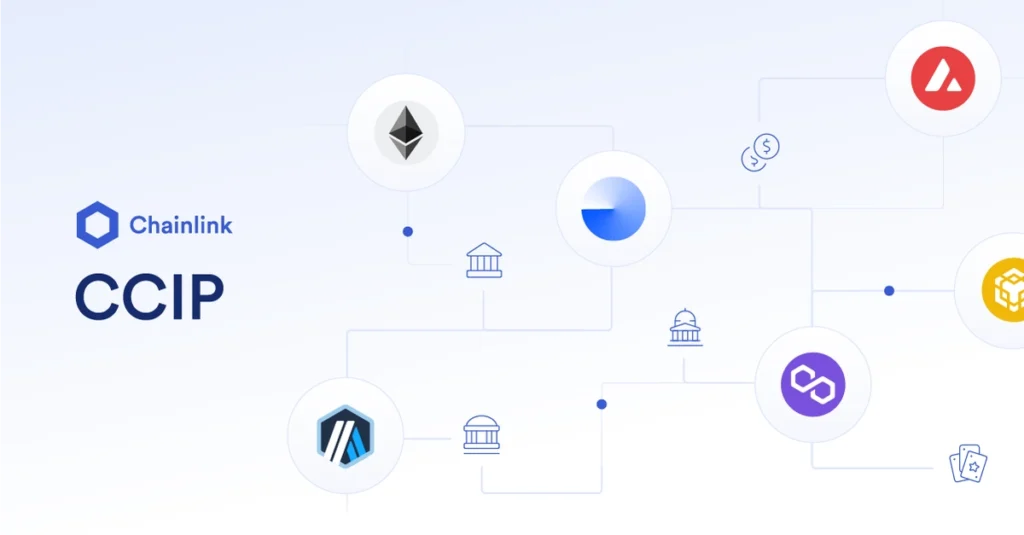

Despite the rapid evolution of blockchain technology, a significant portion of publicly available information regarding Chainlink’s Cross-Chain Interoperability Protocol (CCIP) remains outdated, particularly concerning its fundamental off-chain architecture. A common misconception, still prevalent in online searches for "CCIP architecture," describes two distinct oracle networks—a Committing Decentralized Oracle Network (DON) and an Executing DON—each with separate node sets and responsibilities for different phases of cross-chain message delivery. This description, while accurate prior to CCIP v1.6, no longer reflects the protocol’s current design.
The Evolution of CCIP’s Off-Chain Architecture
As of CCIP v1.6, a pivotal architectural shift has consolidated these into a single, unified entity known as the Role DON. This integrated network encompasses all participating nodes, with two Off-chain Reporting (OCR) plugins—one for committing and one for executing—running on these same nodes. Rather than distinct, independent networks, these plugins represent subsets of the same node pool, differentiated solely by their assigned roles. This update is more than a technical nuance; it fundamentally alters the security model, trust assumptions, and the very understanding of CCIP’s decentralization. For developers, auditors, and those engaged in technical discussions about Chainlink, possessing knowledge that predates v1.6 can signal a critical gap in understanding.
This architectural overhaul represents a continuous effort by Chainlink to enhance the security, efficiency, and robustness of its interoperability solution. CCIP, launched to mainnet in July 2023 after years of development and rigorous testing, was designed to address the pervasive challenge of blockchain fragmentation. With numerous Layer 1 and Layer 2 networks operating in silos, the ability to securely and reliably transfer tokens and arbitrary data across chains is paramount for Web3’s growth. Prior cross-chain solutions often suffered from security vulnerabilities, high centralization risks, and complex user experiences, leading to significant exploits and loss of funds across the industry. CCIP aims to provide a secure, generalized standard for cross-chain communication, leveraging Chainlink’s battle-tested oracle infrastructure.
Understanding the Unified Role DON Model
The previous two-DON model, while conceptually straightforward in separating concerns, introduced inherent vulnerabilities. It necessitated two independent trust assumptions, two distinct quorum requirements, and presented two separate potential points of failure. Compromising either network independently could undermine the entire system.
The Role DON elegantly resolves this by consolidating all operations within a single network. All nodes are members of this unified DON. The OCR protocol dynamically assigns roles: some nodes operate the Commit plugin for a specific source chain, while others run the Execute plugin for a particular destination chain. Critically, a quorum of the entire Role DON must collectively agree on the system’s state, rather than relying on smaller, independent quorums within separate networks.
From a trust-minimization perspective, this unified approach offers a significant advantage. An attacker aiming to compromise the commit process now faces the same formidable challenge as one targeting the execution process, as both rely on the integrity of the same overarching node set. This eliminates any potential "weaker link" between the two critical phases of cross-chain message delivery, bolstering the protocol’s overall resilience against malicious actors. This design choice aligns with the broader industry trend towards more robust and consolidated security architectures for critical infrastructure.
The Commit OCR Plugin: A Three-Phase Process

The Commit plugin is responsible for the initial half of message delivery, ensuring messages are securely attested to on the source chain before being processed. This involves three distinct phases:
-
Observation Phase: Within the Role DON, specialized subcommittees are assigned to monitor specific source chains. Each subcommittee autonomously reads the source chain’s "OnRamp" contract for new messages. They identify a range of sequence numbers to be included in the upcoming batch and compute a Merkle root for these messages. A predefined minimum threshold of valid observations from multiple nodes is mandatory for the process to advance, preventing any single node from dictating message inclusion. This distributed observation mechanism is fundamental to CCIP’s decentralization and fault tolerance.
-
Query Phase: Following observation, a designated leader for the current OCR round compiles a proposed Commit Report based on the gathered observations. This report is then shared with all other nodes within the Role DON for comprehensive validation. Nodes that submitted invalid or inconsistent observations have their contributions discarded. Consensus is achieved only when the remaining valid observations meet the required threshold. This off-chain Byzantine fault-tolerance step allows nodes to mutually verify each other’s work and detect anomalies before any data is written to the blockchain, significantly enhancing data integrity.
-
Reporting Phase: Once consensus is achieved, a subcommittee of nodes, specifically assigned to write to the destination chain, submits the final Commit Report on-chain to the "OffRamp" contract. This report can efficiently bundle Merkle roots from multiple source chains into a single submission. Additionally, it incorporates price reports for fee tokens. The FeeQuoter component requires real-time token prices to accurately calculate transaction costs, and the Commit plugin facilitates the delivery of these updates, negating the need for separate price oracle calls for each message. The OffRamp contract then stores the committed Merkle root. It is crucial to note that at this stage, no execution occurs; committing merely serves as an attestation that a verified set of messages exists on the source chain, validated by a quorum of the Role DON.
The Executing OCR Plugin: Completing the Delivery
The Executing plugin assumes responsibility after a Merkle root has been committed on-chain, managing the second half of the message delivery process. Its operation also unfolds in three phases:
-
Pending Execution Check: The subcommittee connected to the destination chain continuously scans the OffRamp contract for committed Merkle roots that have not yet been fully executed. These represent messages that have successfully passed the commit stage but are awaiting final delivery to their intended receivers. This effectively forms a "pending" queue of cross-chain transactions.
-
Validation and Optimization: The Executing DON then performs a crucial double-check by returning to the original source chain to verify the individual events corresponding to these pending messages. While the Commit plugin attested to the Merkle root’s integrity, the Execute plugin independently verifies the actual existence of these messages on the source chain before proceeding with any execution. This layered validation significantly enhances security. Once validated, the Executing DON optimizes the batch of messages for execution. This optimization considers various factors, including gas limits on the destination chain, specific chain constraints, and maintaining proper message ordering, to determine the most efficient set of messages for the current execution transaction.
-
Execution: The optimized batch of messages is then executed on the destination chain. The OffRamp contract plays a vital role here, validating the Merkle proofs for each individual message against the previously stored root. Upon successful validation, it triggers calls to the relevant token pools and receiver contracts, completing the cross-chain transfer or arbitrary data interaction.
ExecutionStateChangedevents are emitted, indicating either a "Success" or "Failure" status. Importantly, failed executions are not lost; they remain available for permissionless manual re-execution, providing a robust fallback mechanism.
Critical Update: The Evolving Role of the Risk Management Network (RMN)
One of the most significant and often misunderstood updates pertains to the Risk Management Network (RMN). Previously, much of the content surrounding CCIP described the RMN as an independently operated off-chain monitoring layer, continuously watching for anomalies in committed Merkle roots and possessing the capability to trigger an emergency halt across the system.
However, Chainlink’s current official documentation explicitly states that the RMN’s automated off-chain role is no longer active in current CCIP deployments. While its reintroduction as an optional validation layer is anticipated in future releases, its current functionality is different.
What remains active and critical is the on-chain RMN Contract. The Router, OnRamp, OffRamp, and Token Pool contracts within CCIP continue to invoke the isCursed() function on the RMN Contract before processing transactions. This allows for manual curse initiation by the designated CCIP Owner, serving as an essential emergency safeguard for implementing per-chain or network-wide halts when necessary.
In practical terms, this means the automated off-chain anomaly detection layer, designed to independently scrutinize suspicious commit patterns, has been temporarily paused. CCIP’s immediate risk controls now primarily rely on configurable rate limits, developer token attestations, and other monitoring capabilities rather than an active, automated off-chain RMN node network. This is a crucial distinction for anyone involved in auditing CCIP integrations or assessing its security posture. Assuming the RMN provides an independent, automated off-chain monitoring layer is describing intended future functionality, not the current operational behavior. While the contracts still query isCursed(), this flag can only be set manually at present, not automatically by off-chain RMN nodes detecting anomalies.
Parallel Pipelines: How the Two Plugins Coordinate
It is important to clarify that the Commit and Execute plugins do not operate in a strict, sequential hand-off fashion, where one waits for the other to complete. Instead, they function as continuous, parallel pipelines within the same Role DON node set. The Commit plugin continuously processes and commits new batches as messages emerge on source chains, while the Execute plugin simultaneously checks for newly committed roots and processes them into executions as swiftly as the destination chain’s gas limits and confirmation requirements permit.
This parallel execution is a core strength of the Role DON architecture. A single node within the network might simultaneously run the Commit plugin for one source chain and the Execute plugin for a different destination chain, depending on its assigned roles. This unified network structure facilitates such dynamic and efficient job assignments, optimizing resource utilization and throughput across the diverse demands of cross-chain communication.
Implications for Developers, Auditors, and the Broader Ecosystem

The architectural and operational updates within CCIP carry significant implications for various stakeholders:
-
The Terminology Audit: Any documentation, code comments, or architectural diagrams referring to "the Committing DON" and "the Executing DON" as separate networks are likely outdated, predating v1.6. Such instances should prompt a thorough review of the associated content for other potentially obsolete architectural details. Staying current with Chainlink’s official documentation (e.g., docs.chain.link) is paramount for accuracy.
-
The RMN Security Analysis: Security analyses of CCIP integrations that hinge on the RMN’s off-chain automated monitoring as a primary defense layer must be revised. This layer is currently inactive, meaning the automated detection of anomalies is not in effect. While the on-chain curse mechanism persists, it necessitates manual intervention by the CCIP Owner to trigger, shifting the immediate responsibility for emergency halts. Auditors must account for this manual aspect in their risk assessments.
-
The Execution Failure Path: A critical design feature of CCIP is its resilience to execution failures. When an
ExecutionStateChangedevent emits a "Failure" status, the corresponding message is not lost. It remains persistently committed on-chain and is available for permissionless manual re-execution after a configured delay. This necessitates that receiver contracts interacting with CCIP messages be designed with idempotency in mind. An idempotent contract can handle the re-execution of the same message multiple times without unintended double-application of effects, ensuring consistent state transitions even in the event of initial failures and subsequent manual retries. This reinforces a key principle of robust decentralized application design.
Chainlink’s Vision for Secure Interoperability
These ongoing architectural refinements underscore Chainlink’s unwavering commitment to building the most secure and reliable cross-chain infrastructure in the Web3 space. By continuously iterating on its protocol, Chainlink aims to provide developers with the tools to create seamless, multi-chain applications that are not only efficient but also inherently resilient against the complex threats present in a fragmented blockchain landscape. The transition to the Role DON and the clear articulation of the RMN’s current state are vital steps in ensuring transparency and maintaining the highest standards of security for critical cross-chain operations. As the Web3 ecosystem matures, the demand for robust and secure interoperability solutions will only grow, positioning Chainlink’s CCIP as a cornerstone of future decentralized applications.