
In today’s dynamic digital landscape, where consumer attention is fragmented across numerous platforms, the strategic alignment of website design and social media marketing has become an indispensable pillar of business success. While social media channels have undeniably seized the marketing spotlight, discerning businesses recognize that these platforms are not standalone entities but rather integral components of a cohesive digital ecosystem, working in concert with a well-designed website. The fundamental principle governing brand building is consistency, making it paramount for a business’s website design to meticulously mirror and complement its social media content, and vice versa. A failure to achieve this harmonious integration risks confusing the target audience, eroding trust, and ultimately hindering the cultivation of a loyal customer base.
The Evolving Digital Landscape and the Imperative of Integration
The journey of digital marketing has seen significant shifts over the past two decades. Initially, a company’s website served as the primary, often sole, online presence – a digital brochure or storefront. The advent of social media platforms like Facebook, Twitter, and later Instagram and TikTok, introduced new avenues for engagement, brand discovery, and direct customer interaction. For a period, many businesses treated these channels in isolation, viewing social media as a separate, albeit important, marketing arm distinct from their core website. This siloed approach, however, increasingly proved inefficient and detrimental to a holistic brand experience.
The contemporary consumer journey is rarely linear. A potential customer might discover a brand through an engaging Instagram post, seek further information on the company’s website, then return to social media to read reviews or engage with the brand’s community, before finally making a purchase. This fluid movement across channels necessitates a unified brand presence. Any dissonance—be it in visual identity, messaging, or user experience—can create friction, leading to disengagement and lost opportunities. Industry experts widely agree that for any business, all owned digital channels—including social media pages, websites, email marketing platforms, and other digital touchpoints—must operate as a single, coherent unit. To perceive these channels as separate entities is to invite unclear messaging, dilute brand impact, and ultimately result in lower conversion rates.
Key Advantages of a Unified Digital Strategy
Integrating social media with website design offers a multitude of strategic advantages that collectively bolster a business’s market position and drive growth.
1. Cultivating a Stronger, Recognizable Brand Identity:
A consistent visual identity across all owned channels is the bedrock of a strong brand. This encompasses not just the logo and color palette, but also typography, imagery style, tone of voice, and overall messaging. When a brand maintains this consistency, it significantly enhances brand recognition, making it easier for audiences to identify and recall the brand amidst a sea of competitors. In today’s highly saturated digital marketplace, where consumers are bombarded with information, instant recognition is a powerful asset. Studies indicate that consistent brand presentation across all platforms can increase revenue by up to 23%. A coherent brand identity fosters a sense of professionalism and reliability, crucial factors in convincing an audience to move from interest to conversion.
2. Expanding Reach and Optimizing the Customer Journey:
Social media platforms have become prime avenues for brand discovery. Over 70% of consumers reportedly use social media to research products and services before making a purchase. However, while discovery often initiates on social media, the actual shopping experience, detailed product information, and secure transaction processes predominantly occur on dedicated websites. By strategically utilizing social media to expand a business’s reach and leveraging website design to facilitate seamless conversions, the entire customer experience is cohesively tied together. This creates an efficient marketing funnel where social media acts as the top-of-funnel engagement engine, drawing in potential customers, while the website serves as the mid-to-bottom-funnel conversion hub, guiding them through detailed information and purchase pathways. This bidirectional flow is critical: a captivating social media presence drives traffic to the website, and a well-optimized website encourages visitors to explore the brand’s social channels for community engagement and ongoing content.
3. Amplifying Social Proof and Building Trust:
Social proof is a potent psychological phenomenon and an essential marketing tool that significantly helps businesses earn the trust of their audience. It manifests in various forms, including customer testimonials, endorsements from industry experts, user-generated content (UGC), and product reviews. A well-designed section on a website that dynamically incorporates UGC from social media, supported by authentic testimonials, can profoundly strengthen a business’s legitimacy. Research by Brightlocal reveals that 98% of consumers read online reviews for local businesses, and 60% consider the number of reviews a business has before making a purchase decision. Leveraging social proof across all channels creates a powerful narrative of credibility and fosters confidence among potential customers. Furthermore, a meticulously defined content-creation workflow ensures that only high-quality content, consistently highlighting the brand’s identity, values, and goals, is posted on social pages. This commitment to quality extends to the website’s design and overall user experience, directly reflecting the business’s value proposition. In essence, a business’s owned channels are a direct reflection of its standards, and superior design can significantly enhance how its audience perceives the brand.
4. Streamlining Content Production and Scaling Efficiency:
Managing content across multiple digital channels can be a daunting task. While a degree of custom content tailored to each platform’s nuances is beneficial, the ability to repurpose content is a game-changer for efficiency. For instance, a company can embed its Instagram or TikTok feed directly onto its website, ensuring a continuous stream of fresh, engaging content without constant manual updates. Conversely, key content from the website—such as blog posts, product features, or customer success stories—can be distilled into bite-sized versions suitable for social media feeds, accompanied by direct links back to the website to drive conversions and deepen engagement. This "hub-and-spoke" model of content distribution not only saves time and resources but also ensures a consistent message across all touchpoints, reinforcing brand identity and maximizing the reach of valuable content.
5. Maximizing Website Visitors and Cultivating Loyal Followers:
The symbiotic relationship between a business’s social media pages and its website is crucial for attracting and retaining an audience. Each channel needs the other to thrive, enhancing and enriching the overall customer experience. Consider a potential customer who discovers a product via a compelling Instagram reel; their next logical step is to visit the brand’s website for detailed specifications, pricing, and purchase options. Conversely, a user landing on a website through a search engine might seek further engagement or community interaction by exploring the business’s social media pages. This seamless cross-pollination of traffic is vital. As of 2024, nearly 60% of internet traffic originates from mobile devices, underscoring the critical importance of a mobile-friendly website. A responsive design ensures that the integrated experience is smooth and accessible regardless of the device, preventing potential customers from abandoning their journey due to poor usability. The prevalence of platforms like Instagram as primary brand discovery tools means that for many businesses, a significant portion of new customers initiate their journey on social media before transitioning to the website. Aligning these channels is therefore not just an advantage, but a competitive necessity.
Practical Strategies for Seamless Integration
Implementing a truly integrated digital strategy requires deliberate action and thoughtful design choices. Here are five essential actions businesses should undertake:
1. Integrate Social Media Elements Directly into Your Website’s Design:
As social media becomes an inseparable part of consumers’ daily lives, aligning it with website design is no longer optional. Beyond simply using consistent fonts, colors, and logos across all channels, there are numerous sophisticated ways to embed social media into website architecture. This includes placing prominent social sharing buttons on product listings, blog posts, and informational pages, enabling users to easily share content. Integrating social follow buttons prominently in headers or footers encourages website visitors to connect on social platforms. Live social feeds can be incorporated into relevant sections, showcasing real-time engagement and dynamic content. For example, fashion brands like Urban Outfitters strategically place social sharing buttons on every product listing, accompanied by a clear call to action. Clicking these icons seamlessly prepares a link to the product for sharing on the user’s social profile, streamlining the sharing process and amplifying reach. This creates a frictionless user experience, encouraging visitors to spend more time on the site and interact with the brand across channels, which can also indirectly improve search engine rankings by signaling relevance and engagement.
2. Repurpose Social Media Posts for Website Content:
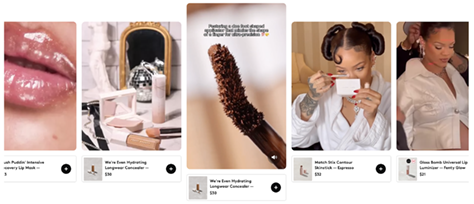
While the common practice is to adapt website content for social media, the reverse is equally powerful and often underutilized. Creating engaging content for social media pages demands significant time and effort; repurposing it for other channels maximizes its value. Beyond merely embedding social feeds, businesses can curate specific social posts and integrate them into product listings as dynamic alternatives to static product shots. This allows the audience to visualize products in real-world use scenarios, offering a more authentic and compelling perspective. Cosmetics brands like Fenty Beauty excel at this by displaying carousels of posts from TikTok and Instagram Reels that feature specific products in action. Users can click a thumbnail to view a video, with a convenient link to purchase the product and its price displayed below. This innovative approach effectively highlights new products, revitalizes interest in existing ones, and provides engaging visual context that static images often lack.

3. Incorporate User-Generated Social Media Content (UGC) into Your Website:
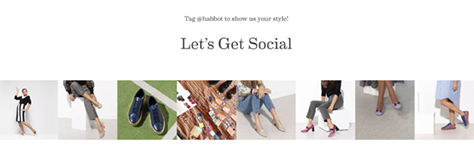
Fan-made or user-generated content (UGC) is not exclusive to social media; a business’s website can significantly benefit from its integration. UGC, such as customer photos or videos featuring products, boosts credibility and enhances customer trust far more effectively than traditional advertising. It also adds a valuable, authentic design element to a page, which improves brand reputation and fosters a sense of community. According to a report by Trustpilot, websites featuring UGC experience a remarkable 20% increase in returning visitors and a 90% increase in time spent on the page. Athleisure brands like Outdoor Voices brilliantly leverage UGC by featuring a carousel of social media posts on their homepage. They further integrate their famous social media hashtag, #DoingThings, into the design, using it as a headline for the UGC section, thus reinforcing brand identity and community engagement. This not only provides social proof but also makes the website feel more dynamic and relatable.
4. Optimize User Experience Through Web Design Analytics:
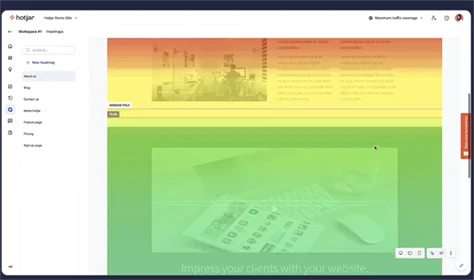
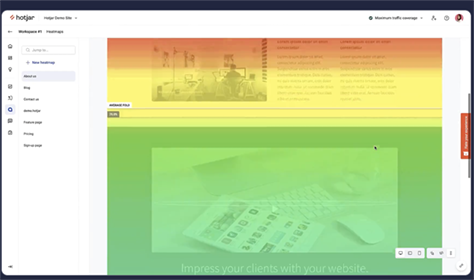
Once social media elements are integrated into a website’s design, it is crucial to continually monitor and understand audience responses through robust analytics. Before finalizing any design, businesses should perform A/B or multivariate testing to identify which integrated elements and layouts resonate most effectively with their audience. Key metrics such as average time spent on a page, bounce rate, and conversion paths provide invaluable insights into user engagement. Furthermore, utilizing heatmaps (like those offered by Hotjar) can visually demonstrate which areas of a page, particularly those incorporating social elements, receive the most interaction. This data-driven approach allows for iterative design improvements, ensuring that the integration is not just aesthetically pleasing but also functionally effective in achieving business objectives and enhancing the user journey.
5. Centralize Customer Reviews Collected from Social Media:
Customer reviews are paramount in modern consumer decision-making. The aforementioned Brightlocal study highlights that 98% of consumers read reviews for local businesses, and 60% actively consider the number of reviews a business has before committing to a purchase or service. A substantial volume of positive reviews signals legitimacy and trustworthiness. Social media platforms, alongside dedicated review sites like TripAdvisor and Google Reviews, are excellent sources for collecting authentic customer feedback. Businesses can launch UGC campaigns that encourage customers to post reviews on social media, which can then be curated and prominently displayed on the website. Monthly subscription services, such as Barkbox, exemplify this by integrating customer reviews directly into the middle of their homepage. They strategically place photos of customers’ pets showcasing their products immediately above the reviews, creating a visually engaging and trustworthy display that reinforces product appeal and customer satisfaction.
Broader Implications and Future Outlook
The seamless integration of website design and social media is more than a trend; it’s a foundational shift in how businesses connect with their audiences. This integrated approach has profound implications: it fosters deeper brand loyalty by creating a consistent and trustworthy experience, it optimizes marketing spend by maximizing content utility, and it significantly enhances data collection, allowing for more precise audience understanding and personalized engagement. As artificial intelligence and machine learning continue to advance, the ability to personalize user experiences across integrated channels will become even more sophisticated, allowing brands to deliver hyper-relevant content and offers. The future of digital marketing is undeniably omnichannel, where every touchpoint—from a social media story to a website product page—works in unison to guide, inform, and delight the customer. For UX designers, this means an expanded role in bridging these digital realms, ensuring that every interaction contributes to a cohesive, meaningful, and ultimately successful brand experience.
Conclusion
For any business striving for relevance and growth in the digital age, understanding and implementing the synergistic relationship between website design and social media is non-negotiable. As UX designers, the imperative is to identify and integrate relevant social media elements into website pages, thereby crafting a more interactive, meaningful, and consistent user experience. By meticulously aligning web designs with social media strategies, businesses can profoundly strengthen brand identity, significantly boost brand awareness, and, as a direct consequence, achieve higher conversion rates. The strategies outlined—from direct integration and content repurposing to leveraging user-generated content, data-driven optimization, and centralizing reviews—provide a comprehensive roadmap for unifying all brand channels into a powerful, cohesive digital presence. This integrated approach is not merely about staying current; it is about building resilient, recognizable, and deeply engaging brands that thrive in the complex tapestry of the modern digital world.