In today’s hyper-connected digital landscape, while social media platforms frequently command the lion’s share of marketing budgets and attention, discerning businesses recognize that website design and social media marketing are not disparate entities but rather interdependent pillars of a cohesive brand strategy. Building a resilient brand presence fundamentally hinges on consistency across all touchpoints. Therefore, it is paramount for a business’s website design to meticulously align with its social media content, and vice versa. A failure to achieve this seamless integration risks confusing the target audience, eroding trust, and ultimately impeding the development of a loyal customer base.
The Evolving Digital Ecosystem and the Need for Integration

The digital marketing paradigm has undergone a profound transformation over the past two decades. Initially, websites served as static online brochures, while social media emerged as a separate, more interactive space for community building. However, the modern consumer journey is rarely linear. It often begins with brand discovery on platforms like Instagram or TikTok, transitions to deeper engagement on a website, and circles back to social media for reviews, customer service, or further content consumption. This fluid interaction necessitates a unified approach, where all owned channels—including social media pages, official websites, and various marketing platforms—function in concert. To view these channels as isolated silos is to invite fragmented messaging, dilute brand impact, and inevitably lead to diminished conversion rates.
Strategic Advantages of Integrating Social Media and Web Design
The deliberate integration of social media with website design offers a multitude of strategic advantages that extend far beyond mere aesthetic consistency.

1. Cultivating a Stronger, Recognizable Brand Identity:
A consistent visual identity and brand voice across all owned channels are the bedrock of a robust brand identity. This uniformity significantly enhances brand recognition, making it easier for potential customers to identify and recall a business amidst a deluge of competitors. In a marketplace saturated with options, a strong brand identity—manifested through consistent colors, logos, typography, and visual language—allows an audience to instantly recognize a brand. This familiarity breeds trust and positions the business favorably to encourage conversions. According to a 2023 study by Lucidpress, consistent brand presentation across all platforms can increase revenue by up to 23%, underscoring the tangible benefits of a unified visual strategy.
2. Expanding Reach and Optimizing the Customer Journey:
Modern consumers frequently leverage social media as a primary avenue for discovering new brands, products, and services. Yet, the critical stages of research, detailed product exploration, and ultimately, the purchasing experience, predominantly occur on a business’s website. By strategically utilizing social media to cast a wider net for audience reach and then leveraging sophisticated website design to facilitate seamless conversions, businesses can craft a holistic customer experience. This integration ensures that the transition from discovery on social media to engagement and transaction on the website is frictionless, guiding potential customers efficiently through their purchasing journey. Data from Statista indicates that as of 2023, over 4.9 billion people use social media globally, highlighting its unparalleled reach for initial brand exposure.
3. Amplifying Social Proof and Building Consumer Trust:
Social proof is an indispensable marketing tool, instrumental in cultivating trust and credibility with an audience. It manifests in various forms, including authentic customer testimonials, endorsements from industry experts, user-generated content (UGC), and product reviews. A well-designed section on a website that dynamically incorporates UGC sourced from social media platforms, bolstered by compelling testimonials, significantly strengthens a business’s legitimacy. Leveraging social proof consistently across all channels—from a social media post showcasing customer satisfaction to a dedicated review section on the website—reinforces trust and validates the brand’s value proposition. Research from Trustpilot reveals that websites featuring UGC experience a 20% increase in returning visitors and a remarkable 90% increase in time spent on the page, illustrating its profound impact on engagement. Furthermore, a rigorous content-creation workflow ensures that only high-quality, brand-aligned content is published on social pages, further reinforcing the brand’s identity, values, and goals. The overall user experience and design quality of a business’s website serve as a direct reflection of its professionalism and commitment to quality, influencing audience perception profoundly.

4. Streamlining Content Production and Enhancing Efficiency:
Managing multiple digital channels can be resource-intensive. While bespoke content for each platform is often beneficial, the strategic repurposing of content offers significant efficiencies. For instance, embedding a company’s Instagram or TikTok feed directly onto its website ensures a continuous flow of fresh, dynamic content without constant manual updates. Conversely, key website content can be distilled into bite-sized, engaging formats for social media, accompanied by direct links to the website to drive traffic and increase conversions. This approach not only optimizes content creation efforts but also ensures a consistent narrative across platforms, maximizing the return on content investment. This dual-directional repurposing strategy is a cornerstone of agile content marketing.
5. Maximizing Website Traffic and Social Engagement:
A truly integrated strategy fosters a symbiotic relationship where each channel mutually benefits the other. Social media pages are enriched by the comprehensive information and transactional capabilities of the website, while the website gains visibility and engagement from social media’s expansive reach. A potential customer might initially discover a product via an Instagram ad or a trending TikTok video, prompting them to visit the website for detailed specifications and purchase options. Conversely, a user landing on a webpage through a search engine might seek out the business’s social profiles to view more dynamic content, community interactions, or customer support. This interconnectedness ensures that both brand discovery and deeper engagement are facilitated. It’s particularly noteworthy that as of 2024, nearly 60% of all internet traffic originates from mobile devices. Consequently, ensuring a mobile-friendly and responsive website design is not merely advantageous but absolutely critical for capturing and retaining a vast segment of the online audience and converting social media interest into tangible website actions.
Five Essential Strategies for Seamless Integration

To ensure that website design and social media marketing work in perfect concert, businesses must implement deliberate and well-considered actions:
1. Integrate Social Media Elements Directly into Your Website Design:
Beyond merely displaying social media icons, true integration involves embedding interactive elements that enrich the user experience and can even bolster search engine rankings. This includes consistently applying the same brand fonts, color palettes, and logos across all digital assets. However, advanced integration can involve:
- Live Social Feeds: Displaying curated Instagram, X (formerly Twitter), or TikTok feeds on relevant website pages (e.g., a "Community" page, product pages).
- Social Sharing Buttons: Implementing prominent, easy-to-use social sharing buttons on product listings, blog posts, and articles. As exemplified by fashion brand Urban Outfitters (Figure 2 in original content), integrating social-sharing buttons with a clear call-to-action on every product listing allows users to effortlessly share product links to their social profiles, significantly extending organic reach.
- Social Login Options: Offering the convenience of logging in or signing up using social media accounts (e.g., Google, Facebook), streamlining the user journey and reducing friction.
- Interactive Widgets: Integrating social media polls, contests, or Q&A widgets directly onto the website to increase engagement and gather immediate feedback.
Such integration creates a cohesive user experience, encouraging visitors to spend more time on the website and engage more deeply with the brand.
2. Strategically Repurpose Social Media Posts for Website Content:
While the common practice is to adapt website content for social media, the reverse is equally powerful and often underutilized. Given the significant time and effort invested in creating engaging social media content, leveraging it on the website is a smart move. Beyond embedding entire social feeds, businesses can creatively use individual social posts:

- Dynamic Product Displays: Instead of relying solely on static product shots, incorporate social media posts—especially videos or carousels featuring products "in action" or styled by influencers. The cosmetics brand Fenty (Figure 3 in original content) excels at this, showcasing TikTok and Instagram Reels content directly on product pages, allowing users to see products in real-world use cases, complete with purchase links and pricing. This adds authenticity and a dynamic visual dimension.
- Testimonial Showcases: Curate positive social media mentions, comments, and reviews into a visually appealing section on the website.
- Behind-the-Scenes Content: Use engaging social media stories or posts about company culture, events, or product development to add a human touch to the "About Us" or "Careers" pages. This not only scales content production but also adds a layer of authenticity and social proof that resonates with website visitors.
3. Incorporate User-Generated Social Media Content (UGC) into Your Website:
UGC, whether fan-made photos, videos, or written reviews, is a powerful trust-builder that extends its benefits beyond social platforms to the website. While social media is an ideal collection ground for UGC, its display on a website significantly boosts credibility, enhances customer trust, and introduces a dynamic design element. The athleisure brand Outdoor Voices (Figure 4 in original content) masterfully integrates UGC on its homepage via a carousel, prominently featuring customer photos and aligning it with their iconic social media hashtag, "#DoingThings," as a headline. This strategy not only improves brand reputation but also significantly impacts user engagement. According to BrightLocal’s 2023 Local Consumer Review Survey, 98% of customers read online reviews for local businesses, and 60% consider the sheer volume of reviews before making a purchase decision. Websites with integrated UGC have been shown to experience higher engagement rates and longer dwell times.
4. Leverage Web-Site Design Analytics to Deepen Audience Understanding:
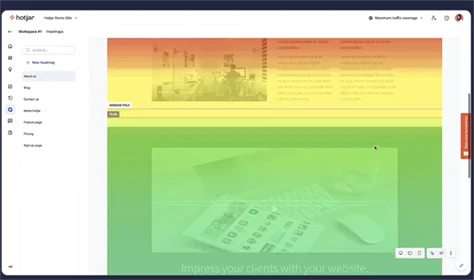
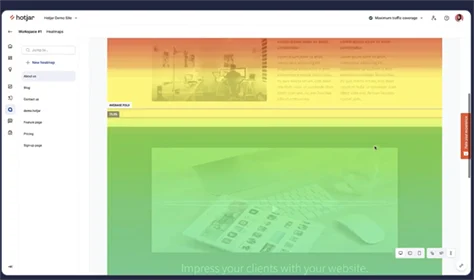
Once social media elements are integrated into a website, understanding audience response through comprehensive analytics is critical for iterative improvement. Before finalizing design choices, A/B or multivariate testing can provide invaluable insights into what resonates most effectively with the target audience. Key metrics such as average time spent on a page, bounce rate, and conversion paths offer quantitative data on engagement. Furthermore, qualitative tools like heatmaps (Figure 5 in original content, exemplified by Hotjar) visually represent user interaction patterns, revealing which areas of a page garner the most attention, clicks, and scrolls. By cross-referencing these web analytics with social media engagement data, businesses can gain a holistic understanding of how social traffic behaves on their site, allowing for data-driven optimization of both content and design for maximum impact. This analytical feedback loop ensures continuous refinement of the integrated strategy.
5. Systematically Collect and Display Customer Reviews from Social Media and Beyond:
Customer reviews are a cornerstone of social proof and directly influence purchasing decisions. The collection of these reviews should be an active and integrated process. Social media platforms are fertile ground for initiating user-generated content campaigns that encourage customers to post reviews. Beyond social platforms, dedicated review sites like Google Reviews and TripAdvisor (for relevant industries) are indispensable sources of authentic feedback. The monthly dog-goodies subscription service Barkbox (Figure 6 in original content) exemplifies effective review integration, prominently featuring customer reviews—often accompanied by photos of pets enjoying their products—directly in the middle of their homepage. This strategic placement, combined with visual proof, immediately establishes legitimacy and trustworthiness. The impact of reviews is undeniable: a study by Brightlocal indicated that 98% of consumers read reviews for local businesses, and Trustpulse reported that 60% of customers consider the number of reviews a business has before committing to a purchase. More reviews equate to higher perceived legitimacy and reliability.

Broader Implications and The Future of Integrated Digital Marketing
The imperative for integrating website design and social media extends beyond immediate marketing gains; it positions businesses for long-term resilience in an ever-evolving digital landscape. As new social platforms emerge and technologies like AI-driven content creation become more sophisticated, an integrated strategy ensures adaptability and agility. UX designers play a pivotal role in championing this integration, translating brand values and marketing objectives into seamless, intuitive, and engaging user experiences across all channels.
Ultimately, the goal is to forge a cohesive, interactive, and meaningful user experience that guides the customer effortlessly from initial discovery to lasting loyalty. By aligning web designs with social media strategies, businesses can not only strengthen brand identity and boost brand awareness but also significantly increase engagement, drive traffic, and, most importantly, elevate conversion rates. The digital future belongs to brands that master this symbiotic relationship, creating a unified narrative that resonates powerfully across every touchpoint of the customer journey.