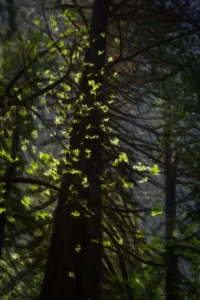

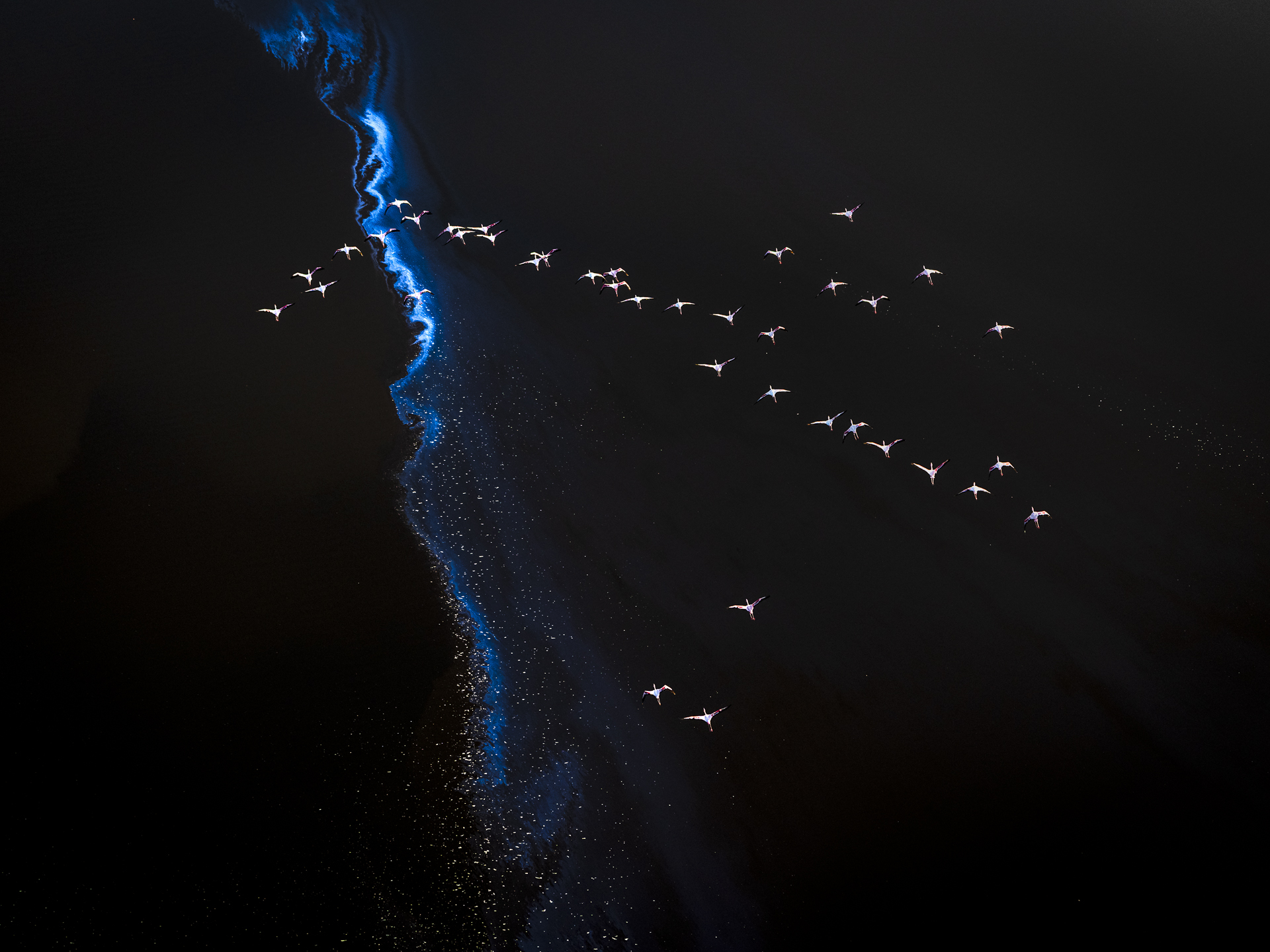
The project emerged during a period of unprecedented global restriction. When international borders closed in 2020, McCormack found himself confined to a narrow radius in Northern California. Deprived of the ability to seek out new horizons, he shifted his focus toward the minute details of a single stretch of coastline. This transition from a "hunting" mentality to a "receptive" one allowed the photographer to identify similarities between seemingly unrelated subjects. In the resulting 200-page volume, McCormack juxtaposes the crystalline structures of minerals like jasper and quartzite with the fluid dynamics of a bear shaking off water or the aerial symmetries of salt lakes in Botswana and glacial rivers in Iceland.
The Pandemic as a Catalyst for Artistic Evolution
The chronology of the project began in early 2020, as the travel industry ground to a halt. For McCormack, whose previous work often relied on the "excitement of elsewhere," the sudden limitation of geography became a clarifying force. By returning to the same coastal locations daily, he exhausted the obvious landscape shots—the sunsets and wide-angle vistas—and began to notice the subtle interplay of light on foam, the erosion of rocks, and the mathematical precision of tidal patterns.
This period of forced observation led to a psychological shift. McCormack describes the process as stripping away the "easy answers" of photography. The repetition of visiting the same site hundreds of times acted as a meditative practice, allowing the subjects to reveal themselves slowly. This methodology eventually expanded beyond California as restrictions eased, leading McCormack to apply this same "attentive seeing" to locations ranging from the Great Barrier Reef to the volcanic plains of East Africa.

Scientific Foundations: The Mathematics of Nature
A central theme of the work is the concept that nature is not chaotic, but rather governed by an underlying intelligence. The book highlights several types of recurring patterns that are well-documented in the fields of biology and physics:
- Fractals: Self-similar patterns that repeat at different scales, seen in the branching of rivers, the structure of ferns, and the veins of leaves.
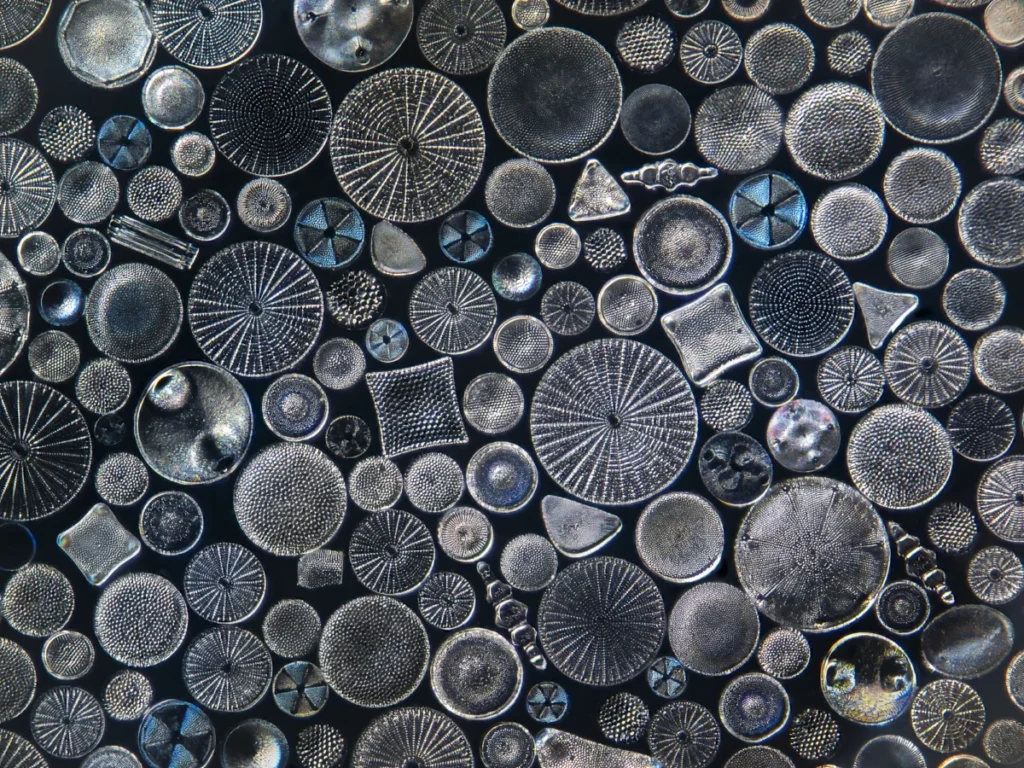
- Tessellations: Repeating shapes that fit together without gaps, such as the scales of a reptile or the cellular structures of microscopic diatoms.
- Spirals: Logarithmic forms found in fossilized ammonites and the arrangement of seeds in a sunflower.
- Flow Patterns: The visual record of forces like wind and water acting upon matter, evidenced in sand dunes and glacial ice.
McCormack’s inclusion of microscopic photography provides a scientific anchor to the more abstract aerial views. Using a technique known as focus stacking, the photographer combines up to 25 separate images of a single specimen to overcome the extremely shallow depth of field inherent in high-magnification photography. This process reveals diatoms and mineral sections with a level of clarity that rivals monumental landscapes, effectively collapsing the viewer’s sense of scale. The message is clear: the elegance of a microscopic organism is no less profound than the grandeur of a mountain range.

Philanthropic Integration and Vital Impacts
Beyond its aesthetic value, the publication serves a pragmatic conservationist purpose. All proceeds from the sale of the book are directed toward Vital Impacts, a non-profit organization founded by National Geographic photographer Ami Vitale. Vital Impacts focuses on two primary pillars: funding direct conservation efforts and supporting emerging storytellers who document the intersection of humanity and the natural world.
The involvement of Vital Impacts underscores a growing trend in the fine art world where photography is utilized as a tool for environmental advocacy. By highlighting the "intelligence" and "speech" of the natural world, McCormack aims to foster a deeper sense of empathy among viewers. The argument presented is that once an observer recognizes the shared structural language between their own world and a distant ecosystem, they are more likely to support the protection of that system.

Exhibition Timeline and Public Engagement
The launch of the book is accompanied by a series of high-profile exhibitions designed to bring McCormack’s vision to a broader audience. The exhibition schedule for 2026 includes:
- April 17 – May 17, 2026: A solo exhibition titled Elements of Wonder: Where Nature Becomes Art will open at CENTER Santa Fe. This gallery setting will focus on the fine-art prints of McCormack’s microscopic and mineral studies.
- April 22 – June 14, 2026: In collaboration with the South Street Seaport Museum and Photoville, McCormack’s work will be displayed in an outdoor installation in New York City. The exhibition will feature 6-by-6-foot "photocubes" placed throughout the South Street Seaport, allowing the public to interact with the images in a large-scale, immersive format.
These exhibitions aim to take the work out of the traditional gallery space and into the public sphere, mirroring the accessibility of the patterns McCormack documents. The outdoor installation at the Seaport, in particular, is designed to contrast the organic geometries of the photographs with the rigid, man-made architecture of Lower Manhattan.

Industry Analysis: The Role of Abstract Conservationism
The release of this book comes at a time when the field of nature photography is undergoing a shift. Traditionally, conservation photography has relied on "shock and awe" tactics—distressing images of habitat destruction or endangered species—to spur action. However, psychological studies on "climate fatigue" suggest that constant exposure to negative imagery can lead to apathy.
McCormack’s approach represents an alternative strategy: "Abstract Conservationism." By focusing on beauty, symmetry, and the intrinsic order of the natural world, the work invites curiosity rather than despair. Experts in environmental communication suggest that this approach may be more effective at engaging audiences who have become desensitized to traditional environmental reporting.

The book also taps into the rising interest in "biophilia"—the innate human tendency to seek connections with nature. As urbanization continues to increase globally, with the UN estimating that 68% of the world population will live in urban areas by 2050, the demand for art that reconnects the viewer with organic forms has surged.
Broader Implications and Legacy
The publication of this work serves as a reminder that the natural world is a living record of time and process. When McCormack speaks of the world "speaking," he refers to the legible traces of chemistry, gravity, and evolution. A ripple in the sand is not just a shape; it is a record of the wind’s velocity and direction. A fossil spiral is a record of a life form that adapted to its environment millions of years ago.

By documenting these "visible traces of forces," McCormack provides a visual bridge between the arts and the sciences. The work suggests that the divide between the two is an artificial construct, and that the same principles of design that humans strive for in art have been perfected by nature over eons.
As the global community faces the challenges of the 21st century—biodiversity loss, climate instability, and environmental degradation—the book advocates for a return to "attentive seeing." It posits that the first step in conservation is not a policy change or a technological fix, but a shift in perspective. By recognizing the recurring geometries and rhythms that connect all things, humanity may find a renewed sense of belonging within the living system it is currently threatening.

The project stands as a testament to the power of constraint. What began as a limitation during a global crisis evolved into a profound exploration of the universal. McCormack’s journey from the vast landscapes of the world to the minute details of a California tide pool serves as a metaphor for the modern environmental movement: a realization that wonder does not depend on distance, but on the quality of attention we pay to the world right beneath our feet.