

The landscape of social media management has undergone a significant shift with the official release of the Buffer Public API, an event punctuated by a unique hardware integration that highlights the burgeoning trend of "ambient computing." This launch, which marks a transition for Buffer toward a more open and extensible ecosystem, was catalyzed by an unexpected collaboration with TRMNL, a company specializing in minimalist e-ink displays. The centerpiece of this collaboration is a new plugin that allows creators and digital marketers to monitor their content queues through a physical, low-power device, moving social media metrics from the browser tab to the physical workspace.
The Genesis of a Serendipitous Integration
The partnership between Buffer and TRMNL did not originate in a corporate boardroom but rather through the independent initiative of a software engineer. Andy Yates, a developer at Buffer, had recently acquired a TRMNL device—a minimalist e-ink screen designed to display curated information without the distractions of traditional monitors or smartphones. As a personal project, Yates developed a private plugin to visualize his own Buffer content queue on the device.
Unbeknownst to the TRMNL team that Yates was an employee of Buffer, they identified his private "Buffer" plugin while scouting for high-quality community-built tools to add to their official ecosystem. When TRMNL reached out to Yates via his personal email to inquire about a public release, the timing coincided perfectly with the final stages of Buffer’s internal development of its public API. This convergence of events accelerated the transition of the plugin from a "personal hack" to an official, production-ready integration.
The Philosophy of Ambient Information and Calm Technology
The integration of Buffer with TRMNL represents a practical application of "calm technology," a design philosophy first articulated by researchers at Xerox PARC in the 1990s. The core tenet of calm technology is that information should remain at the periphery of a user’s attention, moving to the center only when necessary.
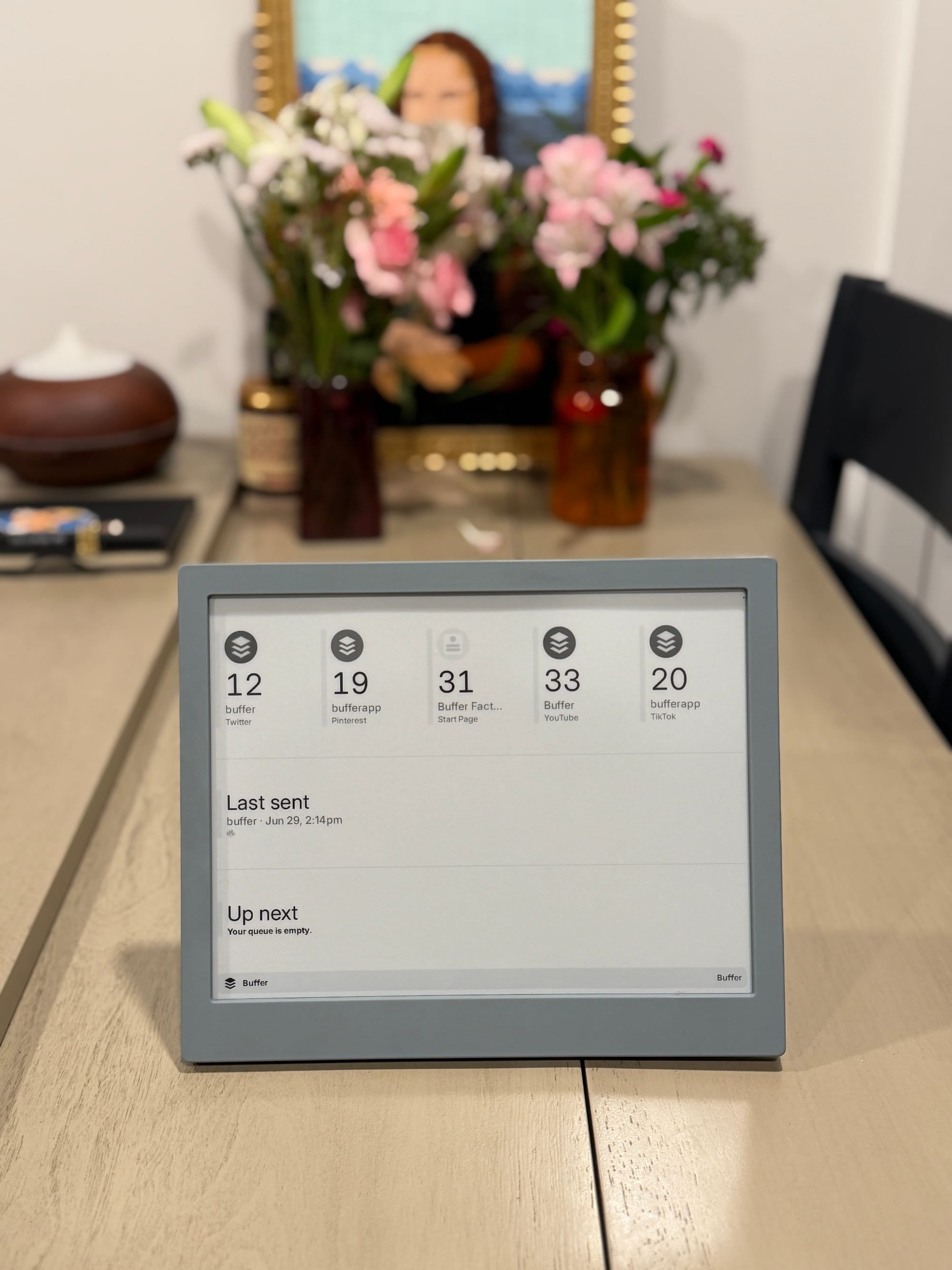
In the context of social media management, users typically interact with their content schedules through "active" retrieval—opening a web browser, navigating to a dashboard, and manually checking for updates. This process often introduces friction and the potential for distraction. By contrast, an ambient display like the TRMNL screen provides a "passive" information flow. The Buffer plugin displays queue counts and upcoming posts in a high-contrast, non-emissive e-ink format that mimics the appearance of paper.
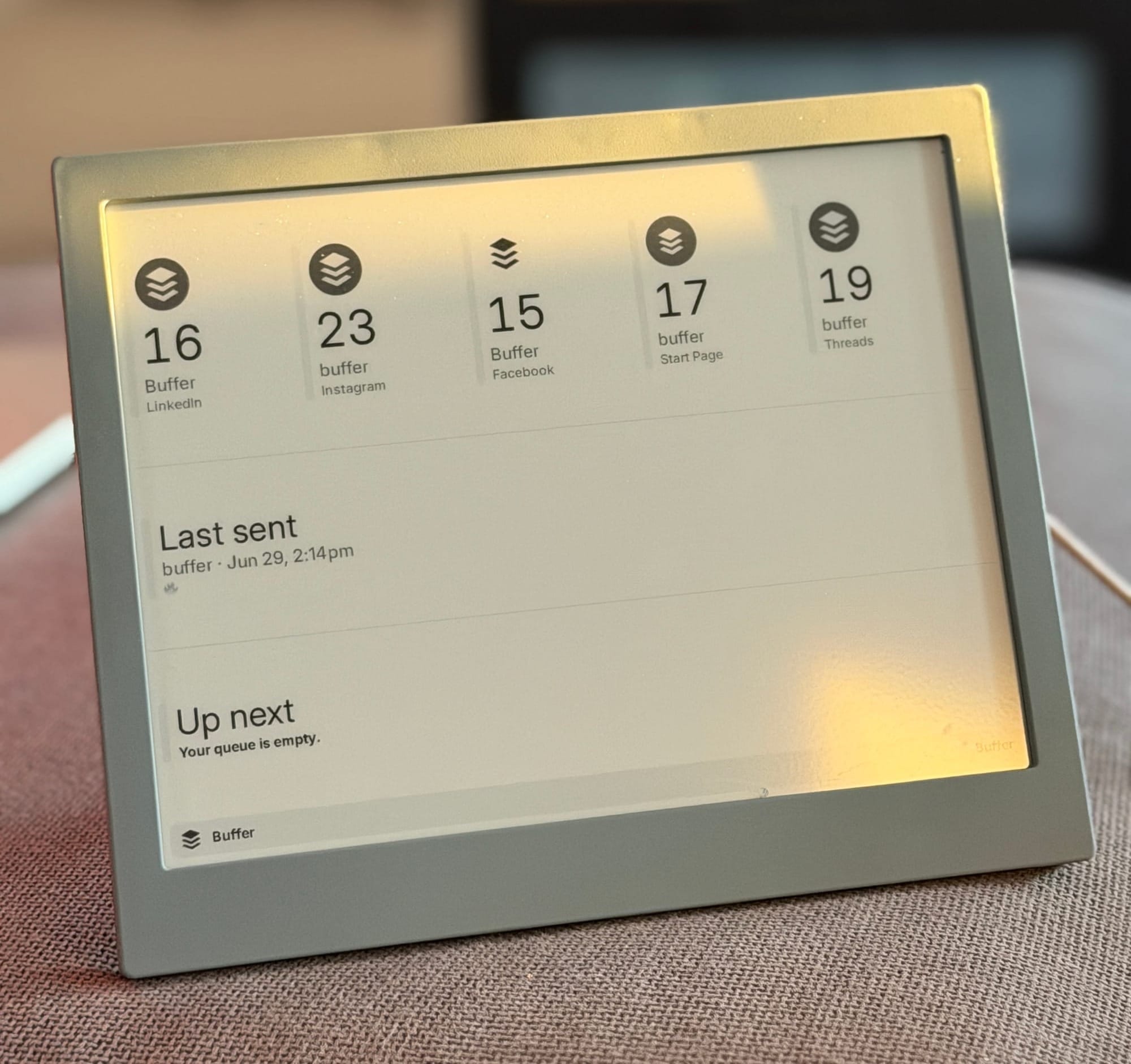
Industry analysts suggest that this shift can reduce the cognitive load on digital creators. Instead of the "jolt" of anxiety often associated with checking a digital dashboard to see if a queue is empty, the ambient display provides a gentle, persistent reminder. It transforms abstract digital data into a physical object on a desk, grounding the user’s workflow in their physical environment.
Technical Infrastructure and Security Standards
The development of the Buffer plugin for TRMNL served as a rigorous real-world test for the new Buffer Public API. To ensure a seamless and secure user experience, the integration utilizes modern web standards that prioritize both developer efficiency and user data protection.
- OAuth 2.0 with PKCE: The plugin connects to the Buffer API using Proof Key for Code Exchange (PKCE). This extension to the OAuth 2.0 flow is specifically designed to secure the authorization process for public and mobile applications, eliminating the need for users to manually copy and paste sensitive API keys.
- Serverless Architecture: The plugin is hosted entirely on TRMNL’s infrastructure. This "serverless" approach meant that the developer did not need to maintain a separate server to bridge the two services, illustrating the ease with which third-party platforms can now build on top of Buffer’s data.
- Collaborative Development: During the move to a public release, Ikraam, a developer from the TRMNL team, collaborated directly with Yates. This partnership resulted in the addition of several features, including an optimized setup flow and enhanced data visualization for the e-ink screen.
- Open Source Contributions: In a move that benefits the broader developer community, the Buffer connector used for the plugin was contributed to TRMNL’s public providers repository. This allows other developers to reuse the foundational code to build entirely different Buffer-related tools for the TRMNL platform, embodying the "build once, reuse often" ethos of open-source software.
Chronology of the Launch and Integration
The timeline of the Buffer Public API launch and the TRMNL partnership reflects a strategic rollout designed to engage both developers and end-users:
- Late Q2 2024: Buffer begins final beta testing of its Public API, aiming to provide a standardized way for third-party developers to interact with its social media scheduling tools.
- Early July 2024: Andy Yates develops the initial private plugin for his personal TRMNL device.
- July 10, 2024: TRMNL scouts identify the plugin and contact Yates, leading to the discovery of the imminent API launch.
- July 13, 2024: Buffer and TRMNL officially launch a joint promotional campaign on LinkedIn and other social platforms. The Buffer Public API becomes generally available.
- July 13 – July 20, 2024: A public giveaway period allows users to enter for a chance to win one of four TRMNL devices and Buffer-branded merchandise.
- July 27, 2024: Winners of the giveaway are announced. Simultaneously, a promotional discount code ("bufferxtrmnl") becomes active for the general public, providing a $10 discount on TRMNL hardware through early September.
Broader Market Implications for the SaaS Industry
The release of the Buffer Public API is a significant move for a company that has long been a staple of the social media toolset. By opening its doors to external developers, Buffer is positioning itself as a platform rather than just a standalone application. This strategy is common among successful Software-as-a-Service (SaaS) companies, such as Slack and Salesforce, which have seen exponential growth driven by their respective app marketplaces.
For the hardware industry, specifically niche e-ink manufacturers like TRMNL, partnerships with established software players like Buffer provide a vital bridge to professional use cases. While e-ink has traditionally been associated with e-readers like the Kindle, the "dashboarding" market is growing as professionals seek ways to manage the "information overload" characteristic of the modern remote and hybrid work era.
The data supports this trend. Recent surveys in the productivity software space indicate that the average professional uses between 10 and 20 different applications daily. The resulting "context switching" is estimated to cost up to 40% of a worker’s productive time. Tools that consolidate information into non-intrusive, ambient formats are increasingly seen as a solution to this fragmentation.
Official Responses and Future Outlook
While official statements from Buffer emphasize the "happy accident" of the TRMNL discovery, the underlying message is one of strategic openness. The company has expressed that the TRMNL plugin is just the beginning of what is possible with the new API. By providing the tools for others to build, Buffer is effectively outsourcing innovation to its community of over 200,000 creators and small businesses.
TRMNL has also lauded the collaboration, noting that the hands-on support from Buffer engineers helped streamline their plugin ecosystem. The company’s focus remains on maintaining a "thriving plugin ecosystem" where developers can quickly deploy calm, minimalist interfaces for a variety of web services.
As the Buffer Public API enters its first full month of general availability, the focus will likely shift to other potential integrations. Possible future developments could include smart home integrations (e.g., changing light colors based on post performance), advanced analytics dashboards for enterprise teams, or specialized mobile widgets.
In conclusion, the launch of the Buffer Public API and the subsequent TRMNL integration serves as a blueprint for how software companies can leverage serendipity and community-driven development. By moving beyond the screen and into the physical environment, Buffer is not only expanding its technical capabilities but also redefining the relationship between the digital content creator and their workspace. The success of this launch will likely be measured by the diversity of the applications that follow in the footsteps of Andy Yates’s "personal hack," further cementing the role of open APIs in the evolution of digital productivity.