
Bridging the Divide: Webflow and the Future of 3D Web Experiences
The project emerged from a fundamental inquiry: could a Webflow site truly host authentic 3D terrain—specifically, actual elevation data (DEMs) draped as a survey-contour mesh and rendered in real-time using Three.js—without sacrificing Webflow’s inherent editability? This question strikes at the heart of a long-standing challenge in web development: how to deliver rich, immersive 3D experiences that are both performant and manageable. Historically, integrating complex 3D graphics into websites has been the domain of highly specialized developers, often requiring bespoke coding environments and meticulous optimization. Webflow, as a leading no-code/low-code platform, has democratized web design, empowering designers and small businesses to create sophisticated sites without deep coding knowledge. Ridgeline’s success in this endeavor demonstrates a powerful synergy, suggesting a future where advanced interactive features become more accessible to a broader range of creators.
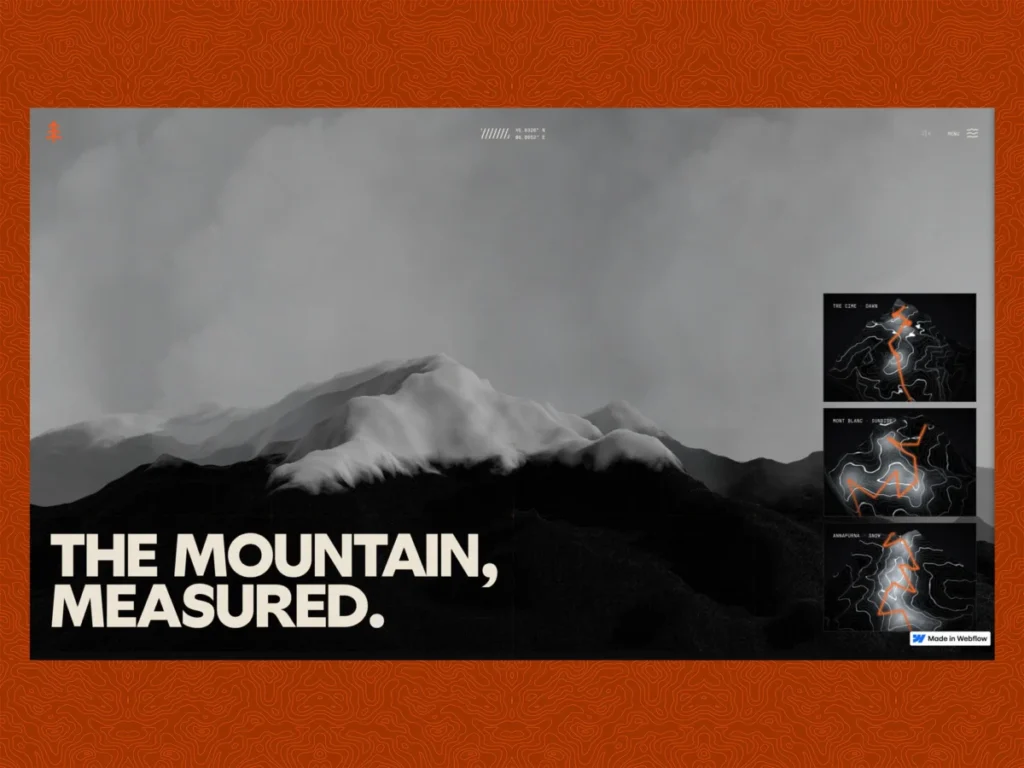
The "Ridgeline" site itself is a testament to this vision, offering three distinct "condition" scenes: "Dawn" depicting a storm over Tre Cime, "Sunrise" capturing blue-hour turning to pink over Mont Blanc, and "Snow" illustrating a night-blue Annapurna with falling snow. Each scene features real geometric data, enhanced by scroll-driven photography and ambient soundscapes. A dynamic atlas homepage provides an aerial tour through the terrain, complete with clickable scene previews, all rendered with impressive realism. The foundational principle guiding the development was clear: "I don’t care if it’s a built-in component or external JS, I want to SEE it." This user-centric rule implicitly dictated the entire architectural approach, prioritizing the visual outcome and immersive experience above rigid adherence to specific component types.
A New Paradigm: AI-Assisted Development and Rapid Prototyping
One of the most remarkable aspects of the Ridgeline project is its accelerated development timeline. The entire site, from conception to a functional demo, was reportedly coded within approximately one week, primarily driven by large language models (LLMs) Claude (Opus 4.8 and Fable 5). This rapid prototyping capability, with AI acting as a primary agent, signifies a potential paradigm shift in web development workflows. The creator utilized an "agentic setup" where Claude drove the Webflow Model Context Protocol (MCP) server, managing pages, components, classes, CSS, variables, custom code, SEO, and publishing. Despite this AI-driven construction, the output remained a completely normal Webflow project, fully editable by a human designer.

This integration of AI into the core development process allowed for unprecedented speed and iterative refinement. The developer maintained a meticulous build log from day one, documenting decisions, successes, and missteps, ensuring that the final write-up offers transparent insights into the real-world challenges and solutions encountered. This approach underscores the growing utility of AI tools not just for code generation but for orchestrating entire development environments and managing complex platform integrations like Webflow’s MCP.
Architectural Choices: React, Webflow, and the Power of Embeds
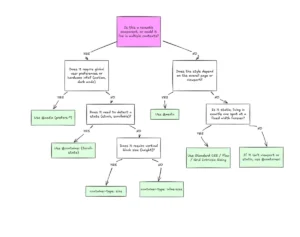
The decision-making process for integrating real-time 3D into Webflow involved carefully weighing two primary approaches for React components: Webflow’s native Code Component (via DevLink or shared library) versus a self-hosted JavaScript embed. While Code Components offer seamless integration within the Designer as first-class elements, the complexity of Ridgeline’s 3D engine—a single, heavy WebGL bundle with its own build step, Three.js, a Blender-baked asset pipeline, and R2-hosted GLBs—made the self-hosted JS embed a more pragmatic choice for this particular project. This trade-off highlighted the flexibility required when pushing the boundaries of a platform.
The embed approach, while lacking the drag-and-drop convenience of a native component, was effectively managed through attribute-driven mounting. Designer-placed host elements (e.g., [data-terrain-scene], [data-terrain-card]) provided hooks for the JavaScript embed to mount into, allowing the designer to control layout and placement while the code managed the complex 3D rendering. This strategic choice allowed for maximum flexibility and performance optimization, avoiding potential bottlenecks or limitations imposed by a more tightly coupled component system for such a graphically intensive application. The underlying principle established for the project dictated that "Markup and CSS live in the Webflow Designer as named components and classes. Behavior, 3D, and animation live in versioned JS on R2. The Designer holds structure; the CDN holds behavior." This clear separation of concerns proved crucial for both maintainability and performance.
Engineering Realism: From Elevation Data to Shader Artistry
The commitment to "real" geometry was non-negotiable. Each terrain in Ridgeline is derived from a Digital Elevation Model (DEM)—specifically, an SRTM elevation dataset—for an actual mountain massif. This data was meticulously modeled in Blender, then exported to glTF (GL Transmission Format), and finally loaded into Three.js. The pipeline for creating these realistic 3D environments involved several critical steps:

- DEM Acquisition and Modeling: Real-world elevation data was used to create accurate topographic representations in Blender.
- glTF Export and Compression: Models were exported to glTF, a format optimized for web delivery. Crucially, Draco mesh compression was applied, dramatically reducing file sizes (e.g., 11 MB to ~1 MB) for static meshes, ensuring faster load times.
- Three.js Integration: The compressed glTF assets were then loaded and rendered within the Three.js framework, the industry standard for 3D on the web.
Even the Blender modeling process benefited from the agentic setup, with AI assisting in model tweaks, streamlining the workflow and eliminating manual round-trips through the UI. The resulting GLB files, typically around 540-580 KB each after Draco compression, proved to be lightweight enough that download speed was never a bottleneck; the primary performance challenges lay in GPU and main thread utilization.
A standout feature of Ridgeline is its distinctive "survey-map" aesthetic, which is not achieved through textures but via a sophisticated fragment shader. This shader dynamically reads the mesh’s world-space height, generating contours, hill-shading, and snow lines. A key technique for maintaining crisp lines at any camera distance is the use of fwidth(), which calculates the anti-alias width in screen space. This ensures lines remain one pixel wide regardless of zoom level, a critical detail for a professional cartographic look. Subtle touches, like a per-pixel dither, were also implemented to combat 8-bit banding in near-black gradients, demonstrating an acute attention to visual fidelity. The same shader, with varying uniform parameters (colors, snow strength, light direction), allows each scene to possess a unique atmospheric quality while sharing a common rendering program.
Optimizing for Fluidity: Animation, Transitions, and Performance
Achieving a locked 60 frames per second (fps) on a highly interactive 3D site is a monumental task, and Ridgeline’s development prioritized performance throughout. The core animation philosophy dictated that React should never re-render on scroll; instead, scroll progress is stored in a ref and accessed within the render loop, preventing unnecessary DOM manipulations. The project leveraged Lenis for smooth scrolling and GSAP (GreenSock Animation Platform) for robust animation control.
One notable optimization involved the "frame-collapse" section, where a full-screen image transitions into a smaller plate. The initial pitfall was animating width and height, which forced continuous re-cropping and visible jumps. The solution involved maintaining a fixed aspect ratio box, sized once to cover the viewport, and animating it purely via transform: scale. This eliminated per-frame layout computations, resulting in a smooth, performant transition. Lessons were also learned regarding CSS drift animations: any animation toggled mid-scroll must start from the element’s resting (identity) state to avoid jarring "pops."
Seamless page transitions presented another complex challenge. Ridgeline employs a PJAX (PushState AJAX) swap mechanism beneath a WebGL "flood" cover—a topographic-contour reveal that sweeps in, holds, and then drains. Crucially, the terrain canvas maintains a single, persistent WebGL context across navigations, rather than tearing down and recreating it. This prevents "evicted contexts" and black flashes that plague many web 3D applications. Even with this, a subtle problem remained: the flood drained when the new mesh was parsed, but before its shader had compiled, leading to main thread stalls. The fix involved compileAsync, which utilizes the parallel-shader-compile extension to offload heavy shader compilation work to a separate thread. This ensures the scene is GPU-ready before the reveal completes, eliminating noticeable freezes.

Performance analysis, aided by a custom in-page FPS profiler, guided these optimizations. This tool allowed developers to pinpoint exact frame rate drops by scroll depth, transforming vague "jankiness" into actionable data. Key performance wins, achieved without sacrificing visual quality, included:
- GPU Snowfall: Particle positions uploaded once, with the shader handling falling and wrapping logic.
- Culling Invisible Elements: Disabling transforms and rendering for off-screen elements.
- Efficient Canvas Rendering: Only rendering canvases when visible or active.
- Reduced DOM/CSS Work: Minimizing operations that trigger layout recalculations.
These efforts collectively propelled the homepage intro from 46fps (min 33) to a stable 60fps (min 56), and eliminated a ~1000ms freeze on the summit reveal, showcasing that the fastest frame is indeed the one that does no unnecessary work.
User Experience and Discoverability: Polishing the "Seams"
Beyond raw performance, a polished user experience hinges on addressing the "seams"—the transitional moments between states. Ridgeline meticulously tackles issues like the first-paint flash, where a plain background might briefly appear before the preloader. This was resolved by injecting synchronous CSS into Webflow’s <head> custom code to hide elements and set a dark background immediately, before JavaScript loads. A failsafe timeout ensures the page doesn’t remain blank if JS fails to load.
The audio experience also received careful attention. Browsers typically block autoplay until a user gesture, so Ridgeline integrates an explicit "Enter" or "Enter-muted" choice into its preloader, which doubles as the gesture to unlock the ambient audio bus. Once unlocked, each scene plays subtle, atmospheric audio that enhances immersion without being intrusive, following the principle that "sound should be the thing you’d miss if it were gone, not the thing you notice when it’s there."
Finally, Ridgeline does not compromise on content discoverability. Despite its technical complexity, the site maintains editable CMS Collections for editorial content, ensuring flexibility. Clean semantic markup, precise per-page titles, and meta descriptions, coupled with the fast Core Web Vitals resulting from performance optimizations, make the site highly accessible to search crawlers and AI answer engines (AEO). This commitment to "real content in real HTML, loading fast" ensures optimal readability for both human users and automated systems.
Broader Implications and Future Outlook

Ridgeline stands as a powerful demonstration of what’s possible at the intersection of advanced web graphics, no-code platforms, and artificial intelligence. It challenges the conventional wisdom that high-performance, real-time 3D is incompatible with the accessibility of platforms like Webflow. For the web development community, this project offers invaluable lessons in performance optimization, complex system integration, and the strategic application of AI in accelerating development cycles.
The success of Ridgeline could inspire a new wave of interactive web experiences, pushing designers and developers to rethink the boundaries of what’s achievable on the web. It suggests a future where immersive storytelling, data visualization, and interactive product showcases can be crafted with greater efficiency and sophistication, potentially opening new avenues for digital agencies and in-house development teams. The rapid, AI-driven development also hints at a future where development is more about orchestrating intelligent agents and making high-level architectural decisions, rather than meticulously writing every line of code.
As the creator reflected, the most recurring lesson was that "it compiles" is not "it’s done." The critical fixes and optimizations came from observing the actual rendered page, highlighting the enduring importance of real-world testing and a meticulous eye for detail in delivering truly exceptional user experiences. Ridgeline is not merely a website; it is a benchmark, signaling a future where the digital landscape becomes increasingly dynamic, immersive, and accessible to a wider spectrum of creators.