

When complex digital marketing strategies threaten to overwhelm professionals, visual storytelling has consistently proven to be the fastest route to clarity. Over a publishing span exceeding fifteen years, digital marketing agencies and thought leadership platforms have relied heavily on custom charts, analytical graphs, and structural diagrams to simplify intricate concepts. Today, the industry faces an unprecedented shift in consumer behavior, search algorithms, and content creation technologies, making the need for clear visual frameworks more critical than ever.
An expansive compendium of 59 diagrams and data-backed charts has been curated to address the most challenging aspects of modern marketing. Organized across core disciplines—ranging from traditional content strategy and search engine optimization to social media dynamics, web design, and data analytics—these visual tools serve as a bridge between abstract theoretical concepts and actionable execution. Marketers are increasingly turning to these resources to streamline planning, optimize conversion funnels, and adapt to the rapid integration of artificial intelligence across digital channels.
The Evolution of Content Marketing and AI Integration
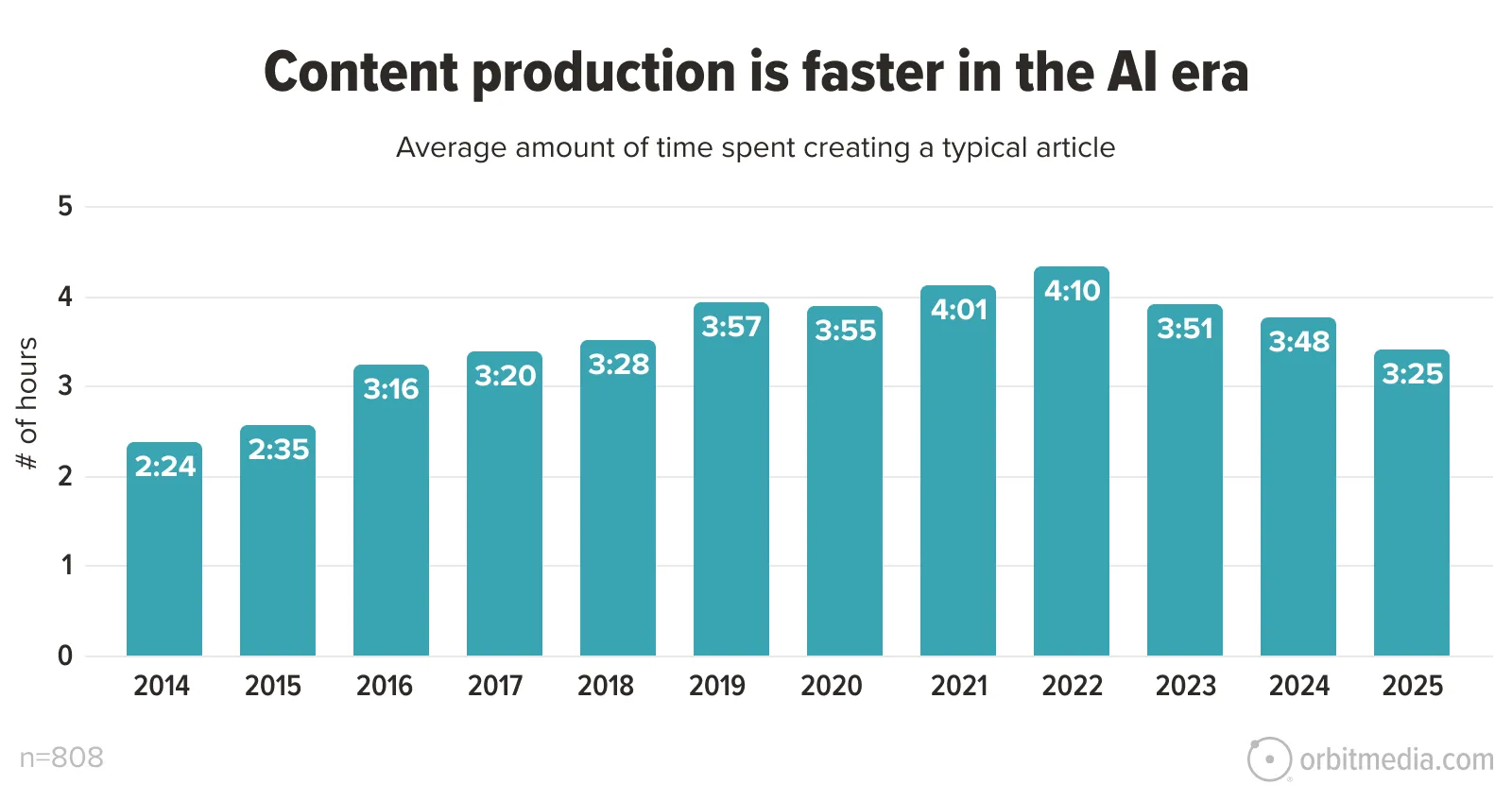
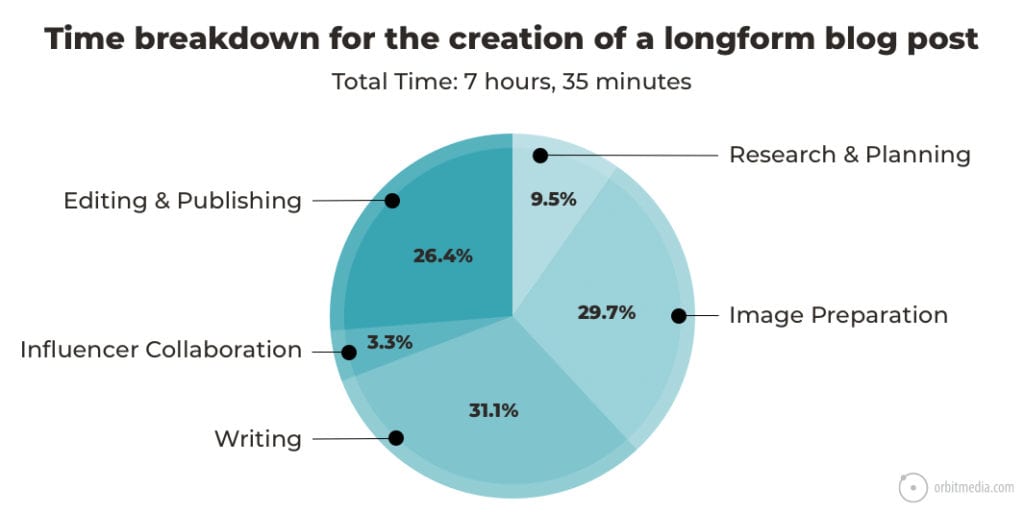
Content marketing has undergone a dramatic transformation, driven heavily by changes in time investments and technological adoption. Annual industry surveys tracking the average time required to write a single blog post reveal significant fluctuations over the past decade. Creators peaked in their time investment around 2022, spending an average of four hours and ten minutes per article. By 2025, that metric stabilized downward to approximately three hours and twenty-five minutes, largely due to efficiency gains provided by artificial intelligence tools.
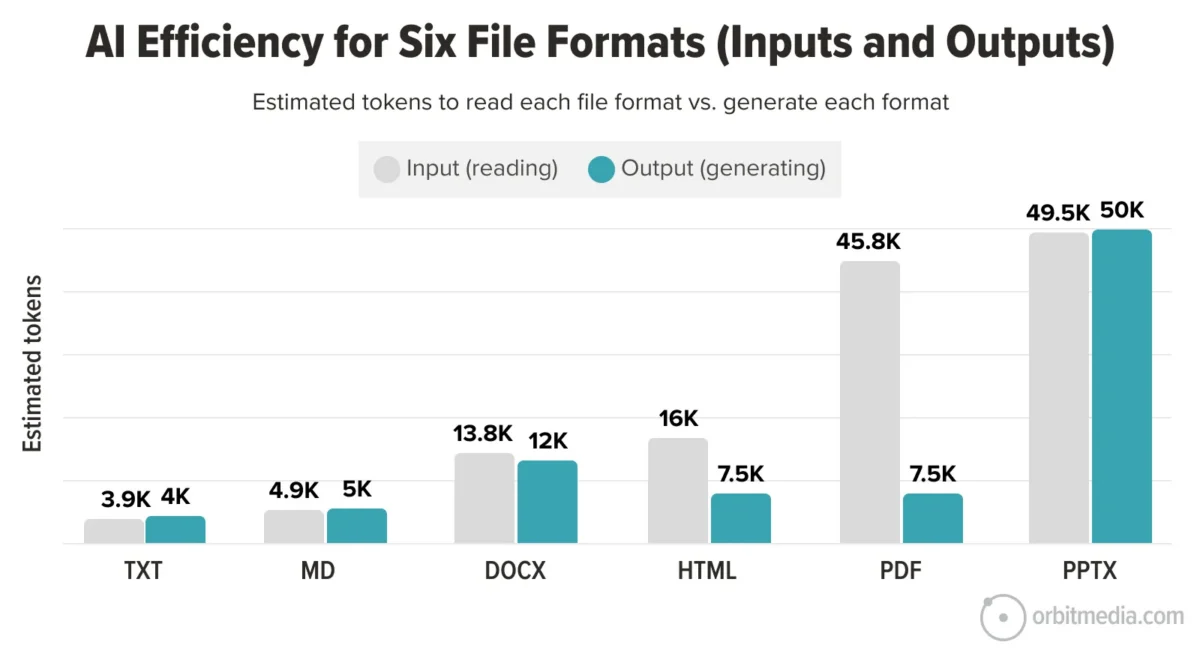
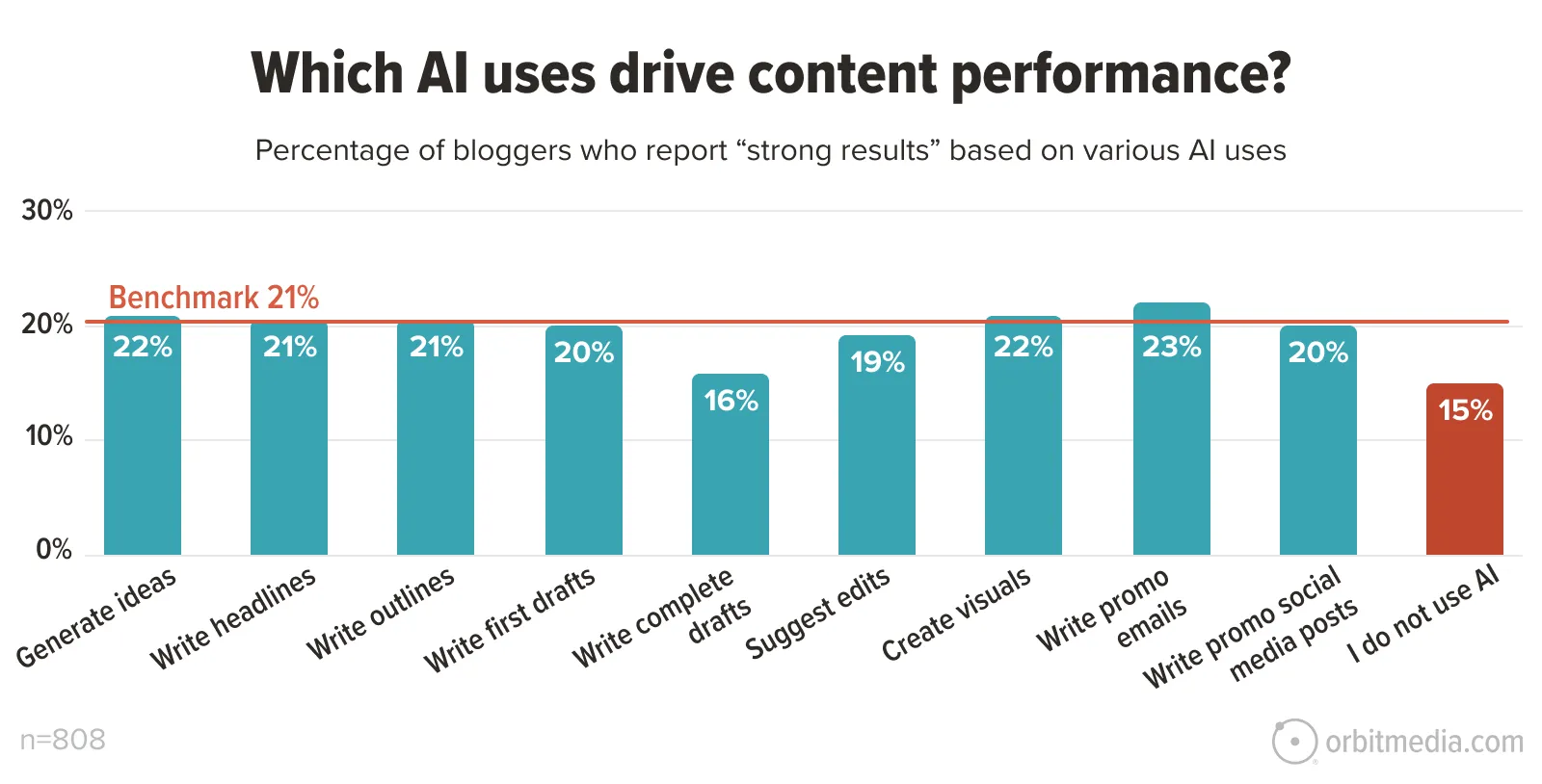
However, the integration of AI into content workflows requires a balanced approach. Data shows that marketers who rely on AI for everything, as well as those who reject it entirely, drive the weakest results. The optimal performance zone lies in the middle. Specific AI use cases, such as brainstorming general concepts, currently yield the highest satisfaction rates among blogging professionals, hovering above a 23% success benchmark. Furthermore, considerations regarding AI operational efficiency—such as evaluating the token and carbon footprints of various file formats like TXT, Markdown, DOCX, HTML, PDF, and PPTX—have become essential components of sustainable digital operations.
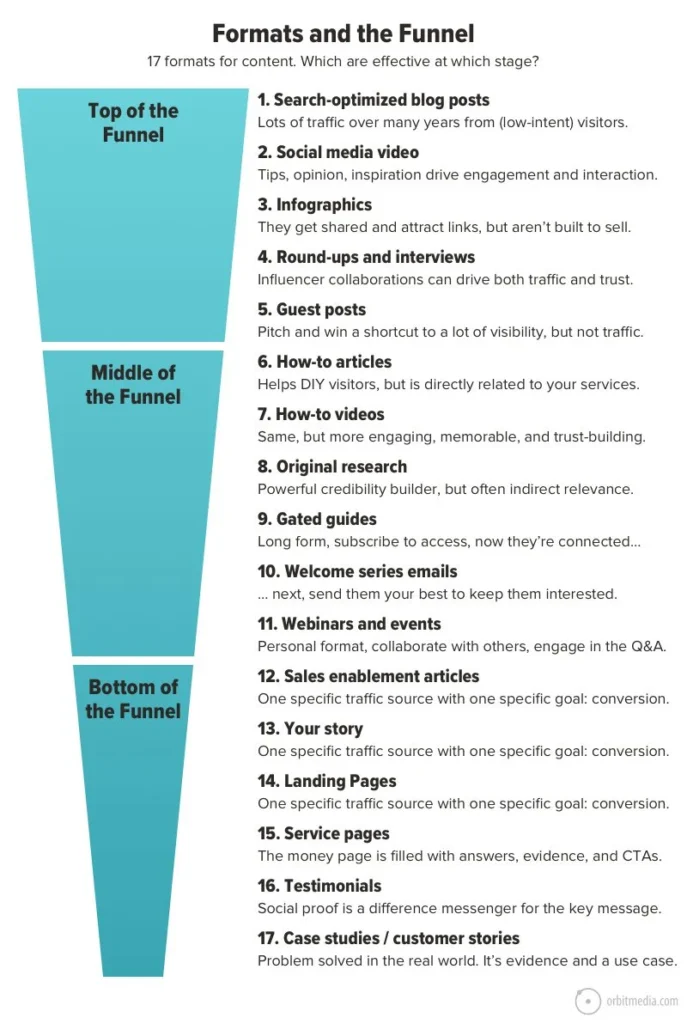
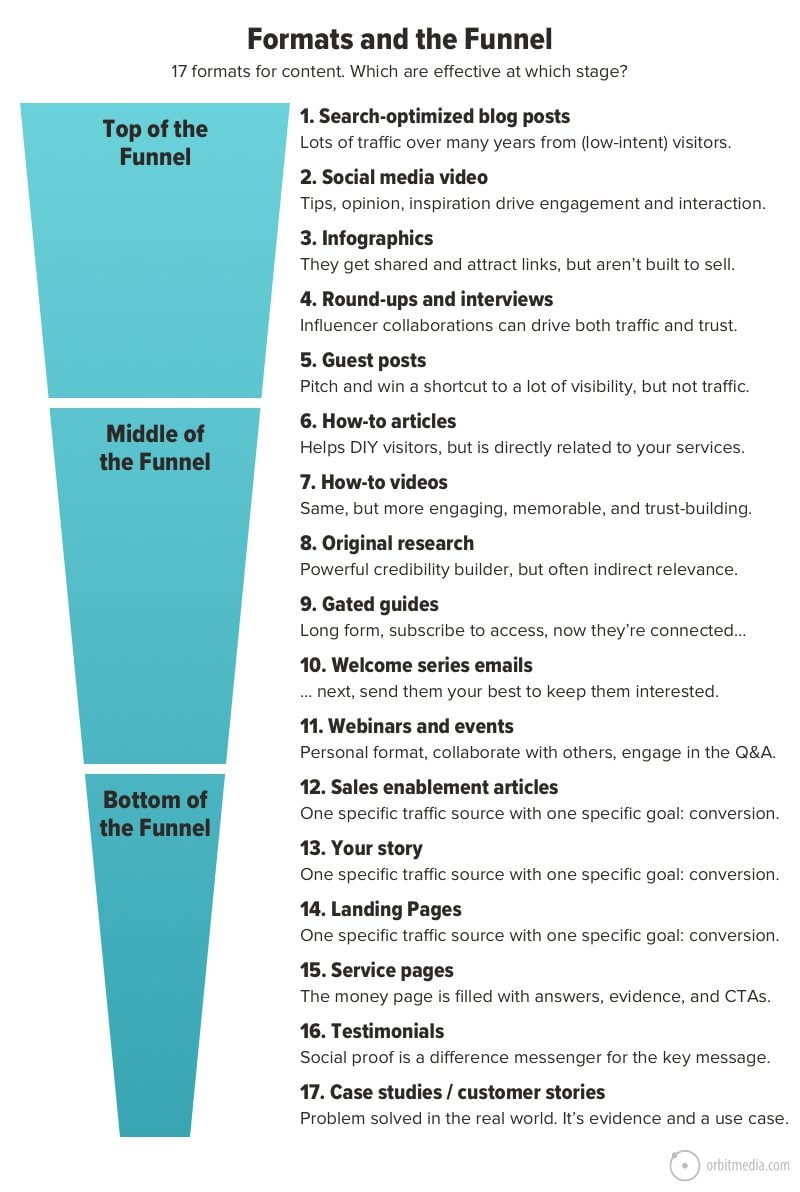
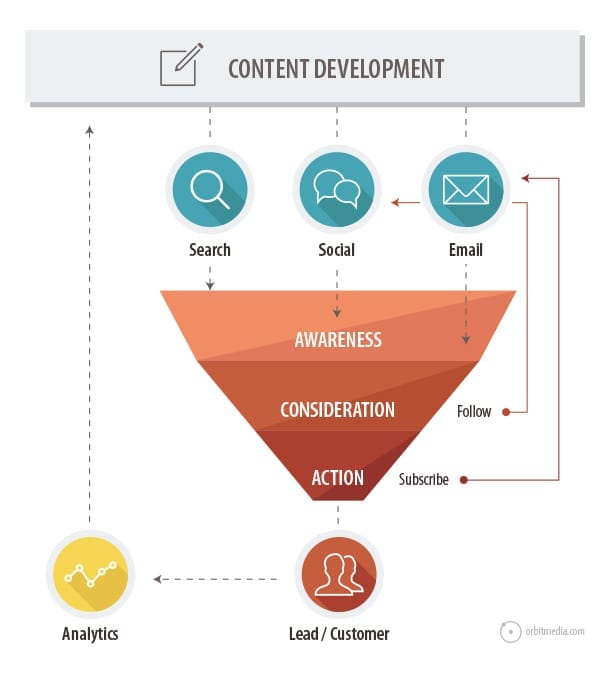
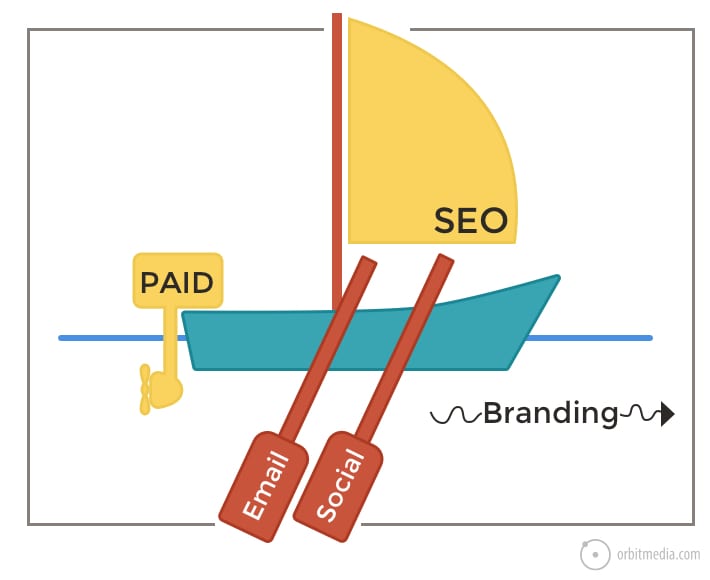
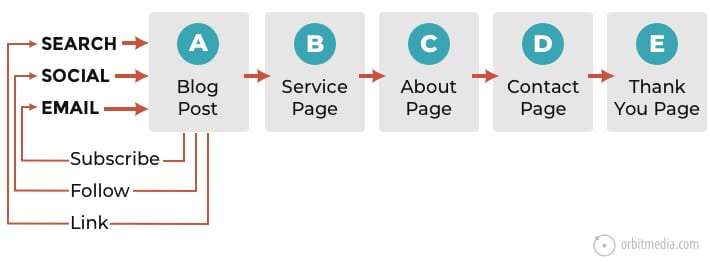
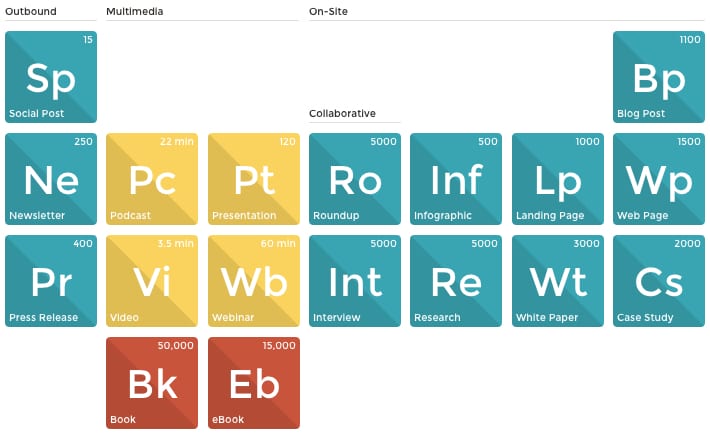
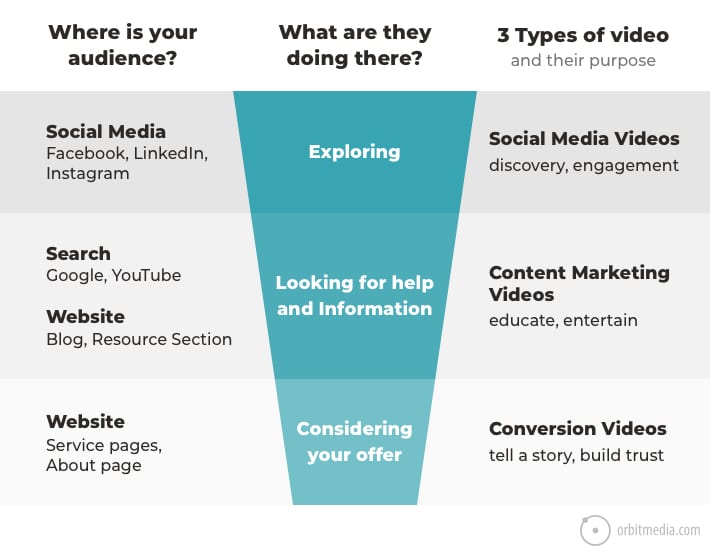
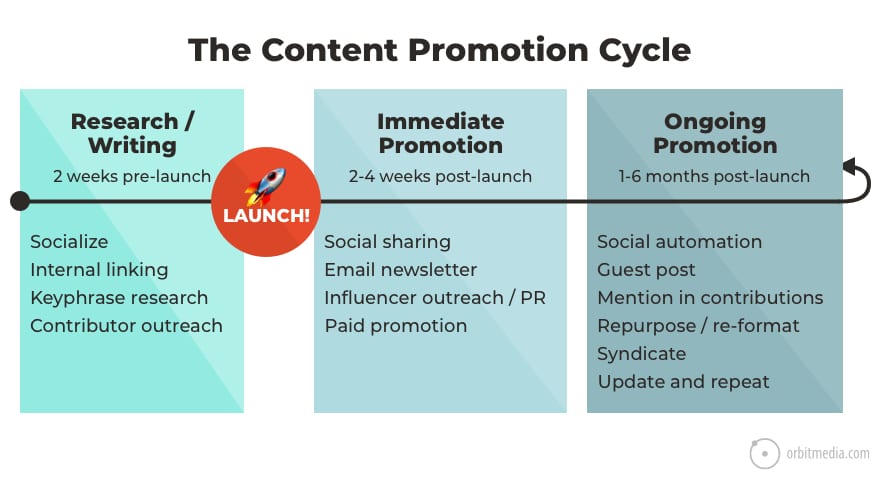
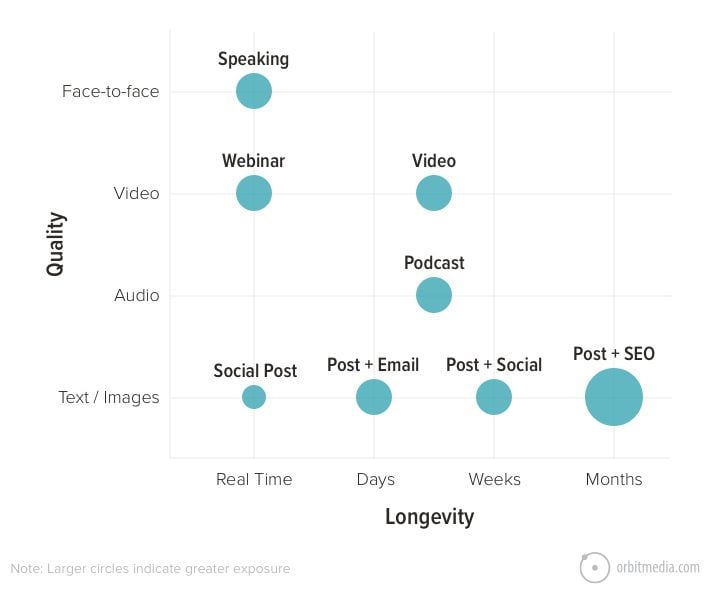
The shift in content development also emphasizes the importance of promotional mechanics. Industry analyses consistently demonstrate that the best-promoted content outperforms superior content with poor visibility. Successful promotion relies on aligning content formats with specific stages of the marketing funnel. Search engine optimization primarily drives early-stage awareness by acting as a discovery engine; social media bridges awareness and consideration through community interaction; and email marketing builds deep consideration and trust through direct, permission-based communication.
Navigating the Transition from Traditional Search to AI Search Optimization
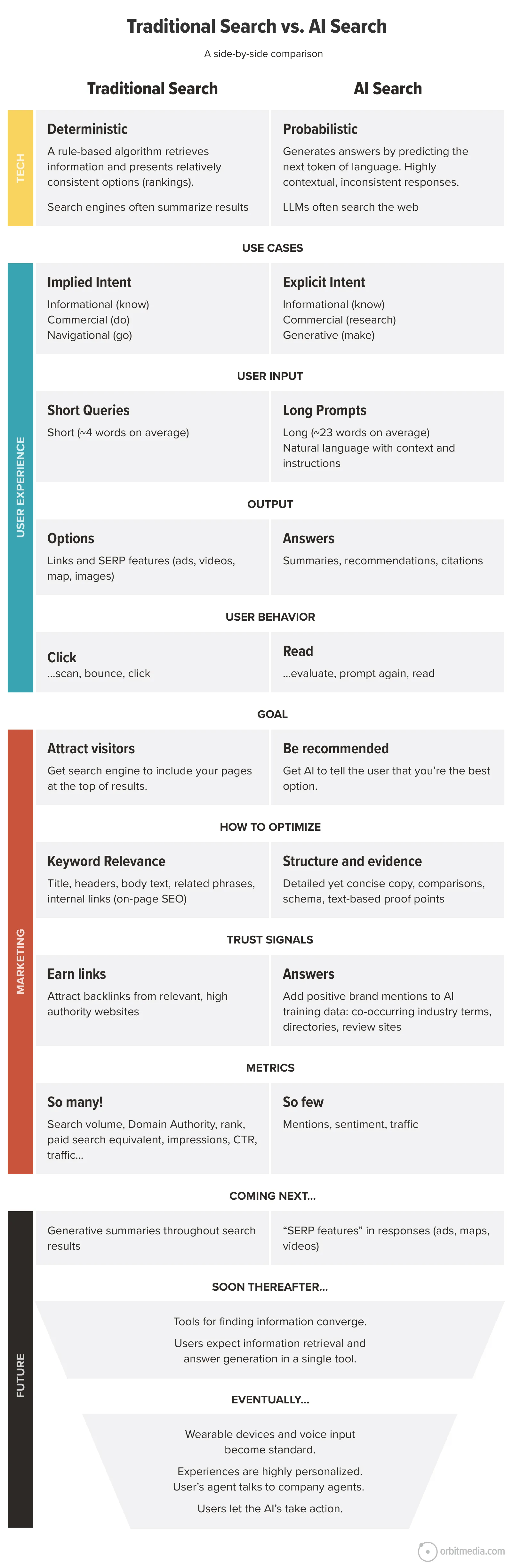
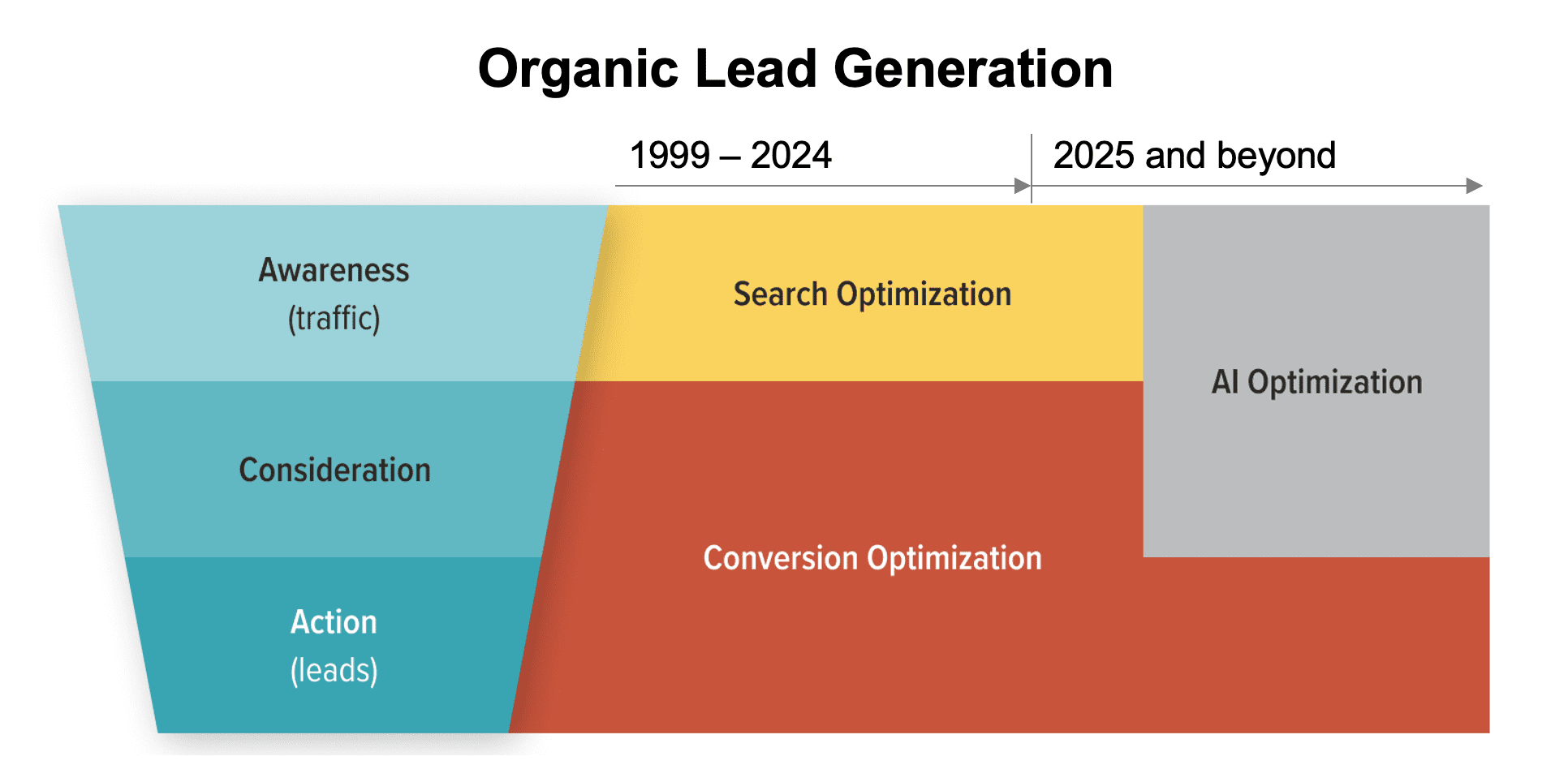
Perhaps the most profound disruption in digital marketing is the paradigm shift from traditional search engines to conversational AI platforms. While traditional search engines focus on ranking and generating clicks by presenting users with a list of options, AI search engines evaluate those options, compare them, and deliver direct recommendations based on user context. This fundamental change moves optimization strategies deeper into the lead generation funnel.
Within the search engine optimization community, terminology surrounding this transition remains fluid. Recent industry analyses indicate that professionals describe this emerging optimization practice using several different monikers: Generative Engine Optimization (GEO) leads preference at 34%, followed closely by Answer Engine Optimization (AEO) at 28%, AI SEO at 22%, and Large Language Model Optimization (LLMO) at 11%. Despite debates over nomenclature, the underlying operational focus remains consistent: establishing brand authority and contextual relevance so that AI models recommend the brand during conversational research queries.
Consumer behavior data reflects this ongoing evolution. Studies tracking research habits indicate that over half of users now begin their preliminary research using AI chat tools rather than traditional search engines, particularly when seeking step-by-step instructions or complex explanations. The only notable exception remains local search, where geographic mapping integration keeps traditional search engines dominant for location-based queries.
Balancing Authority, Relevance, and User Engagement

Despite the rise of conversational AI, foundational SEO principles continue to govern organic visibility. The two primary ranking factors remain authority and relevance. Domain authority, which is heavily influenced by high-quality backlink profiles and digital PR campaigns, determines a website’s capacity to rank competitively. Link reclamation strategies—identifying unlinked brand mentions and converting them into functional backlinks—continue to provide high-return opportunities for SEO practitioners.
Keyword targeting has similarly evolved through intent-based classification frameworks. Understanding whether a keyphrase signifies a "KNOW," "DO," or "GO" intent allows content creators to align their pages with the exact psychological state of the user. Additionally, search engines increasingly factor post-click user behavior into ranking algorithms. High dwell time and long clicks signal valuable content satisfaction, whereas "pogosticking"—where users quickly bounce back to the search results page—indicates poor user experience and inadequate content relevance.
Social Media Dynamics and the Spam Challenge
Social media marketing requires navigating distinct platform environments, particularly regarding audience trust and platform integrity. Recent analyses tracking spam rates across major social networks highlight stark contrasts in user experience. Platforms like X (formerly Twitter) have reported higher percentages of user-encountered spam and suspicious accounts compared to more professional or community-centric networks, directly impacting engagement rates and brand safety considerations.
To maintain effective social media streams, experienced marketers adhere to structured frameworks such as the "Rule of Thirds," balancing promotional messaging with educational content and community engagement. Furthermore, influencer marketing strategies have matured beyond mega-celebrities. Brands now leverage a tiered approach encompassing macro, micro, and nano-influencers, recognizing that organic advocacy within niche networks often drives higher conversion rates and stronger trust signals than broad, untargeted campaigns.
Web Design, User Experience, and Conversion Psychology
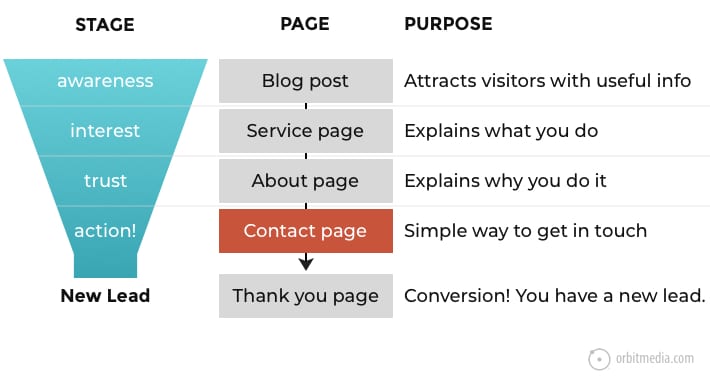
The ultimate objective of digital marketing traffic is conversion. Web design and user experience (UX) diagrams emphasize that conversion rates are determined by a delicate balance between visitor motivation and web friction. Clear messaging, robust visual hierarchy, and the strategic use of color contrast guide the user’s eye toward primary calls to action.
High-performing web pages consistently support their claims with tangible evidence. Research comparing unsupported marketing claims to evidence-driven pages—those featuring verified customer testimonials, industry awards, third-party data, and professional headshots—demonstrates a dramatic increase in user trust and form submissions. Specific structural frameworks for About pages, Contact pages, and B2B service pages provide web designers with actionable checklists to eliminate friction, answer visitor questions proactively, and align page architecture with the psychological path to conversion.
Data-Driven Decision Making and Analytics
Measurement and analysis form the backbone of modern marketing strategies. Industry experts emphasize a critical distinction between reporting and analysis: static reports generate numbers, while actionable analysis generates business decisions. Effective marketers utilize Google Analytics and alternative user research methodologies—such as usability testing, heatmaps, and customer surveys—to form testable hypotheses rather than relying solely on intuition.
By establishing structured workflows for testing marketing assumptions, organizations can systematically identify underperforming assets, validate strategic changes, and scale successful campaigns. The integration of comprehensive campaign tracking codes ensures that post-click data accurately reflects the journey from initial discovery to final conversion.

Implications and Future Outlook
The continuous development of digital marketing methodologies underscores the enduring value of visual communication. By translating complex data sets, multi-step funnels, and abstract theories into standardized diagrams, marketing teams can accelerate internal alignment and improve external audience engagement. As artificial intelligence, search algorithms, and consumer preferences continue to evolve at a rapid pace, the strategic deployment of clear, data-backed visual frameworks will remain an indispensable asset for organizations navigating the modern digital landscape.