
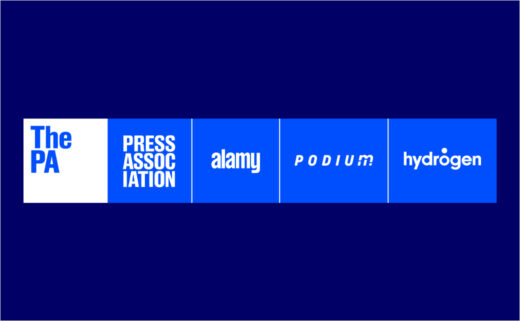
In a definitive nod to its illustrious 158-year history, the UK and Ireland’s premier national news agency, PA Media, has announced a major strategic overhaul that will see the organization revert to its historic moniker: the Press Association. Simultaneously, its parent corporate entity, PA Media Group, is transitioning its identity to simply "The PA."
Unveiled in October 2026, this comprehensive rebranding initiative encompasses a newly designed visual identity, completely revamped digital platforms for both the news agency and its corporate parent, and a renewed philosophical commitment to foundational journalistic integrity. Crafted in partnership with the design agency Significant, the visual refresh replaces the previous branding established in 2019 by Seb Evans Design, which was originally introduced to commemorate the company’s 150th anniversary.
By reclaiming the Press Association name, the organization is making a deliberate statement about the value of independent verification, factual accuracy, and traditional reporting standards in an era increasingly dominated by algorithmic noise and digital speculation.
A Strategic Return to Heritage in an Age of Misinformation
The decision to retire the "PA Media" brand in favor of the historic "Press Association" is far more than a superficial cosmetic change; it represents a calculated institutional response to the shifting modern media landscape. In an environment where the line between verified journalism and unvetted opinion is increasingly blurred by social media algorithms, leadership believes that heritage names carry a unique weight of authority.
Emily Shelley, CEO of The PA, emphasized this core philosophy during the brand launch. "The rebrand comes at a time when trust in news has never been more important. As the media industry navigates change, the Press Association is increasingly relied upon as a bedrock of trusted, independent content," Shelley stated.
She further underscored the cultural urgency driving the shift, noting that audiences frequently struggle to discern fact from speculation online. "This feels like the right moment to return to our roots, because they’ve never been more important. In an age where audiences are struggling to trust what they see and hear, and algorithms promote speculation and opinion over fact, we are bringing back a mark of quality, independence and verification — our name," Shelley explained.
By reasserting the Press Association banner, the leadership team aims to reinforce the irreplaceable value of the professional press not only for direct consumers of news, but for its extensive network of commercial customers, shareholders, and the broader public.
Chronology of Identity: From Fleet Street Staple to Modern Multi-Platform Group
To understand the weight of the 2026 rebrand, it is essential to examine the historical trajectory of the institution. Founded in 1868 by a group of provincial newspaper proprietors, the Press Association was established to provide a reliable, cooperative supply of national and regional news across the United Kingdom. For well over a century, the name became synonymous with the backbone of British journalism, supplying court reports, political developments, sports scores, and breaking news flashes to newsrooms across the nation.
As the media industry underwent massive technological transformation—shifting from physical wire services to digital feeds, multi-media content packages, and data-driven journalism—the organization sought to modernize its corporate image.
- 2019 Milestone: To mark its sesquicentennial (150th) anniversary, the organization rebranded from the Press Association to "PA Media," with the parent company becoming "PA Media Group." Created by Seb Evans Design, this identity sought to position the agency as a forward-looking, cross-platform provider of text, images, video, and data services for the digital age.
- 2026 Pivot: Just seven years later, management recognized that while the digital capabilities of the agency must remain state-of-the-art, its brand equity was most powerfully anchored in its historic legacy. The transition back to the Press Association—alongside "The PA" corporate banner—represents a synthesis of modern multi-media prowess with foundational, trusted branding.
Design Execution and Digital Overhaul
The visual transformation executed by design agency Significant bridges the gap between historical gravitas and contemporary digital usability. The updated visual identity is engineered to perform seamlessly across high-definition screens, mobile applications, social media channels, and traditional print formats.
The digital overhaul is comprehensive:
- The Press Association Website: Completely re-engineered to showcase the agency’s primary news-gathering operations, offering streamlined navigation for media subscribers, editors, and corporate clients seeking verified text, imagery, and video content.
- The PA Corporate Portal: A dedicated digital ecosystem for PA Media Group (now operating as The PA) and its subsidiary operations, providing investors, partners, and stakeholders with transparent access to corporate updates, commercial services, and governance details.
- Typography and Signage: The refreshed typography sheds the ultra-minimalist trends of the late 2010s in favor of bolder, more authoritative lettering that evokes the gravitas of traditional newsrooms while maintaining clean, modern legibility.
Industry Implications and Broader Impact
The decision by a major news agency to roll back a recent modernization effort in favor of a traditional name reflects a broader macro-trend across the global media and publishing industries. As generative artificial intelligence, deepfakes, and click-driven social algorithms flood the information ecosystem, established news brands are realizing that their most valuable asset is institutional trust.
Media analysts note that the Press Association occupies a unique position in the UK and Irish media ecosystem. Serving as a wholesale supplier of news to almost every major national and regional publisher, the agency’s internal standards directly influence the wider public discourse. By leaning explicitly into its historic identity as an association of the press, the organization is publicly reaffirming its commitment to rigorous fact-checking, editorial independence, and accountability.
Furthermore, this rebranding serves as a case study in brand evolution. While tech startups and digital-native companies often prioritize sleek, abstract naming conventions, legacy institutions possess a rare heritage that, when deployed strategically, can cut through market fatigue. By declaring that its roots have "never been more important," The PA has signaled to the industry that authenticity and historical pedigree are powerful competitive advantages in the twenty-first-century information economy.