
The digital landscape is undergoing a tectonic shift, moving away from the rigid, menu-heavy architectures that have defined the internet for decades toward a new paradigm of intent-driven experiences. Since the mid-1980s, when the Xerox Star and the Apple Macintosh cemented the Graphical User Interface (GUI) as the standard for human-computer interaction, software has demanded that users act as the primary orchestrators of digital tasks. This "point-and-click" contract forced users to learn the internal logic of applications, navigating complex funnels, pop-up windows, and endless configuration tabs to achieve simple goals. Today, however, that model is being dismantled by the rise of Large Language Models (LLMs) and autonomous AI agents, ushering in an era where the most sophisticated interface is, increasingly, no interface at all.

A Chronology of the Interface Evolution
To understand the current pivot toward invisible design, one must first recognize the constraints of the last forty years. In the 1980s, the priority was accessibility; developers needed a visual metaphor to bridge the gap between human users and complex machine code. The GUI provided this, turning abstract commands into icons, menus, and windows. This era, while revolutionary, created the "labyrinthine" web.
By the early 2000s, the rise of the browser-based web solidified this model. The standard user journey became a high-friction sequence: landing pages, navigation bars, cookie consent modals, search filters, and checkout flows. During the 2010s, this reached a peak in "Dark Pattern" design, where websites were intentionally architected to keep users engaged for longer periods to drive advertising revenue and data collection.
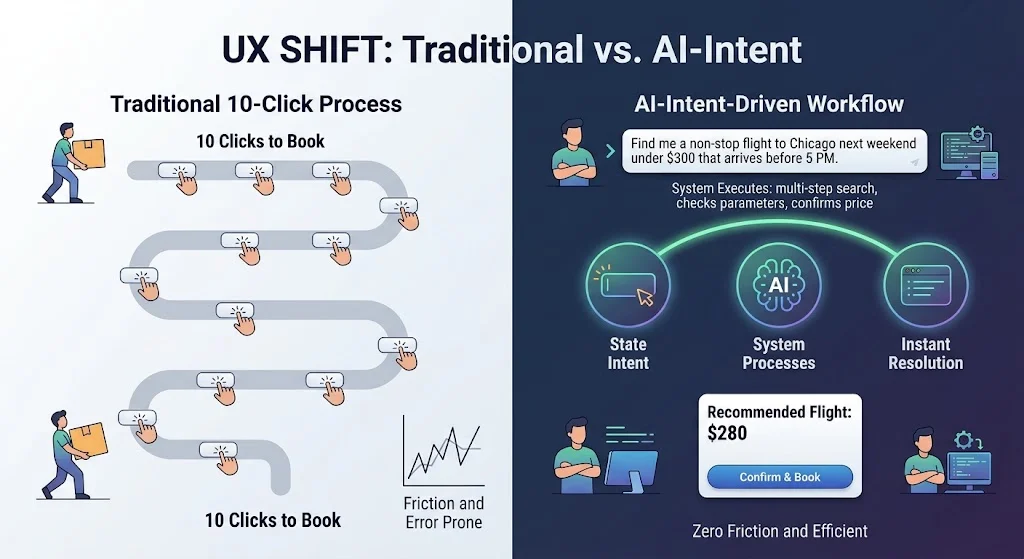
The current transition began in earnest around 2022 with the widespread adoption of transformer-based AI models. These systems shifted the computer’s role from a passive repository of data to an active processor of intent. Instead of searching for a flight via a travel aggregator’s 12-step form, a user can now state a complex goal to an AI agent, which executes the search, filters by parameters, and presents a finalized resolution. This represents a fundamental change in the "HCI" (Human-Computer Interaction) contract: the machine now does the work that was previously forced upon the user.
The Friction Cost: Quantifying the Shift
The traditional "10-click" process is not just a nuisance; it is a measurable drain on productivity. Data from modern usability studies suggests that when a user is forced to navigate through multiple interface layers, the "cognitive load"—the amount of mental effort required to use the system—increases exponentially. For every additional click or decision point in a standard web funnel, abandonment rates rise by approximately 15% to 20%.

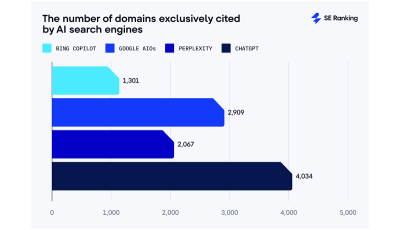
Intent-driven design aims to reduce this friction to near zero. By replacing a series of static buttons with a single natural language input, platforms are observing a significant increase in task completion speed. For instance, in comparative tests between traditional search engines and generative AI-driven answer engines, users typically reach their desired information in 30% less time. The goal is "seamless completion," where the software anticipates the user’s next step before they have to manually trigger it.
Three Pillars of the New Paradigm
The transition to intent-driven web design is built on three core pillars that replace traditional interaction models:
1. High-Level Goal Specification
In the traditional model, a user acts as a technician, selecting filters and parameters. In the new model, the user acts as a manager, stating the desired outcome. This relies on the system’s ability to interpret context—such as time of day, location, and historical preferences—to fill in the gaps without asking the user to manually configure settings.
2. Generative User Interfaces (GenUI)
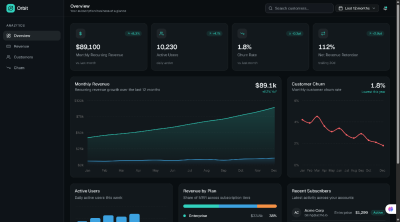
Perhaps the most radical departure from traditional design is the move away from static layouts. In the old paradigm, a website’s appearance was fixed; everyone saw the same navigation bar and footer. With Generative UI, as seen in tools like Vercel’s v0, the interface is created on-the-fly. If a user asks for a financial forecast, the platform generates a custom, functional calculator widget. Once the task is completed, that interface element disappears. This ensures that the screen is never cluttered with tools the user does not need at that specific moment.
3. Autonomous Agent Execution
The traditional interface is built on "prevention"—the constant barrage of warning dialogs and confirmation boxes. While necessary in a manual system, these become bottlenecks in an autonomous one. The new paradigm replaces these with "reversibility." Instead of asking "Are you sure?" before every action, the system executes the action and provides a clear, highly visible "Undo" path. This shift is based on the principle that it is faster to fix a mistake than it is to prevent one through constant user intervention.
Industry Implications and Ethical Challenges
The transition is not without significant risk. Industry experts, including those from the Stanford HCI Group, warn that the "Black Box" problem remains a critical hurdle. When a system executes a task on a user’s behalf, the user may not understand how the system reached its conclusion. To combat this, organizations like the Google PAIR (People + AI Research) team have advocated for "transparency loops." These are design patterns that display the AI’s thought process in real-time, allowing users to verify that the agent understood their intent correctly before it executes a high-stakes action.
Furthermore, there is a looming ethical concern regarding "manipulative defaults." If a platform can predict user intent, it can also influence it. The Center for Humane Technology has highlighted that as interfaces become more invisible, the responsibility of the designer shifts from creating beautiful buttons to ensuring that the AI’s autonomous decisions align with the user’s best interests rather than the platform’s profit motives.
The Future of Web Design: From Engagement to Completion
The metrics by which we measure software success are undergoing a complete reversal. For decades, the industry chased "Time Spent in App" as the gold standard of success. However, under the intent-driven model, time spent is actually a metric of failure. If a user spends ten minutes on a travel site, it implies the interface is difficult to use. If they spend ten seconds on an intent-driven platform, it implies the tool was effective.
This shift mirrors the "Time Well Spent" movement, which argues that technology should serve humanity by getting out of the way. As developers and UX designers look to the future, the challenge will be to master the art of the "invisible interface." This involves designing for ambient feedback, crafting intuitive "undo" mechanisms, and developing clear status indicators that keep the user informed without overwhelming them with data.
We are currently witnessing the end of the "button-centric" era. The next decade of web development will be defined not by how many features a company can cram into a dashboard, but by how well those systems can fade into the background, allowing the user to achieve their goals with as little friction as possible. The ultimate irony of modern web design is that to build the best interface, designers must eventually aim to eliminate the interface entirely. As these tools become more sophisticated, the role of the designer is evolving from a visual decorator into a conductor of intent, ensuring that when the "no interface" future arrives, it is one that remains deeply human-centered and transparent.