
In a decisive move that bridges 158 years of journalistic heritage with the digital demands of the twenty-first century, the UK and Ireland’s premier national news agency, PA Media, has announced a comprehensive rebranding strategy that will see it return to its historic moniker: the Press Association. Simultaneously, its parent corporate entity, PA Media Group, is transitioning to a streamlined new identity, "The PA."
The strategic overhaul, developed in collaboration with design agency Significant, is far more than a cosmetic update. Scheduled to roll out across digital networks, corporate properties, and subsidiary operations, the rebrand represents a deliberate anchor to tradition at a time when the global media landscape is undergoing unprecedented disruption. By resurrecting a historic name deeply embedded in the consciousness of the British and Irish press, the organization aims to draw a sharp, unmistakable line between verified, independent journalism and the increasingly noisy, algorithmic cacophony of modern digital spaces.
Reclaiming a Legacy in an Era of Misinformation
The decision to revive the Press Association name comes at a critical juncture for the global news industry. In recent years, newsrooms worldwide have grappled with declining institutional trust, the rapid monetization of sensationalism, and the proliferation of AI-generated or unverified content amplified by social media algorithms. According to recent media consumption studies, audiences are increasingly fatigued and skeptical of digital noise, where opinion and speculation frequently masquerade as objective reporting.
For the leadership team at PA, this modern crisis of credibility presented both a challenge and an opportunity. Rather than leaning further into contemporary, minimalist tech aesthetics, the agency opted to look backward to move forward.
"The rebrand comes at a time when trust in news has never been more important. As the media industry navigates change, the Press Association is increasingly relied upon as a bedrock of trusted, independent content," the organization stated in an official release detailing the strategic shift.
Emily Shelley, CEO of The PA, elaborated on the philosophical underpinnings of the transformation, emphasizing the therapeutic power of a trusted brand name in a fractured information ecosystem.
"This feels like the right moment to return to our roots, because they’ve never been more important. In an age where audiences are struggling to trust what they see and hear, and algorithms promote speculation and opinion over fact, we are bringing back a mark of quality, independence, and verification—our name," Shelley remarked.
She added that reasserting the historical identity is fundamentally an act of championing the broader press corps. "Reasserting our name is about reasserting the vital role of the press, and we are proud to do so on behalf of our customers, our shareholders, and the public."
A Historical Chronology: Evolution of a National Institution
To understand the weight of this rebranding decision, it is necessary to examine the long and storied timeline of the news agency, which has served as the backbone of British and Irish journalism for over a century and a half.
- 1868: The agency is founded as the Press Association by a provincial coalition of regional newspaper proprietors. Its original mandate was to ensure a reliable, cost-effective, and independent flow of domestic news from London to regional publishers across the United Kingdom.
- Late 19th and 20th Centuries: The Press Association cements its reputation as the gold standard for breaking news, court reporting, parliamentary updates, and sports journalism. It becomes the primary wire service upon which almost every major British newspaper relies.
- 2010s: As the media landscape shifts decisively toward digital-first publishing, the organization expands its multimedia capabilities, incorporating digital video, data journalism, and specialized syndication services alongside its traditional wire reporting.
- 2019: To mark its sesquicentennial (150th) anniversary, the company commissions a major rebrand by Seb Evans Design, shedding the full "Press Association" moniker in favor of the more modern, digitally agile "PA Media," while the corporate parent becomes "PA Media Group."
- 2026: Recognizing shifting industry paradigms and a growing market demand for institutional trust and verification, the organization decides to revert to its historic roots, adopting "Press Association" for the news agency and "The PA" for the parent group, with visual identity crafted by design firm Significant.
Design and Digital Architecture of the New Identity
The visual and architectural overhaul managed by design agency Significant touches every touchpoint of the organization’s public-facing presence. The project includes a complete redesign of the core Press Association website, alongside the deployment of fresh, modern online platforms tailored for The PA and its diverse network of subsidiary operations.
While visual mockups and style guides reveal a clean, contemporary aesthetic, the typography and branding cues deliberately evoke the gravitas of a legacy news institution. The design philosophy avoids fleeting digital design trends in favor of timeless authority—utilizing crisp lines, high-contrast layouts, and structured typography that signals precision, factual rigor, and professional accountability.
This approach marks a distinct departure from the 2019 Seb Evans Design refresh. That previous identity was engineered to reflect a diversified, multi-platform media enterprise operating in a digital-first era. The 2026 update, conversely, utilizes design as a trust signal. It communicates to publishers, broadcasters, corporate partners, and the general public that while the distribution methods have evolved, the core journalistic mission remains anchored in traditional verification standards.
Industry Implications and Broader Market Impact
The rebranding of PA Media back to the Press Association is likely to trigger broader discussions across the media and communications sector regarding the commercial value of heritage branding. In an era where startups and legacy firms alike often chase hyper-modern minimalist identities, PA’s strategic pivot demonstrates that historic capital and institutional memory remain formidable competitive advantages.
For media analysts, the move highlights a growing trend: legacy news institutions are weaponizing their longevity as a differentiator against digital-native aggregators and content farms. By explicitly contrasting its rigorous fact-checking and independent editorial processes with algorithmically driven speculation, the Press Association is positioning itself not just as a news supplier, but as a trusted verification utility.
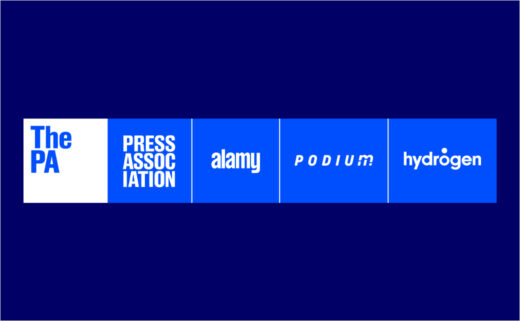
Furthermore, the transition of the parent entity to "The PA" provides a streamlined corporate umbrella that unifies diverse business segments—ranging from photography and sports data to PR distribution and international syndication—while allowing the core journalistic arm to proudly wear its historic badge of honor.
As the newly minted Press Association rolls out its updated digital platforms and visual identity across newsrooms in the UK, Ireland, and beyond, the ultimate test of the rebrand will lie in its continued commitment to the foundational values that birthed the agency in 1868: speed, accuracy, independence, and an unwavering dedication to verifiable truth.