
The crisis of missing household pets has long been a source of profound emotional distress for owners worldwide, yet the specific plight of lost felines has historically received remarkably little technological or corporate intervention. In Kazakhstan, where over 100 cats vanish every single day, the statistics paint a grim picture for pet ownership. According to comprehensive research conducted by the KARE Foundation, approximately one in three cats will run away from home at least once during its lifetime. More alarmingly, fewer than half of these missing felines ever manage to return to their homes, leaving 46% of Kazakhstani cat owners to grapple with the heartbreak of losing a pet at some point in their lives. While virtually every cat owner harbors persistent anxieties regarding the safety and security of their animals, major pet-food brands had largely avoided tackling the issue. The low rate of successful reunions previously rendered the category seemingly intractable—until Whiskas, in collaboration with creative and PR agency Ogency, decided to challenge the status quo.
The Genesis of GdeKotBot: Bridging Technology and Feline Welfare
Recognizing both the scale of the crisis and a glaring gap in the market, Whiskas stepped forward to become the pioneer cat-food brand to actively combat the missing-pet epidemic. The foundation of this initiative was laid with the launch of GdeKotBot, an innovative, artificial intelligence-powered service hosted on the Telegram messaging platform. Introduced initially as a crowdsourcing tool, GdeKotBot allowed everyday citizens to report missing cats and assist in the search for neighborhood animals. The mechanism was designed to be friction-free: whenever an individual spotted a wandering cat on the street, they could simply snap a photograph and upload it to the bot along with precise location data. Behind the interface, advanced facial recognition and AI algorithms cross-referenced the newly uploaded image against a comprehensive, real-time database of missing cats. If the system detected a potential match, the distraught owner was immediately notified with the precise geographical coordinates where the animal was spotted.
Understanding Feline Psychology: The Behavioral Hurdle of Lost Cats
Despite the early success of the Telegram bot, the campaign’s creators quickly identified a fundamental obstacle that plagues virtually all pet-recovery efforts: feline behavior under duress. Unlike lost dogs, which frequently seek out human interaction, food, or reassurance when frightened or disoriented, lost cats react through instinctive concealment. When startled, stressed, or lost in an unfamiliar environment, felines almost invariably retreat into secluded, hard-to-reach locations. They slip beneath parked cars, squeeze into dense garden bushes, scale boundary walls, and creep into subterranean basements or dark attics. These are spaces that are inherently difficult, if not impossible, for human search parties to thoroughly explore. Traditional search methods—such as distributing flyers, posting on social media, or calling out names—frequently fail because a terrified cat will remain completely silent and hidden in the shadows. Recognizing this behavioral impasse, Ogency and Whiskas realized that the only effective search party for a hidden cat was another cat.
Enter the TRUE CATectives: Canine-Free Canine Alternatives
This realization led to the conceptualization and execution of one of the most inventive animal-assisted tech campaigns in recent marketing history: the recruitment of "TRUE CATectives." Ahead of the harsh winter season—a period of heightened peril for lost and stray animals—Whiskas and Ogency expanded the capabilities of GdeKotBot by enlisting a specialized workforce. The team targeted neighborhoods in Kazakhstan that registered the highest density of missing-pet reports. Within these targeted urban sectors, the organizers reached out to owners of free-roaming, outdoor-savvy cats and invited their pets to volunteer as search agents.
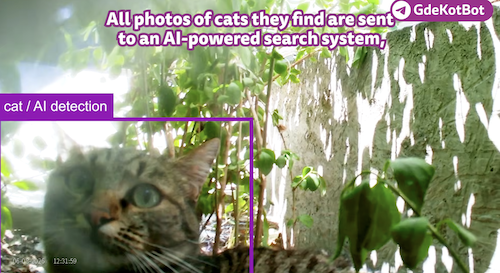
These feline volunteers were outfitted with specialized, lightweight equipment: ultra-compact, high-definition action cameras and miniaturized GPS trackers designed to not impede the animals’ natural agility or comfort. As these cats embarked on their routine daily explorations and territorial patrols, their hardware recorded the hidden corners of the neighborhood that remain forever inaccessible to humans. Armed with these cameras and GPS devices, the TRUE CATectives navigated narrow alleyways, crawled beneath vehicles, peered into cellar windows, and inspected dense shrubbery.
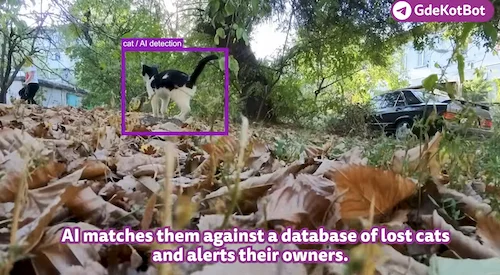
Upon the conclusion of each daily walk, the recorded visual footage was retrieved and processed by GdeKotBot’s upgraded AI framework. The technology meticulously analyzed the video feeds, scanning for feline faces and matching them against the missing-cat database. When the system registered a high-confidence match between a cat captured on a volunteer’s camera and a registered missing pet, the owner received an immediate alert containing both the visual verification and the precise GPS coordinates of the sighting.
Quantitative Impact and Campaign Chronology
Since its initial conceptualization and rollout beginning in 2025, the GdeKotBot ecosystem has grown from a novel local experiment into a robust, life-saving platform. Quantitative metrics released by the campaign organizers demonstrate the tangible efficacy of the initiative. To date, the AI-powered search platform has successfully facilitated the reunification of 407 missing cats with their rightful owners. Furthermore, the digital infrastructure has scaled rapidly, attracting a dedicated community of more than 28,000 active users who contribute sightings, monitor alerts, and spread awareness across urban centers in Kazakhstan.
The strategic timing of the winter-focused campaign launch was deliberate. As temperatures drop sharply across Central Asia, outdoor survival rates for lost pets plummet, making rapid location and recovery a matter of absolute urgency. By turning the natural exploratory instincts of free-roaming cats into a decentralized search network, the campaign circumvented the physical limitations that human searchers face during freezing weather conditions.
Strategic Analysis: Implications for Brand Purpose and Pet Care Innovation
Industry analysts and marketing experts have pointed to the GdeKotBot campaign as a masterclass in authentic, utility-driven brand purpose. For decades, pet-food brands have relied on conventional emotional marketing—focusing on taste, coat shine, and general health within the confines of domestic life. By stepping outside the home and addressing one of the most profound fears a pet owner can experience, Whiskas successfully elevated its brand identity from a mere manufacturer of commodities to an indispensable partner in animal welfare.
From a technological standpoint, the project demonstrates how existing consumer tech—specifically messaging bots and computer vision—can be creatively repurposed to solve hyper-local, physical challenges. The integration of wearable tech on animals, historically reserved for wildlife conservation and academic zoological research, has now been democratized for urban domestic environments through this initiative. By leveraging free-roaming neighborhood cats rather than deploying expensive, dedicated robotic search units, the campaign achieved remarkable efficiency, utilizing the natural urban footprint of domestic felines to cover vast tracts of residential territory.
Global Ambitions and the Call for International Adaptation
Following its proven success within Kazakhstan, the collaborative team behind GdeKotBot is setting its sights on a much broader horizon. The overarching mission moving forward is to establish a replicable blueprint for pet safety that can be adopted on a global scale. Because the infrastructure of GdeKotBot is built around widely accessible technologies—namely the Telegram messaging application, standard AI image-recognition models, and commercially available mini-cameras—the core framework can be easily localized by animal welfare organizations, tech developers, and pet brands in other countries.
The creators and agency partners have openly expressed their hope that the project will inspire animal lovers, technologists, and corporate entities around the world to adapt the technology for their respective national markets. Given that missing pets and the psychological trauma associated with their disappearance represent a universal, cross-border issue, the open-source spirit of GdeKotBot’s methodology offers a viable path forward for global animal welfare communities.
Collaborative Credits and Institutional Support
The realization of the GdeKotBot campaign required a multidisciplinary effort spanning creative advertising, public relations, and corporate stakeholder management. The core creative and public relations execution was spearheaded by Ogency, led by Chief Creative Officer Alexey Leybovich, Creative Group Head Denis Bushuev, Account Director Maria Firer, Account Manager Diana Baktiyarova, Art Director Roman Mirzaev, and CEO Yulia Retunskaya.
On the client side, leadership and strategic oversight were provided by MARS, the parent company of Whiskas. Key contributions came from Nikita Smerdov, Marketing and Media Lead at MARS, and Nargiza Imramziyeva, Marketing Director for Central Eurasia and America (CEA) at MARS. Additionally, localized public relations support and media amplification were managed by BLVD Agency, featuring an operational team comprising Operational Director Emma Khafizova, CEO and Founder Leonid Nigmatullin, Project Manager Miras Murzakhan, Creative Director Aidana Aidarkhan, and Key Account and Project Manager Umit Nurakhmet.
As GdeKotBot continues to expand its user base and refine its AI matching capabilities, it stands as a testament to the potential of combining corporate resources, creative problem-solving, and advanced technology to address real-world vulnerabilities. By mobilizing the unexpected workforce of the TRUE CATectives, Whiskas and Ogency have not only rewritten the playbook for pet recovery but have also given hundreds of cats a second chance at a warm home.