
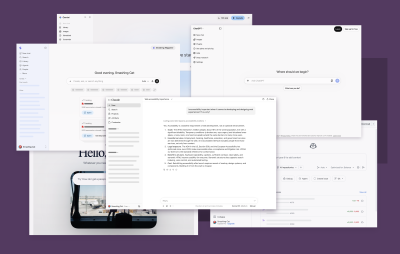
As Large Language Model (LLM) chat interfaces rapidly transform from experimental novelties into the primary portals for digital information, productivity, and essential services, the imperative to ensure these platforms are accessible has reached a critical juncture. The proliferation of immersive chat environments—such as ChatGPT, Claude, Gemini, and GitHub Copilot—marks a fundamental shift in how the public interacts with the web. However, for the millions of users who rely on assistive technologies, these highly dynamic, real-time interfaces often present significant barriers that threaten to exacerbate the "digital divide."
The stakes of this technological shift are profound. When digital tools are designed without universal accessibility, the result is not merely an inconvenience; it is a systematic exclusion from the modern workforce, educational opportunities, and civic participation. According to the World Health Organization, over 1.3 billion people, or approximately 16% of the global population, experience a significant disability. As these LLM-driven platforms become the "new front door" for professional and personal tasks, ensuring they are built with inclusive design principles is no longer a niche requirement—it is a baseline necessity for digital equity.
The Evolution of the Chat Interface
The current generation of LLM interfaces represents a departure from traditional web design. Unlike static pages or simple input forms, these immersive environments are defined by continuous, state-heavy interactions. Typically built on web technologies and often wrapped in cross-platform frameworks like Electron or Tauri, these applications function as persistent, full-screen interactive agents.
The timeline of this adoption has been aggressive. Following the public release of transformer-based conversational AI in late 2022, enterprise and consumer adoption soared. By 2023, major government portals and software development environments began integrating these chat patterns as standard features. Yet, this rapid deployment often outpaced the implementation of robust accessibility features, leading to a fragmented landscape where screen readers and keyboard-only navigation tools often struggle to interpret the stream of incoming data.
Bridging the Accessibility Gap
At the core of the problem is a persistent visual bias in software engineering. Developers frequently design for a "typical" user who can visually track a conversation, notice a loading animation, and observe changes in the main content area simultaneously. For a user relying on a screen reader, however, a screen that updates in real-time without proper semantic signaling is essentially a silent, static interface.

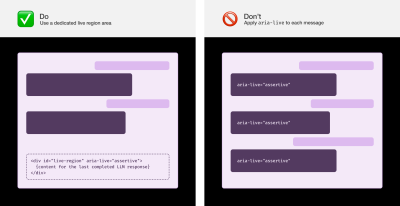
The solution lies in leveraging W3C-standardized accessibility techniques, specifically through the strategic use of ARIA (Accessible Rich Internet Applications) live regions. While it is tempting to apply live region attributes to every message element, expert accessibility practitioners recommend a more stable approach: designating a single, dedicated live region container at the end of the Document Object Model (DOM). This ensures that assistive technology can announce responses as they arrive without disrupting the user’s focus on the input field.

Technical Standards and Best Practices
To achieve an equivalent user experience, developers must look beyond basic compliance. Recent guidance from industry experts suggests a multi-layered approach to interaction design:

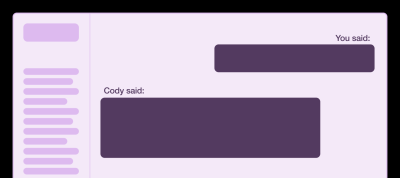
- Semantic Navigation: Because screen reader users heavily rely on heading levels to navigate, developers should implement visually hidden, programmatic headings before each message. By labeling these as "User said" or "Agent said," the interface mimics the visual hierarchy that sighted users rely on to follow a thread.
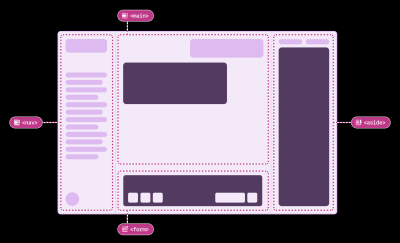
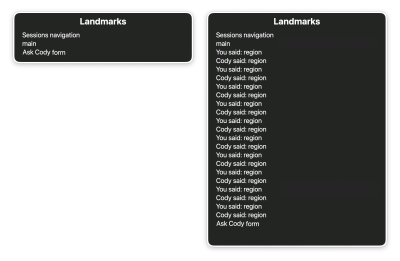
- Strategic Landmarks: While landmark regions (like
<main>or<nav>) are essential for overall page structure, over-implementing them within a chat thread can create navigation fatigue. A "less is more" approach, combined with custom skip links, allows users to jump directly to the conversation history or the input form without cycling through dozens of unnecessary elements. - Composite Widget Patterns: Treating conversation lists as composite widgets allows keyboard users to utilize arrow keys for navigation, mirroring the behavior of native desktop applications. This significantly reduces the physical toll on users with motor impairments who might otherwise be forced to tab through hundreds of interactive elements.
The Role of User Preferences and Customization
One of the most effective ways to manage the complexity of LLM interactions is to offer granular user preferences. Because LLMs often perform background tasks—such as reasoning, file searching, or tool execution—announcing every internal action can overwhelm the user. By allowing individuals to toggle the granularity of these announcements, developers empower users to customize their experience based on their specific needs and cognitive preferences.

Furthermore, respecting the prefers-reduced-motion media feature is essential. For users with attention-related conditions or vestibular disorders, the rapid streaming of text and complex animations can be disorienting. Providing the option to disable animations or sound effects ensures that the tool remains a productive aid rather than a source of distraction.

The Future of Accessible AI
The integration of new standards, such as the ariaNotify() method, promises to eventually simplify the creation of these interfaces by reducing the reliance on complex, hack-prone workarounds. However, as of the current development cycle, cross-browser compatibility remains a hurdle. Consequently, the industry is currently relying on established "tried-and-true" techniques to ensure that users are not left behind during this transitional period.
The implications of failing to prioritize these standards are not just moral; they are increasingly legal. As global regulations such as the European Accessibility Act and the Americans with Disabilities Act (ADA) continue to evolve, organizations that fail to make their AI interfaces accessible face significant liability risks. Beyond the legalities, there is a clear economic argument: accessible software is better software. By designing for the edge cases—those with the most restrictive access needs—developers inadvertently improve the usability of the product for everyone, including those with temporary impairments or those working in high-distraction environments.
The Path Forward: Inclusive Research
The final, and perhaps most important, step in this evolution is the implementation of inclusive user research. Technology companies must move away from the assumption that automated accessibility testing is sufficient. Engaging with disabled individuals who rely on assistive technology is the only way to validate that an interface is truly equitable.
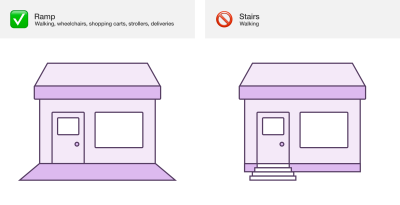
As we look toward a future where LLM interactions are integrated into almost every facet of our digital lives, the responsibility rests on developers, product managers, and architects to build with the assumption that every user—regardless of ability—will seek to access these tools. The transition to a "chat-first" web must be marked not just by innovation in processing power, but by a foundational commitment to ensuring that the power of information is available to all, without exception. The goal is to move beyond the current state of "compliant-but-unusable" software toward a reality where digital tools act as a universal ramp, enabling everyone to reach the opportunities that these powerful new systems provide.