
Meta Platforms is expanding the functionality of its Muse artificial intelligence agents by introducing advanced speaking capabilities and expressive digital avatars. Designed to make interactions more natural, engaging, and versatile, the update allows users to select custom voices for their AI assistants, perform audio-based queries, and engage in face-to-face style video conversations. This significant product evolution represents Meta’s continued investment in multimodal artificial intelligence, merging voice synthesis, facial animations, and real-time responsiveness into a single consumer-facing platform.
The rollout arrives as major technology corporations race to bridge the gap between text-based large language models and human-like conversational interfaces. By enabling users to talk through complex ideas, rehearse presentations, and brainstorm projects out loud, Meta aims to position Muse as an indispensable productivity and creative tool. However, the introduction of customizable accents and novelty character voices also brings renewed scrutiny to Meta’s historical struggles with consumer adoption of personality-driven AI features.
The Evolution of Muse: Moving Beyond Text
For the past several years, generative AI development has been heavily dominated by text-based prompts and response interfaces. While effective for coding, writing, and structured data analysis, text input often creates friction when users are in early brainstorming phases. Meta’s engineering and product teams identified this limitation, noting that human thought processes are frequently verbalized rather than typed.
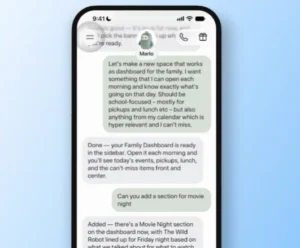
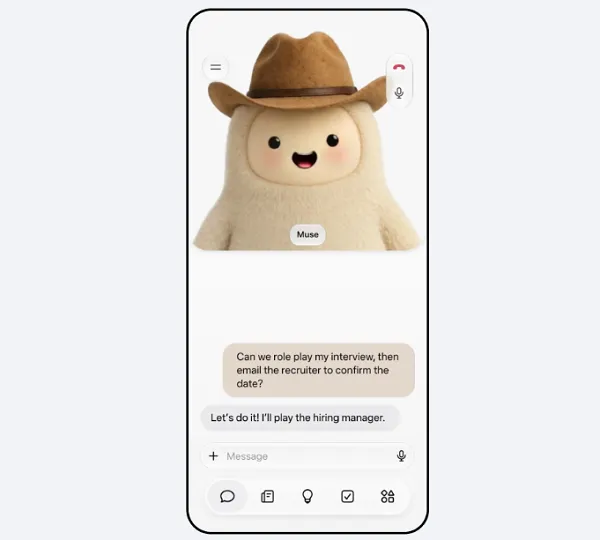
Under the new update, Muse users can bypass the traditional text box to execute audio queries. As Meta explained in its official product briefing, talking through an idea allows it to take shape organically without the pressure of formulating a precise textual prompt. This capability is specifically tailored for professional and personal preparation, such as rehearsing for high-stakes job interviews, running through corporate slide deck presentations, or refining elevator pitches. By hearing real-time vocal responses and answering instantaneously, users experience a simulated environment that closely mirrors genuine human interaction.
In addition to voice output, Meta has integrated expressive avatars that accompany the audio. These digital representations are engineered to display subtle facial expressions, micro-gestures, and emotional shifts that align directly with the conversational tone. Furthermore, the avatar remains visually active while the user is speaking, providing non-verbal cues—such as nodding or attentive leaning—to signal that the system is actively processing the input.
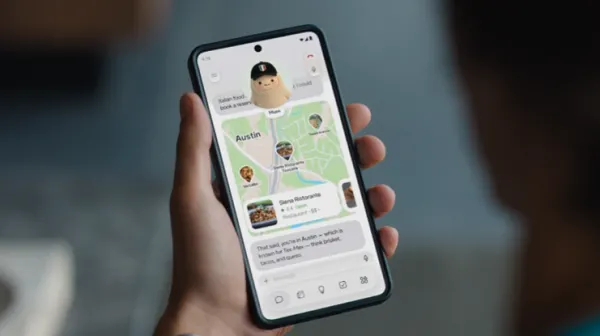
Meta has designed the interface with flexibility in mind, offering three distinct engagement modes: voice-only audio interaction, a split-screen layout featuring the animated avatar alongside the chat interface, and a full-screen mode for immersive, face-to-face discussions.
A History of Novelty Personalities and Celebrity Chatbots
While the core productivity enhancements of Muse’s voice update have garnered positive technical reviews, the inclusion of custom voice options—such as regional accents or whimsical character personas like pirates—has raised eyebrows among industry analysts. This skepticism is rooted in Meta’s previous, highly publicized attempts to infuse personality and celebrity culture into its artificial intelligence ecosystem.
The timeline of Meta’s consumer-facing AI experiments reveals a persistent push toward character-driven interactions, often with mixed commercial results:
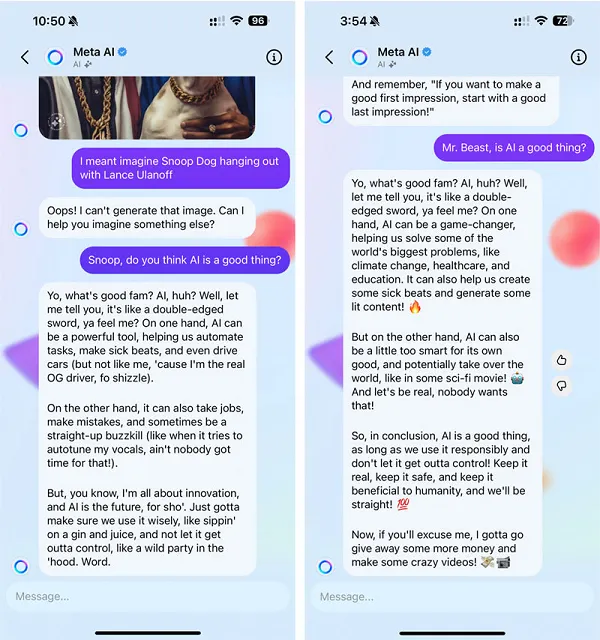
- September 2023: Meta launched celebrity-styled AI chatbots across its messaging platforms, including Messenger and Instagram. These bots allowed users to chat in text form with personas modeled after and licensed by prominent cultural figures, such as Snoop Dogg, Tom Brady, and Kendall Jenner. The goal was to leverage celebrity influence to drive daily active usage of generative AI tools.
- Mid-2024: Due to an overwhelming lack of consumer engagement and declining daily interactions, Meta quietly retired its celebrity-styled text chatbots less than a year after their debut. Users largely viewed the feature as a short-lived novelty rather than a utility.
- August 2024: Undeterred by the initial setback, Meta pivoted to an audio-first approach. The company reportedly invested millions of dollars to secure the voice likenesses of renowned actors and public figures—including Academy Award winner Judi Dench, comedian Keegan-Michael Key, and rapper-actress Awkwafina—for a limited release of voiced AI chatbots.
- April 2025: The celebrity voice initiative suffered a terminal blow when The Wall Street Journal reported that specific users had exploited the audio feature to generate unauthorized, sexually explicit content voiced by the participating celebrities. The controversy forced Meta to halt expansion plans and ultimately terminate the celebrity voice project before it reached a broad global audience.
Despite these historical missteps, Meta’s latest iteration of custom voices for Muse represents a modified approach. Rather than relying on licensed celebrity identities that carry legal, ethical, and reputational risks, Meta is handing the control panel directly to the user, allowing them to stylize their personal productivity assistant with unique linguistic flourishes.
Technical Architecture and Industry Context
The underlying technology powering Muse’s new expressive capabilities relies on advances in neural audio synthesis and real-time multimodal processing. Traditional text-to-speech (TTS) models often sound robotic or fail to capture the cadence, pacing, and emotional nuance required for natural dialogue. Meta’s latest audio models utilize deep neural networks trained on vast datasets of human speech dynamics, enabling the AI to dynamically adjust its pitch, volume, and tempo based on the semantic context of the conversation.
This positions Meta in direct competition with other major technology firms developing advanced voice assistants. OpenAI’s Advanced Voice Mode for ChatGPT, Google’s Gemini Live, and Apple’s upcoming conversational Siri integrations have all shifted the industry standard toward low-latency, emotionally expressive voice interactions. By embedding these capabilities directly into avatars with real-time visual feedback, Meta is attempting to differentiate Muse as a more personal, embodied companion rather than a disembodied voice in a speaker.
Industry observers note that while multimodal AI is rapidly becoming the baseline expectation for consumer software, the boundary between utility and gimmick remains delicate. Features designed to make AI feel more "human"—such as hyper-realistic avatars and playful accents—risk crossing into the uncanny valley for enterprise users, while potentially appealing to younger consumer demographics seeking entertainment value.
Market Implications and Future Outlook
The launch of speaking Muse agents has broad implications for how consumers and professionals interact with personal computing devices. As smartphones increasingly become platforms for continuous, spoken-word AI companions, the physical ergonomics of usage are shifting. Users walking down public streets while conversing aloud with an invisible or onscreen AI avatar may become a common sight, though social acceptance of such behavior remains an open question.
From a commercial perspective, Meta’s strategy relies heavily on driving engagement across its expansive ecosystem of social media applications. By integrating sophisticated AI agents directly into platforms used by billions of people globally, the company hopes to secure a dominant market share in personal AI productivity tools.
However, challenges remain. Privacy advocates continue to monitor how voice and facial interaction data are processed, stored, and utilized for model training. Furthermore, ensuring that expressive avatars and custom voices are not misused to generate harmful, misleading, or inappropriate content will require stringent guardrails from Meta’s trust and safety teams, particularly in light of past vulnerabilities.
As Muse agents roll out to users worldwide, the true test will not be whether consumers enjoy experimenting with pirate accents or animated avatars on day one, but whether the voice and avatar integration proves durable enough to become a daily habit for professional preparation, project planning, and personal organization. Meta’s multi-billion-dollar bet on conversational intelligence now rests on whether users are ready to treat their AI agents less like software tools and more like conversational partners.