
The vibrant global community of Three.js developers and creative technologists is set to converge in Paris this September for the very first Three.js Conference, a landmark event marking nearly fifteen years of the ubiquitous JavaScript library’s profound influence on web-based 3D graphics. This inaugural gathering is poised to be a pivotal moment, bringing together the minds behind countless interactive experiments, sophisticated portfolio sites, immersive installations, cutting-edge games, and foundational open-source tools that have collectively shaped a generation of creative developers. The conference, a long-anticipated assembly, signifies a coming of age for the Three.js ecosystem, offering a dedicated platform for knowledge exchange, collaborative exploration, and the showcasing of groundbreaking innovations.
A Milestone Event for Web3D Development

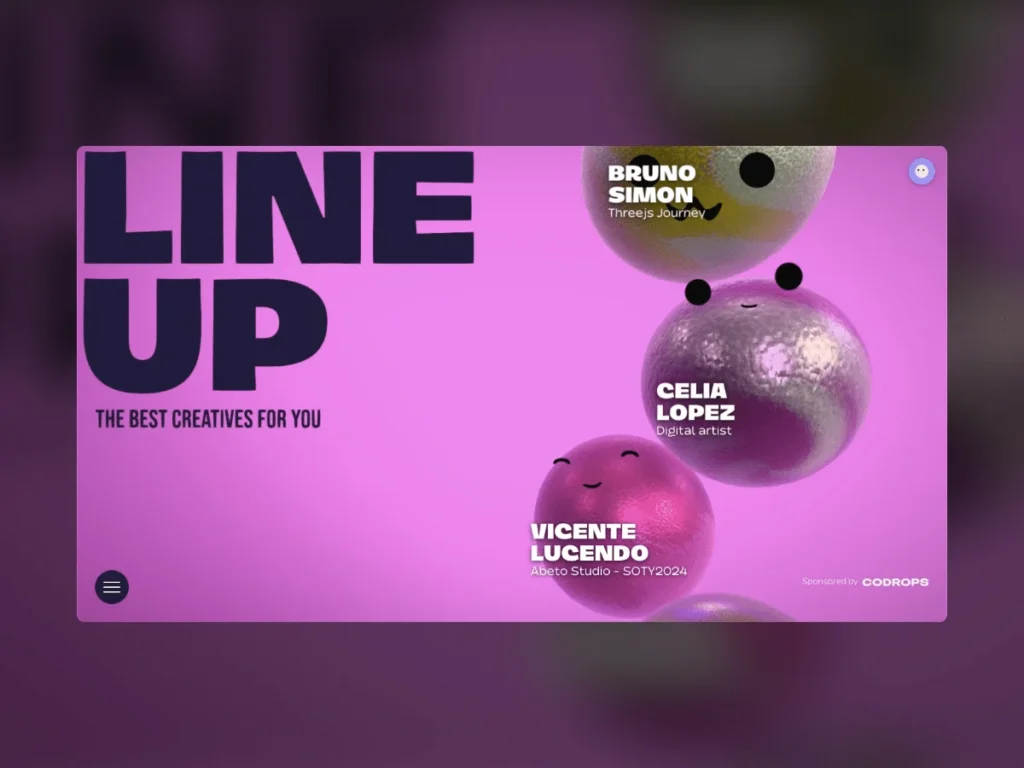
Since its inception, Three.js has democratized 3D rendering on the web, enabling developers to build rich, interactive experiences directly within browsers without requiring specialized plugins. Its accessibility and robust feature set have fostered an unprecedented wave of creativity, pushing the boundaries of what is possible in real-time web graphics. The decision to host a dedicated conference in 2026, after almost a decade and a half of organic growth and widespread adoption, underscores the library’s enduring relevance and the maturity of its community. Organizer David Ronai, who previously offered a behind-the-scenes look at the conference website’s innovative design—transforming bouncing spheres into a dynamic community celebration—has spearheaded an event that is not merely a series of talks, but a testament to collective passion and pioneering spirit.
The conference arrives at a crucial juncture for web graphics, with the emergence of powerful new standards like WebGPU and the increasing integration of artificial intelligence into development workflows. These technological shifts are creating new paradigms for performance, visual fidelity, and interactive design, areas where the Three.js community is at the forefront of exploration. Attendees can expect a comprehensive program designed to delve into these advancements, providing both theoretical insights and practical applications from leading practitioners.
Key Thematic Pillars: Innovation at the Forefront

The speaker lineup for the Three.js Conference offers a compelling glimpse into the current obsessions and future directions of web-based 3D development. Recurring themes among the featured presenters highlight critical areas of innovation:
- WebGPU and TSL (Three.js Shading Language): The next generation of graphics APIs and a dedicated shading language for Three.js promise unparalleled performance and creative control.
- AI Integration: From texture optimization to real-time animation and coding assistance, artificial intelligence is rapidly transforming workflows and possibilities in 3D design and development.
- HTML-in-Canvas: This emerging API offers a transformative approach to integrating semantic HTML content directly into canvas, bridging the gap between traditional web content and immersive 3D environments.
- Interactive Experiences and Performance Optimization: A constant drive to create more engaging user interactions while maintaining high performance remains central to the Three.js philosophy.
- Community and Collaboration: The spirit of shared learning, open-source contribution, and creative "ping pong" between disciplines is evident in many speakers’ approaches.
Spotlight on Visionary Speakers
The conference agenda is packed with insights from a diverse array of experts. Here’s a closer look at what some of the featured speakers are bringing to Paris:

Bruno Simon: Mastering TSL and WebGPU’s Next Frontier
Bruno Simon, renowned for his comprehensive Three.js Journey course, has been deeply immersed in the intricacies of TSL (Three.js Shading Language) and the monumental WebGPU update. His dedication to teaching has necessitated a hands-on approach, leading him to rebuild his entire portfolio as an experimental playground. Simon’s recent obsession, a physics-driven experiment shared on X (formerly Twitter) featuring glowing spheres converting kinetic energy into heat, exemplifies his commitment to pushing the boundaries of realism and interaction. This "nerd stuff," as he describes it, offers a glimpse into his technical depth and playful approach. In Paris, his talk is anticipated to delve into the transformative capabilities of TSL and WebGPU, offering practical insights gleaned from his extensive work. His single-emoji teaser, 🍄, hints at a talk likely to be as whimsical as it is technically profound, potentially exploring mushroom-related graphics or a metaphor for growth and discovery.
Célia Lopez: Bridging AI, 3D Design, and Artistic Craft
As a 3D designer at OFF+BRAND specializing in WebGL, Célia Lopez’s work is driven by a relentless curiosity for new techniques and optimized workflows. Her recent explorations into AI’s role in 3D production are particularly timely, focusing on non-linear texture optimization and the complex task of transferring textures from AI-generated models with messy topologies to clean, production-ready meshes. This work is crucial for understanding how AI-generated assets can be seamlessly integrated into high-quality real-time 3D experiences. Beyond her digital endeavors, Lopez has found a new creative rhythm in launching her own ceramics brand, crafting handmade bowls and cups, demonstrating a holistic approach to design that transcends mediums. Her recent lightning talk at the Paris Design Meetup, showcasing her refined AI workflow, highlights her commitment to sharing knowledge. For the conference, Lopez promises an "unexpected" element, driven by her deep fulfillment in WebGL conferences as spaces for learning, exchange, and vibrant social interaction, reinforcing the community aspect of the event.
Daniel Beauchamp: Personalizing Digital Engagement through Interactive Experiences
Daniel Beauchamp navigates the intersection of interactive product customization for e-commerce and AI-generated media. His work is unified by a central question: how to create digital experiences that are more personal, expressive, and memorable. This curiosity has manifested in two new ventures: a Shopify app integrating Rive for interactive product customization, and a service specializing in AI commercial video. Both aim to foster deeper engagement, moving users from passive consumption to active participation. In Paris, Beauchamp will elaborate on how interactive product experiences can evoke emotion and feeling, allowing consumers to intimately "know a product before buying it." His most valuable "treasure" is a mindset: "Keep building, and at the same time keep exploring, learning, changing, and re-examining both the process and the things I make." This philosophy underscores the dynamic and iterative nature of creative development, a vital lesson for any developer.

Anderson Mancini: Pushing Real-time Rendering with WebGPU
Anderson Mancini views WebGPU not merely as an upgrade but as a paradigm shift, enabling developers to reconsider the limits of browser-based rendering. He is actively revisiting projects previously deemed too computationally expensive for real-time execution, leveraging modern rendering techniques to elevate visual quality and accessibility. His recent work focuses on combining SSGI (Screen Space Global Illumination) and SSR (Screen Space Reflections) for architectural visualization, bringing high-fidelity real-time rendering to the real estate sector. Additionally, Mancini has contributed to the open-source community with r3f-webgpu-perf, a performance monitoring tool for R3F (React Three Fiber) that goes beyond mere metrics, offering real-time optimization guidance informed by years of game development experience. His presentation in Paris will unpack the techniques behind Lumen Decor Studio and CerealBNB, promising practical insights into building high-performance Three.js experiences without compromising artistic ambition.
Natalia Markoborodova & Thomas Nattestad: Charting the Future with HTML-in-Canvas
At Google Chrome, Thomas Nattestad and Natalia Markoborodova are instrumental in shaping the future of web standards, particularly focusing on HTML-in-Canvas. Thomas perceives immense creative potential in this API, while also grappling with the complexities of establishing new web standards—balancing "unbelievable excitement" with the critical need to maintain privacy, security, and interoperability. His work includes introducing the HTML-in-Canvas API at Google I/O, demonstrating how semantic HTML can be rendered interactively and accessibly within a canvas. Natalia, on the other hand, delves into the finer technical details, exploring color spaces, display rendering, and extensive cross-setup testing to refine the API. Her accidental discovery of color discrepancies in an embedded video led her down a "rabbit hole" of color formats and browser rendering, highlighting how minor observations can lead to significant insights. In Paris, they will offer complementary perspectives: Thomas will explore the API’s expansive creative possibilities with a "heavy amount of whimsy," while Natalia will demonstrate its dual nature as both "FUN & FUNctional," showcasing the seamless coexistence of playful interaction and robust engineering.
Patrick Heng & Justine Soulie: The Art of Interactive Storytelling
Patrick Heng and Justine Soulie draw inspiration from the web’s most experimental corners, driven by a shared excitement for pushing creative boundaries. Their collaborative work fuses interactivity, technical innovation, and illustration into captivating, playful experiences. Recently, they have been translating Justine’s illustrations into small interactive games, further enhanced by experiments with MediaPipe and hand tracking to create more tactile and immersive worlds. Their creative process is characterized by a dynamic "ping pong" between illustration and development, where "a sketch can inspire an interaction, and an interaction can inspire a new visual idea." Their presentation will offer a behind-the-scenes look at Ponpon Mania, their interactive WebGL comic, providing a case study in how two distinct disciplines can continuously inspire and elevate each other, resulting in a richer, more engaging narrative.

Robin Payot: AI, Three.js, and Real-time Voice Interaction
Robin Payot’s recent thoughts have been split between the joys of fatherhood and the rapid evolution of AI’s impact on web development. He notes the remarkable shift where designers at his company now utilize AI coding assistants for production code, a scenario "unimaginable" just two years prior. Despite this, Payot emphasizes the enduring importance of fundamental understanding: "You still need to have a solid understanding of the web’s limitations and, at the very least, understand how the code works and what it does." His fascination with AI culminated in a work experiment involving a Three.js animation that dynamically reacted in real-time to the voice of an AI assistant, built with R3F. This project allowed him to observe his shaders responding to diverse voices, accents, and speaking styles, showcasing a novel intersection of AI and interactive graphics. In Paris, Payot will share how AI, Three.js, and a "touch of Zelda" converged in his latest personal project, alongside anecdotes about the debugging challenges that remind us of AI’s current limitations.
Julie Marting: Crafting Playful Identities and Embracing Design Evolution
Julie Marting’s creative energies extend beyond the digital realm, encompassing the design of physical spaces, such as her new apartment, and the exploration of AI tools for design prototyping. Her approach to AI is one of open curiosity, viewing it as an unfamiliar but exciting territory for breathing life into her designs. This curiosity led her to experiment with an AI-powered tool for creating real-time 3D videos for social media, a concept she admits "doesn’t make sense at first," but whose unconventional nature made it a rewarding exploration. At the conference, Marting will offer an exclusive look behind the design and art direction of the Three.js Conference website itself, revealing the strategic decisions, creative "tricks," and subtle "secrets" that forged its distinctive playful identity. Her core design philosophy underscores the value of iterative learning: "Making mistakes and discovering new ideas or techniques as a result of those mistakes is almost part of our weekly routine as designers. It encourages us to constantly learn and try new things we hadn’t thought of before."
Vicente Lucendo: Emotion-Driven Design and Physics Simulation
Vicente Lucendo draws inspiration from an eclectic range of sources, from the dynamic panel compositions of manga artist Yusuke Murata, which masterfully convey motion in static imagery, to the evocative atmosphere of time-worn structures juxtaposed with modern architecture. This keen eye for movement and atmosphere extends to his technological pursuits. After extensive experimentation, Lucendo advocates for the Jolt physics engine, expressing his belief that "it should be more popular!" In Paris, he will share insights from his project Messenger, highlighting that creative projects rarely follow a linear path. His guiding principle is to let the desired emotion dictate every technical and creative decision, serving as the ultimate compass. Lucendo also emphasizes the importance of gaining fresh perspectives on one’s work, whether through seeking honest feedback from teammates or taking a deliberate break from a project, to reveal solutions previously obscured.

Jean Carlo Deconto (sunag): Deep Dive into TSL and Rendering Pipeline Advancements
Jean Carlo Deconto, known as "sunag" in the community, is currently dedicated to TSL, embarking on a comprehensive review of its documentation and syntax. His work on "Tour of TSL" aims to be an invaluable guide for developers, simultaneously contributing to the refinement of TSL’s syntax and implementation ahead of his Parisian presentation. Deconto’s recent experiments span some of the most advanced areas of the Three.js ecosystem, including enhancements to Three.js Inspector, exploration of nanite-style rendering, fire simulation using voxel grids, and deferred rendering techniques for upcoming Three.js releases. His relentless pursuit of rendering pipeline advancements showcases his commitment to pushing the library’s capabilities. In Paris, his "Tour of TSL" will underscore the language’s benefits for modern Three.js development. Deconto’s engineering philosophy is rooted in modularity: "One of the most important things for me is trying to separate the responsibilities of each part of the software to build systems that can be extended individually," promoting robust and scalable development.
The Broader Implications for the Web Ecosystem
The inaugural Three.js Conference is more than just a gathering; it represents a significant maturation of the WebGL and broader web graphics ecosystem. By providing a dedicated forum, it solidifies Three.js’s position not just as a library, but as a vibrant, self-sustaining platform for innovation. The insights shared will undoubtedly accelerate the adoption of cutting-edge technologies like WebGPU and HTML-in-Canvas, pushing browser capabilities and developer creativity to new heights. The strong emphasis on AI integration across various talks signals a fundamental shift in how 3D assets are created, optimized, and animated, potentially streamlining workflows and democratizing access to complex techniques. Furthermore, the conference’s focus on interactive experiences and performance optimization ensures that future web-based 3D remains engaging, accessible, and high-quality, fostering a new generation of immersive digital content. The collaborative spirit fostered at such an event is invaluable, sparking new partnerships, open-source contributions, and the cross-pollination of ideas that drive the entire industry forward.

A Call to Community and Innovation
These esteemed individuals represent merely a fraction of the talent converging in Paris. Over two intensive days, the Three.js community will engage in a rich tapestry of idea sharing, live demos, experimental showcases, deep technical dives, and perhaps even a few humorous anecdotes about unexpected bugs. The collective energy is expected to be palpable, fostering connections and igniting new creative ventures. Codrops, in partnership with the conference, is offering its readers a 15% discount on tickets using the code CODROPS, providing an accessible pathway for more individuals to partake in this historic event. This conference is poised to be a landmark occasion, cementing the legacy of Three.js while simultaneously charting the course for the next wave of web-based 3D innovation.