Tag: audits

  • The Comprehensive Guide to Modern SEO Audits in an AI-Driven Search Landscape

    The Comprehensive Guide to Modern SEO Audits in an AI-Driven Search Landscape

    An SEO audit is a methodical examination of a website’s overall search engine performance, encompassing its technical foundation, content quality, and visibility within search results. Historically, these audits primarily focused on identifying and rectifying issues that hindered traditional "blue-link" rankings in Google Search. However, the advent of artificial intelligence (AI) in search engines has profoundly reshaped how users discover brands and interact with information online. Consequently, modern SEO audits have evolved to include critical new dimensions, such as evaluating entity signals, assessing brand visibility in AI-generated answers, and analyzing content performance within generative AI platforms.

    This guide delves into the contemporary approach to conducting an effective SEO audit, providing clear steps, practical examples, and a comprehensive checklist designed to empower SEO professionals across all skill levels to drive measurable traffic growth and achieve business objectives in this new era of search.

    Understanding the Core of an SEO Audit and Its Evolving Significance

    At its fundamental level, an SEO audit is a structured review designed to pinpoint technical, on-page, content, and link-related issues that impede a website’s performance in search engines. These findings are then translated into a prioritized action plan to unblock traffic, improve rankings, and, most importantly, boost conversions. For businesses and their SEO teams, conducting regular audits is not merely a best practice; it is a strategic imperative for identifying growth opportunities that align directly with overarching business goals.

    Traditionally, an audit would scrutinize elements like crawlability, indexability, metadata optimization, and backlink profiles. While these remain foundational, the landscape of search has undergone a transformative shift with the integration of AI. Major search engines like Google are increasingly relying on sophisticated AI models to understand context, intent, and entities, moving beyond simple keyword matching. This necessitates a broader audit scope that considers how content is interpreted by these advanced algorithms and how brands appear in AI-generated summaries, conversational interfaces, and answer boxes—a practice now often referred to as Answer Engine Optimization (AEO) and Generative Engine Optimization (GEO).

    SEO audits: How to conduct one that drives traffic growth [+ checklist]

    SEO specialists typically conduct these audits at regular intervals—quarterly or annually—or engage third-party consultants for an objective "fresh pair of eyes." The ultimate goal is to transform audit findings into a strategic roadmap that directly supports key performance indicators such as traffic growth, lead generation, and pipeline acceleration.

    A comprehensive audit now includes:

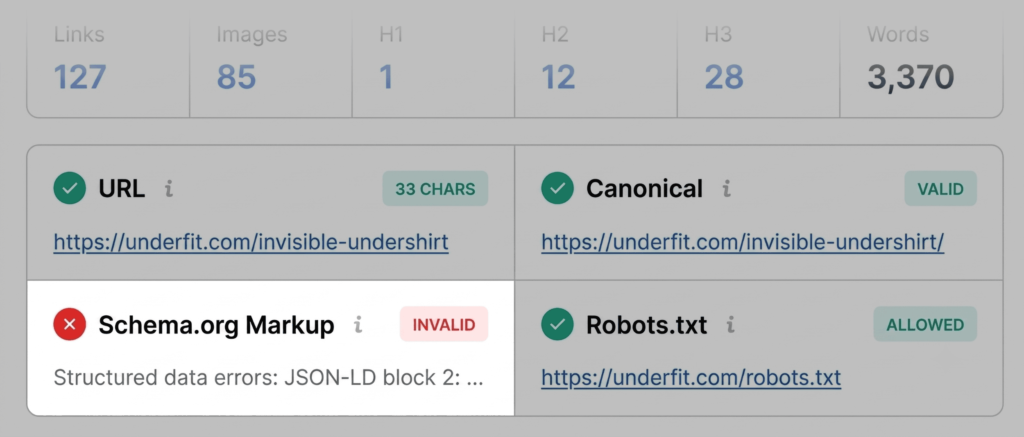
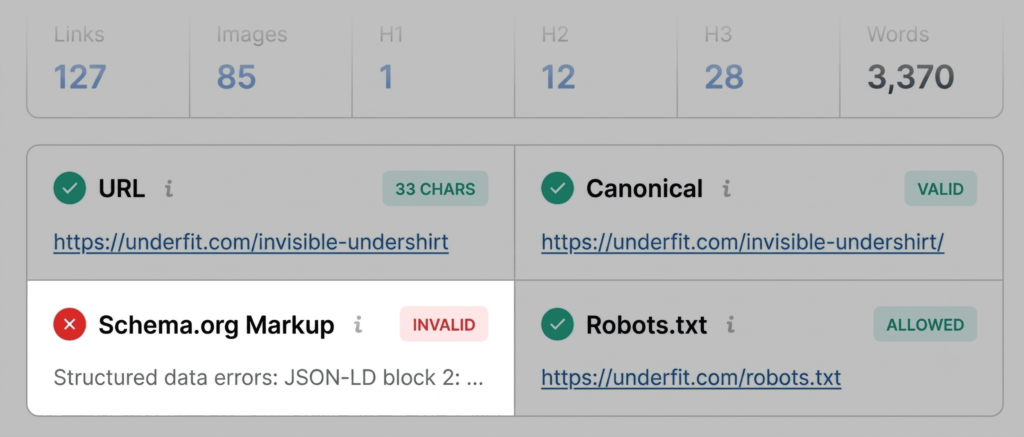
    • Technical Health: Evaluating crawlability, indexability, page speed, Core Web Vitals, structured data implementation, and overall site architecture. These elements form the bedrock of search engine accessibility and user experience.
    • On-Page SEO: Scrutinizing metadata, heading structures, internal linking strategies, URL optimization, and the effective clustering of topics and keywords.
    • Content Quality & Depth: Assessing E-E-A-T (Experience, Expertise, Authoritativeness, Trustworthiness) signals, topical authority, content freshness, identification of duplication or thin pages, and pinpointing content gaps relative to user intent and competitive offerings.
    • Top-Performing Pages Analysis: Identifying pages that consistently generate high traffic or impressions, with a focus on opportunities to enhance click-through rates (CTR) and improve rankings further.
    • Revenue-Generating Pages: Concentrating on product, service, or conversion-oriented pages that have the highest commercial impact, and diagnosing factors that prevent them from achieving higher rankings.
    • Highest-Conversion Pages: Analyzing pages with strong conversion rates to identify scalable elements, replicable strategies, or areas for further optimization.
    • CRO Recommendations: Providing insights into layout friction, user experience (UX) issues, clarity of calls-to-action (CTAs), messaging effectiveness, and engagement metrics.
    • Backlink Profile & Gaps: Assessing the authority and quality of inbound links, identifying toxic links, and uncovering opportunities to acquire valuable links that competitors leverage.
    • Brand and Entity Signals: A crucial modern component, evaluating how clearly a brand is understood and categorized by both traditional search engines and advanced AI models. This ensures accurate representation in knowledge panels and AI-generated responses.
    • AI Search Visibility: Directly examining how a site’s content appears in AI-generated answers, using specialized tools to gauge performance in generative search environments.

    The Evolving Landscape: AI’s Impact on Search and the Audit Process

    The rise of generative AI, exemplified by models like ChatGPT and the integration of features like Google’s Search Generative Experience (SGE), marks a pivotal shift in information retrieval. No longer are users solely presented with a list of ten blue links; they often receive direct, synthesized answers or conversational responses. This fundamentally changes the objective of SEO.

    For instance, Google’s introduction of Core Web Vitals in 2021 underscored the importance of user experience, but the current wave of AI integration goes deeper. It demands that content not only be technically sound and user-friendly but also inherently authoritative, contextually rich, and structured in a way that AI can easily understand and trust as a reliable source for its generated answers. Analysts predict that an increasing percentage of search queries will be answered directly by AI, bypassing traditional organic results for many informational queries. This trend necessitates that SEO audits move beyond merely optimizing for keyword rankings to optimizing for "answerability" and "entity recognition."

    The Strategic Imperative: Why Modern SEO Audits Matter More Than Ever

    SEO audits: How to conduct one that drives traffic growth [+ checklist]

    In a competitive digital marketplace, a static website is a dying one. Regular, comprehensive SEO audits provide a dynamic mechanism for continuous improvement and competitive advantage. Neglecting audits can lead to declining traffic, missed conversion opportunities, and a gradual erosion of brand visibility.

    • Risk Mitigation: Audits identify critical issues like security vulnerabilities, broken checkout processes, or incorrect product information that can have immediate and severe business consequences beyond just SEO.
    • Competitive Edge: By analyzing competitor backlink profiles, content strategies, and AI visibility, audits reveal untapped opportunities and allow businesses to adapt proactively. The market for SEO services is projected to continue its significant growth, reflecting the increasing recognition of its importance in digital strategy.
    • Resource Optimization: A well-prioritized audit helps allocate limited marketing and development resources to tasks that yield the highest impact, preventing wasted effort on low-value activities.

    A Systematic Approach: The Five-Step SEO Audit Framework

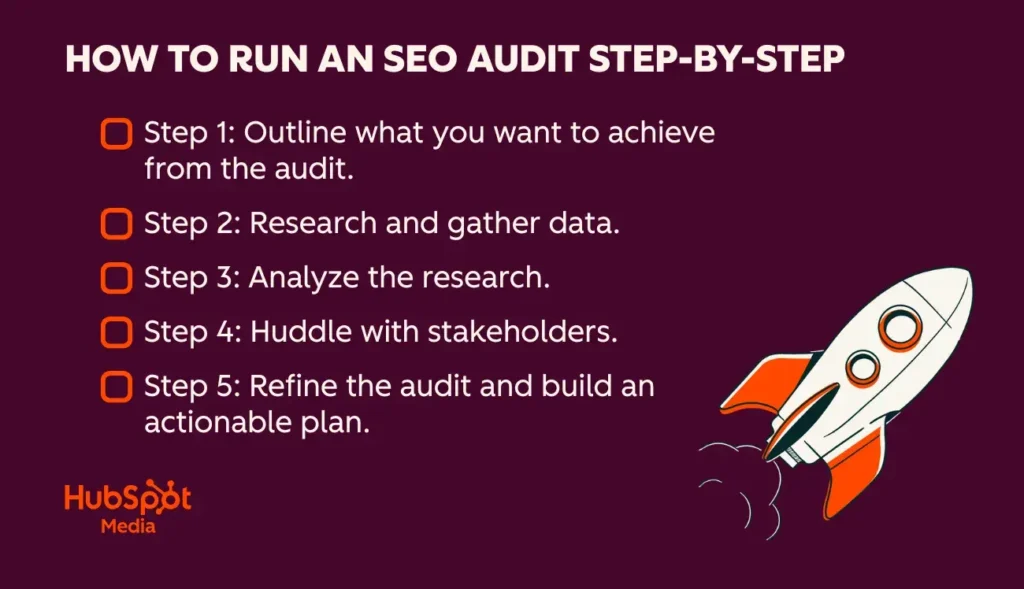
    An effective SEO audit is not a haphazard collection of checks but a carefully orchestrated process. The following five-step framework ensures focus and translates data into actionable strategy, explicitly incorporating the demands of AI-driven search. It’s important to remember that while this is called an "SEO audit," it intrinsically includes AEO (Answer Engine Optimization) and GEO (Generative Engine Optimization) to reflect how modern users interact with brands.

    Step 1: Outline Business Goals and Audit Intent
    The foundational step involves defining why the audit is being conducted and what specific business problem(s) it aims to solve. Every audit must be rooted in business goals, not just a list of technical checks. While improving website traffic and conversions are universal SEO objectives, the specific underlying issues must be clarified. This might involve recovering from a traffic drop, boosting conversions for a new product, or establishing authority in a nascent market segment.

    • How to do it: Engage stakeholders (marketing, sales, product teams) to understand current challenges, upcoming campaigns, and overall business priorities. Ask probing questions: "What metrics have declined?" "Are there new product launches struggling to gain visibility?" "Which audience segments are we failing to reach?" The audit’s scope should then be shaped around these defined objectives.

    • Chronological Context: This initial alignment ensures that all subsequent data gathering and analysis are focused and relevant, preventing the audit from becoming a purely academic exercise. It acts as the guiding star for the entire process.

      SEO audits: How to conduct one that drives traffic growth [+ checklist]

    Step 2: Research and Comprehensive Data Gathering
    This phase is dedicated to collecting all quantitative signals that illustrate the website’s performance. It forms the empirical layer of the audit. This is where the "cookie-cutter SEO" phase takes place, with tools doing the heavy lifting.

    • Data Sources:

      • Google Search Console (GSC): Provides critical data on crawl errors, indexing status, search queries, impressions, clicks, and Core Web Vitals.
      • Google Analytics (GA4): Offers insights into user behavior, traffic sources, conversion paths, and engagement metrics.
      • Website Crawlers (e.g., Screaming Frog, Semrush Site Audit): Identify technical issues like broken links, redirect chains, duplicate content, missing metadata, and site architecture problems.
      • Backlink Analysis Tools (e.g., Semrush, Ahrefs): Reveal backlink profiles, domain authority, toxic links, and competitor link strategies.
      • Keyword Research Tools (e.g., Semrush, Ahrefs): Uncover ranking keywords, search volume, keyword gaps, and topic opportunities.
      • AI Search Graders (e.g., HubSpot AEO Grader): Specifically analyze brand and entity visibility within AI-generated search results and generative engines.
    • Pro Tip: Consolidate all data into a central repository, such as a Google Sheet or dedicated dashboard. This serves as a vital benchmark for future audits, allowing for easy comparison and measurement of progress in metrics like rankings, traffic, and AI visibility.

    Step 3: In-Depth Human Analysis of Research
    This is where raw data transforms into actionable insights, moving beyond what automated tools can provide. It’s the strategic layer where an experienced SEO professional "reads between the lines," connecting patterns, understanding the root causes of issues, and anticipating their impact on traffic, rankings, conversions, and AI visibility.

    • Analytical Process:

      • Identify Trends & Anomalies: Look for significant drops or spikes in traffic, indexing issues, unexpected content performance, or unusual backlink activity.
      • Connect the Dots: For example, a sudden drop in rankings might correlate with a Google algorithm update or a recent site migration.
      • Evaluate Against Goals: Always refer back to the business goals defined in Step 1. How do these data points affect those objectives?
      • Assess AI Readiness: Analyze content through the lens of E-E-A-T and entity clarity. Is the brand’s expertise clearly signaled? Is content structured for easy AI consumption?
      • Competitive Analysis: Compare the site’s performance across all audit areas against key competitors, especially regarding AI visibility and entity recognition.
    • Critical Aspect: Align SEO insights with the broader business strategy, including product priorities, revenue-driving pages, seasonal demand, marketing campaigns, and sales goals. This ensures the audit remains grounded in commercial reality.

      SEO audits: How to conduct one that drives traffic growth [+ checklist]

    Step 4: Huddle with Stakeholders for Alignment
    This phase bridges SEO insights with the operational realities of the business. It’s an opportunity to collaborate with stakeholders, validate assumptions, fill knowledge gaps, and ensure that the recommendations are practical within the context of existing strategy, team capacity, and upcoming initiatives.

    • Purpose: The SEO specialist, having gained a deep understanding of the site’s performance, presents preliminary findings. This meeting is not about delivering the final plan but about discussing the implications of the data. It’s a moment to confirm or adjust initial priorities based on newfound insights or evolving business needs. For instance, the data might reveal an untapped audience segment or a high-potential content cluster not previously considered.

    • How to do it: Prepare a concise summary of key findings and potential implications. Facilitate an open discussion to gain buy-in and refine the strategic direction. Crucially, secure stakeholder agreement on the overall strategic direction before proceeding to build the detailed action plan.

    Step 5: Refine the Audit and Build an Actionable Plan
    This is the culmination of the audit process, transforming insights into a concrete, executable strategy. It’s not enough to merely list issues; the true value of an audit lies in translating those findings into structured actions with assigned owners, realistic timelines, and clear expected outcomes.

    • Plan Components:

      • Prioritized Recommendations: Categorize issues by impact (high, medium, low) and effort (quick win, moderate, significant).
      • Detailed Action Items: Each recommendation should specify what needs to be done, how it should be done, and why it matters (linking back to business goals).
      • Assigned Ownership: Clearly designate who is responsible for each task (e.g., content team, development team, SEO specialist).
      • Timelines & Deadlines: Establish realistic deadlines for completion.
      • Expected Outcomes: Quantify the anticipated results for each major action (e.g., "increase organic traffic by X%," "reduce bounce rate by Y%," "improve AI answer box visibility for Z keywords").
      • Measurement Plan: Outline how the success of implemented changes will be tracked and reported.
    • Outcome: A well-structured plan makes the audit a living document, a weekly roadmap for action rather than a report filed away. For long-term implementation, managing these actions within a project management tool like Asana or Jira can significantly improve efficiency and accountability.

      SEO audits: How to conduct one that drives traffic growth [+ checklist]

    Prioritizing for Impact: Interpreting Your SEO Report and Fixing Issues

    Once audit findings are compiled, the critical next step is to prioritize them strategically based on impact, effort, and business alignment.

    1. Unblock Crawling and Indexing: Top priority must be given to any issues preventing search engines from accessing or indexing key pages. These fundamental technical errors (e.g., accidental noindex tags, broken internal links, faulty robots.txt rules) can instantly suppress visibility. Fixing them often yields the fastest and most significant traffic recovery. This aligns with the "Maslow’s Hierarchy of Needs for SEO," where crawlability and indexability form the base.

    2. Flag Issues with True Business Risk: Certain findings demand immediate attention due to direct revenue or reputational implications. Security vulnerabilities, broken checkout flows, incorrect pricing, or inaccessible forms are non-negotiable priorities that directly affect conversions and customer trust.

    3. Align Tasks with Business Goals: Prioritize content clusters and pages that directly support the company’s specific, SMART (Specific, Measurable, Attainable, Relevant, Time-bound) goals—whether it’s targeting a new audience, promoting a flagship product, or expanding into a new region. An SEO audit must always reflect and serve the business’s strategic direction.

    4. Identify Content Updates for Multiple Channels: Prioritize content that offers compounding value by serving multiple marketing channels (SEO, email nurturing, sales enablement, product education). A single high-quality asset, especially when part of a defined content cluster, can address gaps across various touchpoints. Tools like HubSpot’s free AI content writer can assist in this content amplification.

      SEO audits: How to conduct one that drives traffic growth [+ checklist]
    5. Tackle High-Impact, Low-Effort Wins First: Look for actions that require minimal time (e.g., under 30 minutes) but deliver measurable improvements. Updating a title tag, adding a favicon, compressing images, or deleting an irrelevant, outdated page can quickly build momentum and demonstrate early success, motivating the team.

    6. Cluster Recommendations into Sprints: Group related issues into thematic "sprints" (e.g., "page speed sprint," "schema sprint," "content refresh sprint"). This approach enhances team focus, reduces context switching, and streamlines implementation, allowing for faster delivery of improvements and easier reporting on completed initiatives.

    7. Focus Developer Time on Sitewide, Template-Level Issues: Developer resources are often limited, making strategic allocation crucial. Prioritize fixes that affect the entire site or specific templates, such as sitewide speed optimizations, comprehensive schema improvements, navigation restructuring, or JavaScript cleanup. These changes can positively impact hundreds or thousands of URLs simultaneously. For teams looking to enhance their capabilities, HubSpot Academy’s SEO Course offers comprehensive training.

    Essential Tools for the Modern SEO Auditor

    The right toolkit significantly enhances the speed, accuracy, and prioritization capabilities of an SEO audit.

    • HubSpot AEO Grader: This free tool is indispensable for modern audits, specifically assessing brand and entity visibility in AI search results. It evaluates how a brand appears in generative engines, answer boxes, and conversational interfaces, directly addressing the AEO/GEO components. It measures entity strength, content signals, structured data, and authority markers—all crucial for AI-generated responses.

      SEO audits: How to conduct one that drives traffic growth [+ checklist]
      • Best for: Marketers seeking to move beyond traditional rankings and understand AI’s perception of their brand.
      • Pricing: Free.
    • HubSpot Website Grader: A free, user-friendly tool offering a quick snapshot of a site’s SEO health, performance, mobile usability, and security. It aligns perfectly with identifying "quick wins" by surfacing immediate fixes related to speed, metadata, and basic technical hygiene.

      • Best for: Marketers needing a simple, high-level overview before delving into more complex analyses.
      • Pricing: Free.
    • Semrush: A comprehensive SEO platform widely regarded for its depth in keyword research, competitive analysis, backlink auditing, content insights, and site auditing. It now includes AI/LLM-driven recommendations.

      • Best for: Marketers and consultants requiring extensive data for keyword analysis, competitor insights, and robust reporting across various SEO facets.
      • Pricing: Plans typically start around $165/month (billed annually).
    • Screaming Frog SEO Spider: A must-have for technical audits, this fast, locally installed crawler scans websites to uncover major technical issues like orphan pages, broken links, redirect chains, thin content, and missing metadata.

      • Best for: Technical SEOs who need precise, crawl-based insights and have the expertise to interpret raw data.
      • Pricing: Free version available; licensed version for $279/year.
    • HubSpot Marketing Hub & Content Hub: These integrated platforms empower marketers to implement audit findings efficiently.

      • HubSpot Content Hub: A CMS with built-in AI-powered SEO recommendations, content suggestions, and intelligent content tools. It’s ideal for optimizing metadata, improving on-page signals, and managing content clusters, especially with features like Breeze AI for automated content production.
      • HubSpot Marketing Hub: A comprehensive marketing platform that integrates SEO tools directly with website data, content strategy, and reporting. It facilitates tracking performance, analyzing SEO growth, managing content clusters, assigning tasks, and measuring the impact of audit implementations on traffic and conversions.
      • Best for: Teams seeking an integrated platform to not only identify issues but also to directly implement and track their SEO strategy within a unified ecosystem.
      • Pricing: Marketing Hub offers a free plan; Starter ($9 per seat/month), Professional ($800/month), and Enterprise ($3,600/month).

    Frequently Asked Questions About Modern SEO Audits

    How long does an SEO audit typically take?
    Most SEO audits range from two to eight weeks, depending on the website’s size, complexity, and the desired depth of coverage. Smaller sites might be completed in a few days, while enterprise-level sites with thousands of URLs and intricate technical structures naturally require more time. The analysis and stakeholder alignment phases are often the most time-consuming and crucial, as they demand critical thinking and creative problem-solving. Rushing these stages risks overlooking significant opportunities or misinterpreting data.

    SEO audits: How to conduct one that drives traffic growth [+ checklist]

    Is a developer necessary to complete an SEO audit?
    SEO specialists are responsible for running the audit—diagnosing and documenting technical issues. However, developers are frequently essential for implementing many of the identified fixes. Complex technical adjustments, such as template-level changes, Core Web Vitals improvements, structured data implementation, or JavaScript cleanup, typically require development expertise. The audit identifies the work; the development team executes it.

    How often should an SEO audit be conducted?
    Most businesses benefit from regular audits: quarterly, biannual, or at least annually. Consistent audits are vital for maintaining and growing search performance over time. Companies in rapidly evolving industries, those with frequent content updates, or businesses significantly impacted by AI search shifts may require more frequent checks. At a minimum, a full audit once per year is recommended to benchmark performance and detect any unexpected declines.

    What tools are available for a free SEO audit?
    A basic audit can be performed using several free tools:

    • Google Search Console: For crawlability, indexing, and core web vitals.
    • Google Analytics: For traffic and user behavior data.
    • HubSpot Website Grader: For a quick overview of technical and on-page issues.
    • HubSpot AEO Grader: For insights into AI search visibility.
    • Google PageSpeed Insights: To analyze and improve page loading performance.
      These tools collectively cover essential areas: crawlability, indexability, content quality, and AI search visibility.

    What distinguishes an SEO audit from a general website audit?
    An SEO audit is highly specialized, focusing specifically on elements that influence search engine rankings, organic visibility, and conversions. This includes technical health, content quality, backlink profiles, and AI search visibility. A website audit, conversely, is a broader evaluation that might encompass user experience (UX) design, overall accessibility, conversion rate optimization (CRO), branding consistency, site navigation, and general site performance. Essentially, an SEO audit can be considered a specialized component within a more comprehensive website audit. Both can be combined, but the SEO audit is directly tied to improving search performance and driving traffic growth.

    Modern SEO Audits Go Beyond Blue Links

    A meticulously executed SEO audit is far more than a problem-spotting exercise; it transforms a website into a potent growth engine. By comprehensively reviewing technical health, content quality, authority signals, and critically, AI search visibility, businesses can uncover immediate "quick wins," formulate robust long-term strategies, and construct an actionable roadmap that directly fuels traffic, conversions, and pipeline growth.

    SEO audits: How to conduct one that drives traffic growth [+ checklist]

    It is paramount to remember that contemporary audits transcend the traditional focus on "blue links." They rigorously evaluate how effectively a brand appears in generative search results and whether its content is accurately understood and categorized as a distinct entity by sophisticated AI models. For businesses seeking a swift, precise assessment of their current standing, tools such as HubSpot Website Grader and HubSpot AEO Grader offer convenient ways to gauge both SEO fundamentals and crucial AI visibility within minutes.

    From the perspective of seasoned practitioners, the most impactful audits are those deeply rooted in specific business objectives and executed through collaborative effort. The moment when data unequivocally aligns with stakeholders’ intuitive understanding—or, conversely, reveals something entirely unexpected—is often the most energizing. A truly successful audit leaves teams feeling focused, confident, and invigorated, armed with a clear path forward. This is the hallmark of an exceptional audit: one that not only diagnoses issues but inspires decisive action and delivers tangible, measurable results.

Grafex Media
Privacy Overview

This website uses cookies so that we can provide you with the best user experience possible. Cookie information is stored in your browser and performs functions such as recognising you when you return to our website and helping our team to understand which sections of the website you find most interesting and useful.