
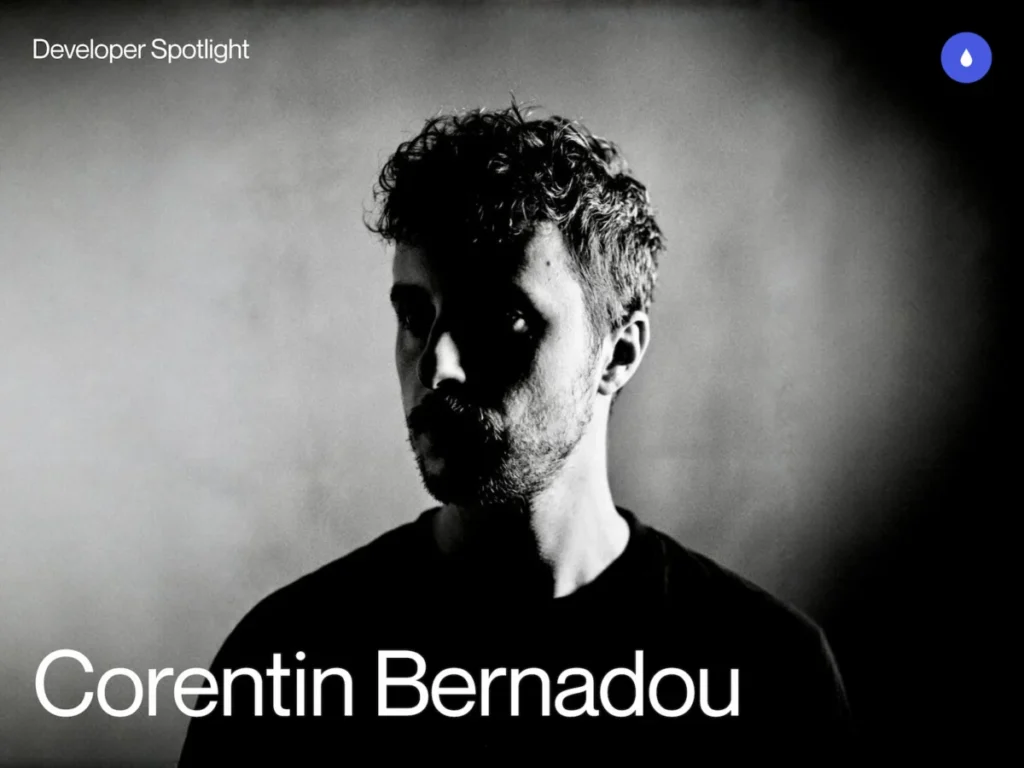
Corentin Bernadou, a distinguished French freelance developer, has captured the attention of the digital design community with his profound expertise in animations and intricate motion graphics. His recent feature on Codrops, a leading online resource for web designers and developers, highlighted his unique trajectory and groundbreaking work in the realm of creative development, particularly his mastery of WebGL and shaders. Bernadou’s journey, marked by a multidisciplinary academic background and a relentless pursuit of innovation, underscores a growing trend in the digital landscape where artistic vision converges with technical prowess to craft immersive web experiences. His transition to freelancing signifies a pivotal moment in his career, aiming to further expand his creative horizons and collaborative engagements on a global scale.
A Non-Linear Path to Digital Craftsmanship
Bernadou’s career trajectory is far from conventional, reflecting a deep-seated curiosity that transcended traditional academic boundaries. His early studies began with a degree in philosophy, a discipline that cultivates critical thinking and abstract reasoning. This was followed by a foray into art history, which provided him with a comprehensive understanding of aesthetic principles, visual composition, and the evolution of creative expression across different eras. These foundational experiences, though seemingly disparate from web development, likely imbued him with a unique perspective on problem-solving and an appreciation for intricate design.
The turning point arrived during his studies in communication, where he first encountered web design. This discovery ignited a nascent interest, prompting him to pursue a full degree in Visual & User Experience Design. While excelling in design, Bernadou soon encountered a common frustration among designers: the conceptualization of an experience often reached a limit without the technical means to bring it to life. This intellectual curiosity, a desire to move beyond the static blueprint into dynamic execution, spurred his decisive pivot towards development.
The Self-Taught Developer: From HTML/CSS to Creative Code
The decision to learn coding independently was a formidable challenge, initially appearing "incredibly difficult, almost impossible." However, Bernadou embraced this obstacle, starting with the fundamental building blocks of the web: HTML and CSS. This period of self-instruction was critical, laying the groundwork for more advanced explorations. During this phase, he discovered influential platforms such as Codrops, Awwwards, and FWA (Favorite Website Awards), which showcased the pinnacle of creative web development. These platforms served as powerful sources of inspiration, crystallizing his ambition to contribute to this exciting new frontier of digital artistry.
His dedication paid off rapidly. Within months, Bernadou successfully transitioned from a designer mindset to that of a developer. He set a clear goal: to secure a development role. To achieve this, he channeled his energy into constructing his inaugural portfolio, a showcase of his newly acquired skills and burgeoning creative vision. The quality of this initial work garnered significant industry recognition, earning him a prestigious "Site of the Day" and a "Developer Award" on Awwwards. Such accolades are highly coveted in the creative web industry, serving as powerful validations of skill and innovation. This recognition proved instrumental in securing his first position at a prominent agency, marking a significant milestone in his professional journey. After six years of contributing to various projects and honing his craft within an agency environment, Bernadou has now embarked on a new chapter: freelance creative development. This move is driven by a desire for greater autonomy, diverse project engagement, and the freedom to explore cutting-edge techniques.
The Philosophy of Perpetual Learning and WebGL Mastery

Corentin Bernadou articulates a fundamental belief that resonates with many in the technology sector: development, and creative work at large, is a field with "no ceiling." This philosophy of continuous learning is his daily motivator, fueling his excitement to discover "what am I going to learn today?" This mindset is particularly crucial in the rapidly evolving landscape of web technologies, where new frameworks, libraries, and techniques emerge with remarkable frequency.
During his tenure at an agency, Bernadou experienced a period he describes as hitting a "plateau," a common challenge for professionals seeking to push their boundaries. To reignite his passion and overcome this stagnation, he set himself a new, ambitious goal: mastering the creation of more complex animations using WebGL. WebGL (Web Graphics Library) is a JavaScript API for rendering interactive 2D and 3D graphics within any compatible web browser without the use of plug-ins. It allows for hardware-accelerated rendering, making it ideal for high-performance visual effects. The learning curve for WebGL can be steep, demanding a strong grasp of mathematics and programming concepts.
Bernadou’s approach to learning WebGL involved extensive experimentation. He began building various visual explorations and, crucially, sharing them on social media platforms, particularly X (formerly Twitter). This act of public sharing served as a "diary" of his progress, but it also had an unexpected and profound impact. His initial posts garnered an audience far larger than he anticipated, providing invaluable feedback, encouragement, and a sense of community. This positive reception became a powerful catalyst, motivating him to continue his explorations and share his discoveries, fostering a vibrant exchange with fellow developers and enthusiasts.
Visualizing the Complex: From Deformations to Shaders
His early WebGL experiments showcased a keen interest in creating dynamic and fluid visual effects. Examples such as "moving portraits" and "spiral of sight" demonstrated his ability to imbue static images with life through subtle yet complex deformations and motion paths. These explorations laid the groundwork for his deeper dive into the technical intricacies of creative coding.
The pursuit of complex animations naturally led him to the most challenging aspect of WebGL: shaders. Shaders are small programs that run directly on the graphics processing unit (GPU), enabling highly customizable and performant visual effects. They are essential for creating realistic lighting, textures, and advanced post-processing effects. Often considered the "steepest part of the learning curve" in graphics programming, mastering shaders requires a strong understanding of vector math, linear algebra, and specialized shader languages like GLSL (OpenGL Shading Language).
Bernadou credits invaluable resources such as Codrops and Bruno Simon’s "Three.js Journey" for guiding him through the fundamentals of shaders. These platforms provide structured learning paths and practical examples that demystify complex concepts, making advanced techniques accessible to a wider audience. His dedication to this challenging domain resulted in a series of captivating visual demonstrations. Animations like "ruby campbell," "through the frames," "flow of portraits," and "tg-7th flow of sound" exemplify his command over shaders, transforming ordinary images and elements into mesmerizing, interactive experiences with fluid transitions and intricate visual distortions. These works not only showcase technical skill but also a refined artistic sensibility, merging form and function seamlessly.
More recently, Bernadou has focused his research and experimentation on the mathematical underpinnings of morphing and motion animations. This deep dive into mathematical principles allows for even greater control and nuance in creating organic and precise movements. His latest demonstrations, including "WebGL_Motion-Geometries-4K," "Motion-Geometries_2," "WebGL_Motion-Geometries-Optimized," and "WebGL_Circle-Optimized," illustrate this advanced understanding. These pieces feature geometric forms and abstract shapes that morph, flow, and interact with striking fluidity, driven by sophisticated mathematical algorithms. This focus highlights a commitment to pushing the boundaries of what is visually achievable on the web, leveraging computation to create art.

The Freelancer’s Arsenal: Adaptive Tech Stack and Essential Tools
As a freelance developer, Corentin Bernadou emphasizes the importance of an adaptable technology stack, tailored to the specific demands of each project. This flexibility is a hallmark of successful independent practitioners who must navigate diverse client requirements and project scopes.
His technological evolution reflects current industry trends. While he previously worked extensively with vanilla JavaScript and custom WordPress setups, he has progressively migrated towards more modern and efficient solutions. His current preference leans towards Nuxt.js, a powerful open-source framework built on Vue.js, known for its server-side rendering capabilities, enhanced performance, and developer-friendly experience. This is often paired with a headless CMS (Content Management System) like Prismic or Sanity. Headless CMS solutions decouple the content management backend from the frontend presentation layer, offering greater flexibility for developers and allowing content to be delivered across multiple platforms.
For animations, Bernadou’s consistent choice has been GSAP (GreenSock Animation Platform), a robust and widely respected JavaScript library celebrated for its high performance, reliability, and comprehensive features for creating complex, timeline-based animations. On the WebGL front, he has recently transitioned from OGL to Three.js. Three.js is a cross-browser JavaScript library and API used to create and display animated 3D computer graphics in a web browser, leveraging WebGL. It provides a higher-level abstraction over raw WebGL, simplifying the process of working with 3D scenes, objects, and animations. This switch suggests a strategic move towards a more widely supported and feature-rich library for advanced 3D development.
Beyond his core programming tools, Bernadou relies on a curated suite of applications for workflow management and productivity. Notion serves as his primary tool for task management and project planning, facilitating organization and collaboration. Cursor, a modern code editor, is his environment for writing and debugging code, while Warp functions as his preferred terminal for command-line operations. However, he identifies two "non-negotiables" that are integral to his creative process: a physical notebook for sketching animation ideas and conceptualizing before digital implementation, and Spotify for music, underscoring the role of auditory stimulation in his focus and creative flow. His workstation setup, meticulously arranged and photographed, further illustrates the importance of a conducive environment for fostering creativity and productivity.
The Uncharted Future: Spontaneity, Growth, and Backend Exploration
Looking ahead, Corentin Bernadou expresses a profound sense of excitement about the unknown, embracing the spontaneity that drives much of his creative exploration. His approach is often initiated by a simple "what if I tried this today?" moment, fueled by continuous inspiration. This ethos of agile experimentation is a testament to his innovative spirit and commitment to pushing boundaries.
He firmly believes he is still at the nascent stages of his journey, with a vast landscape of possibilities yet to be explored. His immediate aspirations include delving into "more complex animations, new techniques, ideas I haven’t even discovered yet." This forward-looking perspective aligns with the dynamic nature of creative technology, where continuous innovation is paramount.

Intriguingly, Bernadou has also developed a growing interest in backend development. While seemingly a departure from his frontend and creative coding focus, this interest represents a logical progression towards full-stack capabilities. Understanding backend systems would enable him to build more robust, data-driven applications, develop custom tools, and perhaps even explore server-side rendering for more complex WebGL projects, offering a holistic approach to web development. This expansion of his skill set would further enhance his versatility as a freelance professional.
Ultimately, Bernadou hopes that freelancing will provide him with the optimal environment to sustain his passion for learning, experimentation, and free creation. He envisions this path leading him to collaborate with "the right people," fostering synergistic partnerships that amplify creative output. His definition of success is refreshingly intrinsic: "If I can make a living doing something that genuinely excites me every day, that feels like the kind of success I’m looking for." This statement encapsulates a profound alignment between personal passion and professional endeavor, a goal many aspire to.
Implications for Creative Development and Industry Trends
Corentin Bernadou’s journey offers valuable insights for aspiring creative developers and the broader digital industry. His advice—"don’t wait until you feel ready to start learning something new"—is particularly salient in an era where digital resources are more accessible than ever. The internet abounds with tutorials, open-source projects, and communities that can empower individuals to acquire new skills. His emphasis on listening to "restlessness" when feeling stuck or uninspired serves as a powerful reminder to seek new challenges and continuously evolve one’s craft.
Bernadou’s work exemplifies how individual creative developers are not merely implementing designs but are actively shaping the future of web experiences. By pushing the technical and artistic boundaries of WebGL, shaders, and complex animations, he contributes to a collective advancement that inspires new trends in interactive design and user engagement. His public sharing of experiments fosters a culture of open learning and collaboration, vital for a rapidly evolving field. As the web increasingly becomes a canvas for rich, interactive, and immersive content, the demand for professionals with Bernadou’s unique blend of artistic vision and technical mastery will undoubtedly continue to grow. His career trajectory serves as a compelling case study for the power of self-driven learning, continuous experimentation, and the pursuit of passion in forging a successful and fulfilling career in the dynamic world of creative development.
