
Tag: chatgpt

  • Ahrefs Analysis Reveals Strategic Gap in ChatGPT Citations for Reddit Content Despite High Retrieval Rates

    Ahrefs Analysis Reveals Strategic Gap in ChatGPT Citations for Reddit Content Despite High Retrieval Rates

    The landscape of artificial intelligence and search engine optimization underwent a significant shift in early 2025 as new data illuminated the complex relationship between large language models and the sources they use to generate responses. A comprehensive study conducted by Ahrefs, a leading search engine optimization toolset provider, has uncovered a stark disparity in how OpenAI’s ChatGPT utilizes Reddit content. While the platform appears to rely heavily on the social news site to build context and understand human consensus, it rarely credits the source with a formal citation. This phenomenon, now being termed the "Reddit gap," suggests that while AI models are becoming more sophisticated in their information gathering, the path to visibility for content creators remains fraught with technical hurdles.

    The Ahrefs report, which analyzed a massive dataset of 1.4 million ChatGPT prompts, provides a granular look at the mechanics of Retrieval-Augmented Generation (RAG). According to the findings, ChatGPT 5.2—the model version active during the primary study period in February 2025—retrieved a vast array of pages to formulate its answers, yet only about half of these retrieved sources actually made it into the final response as a visible citation. The discrepancy was most pronounced with Reddit content, which, despite being a primary source for contextual understanding, was cited less than 2% of the time when accessed through a dedicated data stream.

    Methodology and the Scope of the Dataset

    To understand the internal logic of OpenAI’s search capabilities, Ahrefs researchers examined 1.4 million prompts specifically focused on ChatGPT’s search-enabled features. The study tracked the lifecycle of a response: from the initial user query to the generation of sub-questions, the retrieval of web pages, and finally, the selection of which pages to cite.

    The researchers utilized open-source tools to calculate similarity scores between the retrieved content and the specific sub-queries generated by ChatGPT. This allowed the team to approximate the internal "matching" process the AI uses to determine relevance. By analyzing which pages were "seen" by the model versus which were "shown" to the user, Ahrefs was able to identify the specific characteristics that lead to a successful citation. The data revealed that citation rates vary wildly depending on the source type and the structural integrity of the URL.

    The Reddit Paradox: Context Without Credit

    One of the most striking revelations of the report is the treatment of Reddit. In May 2024, OpenAI and Reddit announced a high-profile partnership that granted OpenAI access to Reddit’s Data API. This deal was intended to provide ChatGPT with real-time access to the "human" element of the internet—discussions, niche advice, and community consensus. However, the Ahrefs data shows that this partnership has not translated into direct traffic for Reddit through citations.

    Of all the pages that ChatGPT retrieved but ultimately chose not to cite, a staggering 67.8% originated from the specific Reddit source identified by Ahrefs. Furthermore, pages from this dedicated Reddit stream were cited only 1.93% of the time. This suggests a functional divide in how the AI treats the data: it uses Reddit as a foundational layer to understand "what people think" about a topic, but it looks to traditional web search results to provide "factual" citations.

    Ahrefs notes that ChatGPT appears to be using Reddit extensively to gauge consensus and build a contextual framework for its answers. For example, if a user asks for the "best coffee maker," the AI may scan Reddit to see which models are currently trending or being criticized by enthusiasts. Once it has formed a "consensus" view, it may then cite a professional review site or a manufacturer’s page to provide the final link to the user. This "upstream effect" means Reddit’s influence on AI responses is massive, yet its visibility in the final output is minimal.

    Technical Factors Influencing Citation Rates

    The study moved beyond the Reddit findings to analyze what actually helps a standard webpage get cited. The results emphasize a shift away from traditional keyword stuffing toward a more nuanced "sub-query" alignment.

    When a user enters a complex prompt, ChatGPT Search often breaks that prompt down into several narrower, more specific queries. Ahrefs found that the highest correlation with a successful citation was not how well a page matched the original prompt, but how closely its title and URL matched these narrower sub-queries.

    For instance, a prompt like "how to plan a trip to Japan" might be broken down into sub-queries such as "Japan rail pass costs 2025" or "best time to visit Kyoto for cherry blossoms." Pages that had titles and URL structures specifically addressing these sub-queries were significantly more likely to be cited than general "Japan Travel Guide" pages.

    The data also highlighted the importance of URL hygiene. Pages with clear, descriptive URL slugs were cited approximately 89.78% of the time they appeared in search results. In contrast, pages with convoluted or non-descriptive URLs saw their citation rate drop to 81.11%. This reinforces previous findings by other analytics firms, such as SE Ranking, which suggested that ChatGPT favors URLs that describe broader topics or specific sub-topics clearly over those that are overly optimized for a single keyword.

    Chronology of the AI Search Evolution

    The relationship between AI and web citations has evolved rapidly over the past year. The Ahrefs study sits at a critical juncture in this timeline:

    • May 2024: OpenAI and Reddit announce a data partnership. This was seen as a move to bolster the "conversational" quality of ChatGPT and provide a more human-centric data source for training and real-time retrieval.
    • Late 2024: OpenAI begins integrating "Search" more deeply into the ChatGPT interface, moving away from a separate "Browse with Bing" plugin toward a more native, integrated search experience.
    • February 2025: The period of the Ahrefs study. At this time, ChatGPT 5.2 was the standard, and citation rates for retrieved pages hovered around 50%.
    • March 2025 and Beyond: OpenAI introduces the GPT-5.3 "Instant" transition. Early data from third-party analysts like Resoneo suggests that this update led to a 20% decrease in the number of cited domains per response. This indicates that OpenAI is becoming more selective—or perhaps more restrictive—in how it attributes information.

    Industry Implications and Reactions

    The "Reddit gap" and the selective nature of AI citations have sparked a debate among digital marketers and content publishers. While there has been no official statement from Reddit regarding the 1.93% citation figure, industry analysts suggest that the "upstream influence" of Reddit might be exactly what OpenAI intended when it signed the data deal.

    For businesses and SEO professionals, the implications are clear: the traditional strategy of ranking for a broad keyword is no longer sufficient to guarantee visibility in an AI-driven search environment. Content must now be structured to answer the specific, granular questions that an AI model generates internally.

    "The study shows that we are moving into an era of ‘semantic precision,’" says one industry analyst who reviewed the Ahrefs data. "If your page is retrieved but not cited, you are essentially training the model for free without getting the referral traffic. To bridge that gap, publishers need to align their metadata—titles and URLs—with the intent of the sub-queries ChatGPT is actually searching for."

    The Broader Impact on the Information Ecosystem

    The finding that ChatGPT uses Reddit to build consensus but does not cite it raises ethical and practical questions about the future of the web. If AI models continue to absorb the collective knowledge of communities like Reddit without directing users back to those communities, the incentive for users to contribute to those platforms could diminish. This could create a "feedback loop" where the AI lacks new, human-generated data to learn from because it has inadvertently suppressed the sources of that data.

    Furthermore, the 20% decrease in cited domains observed in newer models like GPT-5.3 suggests a trend toward "zero-click" responses in the AI space, mirroring a trend that has long been a point of contention in traditional Google search. As AI models become more confident in their synthesized answers, the necessity to "prove" the answer with a citation appears to be declining in the eyes of the developers.

    Looking Ahead: The Future of Attribution

    As OpenAI continues to iterate on its models, the patterns observed in the Ahrefs study may shift. The transition to GPT-5.3 and future versions will likely continue to refine the balance between retrieval and citation. For now, the "Reddit gap" serves as a case study in how AI can utilize a platform’s data for its own intelligence while bypassing the traditional traffic-sharing norms of the internet.

    For content creators, the path forward involves a deeper focus on technical SEO and semantic relevance. The Ahrefs report concludes that simply being "the best" source on a topic is no longer enough; a page must also be the most "mappable" source for the specific sub-questions an AI asks. As the digital landscape moves further away from the traditional list of blue links, the battle for the citation will become as fierce as the battle for the top spot on a Google results page once was.

    The study serves as a reminder that in the world of AI search, visibility is not just about being found—it is about being credited. As long as the "Reddit gap" persists, it remains a signal to all publishers that the way AI "reads" the web is fundamentally different from how it "reports" the web to its users.

  • OpenAI’s ChatGPT Ad Channel Faces Mixed Early Sentiment Amid Data Gaps and Evolving Platform

    OpenAI’s ChatGPT Ad Channel Faces Mixed Early Sentiment Amid Data Gaps and Evolving Platform

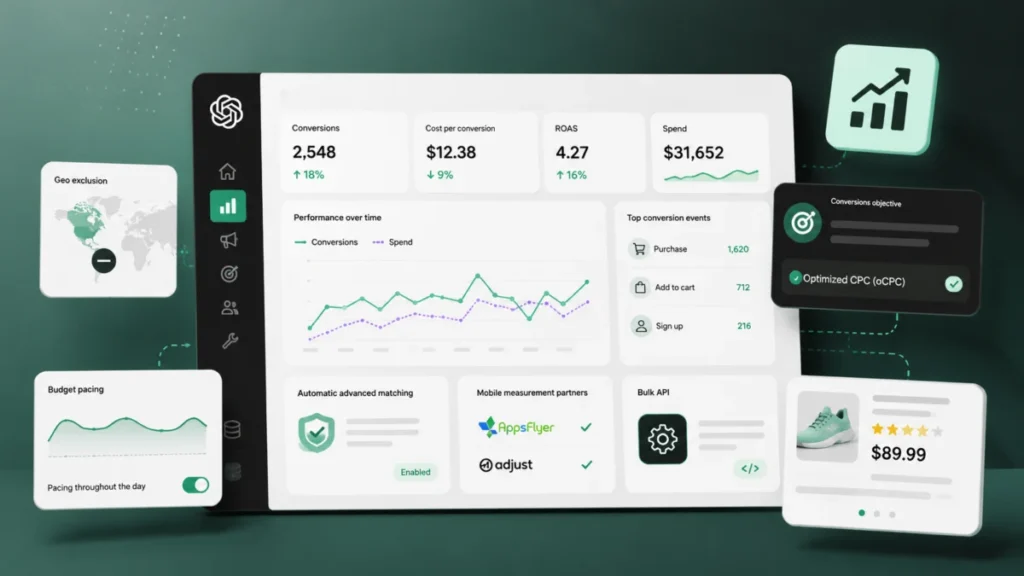
    OpenAI’s ambitious foray into the advertising market, positioning its flagship generative AI model, ChatGPT, as a nascent advertising channel, is currently navigating a period of mixed sentiment among early adopters. Just two months after the official launch of ad placements within the conversational AI platform, brands are grappling with significant challenges, including limited access to performance data, an unclear framework for measuring return on investment (ROI), and the inherent fluidity of a rapidly evolving product. This situation underscores the delicate balance between capitalizing on a burgeoning, high-intent audience and the practical realities of establishing a measurable and reliable advertising ecosystem in a groundbreaking technological space.

    The Genesis of Monetization: OpenAI’s Strategic Imperative

    The journey of OpenAI from a non-profit research institution to a leading commercial entity in the artificial intelligence landscape has been marked by a profound strategic pivot, driven by both its technological advancements and the immense financial demands of developing and operating large language models (LLMs). Founded in 2015 with a mission to ensure that artificial general intelligence (AGI) benefits all of humanity, OpenAI initially operated under a non-profit structure. However, the exponential costs associated with training and deploying models like GPT-3 and subsequently GPT-4 necessitated a shift. In 2019, OpenAI LP was formed as a "capped-profit" entity, allowing it to raise substantial capital while retaining its core mission. This transformation culminated in a multi-billion dollar investment from Microsoft, solidifying a partnership that provided crucial computational resources and financial backing.

    ChatGPT, launched to the public in November 2022, rapidly became a global phenomenon, achieving 100 million users within two months, making it the fastest-growing consumer application in history. This unprecedented user acquisition highlighted the vast potential of generative AI, but also underscored the immense operational expenditure required to sustain such a service. Running LLMs at scale demands vast server farms, continuous energy consumption, and ongoing research and development—costs that far outstrip subscription revenues alone. Consequently, exploring diverse monetization strategies became an inevitable step for OpenAI, leading to the introduction of API access for developers, premium subscription tiers (ChatGPT Plus), and, more recently, the integration of advertising. This strategic imperative to generate revenue is not merely about profit but about sustaining the very innovation cycle that powers OpenAI’s mission, fueling the next generation of AI development.

    A Nascent Ad Channel: Chronology of Integration and Prior Endeavors

    The timeline of OpenAI’s direct monetization efforts beyond subscriptions and API access has been characterized by both bold experimentation and pragmatic adjustments. Following ChatGPT’s explosive growth in late 2022 and early 2023, the company began exploring various avenues to leverage its immense user base. While specific details surrounding the initial "launch" of ads in ChatGPT are still emerging, the current phase, initiated approximately two months ago, represents a more formalized push into the advertising realm. This comes after earlier ventures that met with varying degrees of success, signaling OpenAI’s iterative approach to finding a sustainable commercial model.

    Notably, OpenAI had previously experimented with features such as "Instant Checkout," a commerce integration designed to streamline purchasing directly through conversational prompts. This feature, however, was quietly retracted, indicating challenges in integrating direct transactional capabilities into the user experience or perhaps a broader recalibration of strategic priorities. Similarly, the company’s ambitions in the video sector have reportedly lost ground to competitors, suggesting a need to refocus its monetization efforts on core strengths. These earlier attempts provide crucial context for the current advertising push: they demonstrate OpenAI’s willingness to innovate and pivot, learning from market feedback and competitive pressures as it seeks to establish a viable and impactful commercial presence. The current ad initiative, therefore, represents a refined strategy, focusing on leveraging the conversational interface itself as a medium for brand engagement.

    Advertiser Engagement: Navigating Uncharted Territory

    The current sentiment among advertisers exploring ChatGPT’s new ad channel is, as reported by Ad Age, a delicate balance between "cautious optimism" and outright "frustration." On one hand, the allure of reaching ChatGPT’s rapidly expanding, highly engaged, and often "high-intent" user base is undeniable. Brands recognize the potential for unprecedented contextual relevance, where advertisements could be seamlessly integrated into user queries, offering solutions precisely when a user is actively seeking information or recommendations. This promises a level of targeting and engagement that traditional ad platforms often struggle to achieve.

    However, this optimism is tempered by significant operational hurdles. A primary concern is the conspicuous absence of robust measurement tools and performance benchmarks. Advertisers accustomed to the granular analytics provided by established platforms like Google Ads or Meta Ads are finding it challenging to justify significant budget allocation to a channel where clear ROI metrics are elusive. This lack of transparency makes it difficult to ascertain the effectiveness of campaigns, optimize spend, or even understand basic engagement rates. Brands are experimenting, but often on a limited scale, wary of overcommitting funds to an unproven medium. Concerns also extend to brand safety in a generative AI environment, where the dynamic nature of content creation could theoretically lead to unforeseen juxtapositions with brand messaging, though OpenAI maintains safeguards against direct alteration of core answers.

    The Data Conundrum and Performance Benchmarks

    The fundamental challenge confronting advertisers on ChatGPT lies in the very nature of conversational AI itself. Traditional digital advertising relies heavily on clicks, impressions, conversions, and a predefined user journey across websites or apps. In a generative AI interface, the user interaction is fluid, conversational, and often highly personalized. This necessitates a rethinking of conventional performance metrics. How does one measure the impact of a sponsored recommendation subtly influencing a user’s decision within a chat thread? What constitutes a "conversion" in a purely conversational context?

    Industry analysts suggest that OpenAI must rapidly develop new, AI-native key performance indicators (KPIs) that accurately reflect the unique value proposition of its platform. This could involve metrics related to "recommendation influence," "conversational engagement," "brand recall within a session," or even advanced sentiment analysis post-ad exposure. Without such tools, advertisers face an uphill battle in attributing value and optimizing their campaigns effectively. This mirrors the early days of search advertising in the late 1990s or social media advertising in the mid-2000s, where advertisers and platforms together had to invent and refine metrics to quantify value in novel digital environments. The absence of these benchmarks not only hinders advertiser confidence but also limits OpenAI’s ability to demonstrate the tangible benefits of its ad channel, potentially slowing adoption among mainstream brands.

    Balancing Act: User Trust Versus Commercial Imperatives

    Advertisers are testing ChatGPT ads — but uncertainty remains high

    At the core of OpenAI’s advertising strategy lies a profound tension: the imperative to monetize its popular platform without eroding the user trust that has been central to ChatGPT’s success. Users flock to ChatGPT for its ability to provide unbiased, informative, and helpful responses. The introduction of advertising risks compromising this perception of neutrality, raising questions about whether sponsored content could subtly or overtly influence the AI’s answers.

    OpenAI maintains that ads "do not directly alter core answers." However, early tests and observations suggest that ads can "influence user journeys." For instance, a sponsored retailer might appear more prominently in a list of recommendations, even when multiple viable options exist. This subtle influence, while not directly falsifying information, still presents a grey area regarding user perception of objectivity. The challenge for OpenAI is to design ad integrations that are transparent, clearly distinguishable from organic content, and ultimately add value to the user experience rather than detracting from it. Failure to strike this delicate balance could lead to user backlash, potentially driving users to competitors perceived as more neutral or ad-free. The future evolution of AI advertising will undoubtedly be shaped by how platforms navigate this ethical tightrope, prioritizing both commercial viability and the foundational principle of user trust.

    The Competitive Landscape and Broader Industry Context

    OpenAI’s push into advertising unfolds within an intensely competitive and rapidly evolving AI landscape. Its primary rivals include tech giants like Google, with its Gemini models and long-established dominance in search advertising, and well-funded startups like Anthropic, developers of the Claude AI. Google, in particular, poses a formidable challenge. With decades of experience in monetizing search queries and an unparalleled advertising infrastructure, Google is integrating generative AI into its search experience (Search Generative Experience, or SGE) and its broader ad ecosystem. This means OpenAI is not just competing for AI supremacy but for a slice of the multi-hundred-billion-dollar global digital advertising market, where Google and Meta currently hold significant sway.

    The broader picture reveals OpenAI juggling multiple strategic priorities simultaneously: continuous AI development, expanding its enterprise solutions, and now, building an advertising platform. Some industry observers have suggested that OpenAI has "cast too wide a net," experimenting across various verticals like video and commerce before refocusing. This scattered approach, coupled with fierce competition, highlights the immense pressure on OpenAI to consolidate its efforts and demonstrate clear value propositions for each of its ventures. The success of its ad channel will not only impact OpenAI’s financial sustainability but also influence the future direction of AI monetization strategies across the industry, potentially setting new standards for how conversational AI integrates with commerce and marketing.

    Strategic Imperatives for Marketers

    Given the nascent stage of ChatGPT’s ad platform, marketing experts advise a measured and strategic approach rather than a headlong rush. For large brands with ample experimental budgets, early testing may offer a first-mover advantage, providing invaluable insights into how their target audience interacts with ads in a conversational AI environment. These brands can afford to allocate resources to understanding the nuances of this new channel, even if immediate, quantifiable ROI is not yet guaranteed.

    For smaller to medium-sized businesses, the recommendation is to focus on strategy development. This involves actively monitoring the platform’s evolution, understanding how AI is integrated into broader media consumption and search behavior, and contemplating how their brand narrative could authentically resonate within a conversational context. The priority is not necessarily to spend now, but to prepare for when the platform matures, measurement tools become more sophisticated, and the value proposition becomes clearer. Marketers should consider how their existing content strategies can be adapted for AI-driven discovery, exploring opportunities for organic visibility within AI responses even before committing to paid placements. The ultimate goal is to integrate AI into a holistic media strategy, recognizing its potential to transform customer engagement and discovery.

    Expert and Industry Perspectives

    Industry analysts widely acknowledge the transformative potential of AI in advertising, predicting significant growth in AI-driven ad spending over the next decade. However, they also echo the sentiment of caution regarding OpenAI’s current ad offering. Many draw parallels to the early days of social media advertising, where platforms like Facebook initially struggled to provide robust measurement tools, yet eventually evolved into indispensable channels for marketers. The consensus is that OpenAI possesses a unique asset in ChatGPT’s user base and conversational capabilities, but it must rapidly iterate on its ad product, focusing on transparency, measurability, and user experience.

    Experts anticipate that future iterations of AI advertising will move beyond simple sponsored recommendations to highly personalized, dynamic ad experiences that are contextually aware of the ongoing conversation. This could involve AI assistants proactively suggesting products or services based on inferred user needs, or even engaging in conversational commerce where the AI guides the user through a purchasing decision. However, these advanced applications will require significant technological development, robust ethical frameworks, and widespread user acceptance.

    The Road Ahead: Maturation and Evolution

    ChatGPT ads are undeniably in their infancy—promising, yet largely unproven. The current landscape necessitates a careful, experimental approach from advertisers, who must continue to engage thoughtfully while waiting for the platform to evolve and catch up to the lofty expectations surrounding AI-driven advertising. OpenAI’s journey to establish a robust and profitable ad channel will be an iterative process, marked by continuous product development, refinement of measurement capabilities, and a constant negotiation of the delicate balance between commercial imperatives and user trust.

    The coming months and years will likely see significant advancements in how ads are delivered, measured, and perceived within conversational AI interfaces. Success will hinge on OpenAI’s ability to provide advertisers with compelling data, ensure transparency for users, and foster an ad experience that enhances rather than detracts from the utility of its AI. The eventual impact on the digital advertising ecosystem could be profound, ushering in an era of highly contextual, conversational, and deeply integrated brand engagement, but the path to that future remains complex and full of challenges.

Grafex Media
Privacy Overview

This website uses cookies so that we can provide you with the best user experience possible. Cookie information is stored in your browser and performs functions such as recognising you when you return to our website and helping our team to understand which sections of the website you find most interesting and useful.