
Tag: mission

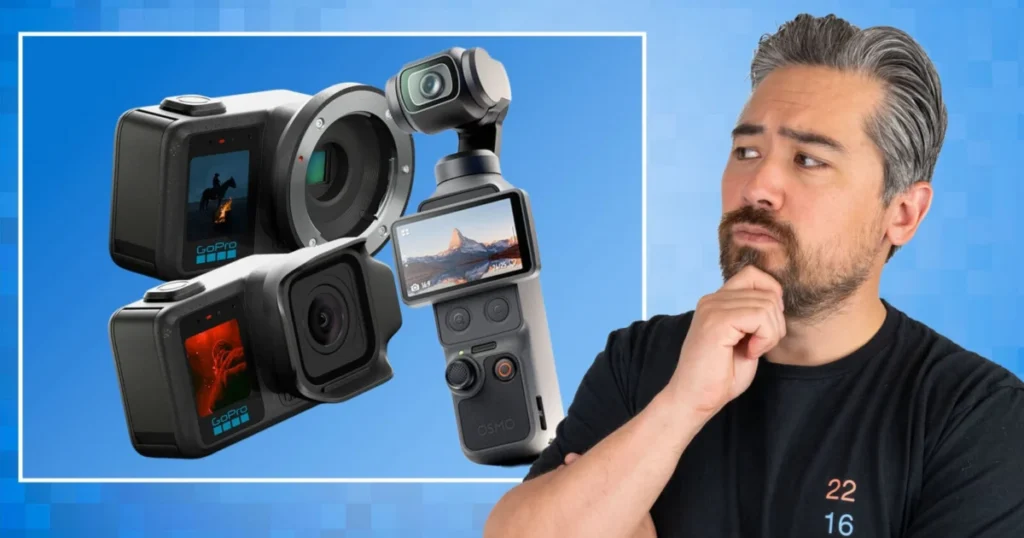
  • Resolve Takes on Lightroom! Plus: the Osmo Pocket 4, and GoPro Mission 1! | The PetaPixel Podcast

    Resolve Takes on Lightroom! Plus: the Osmo Pocket 4, and GoPro Mission 1! | The PetaPixel Podcast

    The digital imaging landscape is currently witnessing a significant transformation as the boundaries between professional video production and high-end still photography continue to blur. In a recent detailed discussion, industry experts, including guest Sarah Teng, explored the strategic shifts within the creative software and hardware markets, specifically focusing on Blackmagic Design’s increasing encroachment into territory traditionally dominated by Adobe, alongside the anticipated release of next-generation capture devices from DJI and GoPro. This convergence of technologies marks a pivotal moment for content creators who are increasingly demanding unified workflows and more capable, compact hardware.

    Blackmagic Design and the Challenge to Adobe’s Hegemony

    For over a decade, Adobe Lightroom has served as the industry standard for RAW image processing and digital asset management. However, the recent trajectory of DaVinci Resolve, developed by Blackmagic Design, suggests a concerted effort to provide a viable alternative for photographers. Originally a high-end color grading suite used in Hollywood color suites, DaVinci Resolve has evolved into a comprehensive non-linear editor (NLE) that incorporates visual effects, audio post-production, and now, increasingly sophisticated tools for still image manipulation.

    The movement of Resolve into the "photo" space is not merely an incidental update but a strategic maneuver. By leveraging its world-class color science—specifically its 32-bit float YRGB processing—Blackmagic offers a level of color depth and recovery that rivals or exceeds Lightroom’s capabilities. For creators who already use Resolve for video, the ability to manage and edit RAW stills within the same ecosystem eliminates the need for multiple expensive subscriptions. This "all-in-one" philosophy is particularly appealing to the modern hybrid shooter, who is often tasked with delivering both video and high-resolution stills from a single shoot.

    The Technical Advantages of Resolve’s Node-Based Architecture

    Unlike Lightroom’s layer-based or slider-based approach, DaVinci Resolve utilizes a node-based workflow. This allows for non-destructive, highly complex grading structures that can be applied to still images. While the learning curve for node-based editing is steeper than the traditional Lightroom interface, the precision it offers in selective color adjustment and HDR (High Dynamic Range) management is significant.

    Data indicates that a growing percentage of professional photographers are exploring Resolve for its "Color Warper" and "Magic Mask" features. Magic Mask, powered by the DaVinci Neural Engine, allows for the automatic isolation of subjects—a task that previously required tedious manual masking in Adobe Photoshop or Lightroom. As these AI-driven tools become more refined, the incentive for photographers to transition to a Blackmagic-centric workflow increases, especially considering the availability of a robust free version of the software.

    The Action Camera Wars: DJI Osmo Pocket 4 and GoPro Mission 1

    The hardware sector is seeing equally aggressive competition. The DJI Osmo Pocket series has revolutionized the vlogging and travel content market by integrating a mechanical three-axis gimbal into a device that fits in a pocket. The anticipation surrounding the DJI Osmo Pocket 4 follows the massive success of the Pocket 3, which introduced a 1-inch sensor to the form factor.

    Anticipated Specifications for the DJI Osmo Pocket 4

    Industry analysts suggest that the Osmo Pocket 4 will focus on refining the sensor technology and improving low-light performance. Expected features include:

    • Enhanced AI Tracking: Integration of ActiveTrack 7.0 for more precise subject following in complex environments.
    • Improved Thermal Management: Allowing for longer 4K/120fps recording sessions without overheating.
    • Variable Aperture or Internal ND Filters: Addressing one of the primary complaints of outdoor videographers regarding shutter speed control.
    • Vertical Shooting Optimization: Further integration of native vertical 9:16 modes to cater to social media platforms like TikTok and Instagram Reels.

    GoPro’s Counter-Strategy: The Mission 1

    GoPro, the company that pioneered the action camera category, is reportedly preparing a response to DJI’s market gains with a new product line potentially dubbed the "Mission 1." While details remain under embargo, the "Mission" nomenclature suggests a shift toward professional-grade, ruggedized utility.

    For years, GoPro has relied on its HERO line to carry the brand. However, with DJI’s Osmo Action 4 and the Osmo Pocket 3 capturing significant market share, GoPro needs a "halo" product. The Mission 1 is rumored to be a specialized device aimed at high-stakes environments—possibly featuring a larger sensor than the current HERO 12 or a modular design that allows for interchangeable lenses. This move would be consistent with GoPro’s recent acquisition of Forcite Helmet Systems, indicating an interest in more integrated, "mission-critical" tech.

    Historical Context and Market Evolution

    To understand the current state of the market, one must look at the timeline of the last five years. In 2018, the original DJI Osmo Pocket was seen as a niche tool. By 2023, the Osmo Pocket 3 had become a primary camera for many professional YouTubers, displacing traditional mirrorless cameras in many scenarios.

    Simultaneously, the software market has seen a shift toward "perpetual ownership" versus "subscription models." Adobe’s Creative Cloud model, while successful, has created a segment of the market that is "subscription fatigued." Blackmagic Design’s model of offering a one-time purchase for the Studio version of Resolve (with free lifetime updates) has proven to be a powerful disruptor.

    Chronology of Key Developments:

    • 2017: Adobe moves fully into the Creative Cloud subscription model, sparking industry debate.
    • 2020: Blackmagic Design adds significant "Stills" support to DaVinci Resolve, allowing users to export high-quality TIFFs and JPEGs.
    • 2022: DJI releases the Osmo Action 3, signaling a renewed focus on challenging GoPro’s dominance.
    • 2023: The launch of the DJI Osmo Pocket 3 sets a new benchmark for small-sensor image quality.
    • 2024: Rumors and leaks regarding the Osmo Pocket 4 and GoPro Mission 1 begin to circulate within the supply chain.

    Supporting Data: The Rise of the Creator Economy

    The demand for these tools is driven by the explosive growth of the creator economy, which is estimated to be worth over $250 billion as of 2024. According to market research, approximately 50 million people worldwide consider themselves "creators." This demographic prioritizes:

    1. Portability: The ability to film high-quality content without a crew.
    2. Speed to Market: Fast workflows that allow for quick editing and posting.
    3. Reliability: Hardware that can withstand varied environments (a GoPro strength).

    The inclusion of DxO PureRAW 6 in the current creative discourse highlights another critical trend: the reliance on AI for image "cleanup." As sensors in devices like the Osmo Pocket 4 remain physically smaller than those in full-frame cameras, software like PureRAW 6 becomes essential. By using deep learning to demosaic and denoise RAW files, creators can extract "full-frame quality" from "action-camera hardware." This synergy between hardware limitations and software solutions is the current frontier of digital imaging.

    Official Responses and Industry Sentiment

    While Blackmagic Design has not officially labeled DaVinci Resolve as a "Lightroom Killer," their feature updates speak for themselves. In various developer forums, Blackmagic engineers have noted that the "request for more robust still-image tools is among the top three most frequent pieces of feedback."

    GoPro’s leadership, during recent earnings calls, has emphasized a "return to the high end." CEO Nick Woodman has hinted that the company’s future lies in "specialized capture," which aligns with the rumors of the Mission 1. Meanwhile, DJI continues to benefit from its vertical integration—manufacturing its own sensors, gimbals, and software—which allows them to iterate faster than almost any other competitor in the space.

    Broader Impact and Implications

    The shift toward Resolve for photo editing and the release of more powerful compact cameras like the Osmo Pocket 4 and GoPro Mission 1 have several long-term implications for the industry:

    1. The Democratization of Professional Color:
    As Resolve becomes a standard for stills, the sophisticated color science once reserved for multi-million dollar film productions is now in the hands of everyday photographers. This will likely lead to a shift in the "aesthetic" of digital photography, moving away from the "digital look" toward a more "filmic" quality.

    2. The Decline of the Entry-Level Mirrorless Camera:
    If action cameras and pocket gimbals continue to improve their sensor tech (as seen in the Pocket 3 and anticipated in the Pocket 4), the market for $500–$800 entry-level mirrorless cameras may continue to shrink. For most creators, a 1-inch sensor with a built-in gimbal is more useful than a crop-sensor camera with a kit lens.

    3. Workflow Convergence:
    The "siloed" approach to media—where one app is for photos and another for video—is dying. The future is a single timeline where 8K video, 45-megapixel RAW stills, and spatial audio are handled simultaneously.

    In conclusion, the discussions surrounding the PetaPixel Podcast highlight a broader trend of convergence and competition. Whether it is Blackmagic Design challenging Adobe’s software dominance or DJI and GoPro fighting for the pockets of creators, the result is a rapid acceleration of technology that benefits the end-user. As these new products and software updates reach the market, the definition of a "professional camera" and a "professional editor" will continue to expand, favoring those who can navigate both the still and moving image with equal proficiency.

Grafex Media
Privacy Overview

This website uses cookies so that we can provide you with the best user experience possible. Cookie information is stored in your browser and performs functions such as recognising you when you return to our website and helping our team to understand which sections of the website you find most interesting and useful.