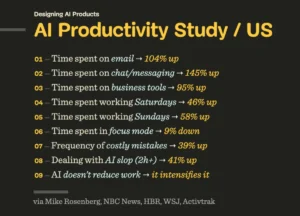
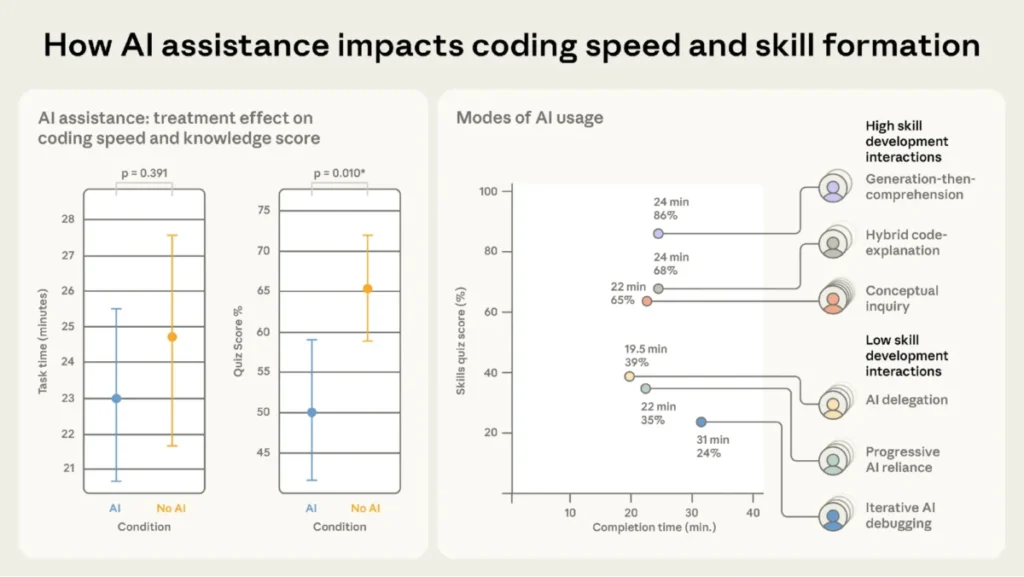

Since early 2026, the landscape of User Experience (UX) design has undergone a rapid and profound transformation, driven largely by the accelerating integration of Artificial Intelligence (AI) into product development workflows. What was once a distinct discipline focused on human-centered research, information architecture, and visual aesthetics is now increasingly intertwined with engineering capabilities, demanding a new hybrid skill set from its practitioners. This shift has redefined the very essence of what it means to be a UX designer, raising critical questions about what is gained in efficiency and what might be lost in the quality and integrity of the user experience.
The evolution has been swift. Where once the debate over whether "designers should code" simmered as an academic discussion, market forces have unequivocally settled the matter. A cursory review of job postings on platforms like LinkedIn reveals a stark departure from traditional UX requirements. Roles that previously emphasized empathy, user research, and prototyping now frequently mandate proficiency in AI-augmented development, technical orchestration, and the delivery of production-ready prototypes. This represents a significant pivot, pushing designers into a realm traditionally reserved for software engineers.
For many seasoned UX professionals, this emerging paradigm presents a significant challenge. The expectation to simultaneously deliver both the conceptual "vibe" and the functional "code" of a product, often leveraging AI agents to bridge technical gaps, is a demanding proposition. While AI promises to democratize development by generating functional code, the industry is quickly discovering that AI-generated code, while functional, is not always synonymous with good code – a distinction with profound implications for scalability, maintainability, and user experience integrity.
The Shifting Sands of the Job Market: Role Evolution in 2026
The pressure on UX designers is palpable, largely signaled by the evolving demands of the job market. Industry data underscores this shift: while traditional graphic design roles are projected for a modest 3% growth through 2034, the outlook for UX, UI, and Product Design roles is significantly more robust, anticipating a 16% expansion over the same period. This accelerated growth, however, is not a continuation of previous trends but is intrinsically linked to the burgeoning field of AI product development.
In this new domain, "design skills" have remarkably ascended to become the number one most in-demand capability, even surpassing traditional coding and cloud infrastructure expertise. This reflects a growing understanding among companies that simply possessing advanced AI capabilities is insufficient; the true value lies in translating these complex technical feats into intuitive, human-centered experiences. As one industry analyst noted, "The ability to bridge the gap between AI’s raw power and human usability is the new gold standard. Companies aren’t just building intelligent systems; they’re building intelligent experiences."
This environment places UX designers in a high-stakes position. Their responsibilities extend beyond crafting interfaces; they are now expected to possess a deep enough understanding of technical logic to ensure that intricate AI functionalities are perceived as intuitive, safe, and genuinely useful by end-users. This push is catalyzing the emergence of a "design engineer" model, where designers must navigate the complex interface between abstract AI logic and tangible, user-facing code.
A recent survey highlighted the rapid adoption of AI within the design community, with 73% of designers now viewing AI as a primary collaborator rather than merely a tool. However, this "collaboration" often manifests as "role creep." Recruiters are increasingly seeking candidates who not only excel in user empathy, information architecture, and interaction design but can also competently prompt a React component into existence and manage its integration into a code repository. This broadened scope has created a noticeable competency gap across the industry.
Experienced senior designers, who have dedicated decades to mastering the nuances of cognitive load, accessibility standards, and ethnographic research, are now finding their professional value scrutinized based on their ability to debug a CSS Flexbox issue or manage a Git branch. This re-evaluation of core competencies is less about the technology itself and more about a fundamental reallocation of value within the product development lifecycle. Businesses, under pressure for rapid innovation and deployment, are beginning to prioritize the speed of output over the meticulous quality of the user experience, fundamentally altering the definition of a "successful" designer in 2026.
The Competence Trap: The Perils of Superficial Dual Expertise
A potentially dangerous misconception circulating in corporate boardrooms is the notion that AI magically renders a designer "equal" to an engineer. This narrative suggests that because a Large Language Model (LLM) can generate a functional JavaScript event handler, the individual prompting it no longer requires a deep understanding of the underlying logic or best practices. In reality, attempting to achieve mastery in two disparate, profoundly deep fields simultaneously often leads to what can be termed the "averagely competent dilemma."

For a senior UX designer to transition into a senior-level coder is akin to asking a master chef, renowned for culinary artistry and precise execution, to also become a master plumber, simply because "they both work in the kitchen." While the chef might be able to get the water running with basic instructions, they would lack the profound understanding of fluid dynamics, pipe materials, and system integrity that prevents catastrophic failures. Similarly, a designer with superficial coding knowledge, even augmented by AI, might produce functional code but would struggle to diagnose or rectify issues when that code inevitably encounters a high-traffic event or a complex integration challenge. In such scenarios, the designer, once an expert in user experience, risks becoming a technical liability.
The High Cost of Unoptimized Code: Technical Debt and Rework
Experienced software engineers universally attest that creating code with AI without precise prompting and a foundational understanding of coding principles often leads to significant rework. Since many designers currently lack the deep technical foundation required to thoroughly audit and optimize the code generated by AI, they are inadvertently contributing to massive amounts of "Quality Debt" – also known as technical debt – within their organizations.
This technical debt manifests in various forms: inefficient algorithms, poorly structured code, lack of modularity, security vulnerabilities, and non-compliance with established coding standards. While the AI-generated code might function in a superficial sense, it often lacks the robustness, scalability, and maintainability crucial for long-term product health.
Creating More Work, Not Less: The Rework Tax
The initial promise of AI in design was to empower designers to ship features more rapidly, ideally reducing reliance on engineering teams. However, the reality has frequently been the emergence of a "Rework Tax" that is draining engineering resources across the industry. When a designer hands off AI-generated code that disregards a company’s internal naming conventions, architectural patterns, or security protocols, they are not streamlining the process for engineers; rather, they are creating a complex puzzle that another team member must painstakingly solve later.

This translates into engineers spending valuable time refactoring, optimizing, and securing code that was meant to accelerate development. The cumulative effect of this "Rework Tax" can negate any initial speed gains, leading to increased development cycles, higher maintenance costs, and potential vulnerabilities that impact user trust and system stability.
Industry Responses and the Path Forward
The challenges posed by this rapid convergence are not going unnoticed. Engineering leads are voicing concerns about the increasing burden of technical debt. Design educators are grappling with how to adapt curricula to prepare future designers for these hybrid roles without sacrificing the core tenets of human-centered design. Company executives, while initially captivated by the promise of accelerated delivery, are beginning to confront the operational costs and risks associated with unoptimized, designer-generated code.
The solution, as many industry leaders are beginning to advocate, lies in moving away from the aspirational but often problematic model of the "Solo Full-Stack Designer" and embracing a more robust framework of integrated designer/coder collaboration.
The Ideal Reality: A Collaborative Ecosystem
Instead of pushing designers to become average engineers, the industry should foster environments where designers and engineers collaborate more deeply, leveraging AI as a powerful accelerant rather than a substitute for specialized expertise. This ideal reality would involve:

- Designers focused on strategic UX: Utilizing AI tools to rapidly prototype, test, and iterate on user flows, interaction patterns, and visual designs, thereby deepening their focus on user research, accessibility, and the overall human experience.
- Engineers focused on technical excellence: Leveraging AI to optimize code, automate repetitive tasks, ensure security, and build robust, scalable architectures, while providing critical technical oversight and mentorship to designers.
- Shared understanding and communication: Establishing robust design systems and clear communication channels that enable designers and engineers to speak a common language, bridging the gap between design intent and technical implementation.
- AI as an intelligent assistant: Employing AI not to replace human expertise but to augment it, empowering both designers and engineers to perform their specialized roles with greater efficiency and insight.
This collaborative model acknowledges the distinct value of both design thinking and engineering rigor. It allows designers to explore more creative solutions and validate them faster, while ensuring that these solutions are technically sound, secure, and maintainable.
Beyond the Prompt: Reclaiming the Core of UX
The industry is currently experiencing a phase of "AI Infatuation," where the novelty and perceived efficiency of AI tools can sometimes overshadow critical considerations of quality and long-term viability. However, historical patterns suggest that the pendulum will eventually swing back towards a re-emphasis on quality, sustainability, and specialized expertise.
The ultimate resolution to the current challenges facing UX designers will emerge when the profession stops attempting to compete with AI tools at what they do best – generating syntax and automating repetitive tasks – and instead reaffirms its focus on what AI cannot replicate: understanding and advocating for human complexity, nuance, and experience.
Businesses that continue to prioritize "designer-shipped code" without adequate engineering oversight will inevitably face a reckoning in the form of accumulating technical debt, increased security vulnerabilities, and potential accessibility lawsuits. The designers who will truly thrive in 2026 and beyond will be those who resist the pressure to become mere "prompt operators" and instead steadfastly position themselves as the unwavering guardians of the user experience. This outcome represents a perfect synergy for both experienced designers, who can leverage their profound understanding of human behavior, and for the industry, which will benefit from more robust, ethical, and user-centric digital products.
The enduring value of UX professionals has always resided in their unique ability to advocate for the human being on the other side of the screen. AI should be embraced as a powerful tool to augment design thinking, allowing for faster iteration and broader exploration of ideas. However, it must never be allowed to replace the specialized engineering expertise that is absolutely essential to ensure that our designs are not only beautiful and intuitive but also technically sound, secure, accessible, and truly work for everyone. The future of UX design lies in this judicious balance: intelligent tools enhancing human ingenuity, not diluting it.