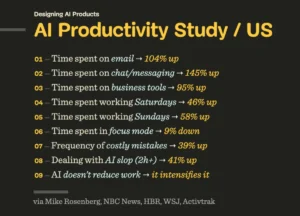

The rapid integration of artificial intelligence into the modern workplace, while hailed for its efficiency gains, is inadvertently ushering in a subtle yet profound shift in team dynamics, threatening the very foundations of human connection that foster trust, belonging, and innovation. What initially appears as liberation from mundane requests and inter-departmental "bugging" may, in fact, be dismantling the informal social scaffolding crucial for healthy, high-performing teams. This emerging paradox underscores a critical challenge for leaders: how to harness AI’s transformative power without sacrificing the invaluable human element.
The Rise of the "Bug-Free" Workforce
In recent years, the phrase "Now I don’t have to bug [someone]" has become an increasingly common refrain among industry professionals discussing AI adoption. This sentiment reflects a genuine relief across various sectors. Product designers, for instance, are leveraging retrieval-augmented generation (RAG) tools to instantly surface research insights, obviating the need to consult with dedicated researchers. Product Managers can now generate acceptable mockups and design options with AI, reducing their reliance on design teams. Engineers are deploying automated scanners that flag accessibility issues in real-time, lessening the need to "bug" accessibility specialists.
This perceived liberation is undeniable. The promise of an unblocked, independent workforce, free from waiting times and inter-personal dependencies, resonates deeply in a fast-paced corporate environment. AI promises to streamline workflows, accelerate decision-making, and boost individual productivity by automating many of the routine informational exchanges that once necessitated human interaction. Companies are actively pursuing this vision, investing heavily in AI tools designed to create what many are calling a "bug-free workforce."
However, this newfound efficiency comes with an unseen cost. The "bugs" being eliminated – the quick questions, the informal chats, the spontaneous collaborations – are not mere interruptions. They are the organic, low-stakes interactions that knit together the social fabric of an organization. These seemingly trivial moments serve as the bedrock for psychological safety, shared understanding, and collective problem-solving. When AI steps in to fulfill these needs, it inadvertently removes opportunities for human connection, potentially leaving teams more efficient but less cohesive, less trusting, and ultimately, less innovative.
The Vanishing Scaffolding of Connection
Consider the subtle, yet significant, elements that disappear when an individual turns to an AI assistant before engaging directly with a colleague. A product designer asking a researcher for an insight might have also exchanged a quick greeting, discussed a weekend plan, or shared a brief frustration about a project. A product manager seeking a mockup from a designer might have engaged in a brief brainstorming session, leading to an unforeseen creative solution, or simply shared a moment of camaraderie. An engineer consulting an accessibility expert might have gained deeper contextual understanding, built rapport, or even discovered a broader systemic issue.

These interactions, while primarily aimed at information exchange, are the essential building blocks for the intangible yet crucial sense of belonging and connection in the workplace. They foster empathy, build social capital, and reinforce shared values. As the original article astutely notes, "The inefficiencies of interpersonal communication and daily interaction build the larger organism known as work culture. When AI disrupts these interactions, what is lost?" The answer, supported by extensive psychological research, points to a potential erosion of trust, psychological safety, and ultimately, team performance.
Empirical Evidence of AI’s Human Cost
The concern that AI could undermine team cohesion is not merely anecdotal; it is increasingly supported by a growing body of research exploring the intricate dynamics of human interaction and performance.
One of the foundational studies in this area was conducted in 2012 by MIT’s Human Dynamics Lab, led by Alex Pentland. Their research, highlighted in the Harvard Business Review, found that the best predictor of team productivity was not formal meetings or individual intelligence, but rather the "energy" derived from informal communication. Hallway conversations, coffee chats, and quick questions were identified as vital conduits for this energy. Teams characterized by robust informal interaction consistently achieved 35% more successful outcomes. With AI reducing the necessity for such interactions, a critical question emerges: what "energy" is not being generated, and how might this lead to fewer successful outcomes in the long run? The non-verbal cues, shared laughter, and spontaneous brainstorming that occur during these informal exchanges are incredibly difficult for AI to replicate or replace.

Further reinforcing this perspective, Google’s extensive Project Aristotle, initiated in 2015, meticulously studied over 180 of its internal teams to identify the factors distinguishing high-performing groups from underperforming ones. Their groundbreaking discovery was that psychological safety – the shared belief among team members that the environment is safe for interpersonal risk-taking – was the number one predictor of team success. This safety is cultivated not through grand gestures, but through frequent, low-stakes "micro-moments" of interaction where individuals feel comfortable asking questions, admitting mistakes, and sharing nascent ideas without fear of judgment. These are precisely the micro-moments that AI’s efficiency is now inadvertently eliminating, posing a direct threat to the very ingredient Google identified as paramount for high performance.
More recent research directly addressing AI’s impact further validates these concerns. A 2025 study published by researchers from Harvard, Columbia, and Yeshiva University, focusing on the impact of AI on performance and team coordination, yielded troubling results. The authors concluded that AI-driven automation decreased overall team performance and increased coordination failures. These negative effects were particularly pronounced in the short term and among low- and medium-skilled teams, which often rely more heavily on peer support and direct communication for learning and problem-solving. Crucially, the study also found that automation decreased team trust. This indicates that while AI can expedite individual tasks, it can fragment the collective understanding and mutual reliance essential for complex, collaborative work.
The Tangible Costs of Disconnection
The erosion of team energy, psychological safety, and trust dueates to a significant detriment to a company’s bottom line, manifesting in several critical areas:

-
Increased Employee Attrition: People don’t stay at companies solely for the work; they stay for the people and the connections they forge. If AI’s presence diminishes these vital links to colleagues, it accelerates employee departure. McKinsey’s "Great Attrition" research consistently identifies a lack of belonging as one of the most frequently cited reasons for employees leaving an organization. When informal micro-interactions disappear, the sense of belonging erodes, leading to increased turnover. The financial implications are staggering: McKinsey estimates that employee disengagement and attrition can cost a median-sized S&P 500 company between $228 million and $355 million annually in lost productivity. Leaders must critically assess whether the promised productivity gains from AI adoption truly outweigh the immense costs associated with a disengaged and attrition-prone workforce. The accumulating evidence suggests a precarious balance, often tilted towards the human cost.
-
Decreased Innovation: Innovation rarely emerges from isolated silos; it thrives on the cross-pollination of ideas, diverse perspectives, and serendipitous encounters. A 2024 analysis of innovation in the private sector by Korean researchers underscored the critical role of "weak ties" – the bridging conversations with people one interacts with occasionally – in sustaining innovative performance, particularly in companies characterized by active technological innovation. These are precisely the interactions that a "bug-free" AI-driven environment tends to eliminate. Breakthroughs often originate not from one’s immediate core team, but from these peripheral connections, which expose individuals to novel ideas and different ways of thinking. Eliminating these crucial "weak tie" interactions in favor of AI could significantly curtail a business’s depth and breadth of innovation across design, coding, content creation, and strategic development. The "seduction" of AI lies in its immediate utility, but this immediate gain can blind organizations to the long-term risk of teams becoming "strangers who happen to work on the same project."
Navigating the Future: Maintaining the Best of Both Worlds
The question is no longer if AI will be integrated into the workforce, but how organizations can leverage its strengths while proactively mitigating its risks to human connection. The answer lies in a deliberate, balanced, and multi-pronged approach that marries AI’s efficiency with a conscious effort to preserve and enhance human interaction.

1. Strategic Use of AI to Eliminate Toil:
AI is a powerful tool, but its application must be discerning. The March 2026 Harvard Business Review article, "When Using AI Leads to ‘Brain Fry’," highlighted a critical concept: acute mental fatigue and cognitive exhaustion from excessive AI use. This "AI Brain Fry" leads to decision fatigue, error-prone work, and significantly, a higher intention to quit (34% of affected workers). However, the study also revealed a crucial nuance: participants who used AI to eliminate "toil" – the repetitive, unenjoyable, and high-volume tasks – reported 15% lower rates of burnout and, importantly, a "higher degree of social connection with peers… because they had more time to spend ‘off keyboard’."
This is the sweet spot for AI integration. By automating tasks that are cognitively draining but socially unrewarding, AI frees up valuable human energy and time. Examples of toil include data entry, routine report generation, first drafts of standard communications, basic code debugging, or initial research synthesis. When these tasks are offloaded to AI, employees gain mental bandwidth and temporal flexibility, allowing them to engage in more meaningful, complex problem-solving discussions with colleagues, participate in collaborative innovation, or simply invest more in building interpersonal relationships. In this scenario, AI doesn’t disrupt team connections; it enables them by removing the busywork that previously prevented deeper human engagement.
2. Institutionalizing Productive Friction:
The legendary co-founder of Pixar, Steve Jobs, understood the profound power of serendipitous collisions. He famously designed the Pixar studios to maximize informal interactions, ensuring that employees from different departments would "bump into each other." As Brad Bird, director of The Incredibles, recounted, "Steve realized that when people run into each other, when they make eye contact, things happen." John Lasseter echoed this, stating he had "never seen a building that promoted collaboration and creativity as well as this one." Jobs intuitively grasped that unplanned interactions drive creative work.
In the age of AI, organizations must consciously design for this "productive friction" in both physical and virtual environments. This could involve:

- Physical Layouts: Creating shared common areas, centralizing facilities like coffee stations or break rooms, and designing workspaces that encourage movement and informal encounters.
- Virtual Environments: Implementing "virtual water cooler" channels, scheduling unstructured "coffee breaks" in remote teams, fostering cross-functional "knowledge-sharing" forums, and using collaborative tools that encourage real-time, spontaneous interaction rather than asynchronous, isolated work.
- Structured Interventions: Organizing regular "innovation jams" or "problem-solving clinics" that bring together diverse teams specifically to tackle complex challenges that AI cannot solve alone, forcing human collaboration and the exchange of varied perspectives. These activities can be facilitated by AI, but the core interaction remains human.
3. Building Team Cohesion Through AI-Inspired Laughter:
Humor is a powerful bonding agent in the workplace. Extensive research, such as that by Alison Wood Brooks and Leslie K. John, underscores how positive humor in the workplace fosters trust, reduces stress, and strengthens team cohesion. AI, surprisingly, can be a catalyst for this. By using generative AI tools for lighthearted, absurd activities, teams can create shared moments of laughter and connection.
Examples include:
- "Vibe-Coding" Activities: Using AI image generators to create humorous visual interpretations of team dynamics, project challenges, or inside jokes. The sheer absurdity of AI’s attempts can spark genuine amusement and shared experience.
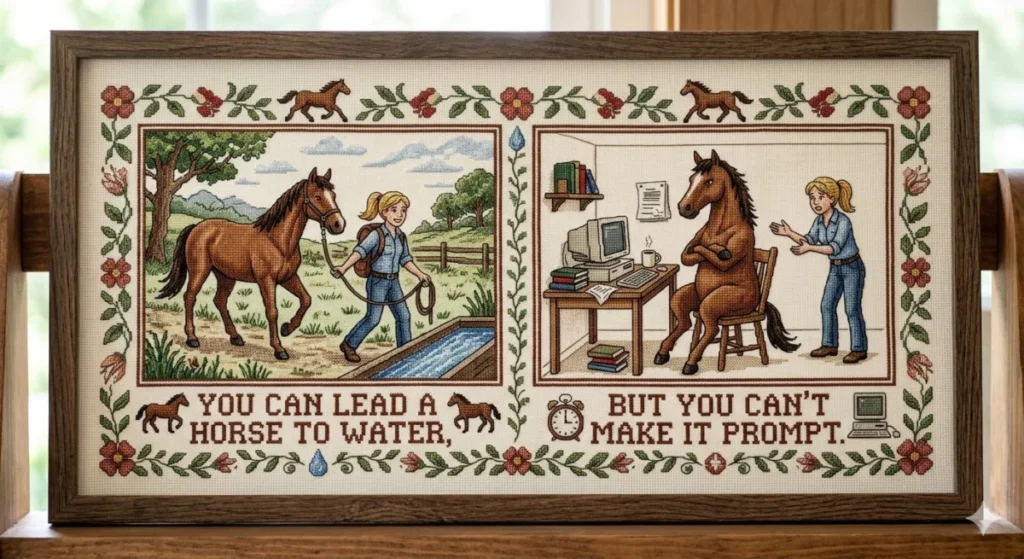
- AI-Generated Icebreakers: Asking AI to create a quirky "spin on a cliché" (e.g., "You can lead a horse to water, but you can’t make it prompt") for a workshop or meeting can immediately lighten the mood and foster a sense of shared fun.
- Creative AI Challenges: Tasking teams with using AI to generate the most ridiculous product idea, a comical corporate jingle, or an absurd team mascot can be a low-pressure way to learn about AI capabilities while strengthening interpersonal bonds through shared creativity and laughter.
These strategies – leveraging AI to eliminate toil, institutionalizing opportunities for productive human friction, and using AI as a prompt for team-building humor – illustrate a path forward where AI and human intelligence complement each other, rather than compete. The goal is not to eliminate AI, but to integrate it thoughtfully, ensuring it enhances, rather than detracts from, the uniquely human aspects of teamwork.
Conclusion

The question facing contemporary organizations is not whether to adopt AI, as its pervasive influence is increasingly undeniable. Instead, the critical inquiry is: what kind of team do we aspire to become when AI is the newest teammate? Leaders who approach AI integration with a blend of technological foresight and profound emotional intelligence will be best positioned to cultivate thriving teams. This requires a nuanced understanding that while AI excels at data processing, automation, and information retrieval, it cannot replicate the subtle, complex, and deeply human processes of building trust, fostering empathy, sparking serendipitous innovation, or nurturing a sense of belonging.
When crises strike – whether an unexpected market pivot, a significant product failure, or an unforeseen external shock – it is the teams with robust, intact cultures, built on a foundation of trust and psychological safety, that will demonstrate resilience and adaptability. These are the teams where individuals feel connected enough to voice concerns, innovative enough to find novel solutions together, and cohesive enough to navigate uncertainty as a unified force. By strategically deploying AI to augment human capabilities and eliminate drudgery, while simultaneously designing deliberate pathways for human connection and interaction, leaders can forge a future where AI empowers individuals and strengthens the collective, ensuring that efficiency gains do not come at the irreparable cost of human connection. The future of work demands a symbiotic relationship between artificial intelligence and authentic human intelligence.