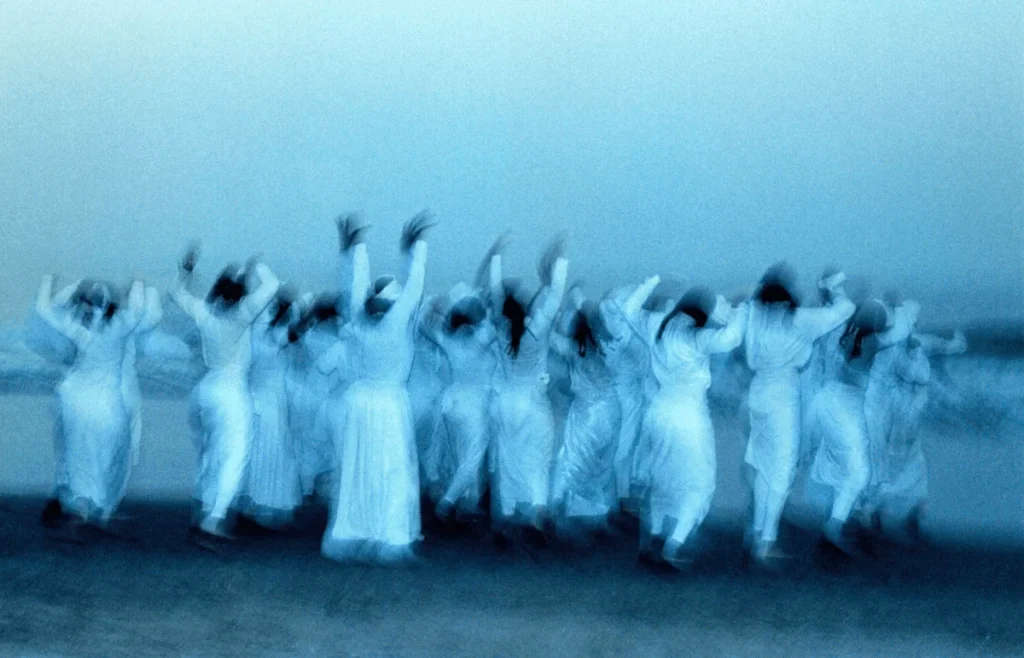

The Bruce Silverstein Gallery in New York City is currently hosting a landmark exhibition titled Chester Higgins: Shared Memories, a comprehensive retrospective that encapsulates more than sixty years of photographic excellence. Running through June 20, 2026, the exhibition serves as a profound exploration of the life’s work of Chester Higgins, a photographer whose career has been dedicated to documenting the dignity, history, and spiritual essence of people of African descent. Higgins, who spent nearly four decades as a staff photographer for The New York Times, has utilized his lens not merely as a tool for documentation, but as an instrument of social and cultural correction. His body of work challenges centuries of visual stereotypes, offering instead a nuanced, "embracing, and nonjudgmental" portrait of the African Diaspora that spans from rural Alabama to the ancient civilizations of the Nile Valley.
A Legacy Rooted in the American South and the Civil Rights Movement
To understand the depth of the Shared Memories exhibition, one must look to Higgins’ formative years in the heart of the American South. Born in 1946 and raised in rural southern Alabama, Higgins came of age during the peak of the Civil Rights Movement. This era was defined by a stark dichotomy between the lived reality of Black communities and their representation in the mainstream media. While attending Tuskegee University—an institution synonymous with Black intellectual and economic self-determination—Higgins experienced a pivotal moment of realization regarding the power of the image.
Following a political protest at the Alabama State Capitol in Montgomery against the segregationist policies of Governor George Wallace, Higgins observed the subsequent media coverage. He noted with clarity that the photographs published in regional newspapers did not depict the students as American citizens exercising their constitutional right to petition the government. Instead, the imagery was framed to cast the protesters as "potential arsonists, rapists, thugs, and thieves." This discrepancy between the truth of the event and its visual record became the catalyst for Higgins’ career. He realized that the "sociological contract" of a photographer is visible in their work; if a photographer lacks empathy or harbors prejudice toward their subject, that bias inevitably colors the final image. This lesson birthed his lifelong mantra: "The photograph never lies about the photographer."

Reshaping the Editorial Standard at The New York Times
Higgins joined The New York Times in 1975, a period when major American newsrooms were beginning to grapple with the findings of the 1968 Kerner Commission Report. That report had famously indicted the American media for its role in racial polarization, stating that the press "has too long basked in a white world looking out of it, if at all, with white men’s eyes and white perspective." Higgins became a crucial figure in dismantling this perspective from within the "paper of record."
During his 39-year tenure at the Times, Higgins acted as what he describes as an "agent of expansion." His mission was to diversify the "visual diet" of the American public, which had been conditioned to associate Black life primarily with pathology, poverty, and social strife. Higgins sought to balance this narrative by highlighting universal human experiences—celebrations, religious ceremonies, family structures, the dignity of labor, and the grace of aging. He approached subjects in poverty not with a lens of pity or class-based exclusion, but with a focus on their inherent humanity.

His impact was recognized by the institution itself. Upon his retirement in 2014, the Managing Editor of The New York Times remarked that Higgins had fundamentally changed how the newspaper’s staff perceived Black people, effectively expanding the horizons of both the editors and the readership. By placing images of Black joy and complexity in front of the nation’s decision-makers, Higgins translated art into a form of "digestible data" that challenged systemic biases.
The Aesthetic Philosophy: Signature of the Spirit
A central theme of the Shared Memories exhibition is Higgins’ pursuit of what he calls the "Signature of the Spirit." This concept transcends traditional photojournalism, moving into the realm of the metaphysical. Higgins attributes this perspective to a profound out-of-body experience he had at a young age, which convinced him that reality is multi-layered and driven by invisible, shifting forces.

In his professional practice, Higgins identifies as an "ortovert"—a term he uses to describe his ability to harness his ego and allow the "Spirit" to guide the photographic process. He views the world as a "Marionette performance" where natural behaviors are driven by underlying spiritual forces. His work seeks the "marriage between Nature and life," looking for the moments where the spiritual world reveals itself through the physical. This philosophy is particularly evident in his extensive travels throughout Ethiopia and the Nile Valley, where he documented the ancient religious traditions and monuments that serve as the bedrock of African identity.
Chronology of a Visionary Career
The exhibition at Bruce Silverstein Gallery provides a chronological and thematic roadmap of Higgins’ evolution:

- The 1960s (The Formative Years): Early work at Tuskegee University, capturing the quiet dignity of rural Alabama and the burgeoning fire of student activism.
- The 1970s and 80s (The New York Era): His entry into professional photojournalism, where he began documenting the vibrant cultural life of Harlem and the broader African American experience for The New York Times.
- The 1990s to Present (Global Exploration): A shift toward a more global perspective, focusing on the "Sacred Nile" project. This era includes his landmark books such as Feeling the Spirit: Searching for the World of the African Diaspora (1994), which involved traveling to more than 30 countries.
- The 2020s (The Retrospective Era): The curation of six decades of work into major exhibitions like Shared Memories, which contextualizes his historical contributions within the contemporary dialogue on identity and representation.
Supporting Data and Social Impact
The significance of Higgins’ work is underscored by the historical lack of diversity in the field of photography. According to various industry surveys conducted over the decades, Black photographers have historically represented a small fraction of staff positions at major metropolitan dailies. Higgins’ presence at The New York Times was not just a personal achievement but a systemic disruption.
His work aligns with a broader movement in "Black Visual Culture" that seeks to move away from "the gaze" of the outsider. By documenting the African Diaspora from an internal perspective, Higgins contributed to what scholars call "visual sovereignty." This is the power of a community to define its own image and history. The Shared Memories exhibition serves as a quantitative and qualitative record of this sovereignty, showcasing thousands of moments that might otherwise have been ignored or misrepresented by the mainstream press.

Analysis of Implications for Modern Representation
In the contemporary digital age, where images are produced and consumed at an unprecedented rate, Higgins’ philosophy remains highly relevant. The exhibition arrives at a time when the "daily confusion and miseducation" regarding race and identity continues to permeate social media and political discourse. Higgins describes his work as a "balm"—a positive and loving message that serves as a counter-narrative to modern polarization.
The exhibition suggests that the role of the photographer is not merely to "take" a picture but to "give" a perspective. Higgins’ success in changing the editorial culture of The New York Times provides a blueprint for how individual creators can influence large-scale institutions. His insistence on a "balanced human personality" in portraiture challenges current photographers to consider the "sociological contract" they sign every time they press the shutter.

Conclusion: A Living Archive of the African Spirit
Chester Higgins: Shared Memories is more than a display of technical mastery; it is a testament to the endurance of the human spirit and the power of ethical storytelling. By spending sixty years honoring the presence and achievements of people of African descent, Higgins has created a living archive that bridges the gap between the past and the future.
As the exhibition continues its run through June 2026, it offers a space for reflection on how far the visual representation of Black life has come and how much work remains. Higgins’ career demonstrates that while the road of human struggle can be exhaustive, the common denominators of humanity—celebration, family, and the search for the divine—are universal truths that, when captured with respect, have the power to expand the collective consciousness of a nation. Through his lens, the "Signature of the Spirit" remains visible, providing a permanent record of a people’s grace, resilience, and unyielding humanity.