
The exhibition arrives at a time of renewed national discourse regarding civil rights and the representation of marginalized communities in major institutional spaces. Through a meticulously organized selection of gelatin silver prints, inkjet prints, collages, and digital video, the show argues that the Black Arts Movement was not merely a literary or theatrical phenomenon, but a visual revolution that fundamentally altered the American landscape.
The Evolution of the Black Arts Movement: A Chronological Context
To understand the scope of the exhibition, one must look at the historical timeline it covers. The year 1955 serves as a symbolic starting point, coinciding with the beginning of the modern Civil Rights Movement, most notably marked by the Montgomery Bus Boycott and the tragic murder of Emmett Till, whose open-casket funeral photographs in Jet magazine galvanized a generation.
The exhibition navigates through the 1960s, a decade defined by the rise of the Student Nonviolent Coordinating Committee (SNCC) and the Black Panther Party, both of which utilized photography to bypass mainstream media narratives. It then moves into the 1970s and early 1980s, exploring the "post-movement" era where the aesthetic foundations laid by earlier pioneers evolved into more experimental forms, such as Afrofuturism and conceptual photography.

By the time the timeline concludes in 1985, the Black Arts Movement had successfully established a distinct aesthetic language—one that prioritized the "Black Gaze" over the traditional ethnographic or journalistic lens of the white establishment. This period saw the rise of community-based workshops and collectives, such as the Kamoinge Workshop in New York, which provided a supportive environment for Black photographers to refine their craft and document their own lived experiences.
Curatorial Vision and Key Artistic Contributions
The collaboration between Philip Brookman and Deborah Willis brings together two of the most influential voices in the study of American photography. Willis, a MacArthur "Genius" Fellow and chair of the Department of Photography and Imaging at the Tisch School of the Arts, has spent decades documenting the history of Black photographers. Her influence is evident in the exhibition’s focus on "Black self-fashioning"—the intentional use of the camera to construct identities rooted in dignity and beauty.

Mazie Harris, assistant curator at the Getty, emphasizes that the selection process was designed to showcase the "dynamism of lens-based media." The exhibition features a blend of iconic imagery and previously overlooked works. Among the most recognizable pieces is Ernest C. Withers’ 1968 photograph, I Am a Man, depicting sanitation workers on strike in Memphis. This image, which became a global symbol of the struggle for human rights, serves as a testament to the photograph’s power to distill complex political demands into a single, unshakeable frame.
The exhibition also highlights the work of Gordon Parks, specifically his 1963 portrait Ethel Sharrieff in Chicago. Parks, the first Black staff photographer for Life magazine, utilized his platform to bring the realities of Black life into the homes of millions of Americans. His work bridged the gap between high art and photojournalism, proving that a photograph could be both aesthetically sophisticated and socially transformative.

Technical Diversity and the Power of the Image
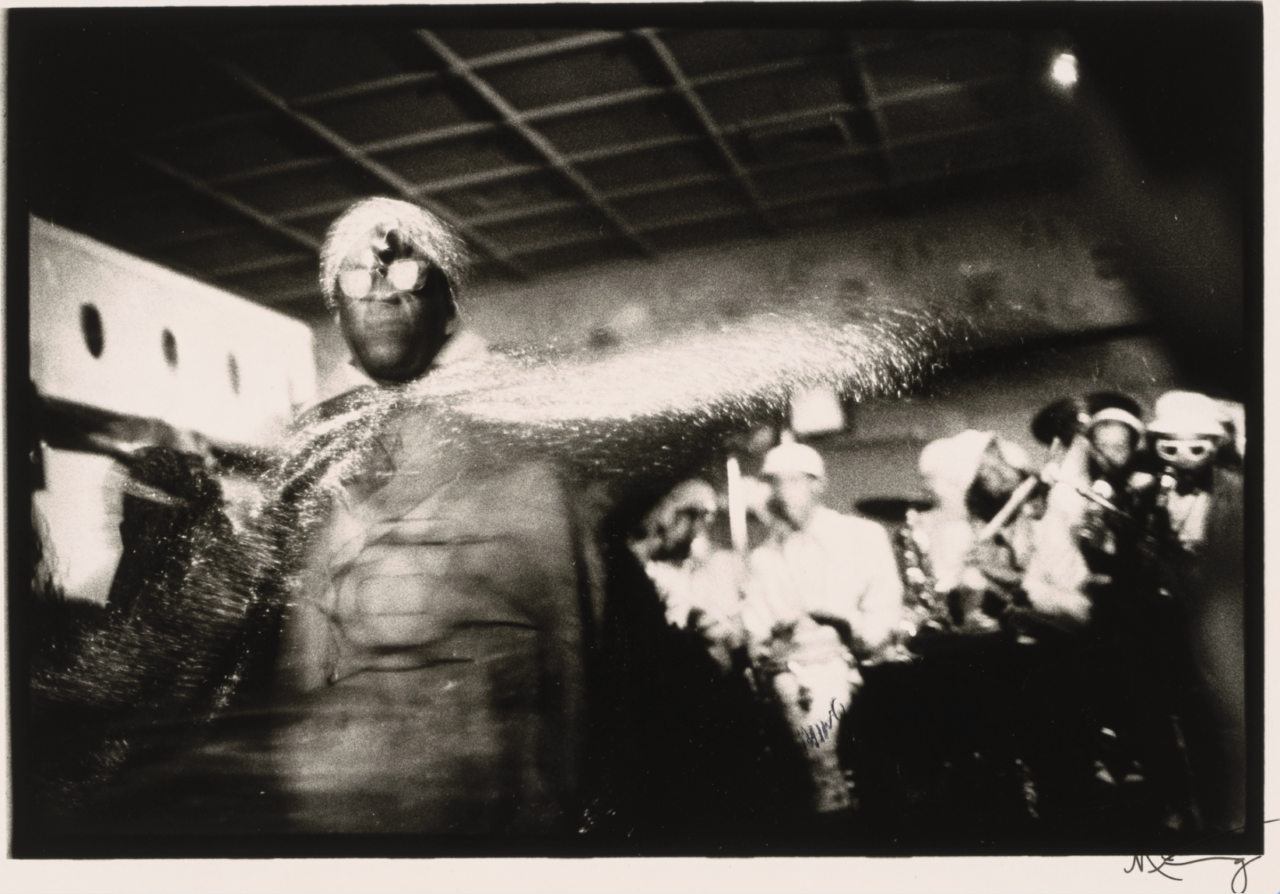
While traditional documentary photography forms the backbone of the exhibition, the curators have included works that push the boundaries of the medium. Ming Smith’s Sun Ra Space II, New York, New York (1978) represents a departure from strict realism. By using extended exposure and blur, Smith captures the ethereal, otherworldly essence of the jazz philosopher Sun Ra. This piece illustrates the "liberatory futurism" that became a hallmark of Black artistic expression in the late 1970s.
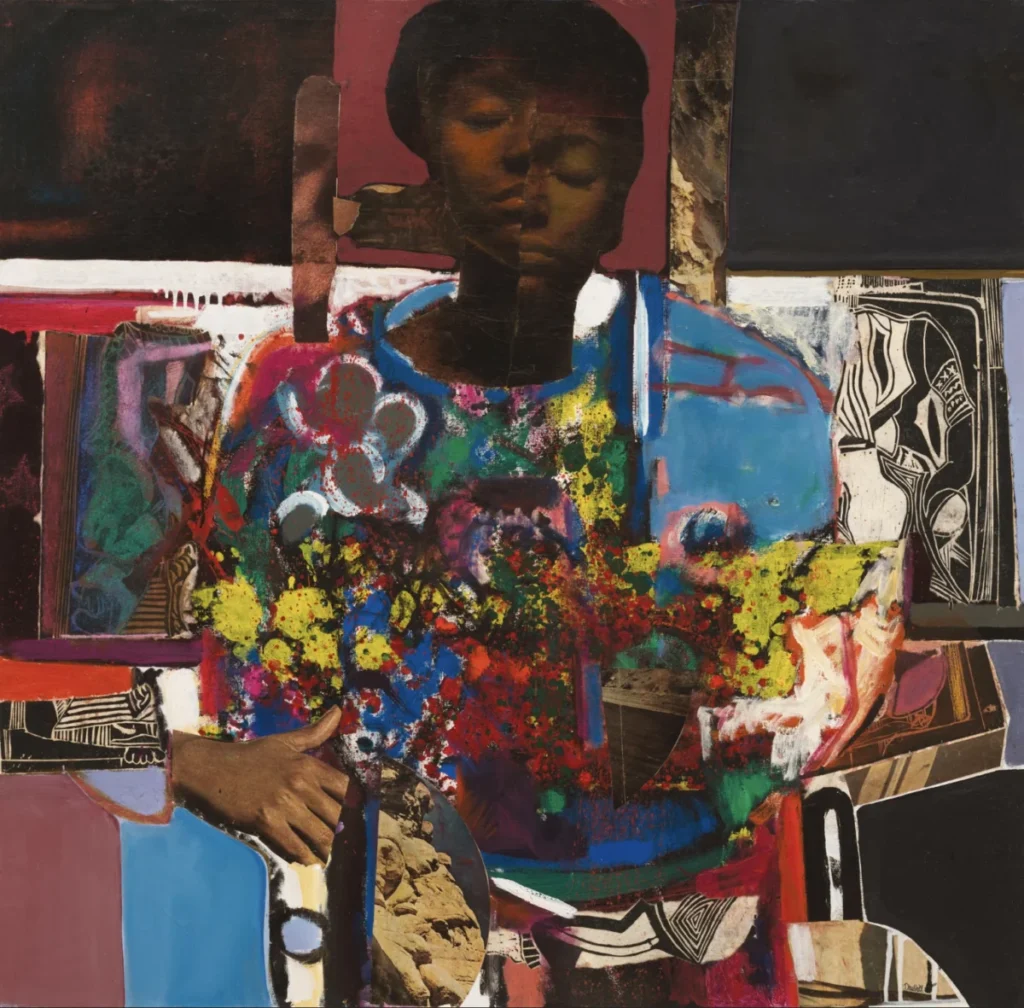
The inclusion of collage and mixed-media works, such as David Clyde Driskell’s Woman with Flowers (1972), further enriches the narrative. These works demonstrate how artists of the era integrated photography with painting and found objects to create layered stories of African diasporic identity. The exhibition also features experimental film and video, such as Barbara McCullough’s Shopping Bag Spirits and Freeway Fetishes (1980), which explores ritual space and urban creativity in Los Angeles, featuring appearances by legendary artists like Betye Saar and David Hammons.

Supporting data from the Getty suggests that the exhibition draws from several major archives, including the Johnson Publishing Company Archive and the Tom & Ethel Bradley Center at California State University, Northridge. This reliance on community and commercial archives underscores the fact that much of Black history was preserved outside of traditional museum structures for decades.
Photography as a Tool for Political Organizing
A significant portion of the exhibition is dedicated to works that were not originally intended for museum walls but were produced to support grassroots political organizing. Photographs by Harry Adams, such as Protest Car (1962), and John W. Mosley’s documentation of Dr. Martin Luther King Jr. in Philadelphia, highlight the camera’s role as a tactical instrument.

In these contexts, the photographer acted as both an observer and a participant. The images were reproduced in pamphlets, community newspapers, and posters to mobilize voters and document police misconduct. Mazie Harris notes that these images were consequential because they "cut through the noise of mainstream media to capture widespread attention." This historical precedent remains highly relevant in the digital age, where social media has become the primary battleground for visual activism.
The exhibition poses a vital question: Can photography still have the same political impact today? Harris argues that while the opportunity for sharing images is greater now than in the 1960s, the challenge lies in maintaining a "powerful vision and strong voice" amidst a saturated media environment.

Institutional Impact and Future Implications
"Photography and the Black Arts Movement, 1955–1985" is more than a retrospective; it is an institutional acknowledgment of the artists who were often excluded from the art historical canon during their lifetimes. By hosting this exhibition, the Getty—an institution traditionally associated with European masterpieces—is signaling a broader shift in curatorial priorities toward inclusive and diverse histories.
The exhibition’s resonance is amplified by the current political climate in the United States, where efforts to restrict the teaching of African American history have surfaced in various states. In this context, the Darryl Cowherd photograph The Time is Now (1960s) acts as a mission statement for the show. As Harris reflects, the phrase is a reminder that the work of these artists remains an ongoing challenge to the status quo.

Following its run at the Getty in Los Angeles, which concludes in mid-June, the exhibition is scheduled to travel to the Mississippi Museum of Art in Jackson, where it will be on view from July 25 to November 8, 2026. The move to Mississippi is particularly poignant, as the state was a central theater for many of the events depicted in the photographs.
Conclusion: A Legacy of Dignity and Respect
The 150 works on display provide a vivid tapestry of a community in the process of redefining itself. From the youthful energy of Moneta Sleet Jr.’s Two Teenaged Supporters of the Selma March to the intimate domesticity of Carrie Mae Weems’ Mom at Work, the exhibition celebrates the full spectrum of Black life.

Ultimately, "Photography and the Black Arts Movement, 1955–1985" challenges visitors to reconsider the role of the image in society. It asserts that the camera is not a neutral observer but a potent weapon for justice and a mirror for beauty. By documenting the unflagging commitment to change exhibited by these artists, the Getty provides a roadmap for future generations of creators to use their tools to promote dignity, respect, and social transformation. The exhibition serves as a profound reminder that while the decades of the mid-twentieth century were tumultuous, they produced a visual legacy that continues to illuminate the path toward a more equitable future.