
The global camera industry has reached a definitive crossroads in 2026, marked by the realization that the traditional utility-based sales model has become obsolete for the general consumer. For more than a decade, manufacturers focused on technical benchmarks—megapixels, autofocus points, and burst rates—in an attempt to justify the existence of standalone hardware. However, as smartphone computational photography has reached a level of proficiency that satisfies nearly all casual imaging needs, the industry’s survival has become dependent on a psychological shift: moving from selling a tool that people need to selling an object that people want. This strategic pivot toward "desire-led" manufacturing has revitalized a market that many analysts once predicted would vanish entirely.
The End of the Technical Arms Race
For the better part of the 2010s, the camera industry was locked in a "spec race" that prioritized quantitative improvements over qualitative experiences. Manufacturers released annual updates that boasted incremental gains in sensor resolution and ISO sensitivity. While these advancements were technically significant, they failed to address the existential threat posed by the smartphone. By 2020, the average consumer no longer viewed a dedicated camera as a necessity for capturing life’s moments; the device already in their pocket was "good enough," and more importantly, it was integrated into their social and digital lives in ways a traditional camera could not replicate.
The result of this focus on technical superiority was a generation of cameras that, while capable of producing flawless images, were often described by users as "emotionally inert." These devices were efficient black boxes that functioned well but offered little in the way of tactile satisfaction or creative inspiration. The industry eventually recognized that competing with smartphones on the grounds of convenience and automated processing was a losing battle. Instead, the path to longevity lay in emphasizing the "ritual" of photography—the physical and sensory experience of using a dedicated machine to craft an image.
Chronology of the Experience-First Movement
The transition from utility to desire did not happen overnight. It was a gradual evolution sparked by a few key product launches that challenged the prevailing industry wisdom.
2012–2020: The Seeds of Niche Appeal
Fujifilm’s X-Series and the original Nikon Df attempted to bring tactile controls back to the digital era. While these were initially viewed as niche products for enthusiasts, they established the groundwork for the idea that a camera’s physical interface could be a primary selling point.
2021–2023: The Post-Pandemic Rebound
As global travel resumed, there was a surge in interest in "intentional" hobbies. The Fujifilm X100V became a viral sensation on social media platforms, not because of its sensor specs, but because of its aesthetic appeal and the "film-like" quality of its straight-out-of-camera JPEGs. This period saw the first significant rise in Japanese domestic camera sales in over a decade.
2024–2025: The Rise of the Retro Full-Frame and Style-Compacts
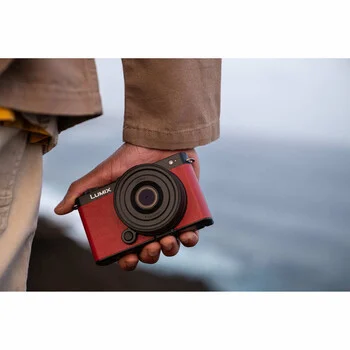
The launch of the Fujifilm X100VI and the Nikon Zf solidified the "desire" strategy. The X100VI, in particular, became a cultural phenomenon, maintaining a six-month backorder status for nearly two years. Simultaneously, manufacturers like Panasonic began experimenting with "style-led" compacts like the Lumix S9, which prioritized color science and portability over traditional professional features.
2026: The Diversification of the "Vibe" Economy
By 2026, the market has bifurcated. While professional-grade cameras continue to push technical boundaries for the high-end market, the consumer sector is dominated by "personality-forward" devices. This includes everything from $2,000 retro-styled full-frame bodies to $35 keychain cameras that celebrate low-fidelity imagery.
Market Data and Consumer Behavior Shifts
Recent data from Map Camera, a leading specialty retailer in Shinjuku, Tokyo, provides a snapshot of this shift. In 2024 and 2025, the best-selling models were not the most "capable" in the traditional sense. The Fujifilm X100VI and the Nikon Zf consistently outperformed more conventional, ergonomically "modern" cameras.
According to retail tracking, Japanese compact-camera sales more than doubled year-over-year in 2025. This growth was driven largely by two demographics: Gen Z consumers looking for an alternative to the "perfect" look of smartphone photos, and older enthusiasts who value the mechanical feel of vintage-inspired dials. The "lo-fi" movement has also contributed to this growth. The Kodak Charmera, a 1.6-megapixel keychain camera, became an unexpected hit, selling out upon launch and attracting secondary market premiums. Despite its technical inferiority, it won prestigious design awards, including the iF Design Award and the Red Dot Design Award, highlighting that in 2026, "design" is as much a product as "imaging."
Stakeholder Perspectives and Industry Responses
The shift toward desire-based marketing has prompted varying responses from industry leaders. Fujifilm’s corporate strategy has leaned heavily into the premium, aspirational nature of its products. In recent statements, Fujifilm executives have suggested that maintaining high value—and even a degree of scarcity—is preferable to over-saturating the market and devaluing the brand. This "Leica-style" approach aims to position the camera as a luxury object rather than a commodity.
Nikon has seen similar success by leveraging its heritage. The Nikon Zf proved that a retro-styled body could command a premium price and outsell more technically "logical" models. However, this strategy is not without its critics. Some industry analysts point out the "aesthetic friction" that occurs when modern, plastic-heavy lenses are mounted on vintage-inspired bodies, suggesting that the industry still has work to do in aligning its lens ecosystems with this new design philosophy.
Canon, traditionally more conservative in its design language, has also begun to tap into this trend. The 2025 reissue of the PowerShot Elph 360 HS—a decade-old design—indicates a willingness to capitalize on the "Y2K aesthetic" and the demand for simple, stylish point-and-shoots, even if the internal technology remains largely unchanged.
Analysis of the "Lo-Fi" Phenomenon
Perhaps the most startling evidence of the "want over need" thesis is the success of intentionally "bad" cameras. The popularity of the Kodak Charmera, the Camp Snap, and the Paper Shoot camera suggests that a significant portion of the market is actively rejecting high-fidelity imaging.
For a generation raised on the hyper-processed, AI-sharpened images of modern smartphones, the soft, noisy, and unpredictable output of these "toy" cameras feels authentic. These devices offer "friction"—the lack of a screen, the inability to immediately share, and the physical constraints of the hardware—which users now perceive as a feature rather than a bug. It transforms photography from a background task of modern life into a deliberate, tactile event.
Broader Impact and Future Implications
The pivot to desire has saved the camera industry from total marginalization, but it introduces new risks. Building a business on "vibes" and aesthetic trends is inherently more volatile than building one on measurable technical superiority. Fashions change, and the "retro" look that is dominant in 2026 may eventually lose its luster.
Furthermore, the industry’s reliance on scarcity—whether accidental or strategic—could lead to long-term consumer resentment. While a six-month waiting list adds to a product’s mystique, it also prevents many potential users from entering the ecosystem.
Despite these challenges, the move toward "intentional" hardware is likely the only sustainable path forward. By focusing on the pleasure of the object and the unique experience of the shooting process, camera manufacturers have carved out a space that smartphones cannot occupy. The dedicated camera is no longer a tool for everyone; it is a specialized instrument for those who find joy in the act of creation.
In conclusion, the smartest move the camera industry made in the mid-2020s was to stop trying to be necessary. By embracing the fact that they are producing "luxury" experiences and tactile art objects, companies like Fujifilm, Nikon, and Ricoh have ensured their relevance for the next decade. The industry has finally accepted that while everyone has a camera in their pocket, people will still pay for the one they want to hold in their hands. This shift represents a fundamental maturing of the digital imaging market, moving away from the adolescent obsession with numbers and toward a more sophisticated understanding of human desire and creative fulfillment.