
Oakland, California – Jim Parkinson, a towering figure in the world of lettering art, type design, and painting, passed away on June 26, 2025, at his home in Oakland, California. He was 83. His death followed a prolonged battle with Alzheimer’s disease, a condition he faced with the same grace and resilience that characterized his creative life. Parkinson is survived by his wife, Dorothy A. Yule, a distinguished book artist, who not only shared his life as a partner since 2010 but also served as his devoted caregiver throughout his years of dementia.
Born in Oakland on October 23, 1941, Parkinson’s early life was marked by a formative encounter with Abraham Lincoln Paulsen, a local lettering virtuoso known as the "Wizard Penman." Paulsen possessed the remarkable ability to pen the Gettysburg Address upside down and backward using only the numeral "2." This extraordinary display ignited a lifelong passion in young Jim, providing his initial immersion into the intricate craft of lettering. His early education in the field was self-directed, a testament to his voracious appetite for knowledge. He meticulously collected and studied lettering manuals and correspondence-school textbooks, often drawing from resources that were decades old. This deep engagement with historical styles, and his innate talent for reinterpreting them with a contemporary sensibility, would become a hallmark of his illustrious career.
Parkinson pursued his formal education at the California College of Arts and Crafts, where he studied both design and painting. He graduated in 1963, a period of burgeoning artistic and cultural shifts across the United States. Following his graduation, he relocated to Kansas City, Missouri, to join the esteemed staff artists at Hallmark Cards. Initially assigned to roles that did not align with his burgeoning talents, Parkinson soon found his true calling when he was transferred to the lettering department. It was here that his extraordinary aptitude for hand-rendering any letterform was recognized and nurtured. This specialization proved to be not only a professional revelation but also a profound life calling. His ability to meticulously craft letters by hand would become the bedrock of a freelance career that spanned over five decades, a remarkable testament to his dedication and skill.
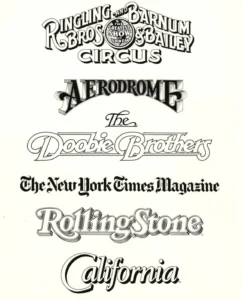
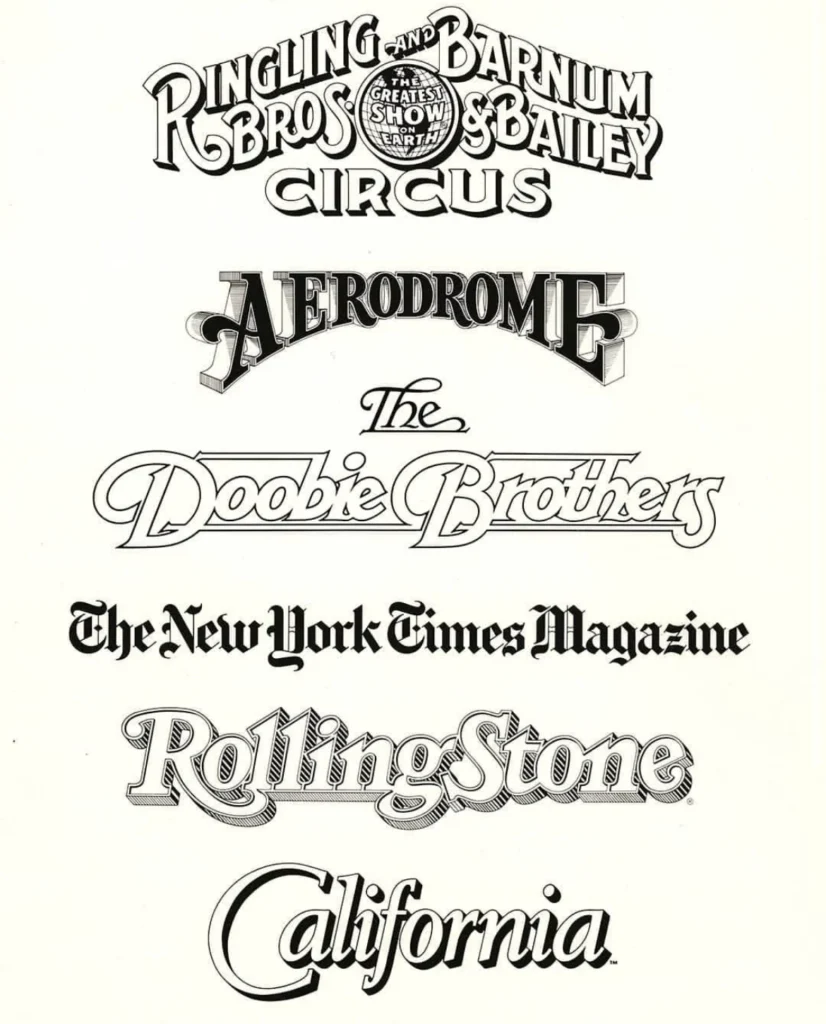
Upon returning to Oakland to establish his independent practice, Parkinson’s broad and exceptional skill set allowed him to undertake a vast array of projects, from iconic logos to comprehensive typeface families. His career was a mosaic of diverse contributions, each infused with his distinctive touch. Over the course of fifty years, Parkinson’s lettering graced countless applications, shaping the visual landscape of advertising, music, and media. He was responsible for the distinctive headlines that adorned advertisements, the memorable logos for legendary musical acts such as The Doobie Brothers, and the evocative branding for the grand spectacle of Ringling Brothers and Barnum & Bailey Circus. His prolific output extended to the creation of dozens of custom and retail typefaces, as well as numerous nameplates for prominent publications like Rolling Stone and the Los Angeles Times. His influence was so pervasive that a casual visit to any newsstand in the United States, and indeed many abroad, would invariably reveal his handiwork, often on multiple covers. Art directors frequently sought his expertise to revitalize their publication’s identities, and he was known to redraw some titles multiple times over the years, adapting his craft to evolving aesthetic trends.
Beyond his celebrated work in commercial lettering and type design, Parkinson cultivated a unique artistic pursuit in his later years: the painting of vintage neon signage. This was not a mere hobby but a dedicated exploration of Americana through the lens of fine art. Drawing inspiration from his extensive road trips across the American West, his photo albums became a rich source for dozens of large-scale paintings. These works meticulously captured the ephemeral beauty of aging neon signs, rendering every chipped surface and broken glass tube with an almost hyperreal fidelity, often appearing even more vivid than the original photographs that inspired them. His home became a gallery for these evocative pieces, a testament to his enduring fascination with the visual vernacular of roadside America.

The author, Stephen Coles, shared a personal connection with Parkinson, having known him for twenty years. Coles recounted how Parkinson was among the first to welcome him to Oakland in 2004. Parkinson generously opened his home and his personal archives to visitors, sharing his extensive collection of ephemera, type books, and his own considerable body of work. These visits were cherished experiences, allowing friends to witness firsthand the breadth of Parkinson’s talent as he unveiled flat files brimming with original artwork. He was a consistent and beloved presence at semiregular picnics hosted by the typographic community, where he exuded a characteristic blend of joy, wisdom, and a disarming, casual silliness. This grounded approach, as Coles noted, prevented him from adopting an elitist stance, embodying the admirable philosophy of Margot Fonteyn: "Take your work seriously, but never yourself." This wry levity was palpable throughout his website, an early acquisition in the nascent internet era, and in a video interview conducted in 2010.
Parkinson’s gift for storytelling was as profound as his mastery of letterforms. The Letterform Archive is slated to publish his memoir in 2026, a project that promises to offer a rich and intimate portrait of his life and career to a wider audience. This posthumous publication will allow those who never had the opportunity to meet him to connect with his legacy through his own words.
A memorial service for Jim Parkinson will be held in the fall. In lieu of flowers, the family requests that donations be made to the Alzheimer’s Association, a cause that resonated deeply with them during Parkinson’s illness. The community is invited to share their memories and tributes in the comments section of the original publication.
The passing of Jim Parkinson marks the end of an era for many in the design and lettering communities. His influence, however, will undoubtedly endure through his extensive body of work, his forthcoming memoir, and the inspiration he provided to countless artists and designers. His ability to imbue even the most mundane letter with personality and life, coupled with his profound humanity, ensures his lasting legacy.
The development of Parkinson’s career can be traced through several key phases. His early exposure to lettering in Oakland provided a foundational understanding of historical forms. His tenure at Hallmark Cards, while not initially ideal, served as a crucial training ground, allowing him to hone his technical skills under professional conditions. The establishment of his freelance practice in Oakland marked the beginning of his most prolific and impactful period, during which he diversified his portfolio across numerous media. His later focus on painting neon signs represented a mature artistic phase, where he applied his keen observational skills and technical prowess to a more personal artistic endeavor.
Parkinson’s impact on the field of typography and lettering is quantifiable through the sheer volume and visibility of his work. Examining his contributions reveals a consistent commitment to quality and innovation. For instance, his work for publications like Rolling Stone and the Los Angeles Times, which he redrew multiple times, demonstrates an ability to adapt and evolve his style while maintaining a recognizable artistic voice. This longevity and recurring engagement with major clients speak volumes about his enduring relevance and the high regard in which he was held by art directors and editors. His custom typefaces, though not always widely publicized by name, formed the backbone of visual identities for numerous brands and organizations, contributing to the recognizability and success of these entities.

The broader context of Parkinson’s career is set against a backdrop of significant technological shifts in the design industry. While he mastered the art of hand-lettering, a skill that became increasingly rare with the advent of digital design tools, he also embraced and contributed to the development of digital typefaces. This dual mastery—of traditional craft and evolving technology—allowed him to remain at the forefront of his field for decades. His ability to bridge the gap between analog and digital design provided a unique perspective and a valuable resource for a rapidly changing industry.
The implications of Parkinson’s work extend beyond mere aesthetics. The logos and typefaces he created often became synonymous with the brands and publications they represented, embedding themselves in the cultural consciousness. His contributions to the visual language of media and commerce have had a tangible impact on how information is communicated and how brands connect with their audiences. The enduring presence of his work in the public sphere underscores the power of skilled craftsmanship and artistic vision.
The availability of Parkinson’s memoir will offer an invaluable primary source for understanding the life and motivations of a significant figure in contemporary design. His website and the video interviews further contribute to a rich archival record of his work and thought process. The planned publication by the Letterform Archive, a renowned institution dedicated to preserving and promoting the art of letters, ensures that his legacy will be meticulously curated and made accessible to future generations of designers and enthusiasts. The continued support of institutions like the Letterform Archive is vital for safeguarding the history and practice of typography and lettering.
Parkinson’s dedication to his craft, his generosity as a mentor and friend, and his unique artistic vision have left an indelible mark. His passing is mourned by a wide circle of colleagues, friends, and admirers, and his contributions will continue to inspire and inform the world of design for years to come. The Alzheimer’s Association plays a crucial role in research and support for those affected by this devastating disease, making donations in his memory a meaningful way to honor his life and acknowledge the challenges he faced. The outpouring of shared memories and the anticipation of his memoir reflect the profound impact he had on individuals and the broader cultural landscape.