
The digital landscape of video content has undergone a significant transformation as the distinction between long-form storytelling and short-form snackable content becomes more pronounced. According to an extensive analysis of nearly 2 million videos shared on YouTube, the timing of content publication has emerged as a critical, yet often misunderstood, lever for algorithmic success. While the quality of content, the relevance of titles, and the visual appeal of thumbnails remain the primary drivers of growth, data-driven scheduling provides the necessary momentum for a video to be picked up by recommendation engines. This study, conducted by social media management platform Buffer, identifies a stark divergence in how audiences consume different formats, necessitating a bifurcated strategy for creators and digital marketers aiming for maximum reach in 2026.
The Macro View of YouTube Engagement Dynamics
YouTube’s ecosystem is no longer a monolith. The platform now operates two distinct distribution systems: the traditional Home and Search feeds for long-form videos and the "Shorts Feed" for vertical, short-form content. Each system utilizes different signals to determine what content to promote. For long-form videos, early engagement—measured in clicks, watch time, and initial likes within the first few hours—is a vital signal to the algorithm that a video is worth recommending to a broader audience. Conversely, YouTube Shorts are often resurfaced by the recommendation engine over a period of days or even weeks, making the initial hour of posting less "make-or-break," yet still influential for establishing an early baseline of performance.
The 2026 data indicates a major shift from previous years. In 2025, the "sweet spot" for posting was generally considered to be weekday afternoons between 3:00 p.m. and 5:00 p.m. However, the latest analysis reveals that viewer habits have migrated toward weekend mornings for deep-dive content and late-night weekday windows for short-form entertainment. This shift reflects a more disciplined separation of leisure time, where viewers dedicate weekend mornings to educational or high-production content and use weekday evenings to unwind with Shorts.
Detailed Findings: The Best Time to Post Long-Form Videos
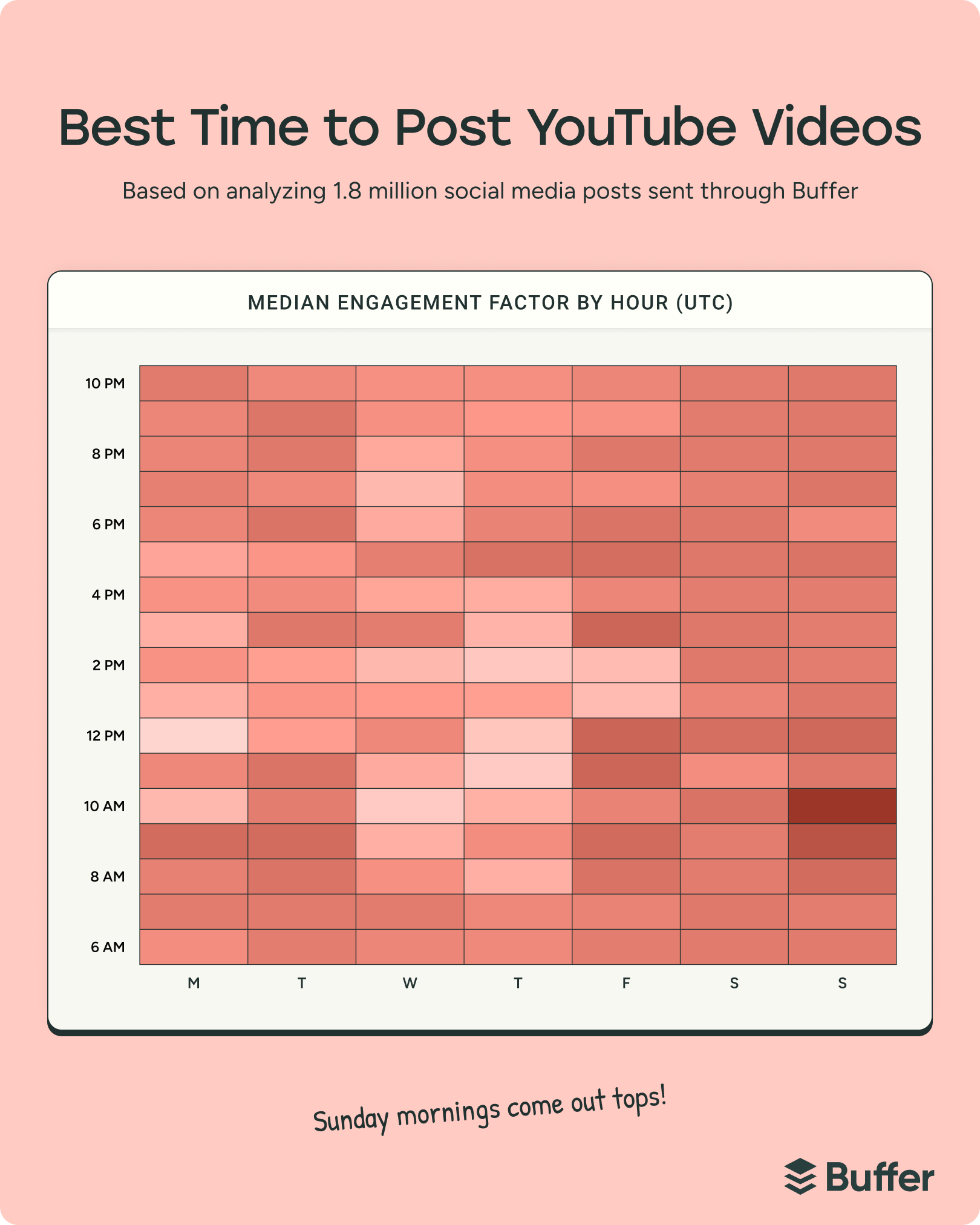
The most significant takeaway from the 2026 study is the dominance of Sunday as the premier day for long-form video uploads. Specifically, Sunday at 10:00 a.m. has been identified as the highest-performing time slot of the entire week, yielding an engagement factor of 0.95. This window represents a period when global audiences are most likely to be at home, away from work or school obligations, and looking for substantial content to consume.
Weekly Performance Breakdown for Long-Form Content:
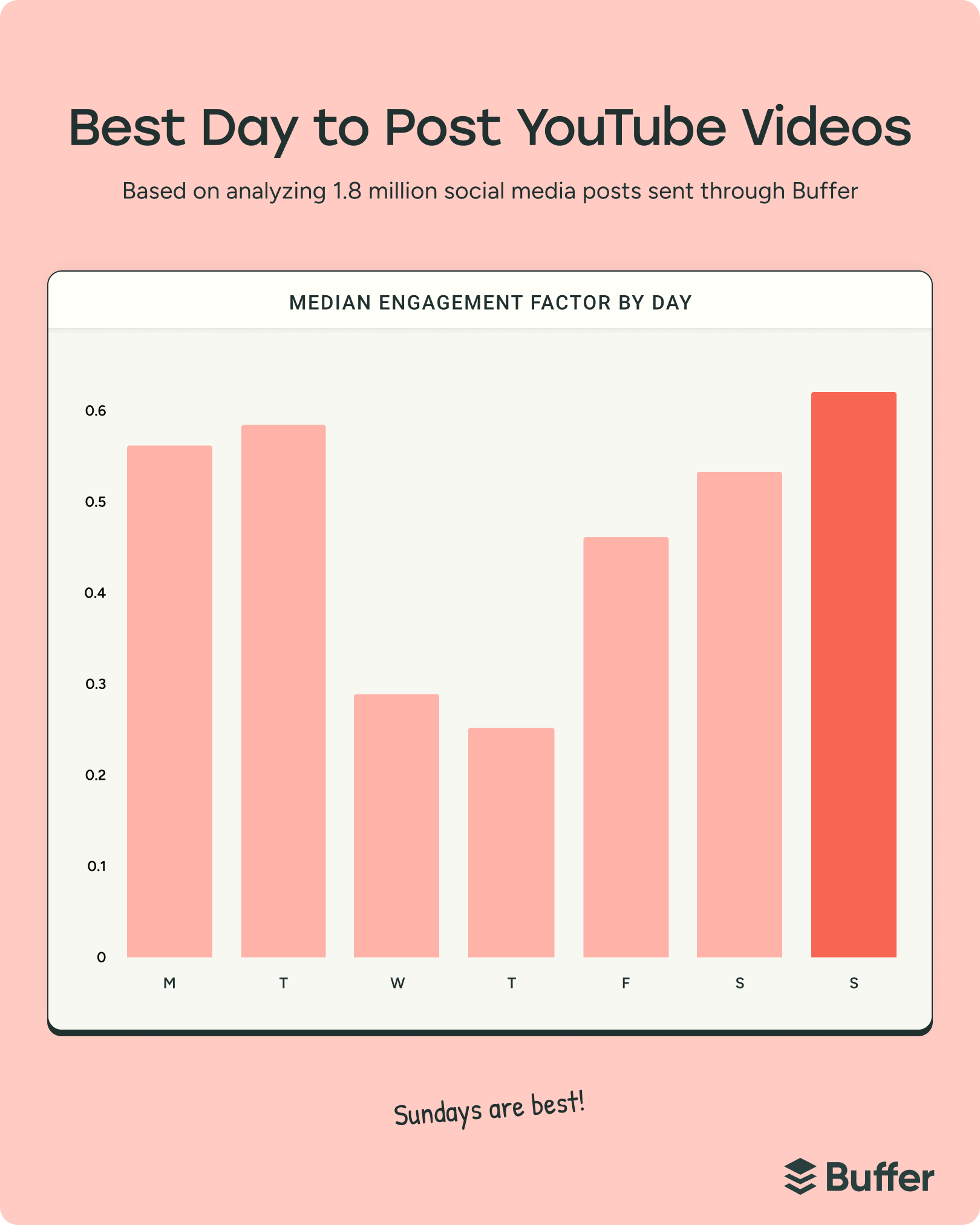
- Sunday: The undisputed leader. The window between 9:00 a.m. and 12:00 p.m. shows the highest concentration of active users.
- Monday and Tuesday: These days remain strong, particularly in the early morning at 9:00 a.m. Tuesday is noted as the strongest weekday, suggesting that viewers are looking for a mid-week mental break early in the day.
- Wednesday and Thursday: These are the "dead zones" for long-form engagement. Thursday at 2:00 p.m. recorded one of the lowest engagement factors of the week (0.11), suggesting that mid-afternoon during the work week is the least effective time to launch a major production.
- Friday and Saturday: Engagement moves toward the midday slot. Friday at 12:00 p.m. serves as a strong alternative to the Sunday peak, as viewers transition into the weekend.
The data suggests that for long-form creators, "front-loading" the week (Monday/Tuesday) or waiting for the "Sunday Peak" is the most effective strategy. Posting during the Wednesday-Thursday slump risks the video being buried before the weekend audience arrives.
The Rise of the "Evening Scroll": Optimizing YouTube Shorts
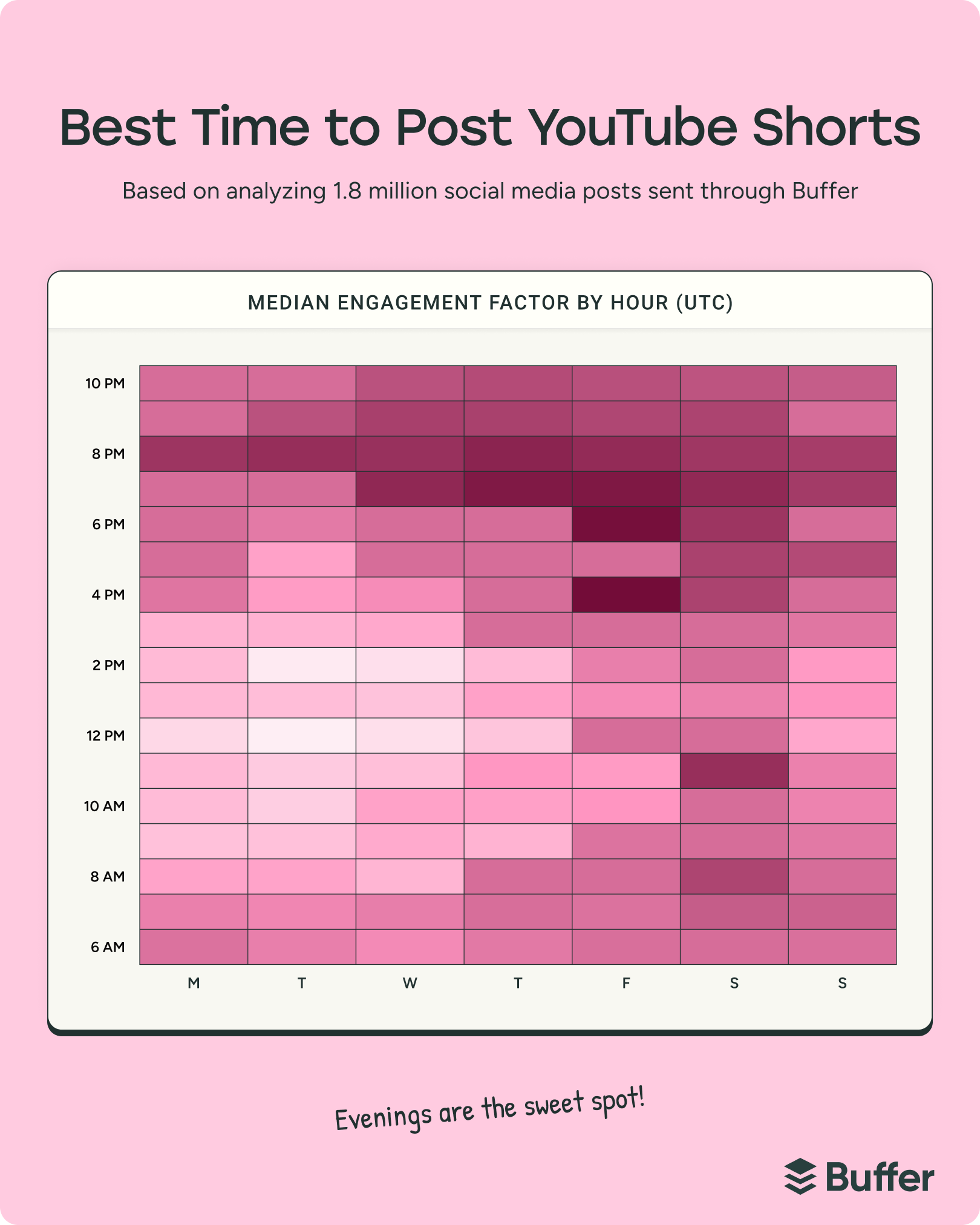
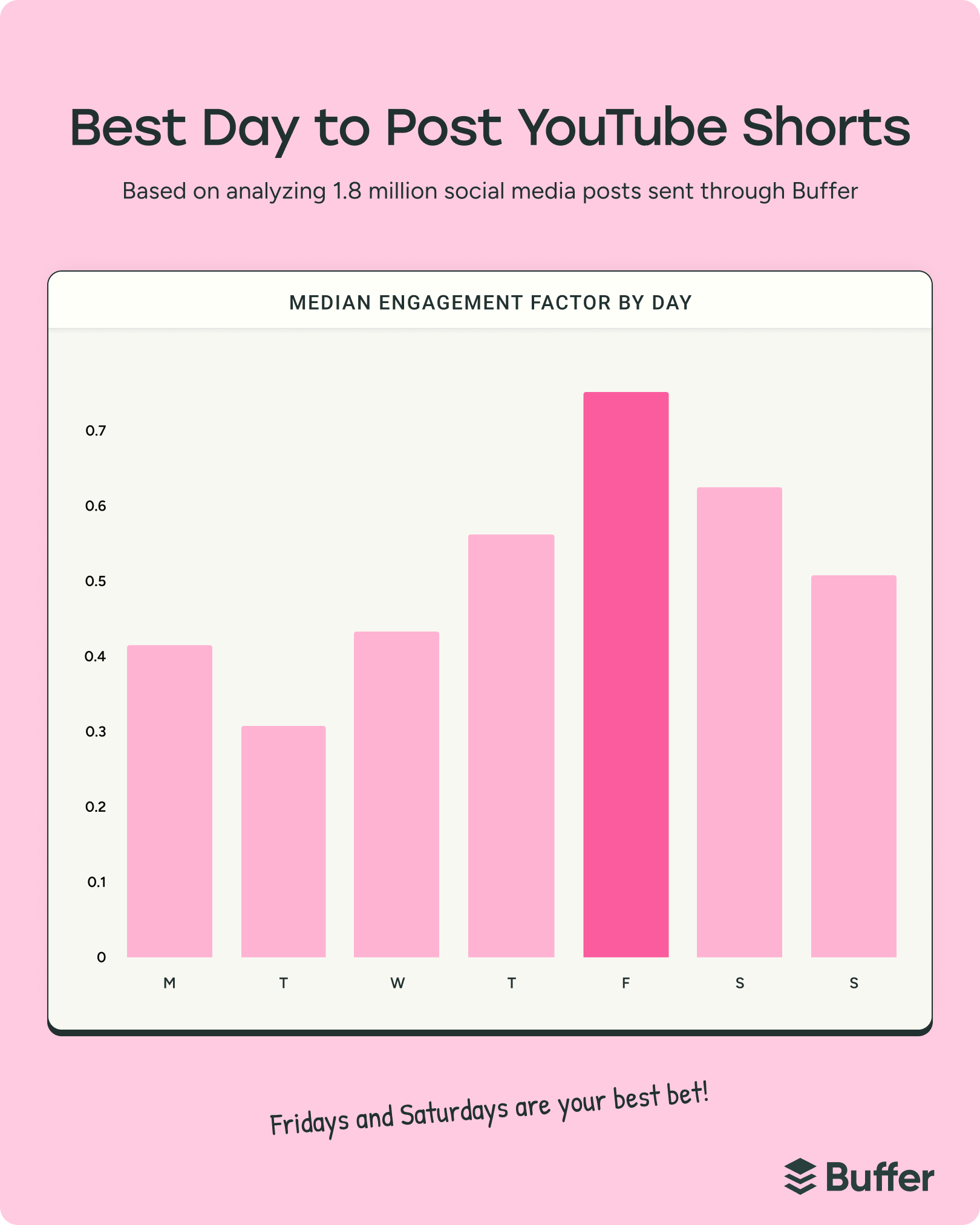
YouTube Shorts follow a completely different behavioral pattern. Unlike long-form videos that peak in the morning, Shorts engagement thrives in the evening. The analysis indicates that Friday is the premier day for Shorts, with the top three time slots being 4:00 p.m., 6:00 p.m., and 7:00 p.m.
This trend aligns with the "unwinding" behavior associated with vertical video platforms like TikTok and Instagram Reels. Users typically engage with short-form content during transit, during dinner, or as a pre-sleep routine. The study found that between 6:00 p.m. and 11:00 p.m., Shorts engagement remains consistently high across most days of the week.
Strategic Insights for Shorts:
- The Weekend Shift: Saturday is the only day where a morning slot (11:00 a.m.) competes with evening performance. This suggests a window for "lifestyle" or "vlog-style" Shorts that accompany a viewer’s weekend morning routine.
- The Mid-Week Lag: Monday and Tuesday are the weakest days for Shorts, reversing the trend seen in long-form content.
- Recommendation Engine Lag: Because Shorts can "go viral" days after they are posted, the primary goal of the Friday evening post is to capture the initial wave of high-intensity weekend traffic, which then provides the algorithm with enough data to keep the video in the feed for the following week.
Chronology of Algorithmic Evolution: 2024–2026
To understand why these times have shifted, it is necessary to look at the timeline of YouTube’s platform updates.
- Late 2024: YouTube increased the integration of Shorts into the main Home feed, leading to a temporary cannibalization of long-form views.
- 2025: The platform refined its "multi-format" creator tools, encouraging users to post both long and short content. This led to "content fatigue" during traditional weekday work hours.
- 2026: User behavior stabilized into the current "Morning/Long, Evening/Short" dichotomy. The algorithm now places a higher premium on "Watch Session Duration," rewarding videos that are posted when users have the time to watch multiple videos in a row.
Industry Implications and Expert Analysis
Digital marketing analysts suggest that these findings should lead to a "Two-Tiered Scheduling" approach. Brands and creators should no longer aim for a single "post time" for all their assets. Instead, a sophisticated content calendar should involve scheduling long-form educational or brand-storytelling pieces for Sunday mornings, while using Friday evenings to drop high-energy, promotional, or behind-the-scenes Shorts.
A crucial technical consideration highlighted by the data is the "processing lead time." Industry experts recommend uploading videos in an "Unlisted" state at least 2 to 3 hours before the target peak time. This allows YouTube to process the video in 4K resolution and, more importantly, allows the algorithm to "read" the video’s metadata and transcript. By the time the video is toggled to "Public" at 10:00 a.m. on Sunday, the system already knows exactly which audience segment should see it first.
Utilizing First-Party Data: The YouTube Studio Guide
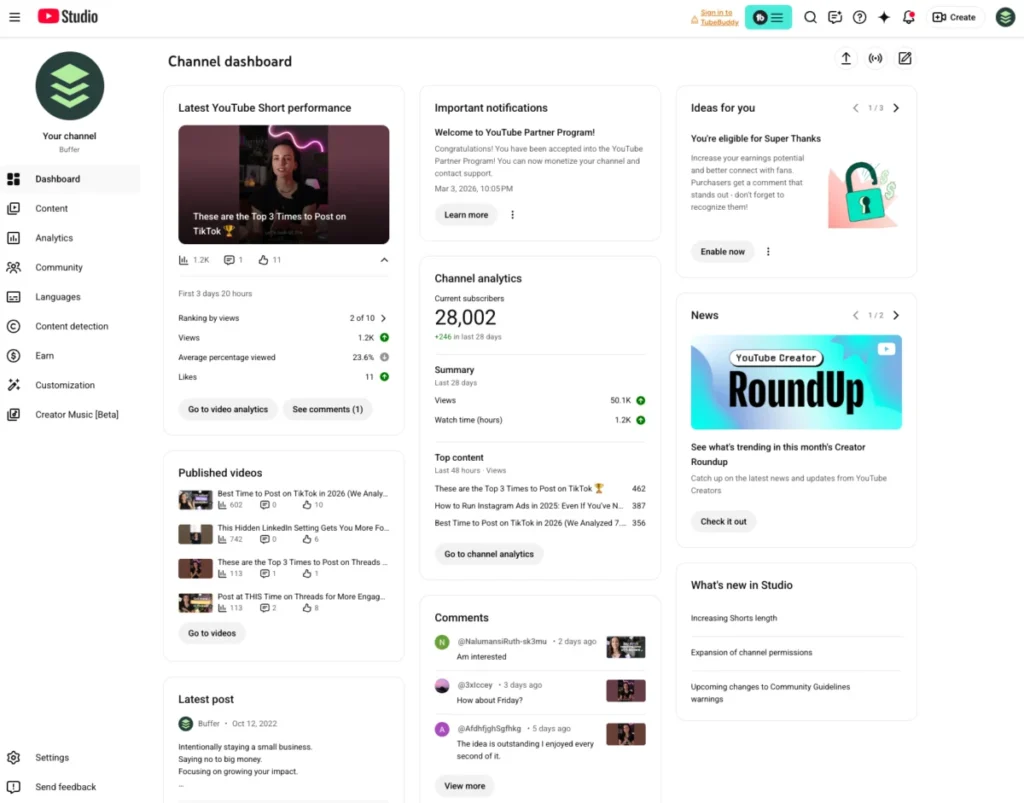
While global data provides a foundational benchmark, individual channel performance can vary based on specific niche demographics. For instance, a gaming channel might see higher late-night engagement than a financial news channel. To refine these global insights, creators are encouraged to utilize the "Audience" tab within YouTube Studio.
The "When your viewers are on YouTube" report provides a localized heatmap. This tool analyzes the specific behavior of a channel’s existing subscribers and viewers over the last 28 days.
- Accessing the Heatmap: Navigate to
Analytics->Audience. - Interpreting Colors: Darker purple segments indicate peak activity.
- Strategic Application: Creators should aim to publish their content approximately 60 to 90 minutes before the darkest purple blocks appear. This ensures the video is "live and indexed" by the time the maximum number of viewers open the app.
Broader Impact on the Creator Economy
The shift toward Sunday morning for long-form content has significant implications for creator burnout and workflow management. With the weekend now being the "prime time" for performance, many creators are moving toward a "Thursday-Friday production finish" to ensure content is ready for the Sunday surge.
Furthermore, for global creators, the study notes that these recommended times are "locally applicable." Because YouTube’s servers deliver content based on the viewer’s time zone, a 10:00 a.m. post will effectively "roll" across the globe, hitting the peak window in London, then New York, then Los Angeles as those regions wake up.
Conclusion and Strategic Checklist
Success on YouTube in 2026 requires a marriage of high-quality production and tactical distribution. While the "Sunday 10 a.m." and "Friday 4 p.m." windows are the current gold standards for long-form and Shorts respectively, they should be viewed as part of a holistic optimization strategy.
Key Takeaways for 2026:
- Prioritize Sundays: Move major launches to Sunday morning to capitalize on the week’s highest engagement.
- Shorts are for the Weekend Eve: Use Friday evenings to launch Shorts that can carry momentum through the weekend.
- Avoid Mid-Week Afternoons: Wednesday and Thursday afternoons are statistically the worst times to launch new content.
- Test and Iterate: Use the global data as a starting point, but always verify against the channel-specific heatmap in YouTube Studio.
By aligning publication schedules with these documented shifts in human behavior, creators can significantly increase the probability of their content being favored by the YouTube algorithm, ultimately leading to higher retention, more subscribers, and sustained channel growth.