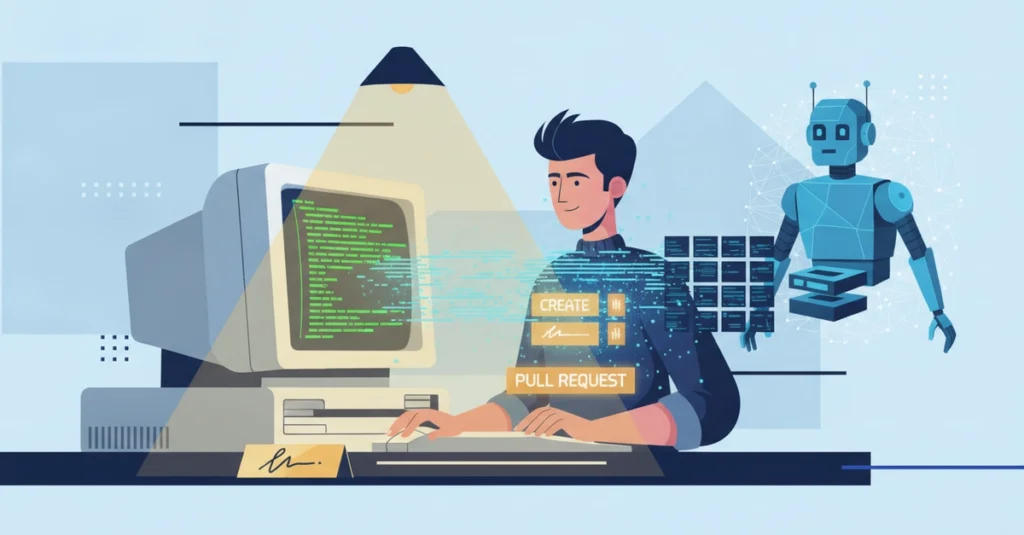

The advent of artificial intelligence in software development has ushered in a new era of productivity, yet it simultaneously presents a profound redefinition of developer responsibility and ownership. In a recent account, a developer described submitting a pull request (PR) where the majority of the code was generated by an AI agent. The code was ostensibly clean, adhering to style guides, and passing initial tests, leading to its approval by a teammate. Despite the AI’s authorship, the developer’s name remained on the PR, implicitly assigning them full accountability for the code’s performance and any potential failures. This scenario encapsulates a growing tension within the tech industry: as AI automates code generation, the human burden of validation, context integration, and ultimate responsibility appears to increase, rather than diminish.
The Rise of AI in Software Development: A Brief Chronology
The integration of AI into the software development lifecycle has rapidly accelerated over the past decade, moving from theoretical concepts to practical tools. Early innovations focused on intelligent code completion and basic error detection. However, the true inflection point arrived with the development of large language models (LLMs) specifically trained on vast repositories of code. Tools like GitHub Copilot, launched in 2021, and subsequent iterations from various tech giants, marked a significant shift. These AI coding assistants transitioned from merely suggesting code snippets to generating entire functions, classes, and even complex logic based on natural language prompts or existing code context.
The timeline of AI adoption in coding looks roughly like this:
- Early 2010s: Emergence of advanced IDE features like intelligent autocompletion and static analysis tools.
- Mid-2010s: Research into machine learning for code generation begins to gain traction, with early prototypes demonstrating limited capabilities.
- Late 2010s: Introduction of AI-powered tools for bug detection and code refactoring, utilizing techniques like deep learning.
- 2020-2021: OpenAI’s GPT-3 showcases unprecedented natural language understanding and generation, paving the way for code-specific LLMs. GitHub Copilot, powered by OpenAI’s Codex, is introduced, demonstrating the ability to generate multi-line code from comments and function names.
- 2022-Present: Widespread adoption and rapid evolution of AI coding agents, including integrations into popular IDEs, CI/CD pipelines, and specialized agents capable of tackling complex development tasks from requirements to testing. This period has seen a democratization of AI coding, making advanced generation capabilities accessible to a broad developer base.
This rapid technological advancement has significantly impacted developer workflows, promising substantial productivity gains. A 2023 study by GitHub indicated that developers using Copilot completed tasks 55% faster on average. Yet, this efficiency comes with an evolving set of challenges, particularly concerning the perception and reality of code ownership.
Shifting Paradigms: From Typing to Oversight
The traditional role of a software developer largely involved the meticulous crafting of code, line by line. With AI agents now capable of producing functional code at an unprecedented speed, the developer’s role is undergoing a fundamental transformation. The focus shifts from primary authorship to a more supervisory and critical evaluation function. Developers are increasingly becoming "code integrators" and "context engineers" rather than just "code writers."
This new paradigm involves:
- Prompt Engineering: Articulating clear and precise instructions for the AI agent.
- Code Generation: Allowing the AI to produce a significant portion of the codebase.
- Review and Refinement: Critically assessing the AI-generated code for correctness, efficiency, security vulnerabilities, and adherence to specific system requirements and architectural patterns.
- Integration and Testing: Incorporating the code into the existing system and ensuring comprehensive testing.
While the AI handles the mechanical act of typing, the intellectual labor of understanding the system, anticipating edge cases, and ensuring holistic correctness remains firmly with the human developer. "The primary output of a developer is no longer just code, but high-quality, contextually appropriate code," states Dr. Anya Sharma, a lead researcher in human-computer interaction at a prominent tech university. "This necessitates a deeper level of critical thinking and system-level understanding than ever before, even as the lower-level coding tasks are offloaded."
The "Easy Trap" of Delegated Responsibility
One of the most insidious psychological effects of AI code generation is the "easy trap" of diminished ownership. When an AI agent rapidly produces clean, well-structured, and often functional code, there is a natural tendency for the human reviewer to perceive the AI as the primary author. This can lead to a subconscious reduction in the perceived responsibility of the human developer, making them feel more like an editor or an approver rather than the ultimate owner.
This trap is particularly potent because the AI-generated code often "looks good." It adheres to syntax, follows common patterns, and frequently passes automated tests. The speed and apparent quality can create an illusion of complete reliability, making it easier for a developer to simply "click approve." However, as legal and industry standards affirm, authorship and responsibility are distinct. If a developer incorporates code written by a colleague into their pull request, the accountability for that code’s behavior, once merged, falls squarely on the developer who submitted the PR. The AI, fundamentally, is just another tool, albeit a sophisticated one. Its use does not absolve the human operator of the ultimate responsibility. "Attributing a production outage to ‘the AI’ is a non-starter in any professional incident review," comments Marcus Thorne, a veteran software engineering director. "The buck always stops with the human who signed off on the change."

The Crucial Role of Human Context and Systemic Knowledge
The core reason why human ownership remains paramount lies in what AI agents inherently lack: deep, contextual understanding of a specific system and its operational environment. While LLMs are trained on vast datasets of code, they operate primarily on patterns and statistical relationships, not on the nuanced, often unwritten, rules and historical decisions that govern complex software systems.
Consider the following critical areas where AI agents frequently fall short:
- Multi-tenancy and Data Isolation: Many modern applications serve multiple clients or "tenants" from a single codebase and database. An AI agent, unless explicitly prompted with every minute detail, might generate a database query that is syntactically valid but critically misses a
tenant_idfilter, potentially exposing one tenant’s data to another or causing data corruption. This requirement is often an architectural decision not explicitly visible in a single file’s context. - Business Logic Nuances: Complex business rules, often accumulated over years, dictate how data should be handled, what actions are permissible, and what side effects certain operations entail. An AI might generate a
DELETEoperation that seems correct but overlooks a specific business rule requiring associated records (e.g., historical audit logs, related order details) to be preserved or soft-deleted, leading to data integrity issues or compliance breaches. - Historical Technical Debt and Architectural Decisions: Every software project carries a history of past decisions, including choices of libraries, frameworks, and specific implementations. A team might have explicitly decided against using a particular third-party library due to performance issues encountered a year ago, or because of a known security vulnerability. An AI, unaware of these "tribal knowledge" decisions documented in internal wikis, Slack threads, or meeting minutes, might confidently propose using such a deprecated or problematic component.
- Performance and Scalability Constraints: While AI can generate efficient-looking code, it often lacks the ability to foresee how that code will perform under specific load conditions within a unique infrastructure setup. A seemingly innocuous loop or database call generated by AI might become a significant bottleneck in a high-traffic environment, a factor a human developer with knowledge of the system’s scale requirements would anticipate.
- Security Best Practices Specific to the Organization: Beyond generic security principles, many organizations have internal security policies, custom vulnerability scanning tools, or specific coding patterns designed to mitigate unique threats. An AI might generate code that is generically secure but misses a specific organizational requirement, such as unique encryption standards or custom authentication flows.
"AI agents excel at pattern recognition and code synthesis," explains Dr. Lena Karlsson, a cybersecurity expert specializing in AI applications. "But they are blind to the ‘why’ behind many critical system decisions. That ‘why’ often resides in human heads, in archived conversations, and in the unspoken architectural principles that define a robust system. This makes human oversight not just beneficial, but absolutely indispensable." The ability to discern whether AI-generated code is correct for your company is a distinct skill that AI itself cannot replicate, at least not yet.
Limitations of AI-Powered Code Review
A natural extension of using AI for code generation is to employ a second AI agent for code review. This approach, indeed, can catch errors that the initial generation might have missed, acting as an intelligent linter or a second pair of digital eyes. Many developers now integrate AI review tools into their workflows, often finding them effective in identifying common bugs, style violations, and even potential security flaws.
However, the efficacy of two AIs agreeing should not be conflated with human accountability. If both the generating AI and the reviewing AI miss a critical flaw – such as the aforementioned multi-tenant check or a subtle race condition – the fundamental problem remains. Neither AI possesses consciousness, empathy, or responsibility. They do not experience the repercussions of a production outage, participate in a postmortem analysis, or bear the cost of fixing a major bug. They do not learn from mistakes in a way that fosters proactive prevention based on shared organizational experience.
Furthermore, AI agents deliver both correct and incorrect code with the same confident, declarative tone. This lack of discernible nuance between optimal and flawed output can be dangerously misleading if it replaces human judgment. Developers, faced with an AI’s authoritative output, might be less inclined to scrutinize it as rigorously as they would a human-written piece of code, leading to an insidious erosion of critical review skills. The calm assurance of an AI, even when wrong, can lull a human into a false sense of security, making the eventual discovery of a critical error all the more impactful.
Redefining Developer Ownership in the AI Era
Given these complexities, the concept of developer ownership in the AI era is not diminishing; it is expanding and intensifying. The nature of the work has shifted from primarily writing lines of code to a more elevated role focused on critical evaluation, strategic integration, and comprehensive risk assessment.
The contemporary developer’s responsibilities now encompass:
- Architectural Fit: Ensuring AI-generated code aligns with the existing system architecture, design patterns, and long-term strategic vision.
- Edge Case Identification: Proactively identifying and addressing scenarios where the AI’s generic solutions might fail due to specific system constraints or unusual user interactions.
- Long-Term Maintainability: Assessing the readability, modularity, and future maintainability of AI-generated code, ensuring it doesn’t introduce hidden technical debt.
- Failure Mode Analysis: Understanding potential points of failure and developing robust error handling and recovery mechanisms, going beyond what an AI might generically suggest.
- Performance Optimization: Tuning AI-generated solutions for optimal performance within the specific operational environment.
- Security Hardening: Applying an organization’s specific security protocols and best practices to AI-generated code.
"The AI has effectively commoditized the act of code generation, much like compilers commoditized assembly language," observes Dr. David Chen, a leading expert in software engineering ethics. "This frees developers to focus on higher-order problems: system design, intricate business logic, complex integrations, and, crucially, ensuring the integrity and safety of the entire software ecosystem. This isn’t less responsibility; it’s a more concentrated and impactful form of responsibility."

The volume of code flowing through a developer’s review pipeline has increased dramatically with AI assistance. Each line, regardless of its origin, still requires a human who is willing to stake their professional reputation on its correctness. The sheer quantity of code necessitates an even sharper critical judgment. However, the number of individuals ultimately accountable for a given change has not grown; it remains singular per pull request. This means that while the input (AI-generated code) has become cheaper and faster, the output (human judgment and accountability) has become exponentially more valuable and expensive.
Implications for Quality Assurance and Risk Management
The integration of AI into coding pipelines has profound implications for quality assurance (QA) and risk management strategies. Traditional QA processes, which often involve manual review, unit testing, integration testing, and end-to-end testing, must adapt to account for AI-generated code.
- Enhanced Testing Strategies: While AI can generate unit tests, human developers must ensure these tests cover critical business logic, edge cases, and potential integration points that AI might overlook. Test coverage metrics become even more critical, and fuzz testing or property-based testing might gain prominence to expose AI-generated vulnerabilities.
- Shift in QA Focus: QA teams may shift their focus from purely bug detection to more holistic system validation, ensuring that AI-generated components integrate seamlessly and do not introduce regressions or new failure modes.
- Incident Response and Postmortems: In the event of a production incident, the root cause analysis must meticulously distinguish between human error, AI-generated flaws, and system-level issues. The "blame the AI" excuse will not suffice. Postmortems will need to investigate not just what failed, but why the AI generated the problematic code and why the human oversight failed to catch it. This places an increased emphasis on robust review processes and clear accountability frameworks.
- Compliance and Regulatory Adherence: Industries with strict regulatory requirements (e.g., finance, healthcare, aerospace) face additional layers of scrutiny. Ensuring that AI-generated code complies with industry standards, data privacy laws (like GDPR, HIPAA), and internal policies requires human expertise and documented audit trails that trace decisions, not just code generation.
Legal and Ethical Dimensions of AI-Generated Code
Beyond operational concerns, the widespread adoption of AI in code generation opens complex legal and ethical considerations.
- Copyright Ownership: Who owns the copyright of AI-generated code? Is it the AI’s developer, the human who prompted the AI, or is it uncopyrightable? Current legal frameworks are struggling to keep pace with these questions, particularly when AI models are trained on vast amounts of copyrighted material.
- Liability: In the event of catastrophic failure or a security breach caused by AI-generated code, who is liable? The developer who approved it? The company that deployed the AI? The creators of the AI model? Legal scholars are actively debating these questions, suggesting the need for new legislation or interpretations of existing laws.
- Ethical Implications: The potential for AI to perpetuate biases present in its training data (e.g., in algorithms for hiring or lending) is well-documented. Similarly, AI-generated code could inadvertently introduce ethical issues, such as unfairness or discrimination, if not carefully reviewed for its societal impact. The developer’s ethical responsibility to scrutinize and mitigate such risks becomes paramount.
The Future of Software Development: A Collaborative Human-AI Ecosystem
The trajectory of software development points towards an increasingly collaborative ecosystem where humans and AI agents work in synergy. This future envisions AI as an indispensable tool that augments human capabilities, offloading repetitive and predictable tasks, thereby allowing developers to concentrate on higher-order cognitive functions.
Developers will evolve into "AI orchestrators" or "AI whisperers," skilled in crafting precise prompts, evaluating complex outputs, and integrating AI-generated components into coherent, robust systems. Education and training for future developers will need to emphasize critical thinking, system design, security best practices, and ethical considerations, alongside proficiency in traditional coding skills.
This shift is not about replacing human developers but redefining their value proposition. The human capacity for intuition, abstract reasoning, contextual understanding, and ethical judgment remains unmatched by current AI. These uniquely human attributes will be the driving force behind innovation and the ultimate guarantor of software quality and reliability in an AI-assisted world.
In conclusion, while AI agents offer unprecedented speed and efficiency in generating code, they do not, and cannot, assume the mantle of ultimate responsibility. The ease with which AI can produce code creates a deceptive illusion of delegated ownership. However, the complex interplay of system context, historical decisions, nuanced business logic, and critical risk assessment firmly anchors accountability with the human developer. As the industry hurtles forward, embracing the power of AI, developers must remain vigilant. They must read every line of AI-generated code as if they wrote it, because to every stakeholder downstream—from end-users to incident response teams—they did. The transactional cost of code may have decreased, but the cognitive and professional cost of ownership has demonstrably risen. Ignoring this reality is the surest path to breakdowns and vulnerabilities that will inevitably manifest at the most inopportune moments.