
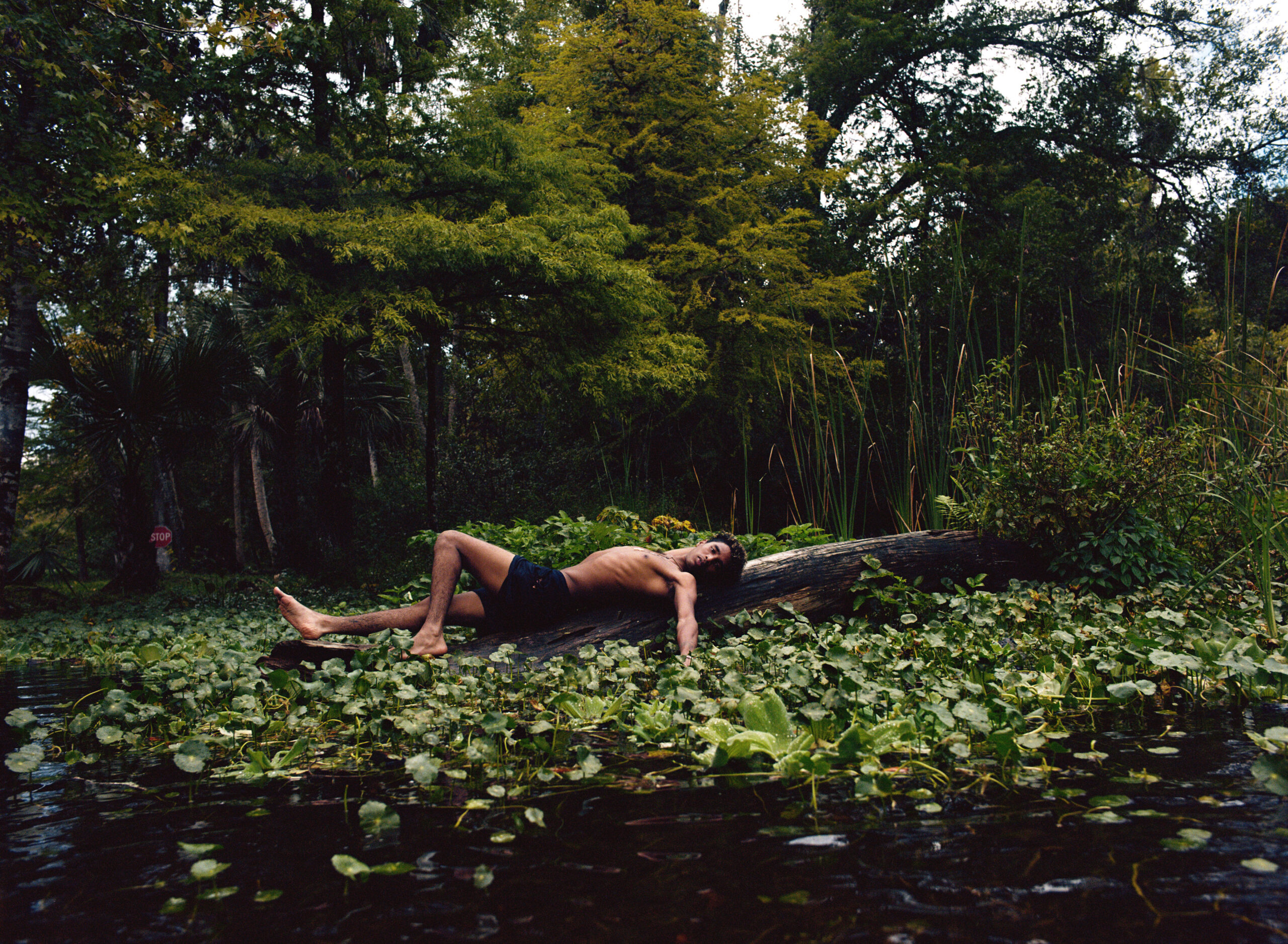
For generations, the visual mythology of the American coming-of-age story has been dominated by a narrow set of tropes: sun-bleached Midwestern highways, suburban adolescence, and an implicit, exclusionary definition of who belongs in the great outdoors. In his acclaimed photographic series Florida Boys, Miami-based artist Josh Aronson challenges this visual hegemony. By staging cinematic, tender, and evocative tableaus of young Black, Brown, and queer men navigating the swamps, forests, and remote waterways of the Sunshine State, Aronson is not merely documenting youth culture—he is actively expanding the boundaries of American pastoral iconography.
Main Facts and Artistic Premise
Born in Toronto in 1994 and raised in Florida, Aronson occupies the complex position of an insider-outsider. Coming from a family with no ancestral roots in the region, he grew up feeling detached from the traditional imagery of Americana that dominated media narratives. To bridge this gap, Aronson turned to photography as a mechanism for spatial and cultural reclamation.
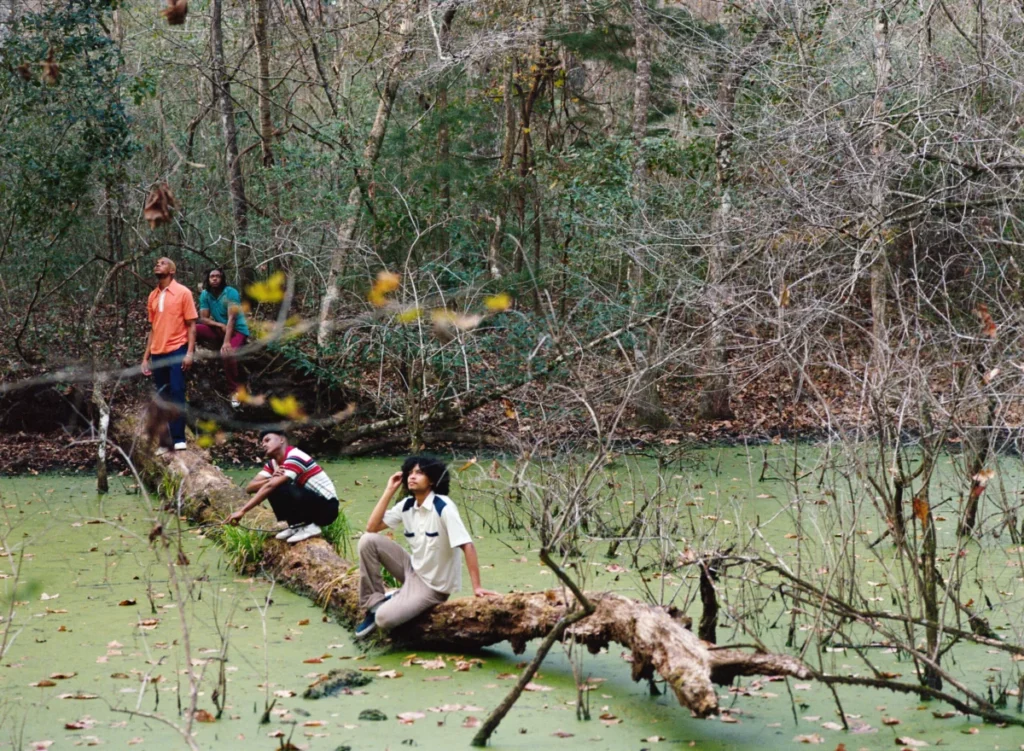
Rather than scavenging for candid moments among rural youth, Aronson curates and casts his subjects—primarily young men from the greater Miami area, many of whom are first-generation Americans or children of immigrants. He transports them from the urban core into remote natural landscapes across the state. In these settings, the young men act as surrogates for Aronson’s own experiences, engaging in play, quiet reflection, and mutual care. The resulting images—with titles like Ophelia, Christlike, Climbers, and Swamp—straddle the line between documentary realism and high-end cinematic fiction.

Aronson’s work has garnered widespread critical acclaim, earning features in prestigious publications such as The New York Times, The Paris Review, Financial Times, Frieze, Italian Vogue, Teen Vogue, Dazed, i-D, and The Guardian, alongside a notable spotlight in Vogue. Beyond his print portfolio, Aronson is also recognized in the contemporary art community as the creator of Photo Book Speed Date, a public engagement program designed to foster connection through rapid-fire discussions of photography books.
Chronology and Process: A Five-Year Archival Journey
The creation of Florida Boys is defined by an unconventional and rigorous timeline that spans half a decade, marked by intensive digital research, physical exploration, and a radical approach to media management.

The project’s genesis began with deep archival and digital reconnaissance. Because Aronson did not grow up exploring Florida’s rural expanses, he utilized platforms like Instagram—scanning geo-tags and hashtags such as #VisitFlorida and #FloridaWild—alongside historical travel guides, vintage brochures, and state maps to locate untouched terrain. He meticulously mapped multi-year itineraries, embarking on solo scouting trips to test lighting compositions, locate remote boat-only state parks, and collect ephemera that would later accompany his physical exhibitions.
Once the locations were secured and the casts were organized, Aronson entered a multi-year production phase. However, his post-production workflow diverged sharply from industry standards. In an era dominated by instant digital feedback and rapid turnaround times, Aronson chose to leave his film undeveloped for three full years.

Operating under a strict compartmentalization of artistic modes—separating the impulsive, creative "maker" from the analytical "editor"—Aronson deliberately resisted the urge to inspect his exposures. This method allowed him to maintain a sense of psychological curiosity and creative hunger, sustaining the momentum of the project across five years without second-guessing his compositions.
When he finally developed the film, the moment carried profound psychological weight. Rather than discovering ruined exposures or technical failures, Aronson was met with empirical proof of the surreal landscapes and emotional connections he had orchestrated, likening the developed rolls to rediscovering a long-lost personal diary.

Supporting Context: Confronting the Legacy of American Wilderness
To fully understand the cultural weight of Florida Boys, one must examine the historical architecture of the American landscape. For decades, mainstream conservation movements and wilderness photography have projected an illusion of nature as a neutral, universal sanctuary. Aronson, however, has increasingly confronted the exclusionary foundations upon which these spaces were built.
The American ideal of the wilderness has long been intertwined with the displacement of Indigenous populations and the marginalization of Black and Brown communities. Historically, early conservation efforts frequently intersected with social hierarchies that dictated who possessed the economic privilege, social standing, and perceived physical safety to rest and roam outdoors.

By placing young, first-generation, queer, and minority men at the center of these sprawling, untamed backdrops, Aronson directly confronts these historical exclusions. His subjects do not appear as outsiders trespassing in a hostile environment; rather, they exist in total harmony with the cypress swamps, lunar-like rock formations, and dense canopies. Through this visual juxtaposition, the project acts as a quiet political critique of who has historically been granted visibility in the American landscape.
Artistic Lineage and Critical Reception
Aronson’s methodology does not exist in a vacuum; it is explicitly indebted to the lineage of boundary-pushing contemporary photography. He frequently cites Justine Kurland’s seminal series Girl Pictures—which challenged traditional group portraiture through collective adolescent narratives—and the freewheeling, collaborative outdoor aesthetics of Ryan McGinley as foundational influences on his practice.

Since the public rollout of Florida Boys and its subsequent gallery showings—such as the exhibition at Baker–Hall, which integrated found ephemera, maps, and archival brochures alongside large-scale outdoor installations, grids, and assemblage walls—the response has been overwhelmingly positive. The project has resonated deeply not only within contemporary fine art circles but also with long-term Florida residents from older generations who see fragments of their own shifting home state reflected in the imagery.
Art critics and curators have repeatedly emphasized the cinematic quality of Aronson’s photographs. Rather than traditional snapshots, the images function as narrative "film stills," capturing micro-moments of human tenderness, tension, and camaraderie against the backdrop of a complicated southern landscape—complete with the stark reminders of modern political polarization, from local diners to Confederate and political flags glimpsed along the state’s rural highways.

Broader Impact and Implications
As contemporary photography continues to grapple with questions of representation, identity, and environmental access, works like Florida Boys offer a vital framework for future discourse. By refusing to let rural landscapes remain the exclusive domain of traditional Americana, Aronson broadens the scope of who gets to be memorialized in the canon of outdoor photography.
Ultimately, Florida Boys transcends regional documentation. It serves as an emotional blueprint for how art can be utilized to heal historical alienation, foster genuine human connection, and construct new spaces of belonging where none previously existed. For Josh Aronson and his collaborators, the camera is not merely a tool for recording reality, but an instrument capable of making imagined futures visible, tangible, and real.