
The evolution of modern photographic lighting gear has historically skewed toward accumulation. For decades, building a professional lighting kit meant purchasing an array of specialized modifiers: silver and white reflectors for bouncing, flags and gobos for cutting spill, various synthetic and paper backdrops for framing subjects, and dedicated negative fill cards to deepen shadows. However, contemporary on-location workflows and minimalist studio design demand equipment versatility. A single, reversible black-and-white panel—exemplified by the Westcott V-Flat system—can execute all five of these fundamental tasks within a single shoot, proving that learning to read and shape ambient and strobe light with one multi-purpose tool often outperforms owning five separate, single-use modifiers.
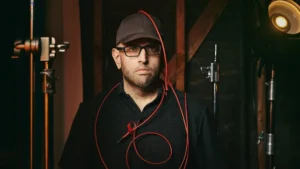
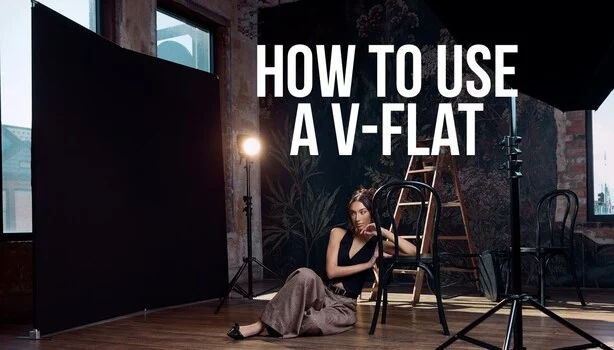
In a comprehensive instructional walkthrough released via Westcott Lighting, instructor Ashley demonstrates how photographers can maximize the utility of a standard folding V-Flat board on location. The tutorial moves beyond basic studio applications, detailing five distinct configurations designed to give shooters precise control over contrast, shadow structure, and background aesthetics without overcomplicating their gear pack.
Main Facts and Setup Methodology
The core premise of the Westcott demonstration centers on spatial efficiency and light manipulation physics. A standard V-Flat consists of two large, hinged foam-core or rigid panels featuring a stark white surface on one side and a matte black surface on the other. This dual-sided design allows photographers to pivot rapidly between additive and subtractive lighting methods.
The first technique addresses the common challenge of harnessing harsh ambient window light. Rather than deploying large diffusing panels over the window itself, the subject is positioned just out of the direct sunbeam. The white side of the V-Flat is then brought in close to the subject to catch and redirect the ambient window illumination. According to fundamental inverse-square law principles demonstrated in the video, the closer the reflective board sits to the subject, the more light it throws back. When pulled in tight, the passive white surface acts effectively as a primary key light, yielding a softer quality than the raw sun and producing large, flattering catchlights in the subject’s eyes.
Chronology of the Demonstration and Advanced Configurations
Following the ambient bounce setup, the tutorial progresses into subtractive lighting and background control. The chronology of the Westcott presentation systematically moves from simple ambient manipulation to complex, multi-light studio hybrid setups.
- Subtractive Flagging and Negative Fill: Flipping the board to its black side transforms its function entirely. By positioning the black fabric to block stray window light, the photographer carves out a clean pocket of shade while allowing the background to retain natural texture from the ambient environment. To illuminate the subject within this self-created shadow, an FJ400 version 2 strobe is fired into a 53-inch deep umbrella, complemented by an FJ800 outfitted with a warm gel functioning as a hair light.
The demonstration highlights negative fill as the most critical yet frequently overlooked technique in modern portraiture. When a photographer uses a large scrim to diffuse a light source—such as an FJ400—the resulting light is remarkably soft and even. However, without careful shadow management, heavily diffused light can read as flat and lifeless. Placing the black side of the V-Flat close to the shadow side of the subject absorbs ambient room bounce, deepening the transitions along the cheekbones and jawline to restore facial structure and contrast without compromising the softness of the primary source.
-
Background Isolation and Gradient Generation: Transitioning from light control to set design, the third and fourth setups utilize the V-Flat as an environmental element. The matte black fabric serves as a clean, light-absorbing backdrop that instantly conceals cluttered or distracting location environments. To prevent the background from appearing dead flat or undifferentiated, a gelled FJ800 is aimed directly at the black fabric, introducing a subtle color gradient that adds depth and dimension to the frame.
-
The Dual-Sided Hybrid Configuration: The final and most advanced configuration layers both functional sides of the V-Flat frame simultaneously. The black fabric is oriented to shield the subject from unwanted light spill, while the white side acts as a dedicated bounce surface. Two strobes are pointed directly into the center of the white panel, producing an even, high-key white background. Concurrently, a 24-inch rapid box beauty dish maintains a directional, highly defined key light on the subject. This configuration demonstrates how a single physical board can execute two entirely separate structural tasks within a single exposure.
Supporting Data and Industry Context
The rising popularity of multi-role modifiers like the V-Flat aligns with broader economic and technological shifts in the commercial photography industry. Over the past decade, the democratization of lighting equipment has driven down the cost of large modifiers, deep umbrellas, portable strobes, and diffusion scrims. Consequently, independent photographers and small production teams can afford gear setups that once required high-end rental houses.
Market research within the photographic equipment sector indicates a growing preference for modular, multi-functional gear. Data from specialty retailers such as B&H Photo Video shows sustained demand for collapsible panels and hybrid modifiers that reduce cargo volume for location shooters. Packing for on-location shoots frequently involves navigating tight spaces, strict time constraints, and logistical hurdles associated with air travel or urban parking. Carrying five distinct modifiers—a reflector, a flag, a backdrop, a negative fill card, and a diffuser—adds unnecessary weight and setup time. Conversely, folding systems streamline the transition between lighting ratios, allowing a single photographer to operate efficiently without a large crew.
The Implications of Subtractive Lighting in Contemporary Portraiture
While the affordability of softboxes and strobes has made clean, shadowless lighting universally accessible, industry analysts and veteran educators frequently note a concurrent stylistic challenge: the proliferation of weightless, hyper-diffused imagery devoid of structural contrast.
When lighting equipment becomes too powerful and easy to diffuse, portraits often lose their three-dimensional quality. Shadows are the foundational element that defines human anatomy, translating a flat two-dimensional photograph into a sculptural representation of form. Subtractive lighting—the deliberate removal of ambient light via negative fill—serves as the antidote to this modern aesthetic flattening.
Unlike adding more light sources, which can quickly overcomplicate a scene and wash out subtle tonal gradations, subtraction costs nothing in power output, requires no electrical connections, and functions reliably in both bright and dim environments. By cutting the ambient light that would otherwise bounce off surrounding walls and fill in the shadow side of a subject’s face, photographers steepen the transition from highlight to shadow. This technique emphasizes facial bone structure, increases perceived sharpness without altering lens focus, and introduces a classic, cinematic contrast that digital post-processing alone cannot authentically replicate.
Broader Industry Impact and Pedagogical Shift
Instructional content provided by manufacturers like Westcott Lighting reflects a broader pedagogical shift in digital media education. Rather than focusing exclusively on gear specifications and power output numbers, contemporary educational resources emphasize lighting physics, spatial awareness, and problem-solving methodologies.
As content creators and commercial photographers face tighter profit margins and compressed production schedules, the ability to control an entire lighting environment using minimal gear becomes a core competitive advantage. The techniques outlined in the Westcott V-Flat demonstration illustrate that advanced lighting results do not depend on the sheer volume of equipment deployed, but rather on the photographer’s ability to manipulate light and shadow dynamically with versatile, foundational tools.
Ultimately, mastering the dual nature of a simple black-and-white board teaches photographers to think as much about what they choose to take away from a scene as what they choose to add. This shift in perspective underpins professional image-making, bridging the gap between technical execution and artistic intent across diverse commercial and editorial assignments.