
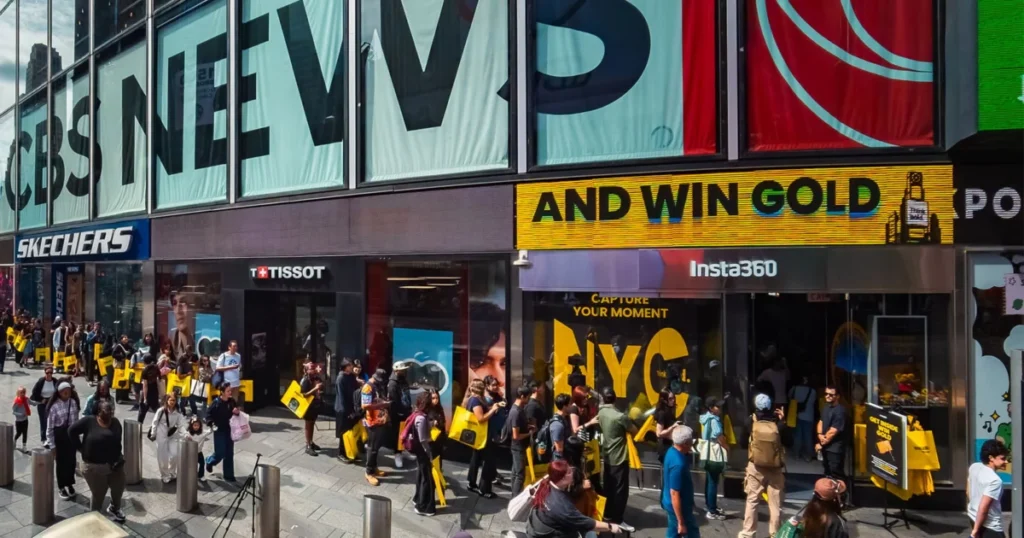

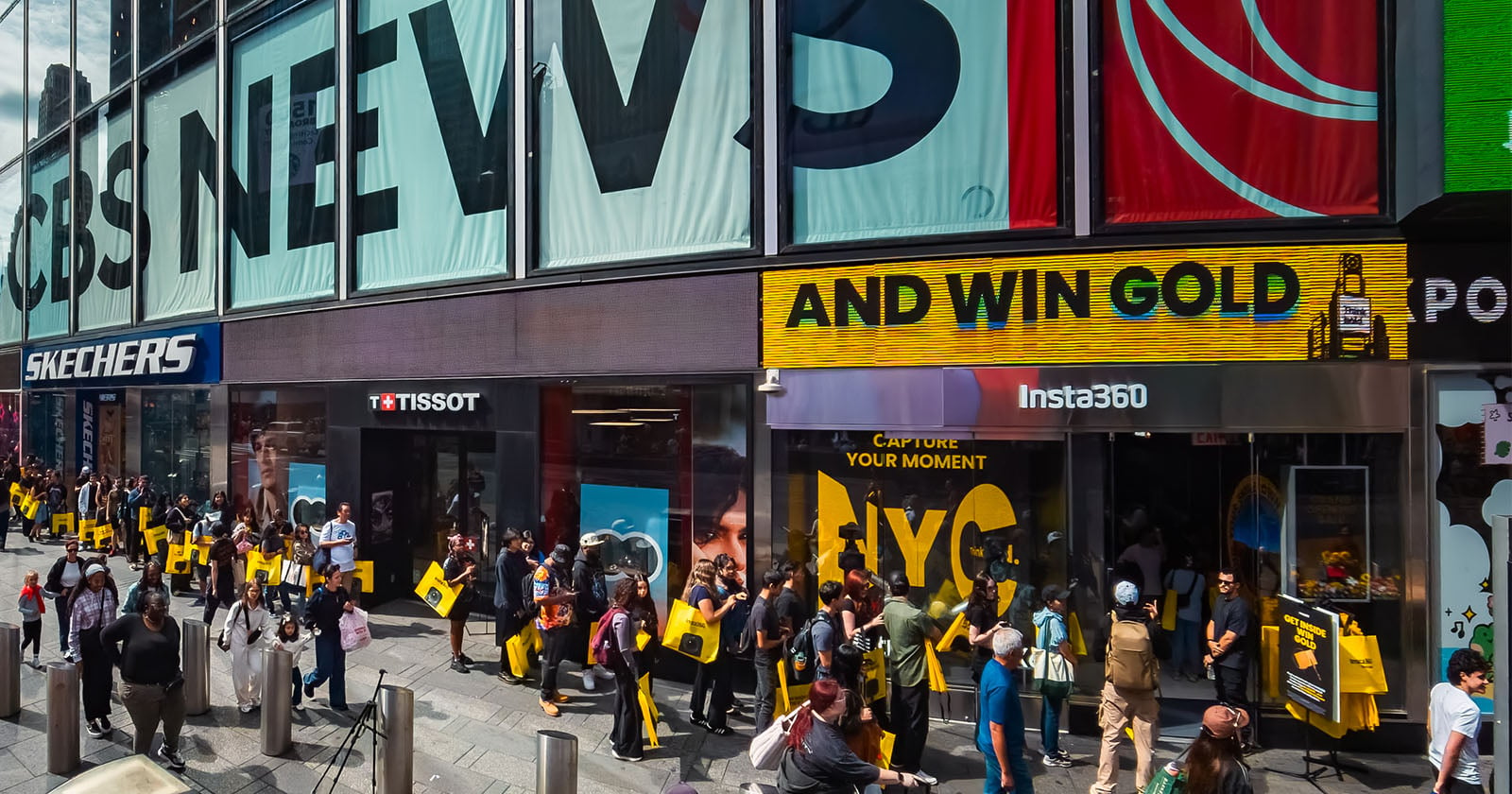
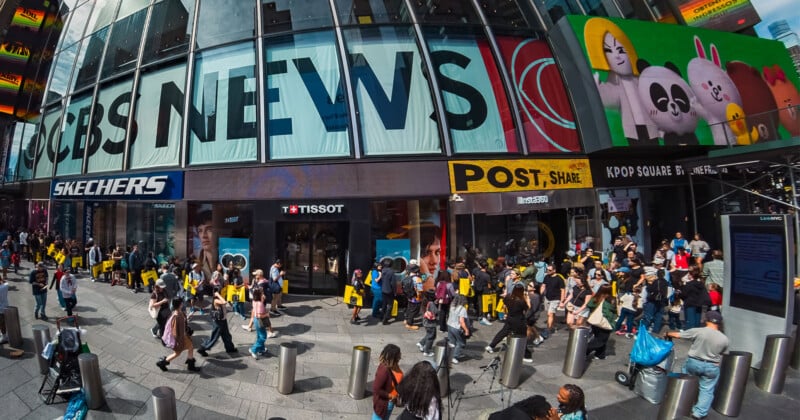
On September 19, 2026, the global imaging powerhouse Insta360 officially transitioned from a digital-first pioneer to a brick-and-mortar presence in the United States, inaugurating its first flagship retail location in New York City’s iconic Times Square. This strategic move marks a pivotal moment for the Shenzhen-based company, which has spent the last decade disrupting the camera industry through innovative 360-degree capture technology and, more recently, versatile action and gimbal systems. The opening, situated in one of the most high-traffic pedestrian corridors in the world, serves as both a distribution hub and a dedicated space for consumer education, reflecting the company’s ambition to move beyond online retail and establish a physical, lasting footprint in the Western market.
The significance of this expansion cannot be overstated. Since its inception as a startup in 2015, Insta360 has rapidly ascended to become the dominant force in the 360-degree camera sector. By leveraging advanced software algorithms and hardware design, the company transformed what was once a niche technology—cumbersome to edit and difficult to view—into a mainstream tool for creators, athletes, and casual users. The company recently announced that it has surpassed the milestone of 10 million cameras shipped worldwide, a testament to its aggressive product development cycles and successful penetration into global markets.
A Decade of Meteoric Growth
The timeline of Insta360’s journey is defined by rapid iteration. Following the 2016 launch of the "Nano," a device that essentially turned smartphones into 360-degree cameras, the company steadily refined its hardware. By 2026, the brand had successfully diversified its portfolio. The launch of the X6 flagship camera earlier this summer signaled a shift toward professional-grade image quality, incorporating dual Sony Type 1/1.1 sensors that allow for high-fidelity capture in varied lighting conditions.
Simultaneously, the company’s expansion into the gimbal category with the Luna Ultra and Luna Pro series—developed in partnership with the German optics giant Leica—has challenged the established dominance of competitors like DJI. By offering features such as detachable, modular display units, Insta360 has successfully differentiated its hardware from conventional point-and-shoot cameras, positioning its devices as essential components of a modern content creator’s kit.
The Strategic Importance of Times Square
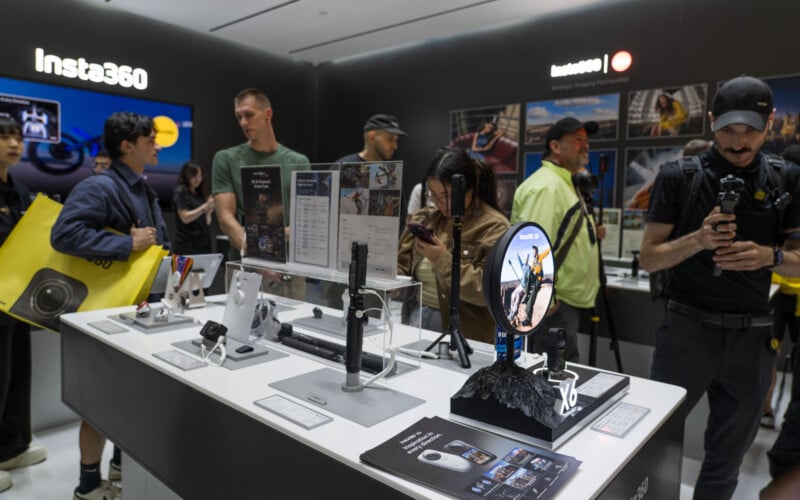
The decision to anchor its U.S. retail presence in Times Square is a calculated maneuver. As Tom Harris, President of the Times Square Alliance, noted during the opening, the location serves as a "global stage." For a company that relies heavily on visual demonstrations to explain its complex products, the flagship store acts as an immersive laboratory.
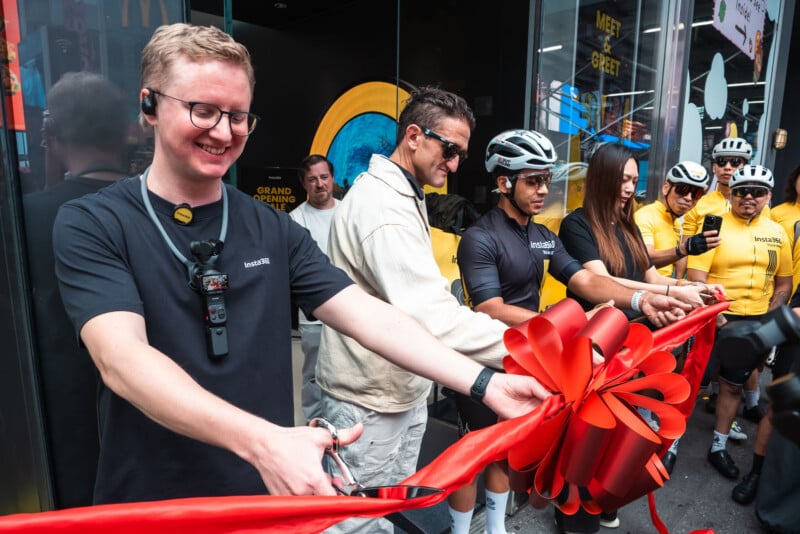
Unlike traditional cameras, 360-degree technology often requires a learning curve to fully grasp the potential of "invisible" selfie sticks or reframing capabilities. Max Richter, Co-founder and VP of Marketing at Insta360, emphasized that the store is designed to bridge this educational gap. "A lot of people know us from social media, but usually it’s a challenge to educate users about the technology behind it," Richter explained during the event. By providing hands-on demonstrations, the company aims to convert curious passersby into active users who understand the ecosystem of accessories and software workflows that accompany their hardware.
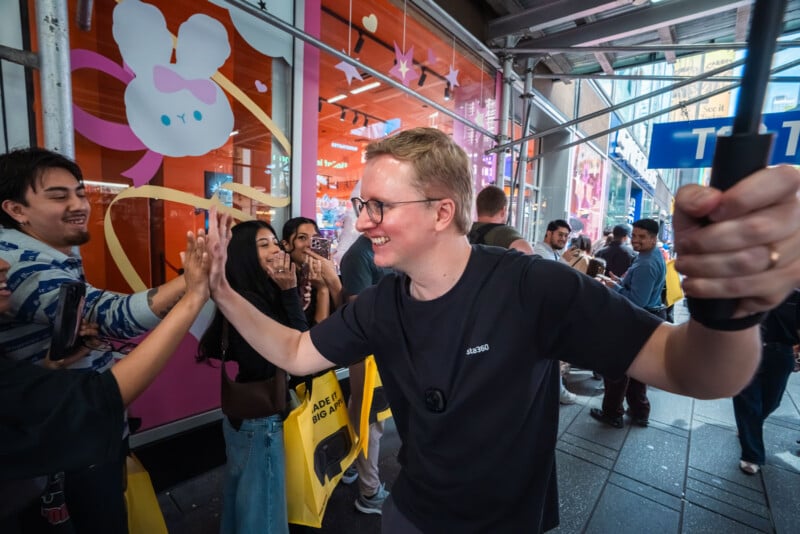
The opening day saw an impressive turnout, with lines forming as early as 2:30 AM. The first individual in the queue was rewarded with a bespoke, gold-inlaid Luna Ultra, a gesture that highlights the brand’s commitment to its early adopters and community-building efforts.
Market Dynamics and Competitive Landscape
The launch of the New York flagship arrives during a period of significant volatility in the consumer imaging sector. The competitive landscape has been disrupted by external regulatory and financial pressures affecting major industry players. DJI, a primary competitor in the handheld gimbal and action camera space, has faced ongoing scrutiny from U.S. government agencies, creating a vacuum that other manufacturers are eager to fill.
Furthermore, the recent acquisition of GoPro by Starman Optical for $285 million, following a series of quarterly financial losses, has sent shockwaves through the industry. These shifts have provided Insta360 with a unique window of opportunity to consolidate its market share. By establishing a high-profile physical presence, Insta360 is not only signaling its financial stability but also its readiness to capture the consumer base left adrift by the restructuring of its long-standing rivals.
Expanding the Global Retail Footprint
The New York store is not an isolated endeavor but a central pillar of a broader, aggressive global retail strategy. This expansion began in earnest last month with the opening of a flagship location in Tokyo, Japan. The company has already established a network of dozens of authorized dealers across Asia, and the current roadmap includes a significant push into Europe, with Munich, Germany, identified as the next major site for a flagship store.
This international retail strategy is intended to diversify the company’s revenue streams. While online direct-to-consumer sales remain the bedrock of the business, physical locations offer a "third space" where community members can gather. This is particularly important for a brand that owes much of its growth to the viral nature of its user-generated content. As noted by professional photographer and videographer Anthony Quintano, a long-time user who documented the evolution of the brand, the ability to see and touch the hardware is the final barrier to entry for many potential customers.
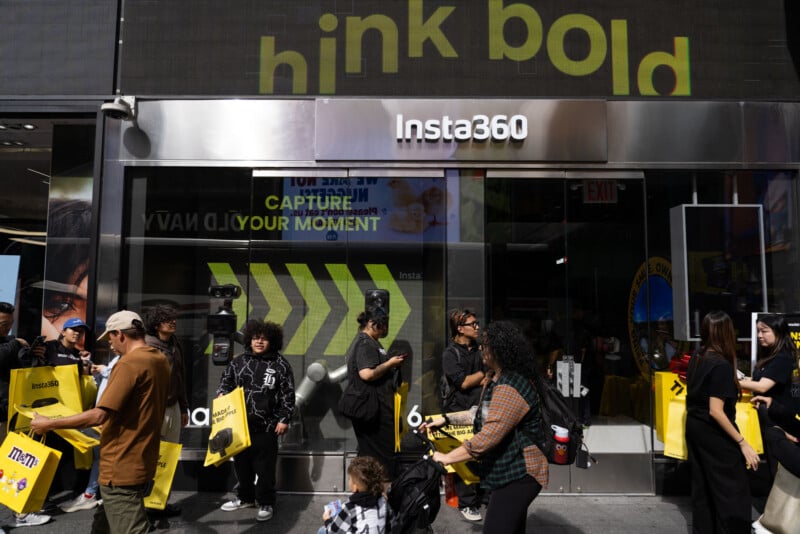
"I remember when Times Square was full of camera stores selling film," Quintano noted. "To see a brand like Insta360 here now, showing people how easy it is to capture these high-quality, multi-angle videos, it brings the technology down to earth."
Future Goals and Technological Integration
Looking toward the future, Insta360 remains focused on its long-term vision of making imaging technology "invisible." Founder JK Liu has previously articulated a goal to develop a camera system that operates seamlessly through advanced motion control, AI-driven post-processing, and superior optics, effectively removing the technical friction of image-making.
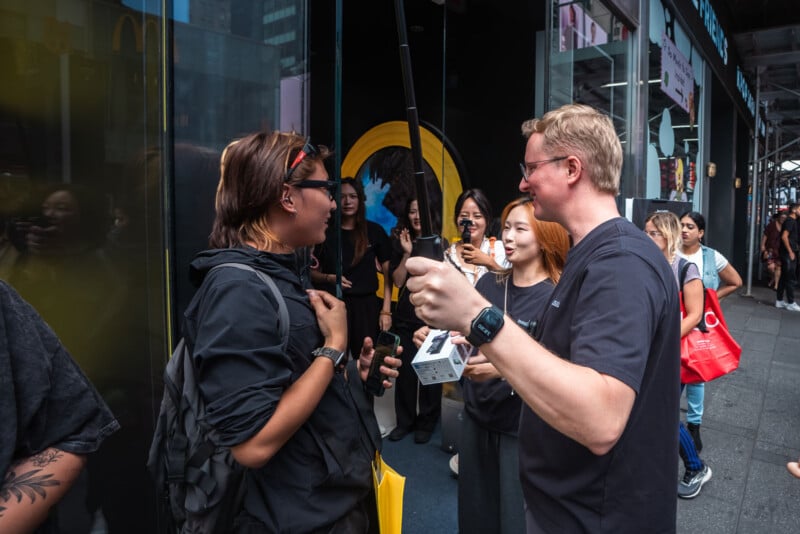
While such a device remains in the developmental phase, the current retail stores are designed to serve as a showcase for this trajectory. The inclusion of the GO series—tiny, wearable cameras—alongside the heavy-duty action equipment, illustrates a wide range of use cases that the company supports, from extreme sports to daily vlogging.
The implications of this expansion are clear: Insta360 is moving from being a product manufacturer to a lifestyle brand. By controlling the customer experience in key global hubs, the company is effectively insulating itself from the fluctuations of the e-commerce landscape and ensuring that its technology remains accessible to a broad demographic.
As the company looks to the remainder of 2026 and into 2027, the success of the Times Square flagship will likely serve as a benchmark for its future physical endeavors. For a brand that started with a simple vision of capturing 360-degree footage, the ability to command a crowd in the center of New York City underscores the transformation of both the company and the modern imaging market. The path ahead will be defined by how effectively the brand can maintain its innovative edge while scaling its operations to meet the demands of a global, and increasingly physical, retail footprint.
Full Disclosure: PetaPixel attended Insta360’s grand opening event in New York as part of a paid collaboration.