
The traditional news cycle has been fundamentally restructured as real-time updates on social media platforms become the primary catalyst for public discourse and brand perception. According to the Q1 2026 Pulse Survey, social media has officially surpassed traditional outlets as the first point of contact for news consumption. Headlines no longer originate solely from wire services; instead, they emerge from viral TikTok videos, breaking threads on X (formerly Twitter), professional analysis on LinkedIn, and granular community debates on Reddit. This decentralization of information means that brand narratives are being shaped across multiple platforms simultaneously, often creating a feedback loop where a single post can escalate into a global trend within hours.
For modern organizations, the challenge is no longer just about tracking direct mentions. Conversations regarding corporate reputation, product quality, and executive leadership are happening in disparate digital corners, often without tagging the official brand accounts. When public sentiment can pivot in a matter of minutes, relying on manual dashboard checks or legacy press monitoring is no longer a viable strategy. Industry experts argue that a unified, proactive approach to cross-network listening is essential to prevent "narrative blindness"—a state where a brand is unaware of a burgeoning crisis until it has already reached a critical mass.
The Paradigm Shift: From Newsrooms to Social Streams
The shift toward a social-first news environment represents a decade-long transition in how information is disseminated. In the early 2010s, social media served as a distribution channel for articles produced by traditional media. By the mid-2020s, the roles have reversed; traditional media now frequently reports on stories that have already matured on social platforms.
The Q1 2026 Pulse Survey highlights that users are not just consuming news passively; they are participating in its creation. This "democratization of the scoop" means that a customer’s review on a niche forum or a short-form video demonstrating a product flaw can carry as much weight as a formal investigative report. For brands, this necessitates a move away from siloed monitoring. If the marketing team is only looking at Instagram while the customer service team is only looking at X, and the PR team is only looking at Google News, the organization remains vulnerable to "blind spots" in the digital ecosystem.
Defining Cross-Network Brand Monitoring
Cross-network brand monitoring is the systematic practice of tracking, aggregating, and analyzing mentions of a brand, its products, and its leadership across the entire digital spectrum. Unlike traditional social listening, which might focus on a few key platforms, cross-network monitoring synthesizes data from social networks, discussion forums (such as Reddit and Discord), review sites (Yelp, G2, Trustpilot), blogs, and digital news outlets into a centralized "single pane of glass."
This methodology relies on a combination of sophisticated social listening and media monitoring software. These tools scan the internet for specific keywords, hashtags, and phrases, converting what was once fragmented "online chatter" into structured data points. By unifying this information, organizations can identify patterns that might otherwise go unnoticed—such as a specific complaint on a forum eventually manifesting as a viral trend on TikTok.
The Strategic Importance of Unified Monitoring
Implementing a unified cross-network strategy is critical for several operational reasons. First, it provides a comprehensive view of the "media landscape," which Paul Quigley, General Manager of Listening at Sprout Social, describes as an essential requirement for modern business. "Today, narratives—both opportunities and threats—can kick off anywhere," Quigley noted. "Brands risk exposure and missed opportunities if their listening focuses too heavily on just a couple of sources. They need nothing less than the full media landscape at their fingertips."
Second, unified monitoring allows for faster crisis mitigation. A PR crisis rarely stays on one platform. A spark on Reddit might be fanned by a journalist on X and then visualized by a creator on TikTok. Without a cross-network view, a brand might attempt to extinguish the fire on one platform while it continues to rage on others.

Third, it enables better consumer intelligence. By monitoring conversations across different demographics—such as the professional-leaning audience on LinkedIn versus the younger, trend-driven audience on TikTok—brands can tailor their messaging and product development to meet the specific needs of various segments.
Chronology of Brand Monitoring Evolution
To understand the current state of agentic monitoring, it is helpful to view the historical trajectory of how brands have tracked their reputations:
- The Clipping Era (Pre-2000s): Monitoring was largely manual, involving physical "press clippings" from newspapers and magazines, often delivered days or weeks after publication.
- The Keyword Era (2000s–2010s): The rise of Google Alerts and early social tools allowed brands to track specific keywords. Monitoring was still largely reactive and focused on the web rather than social "walled gardens."
- The Dashboard Era (2010s–2023): Brands adopted sophisticated dashboards that pulled in feeds from major social networks. However, this required human analysts to log in, interpret charts, and manually identify shifts in sentiment.
- The Agentic AI Era (2024–Present): The current phase involves autonomous AI agents that monitor data 24/7, identify anomalies without human prompting, and provide contextual recommendations in real-time.
Establishing a Unified Data Foundation
Building a successful cross-network program requires two distinct phases: channel mapping and objective categorization.
Centralizing Network Monitoring
The first step involves identifying which digital "pillars" are most relevant to the brand’s audience. While every brand is different, a robust strategy typically includes:
- Major Social Networks: TikTok, Instagram, X, and LinkedIn for broad reach.
- Community Hubs: Reddit, Discord, and specialized forums for deep-dive discussions.
- Review Ecosystems: Industry-specific sites where product feedback is centralized.
- Digital Press: Traditional news sites, Substacks, and niche blogs.
Once these channels are identified, the data must be aggregated into a single dashboard. This centralization eliminates organizational silos, ensuring that social media managers, PR professionals, and C-suite executives are all operating from the same "source of truth."
Setting Strategic Tracking Objectives
Data collection without a goal is merely noise. Organizations must set specific benchmarks to measure the success of their monitoring efforts. Common objectives include:
- Share of Voice (SOV): How often is the brand mentioned compared to its primary competitors?
- Sentiment Volatility: How quickly does the public mood shift following a product launch or news event?
- Narrative Origin: Where do the most impactful stories about the brand typically start?
- Executive Reputation: Tracking the public perception of key leadership figures.
From Reactive Dashboards to Proactive Agentic Monitoring
One of the most significant shifts in the industry is the transition from passive dashboards to "agentic" monitoring. Traditional monitoring required a human to log in, look at a graph, and decide if a spike in mentions was significant. This introduced a "latency gap"—the time between an event occurring and a human noticing it.
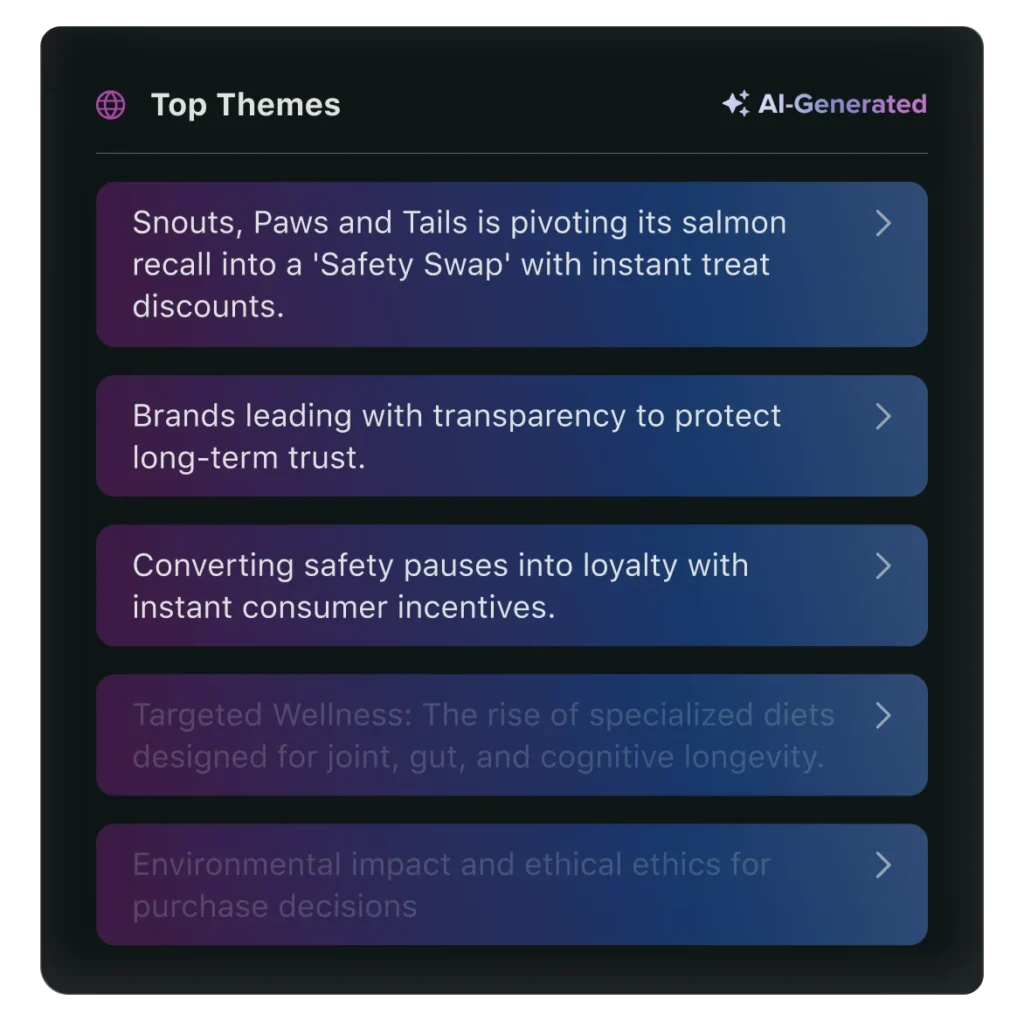
Agentic monitoring, powered by AI, eliminates this gap. AI agents operate as "always-on" analysts that scan networks in real-time. Unlike a simple alert that triggers based on volume, an agentic system understands context. It can distinguish between a "good" spike in mentions (a successful marketing campaign) and a "bad" spike (a burgeoning PR crisis).
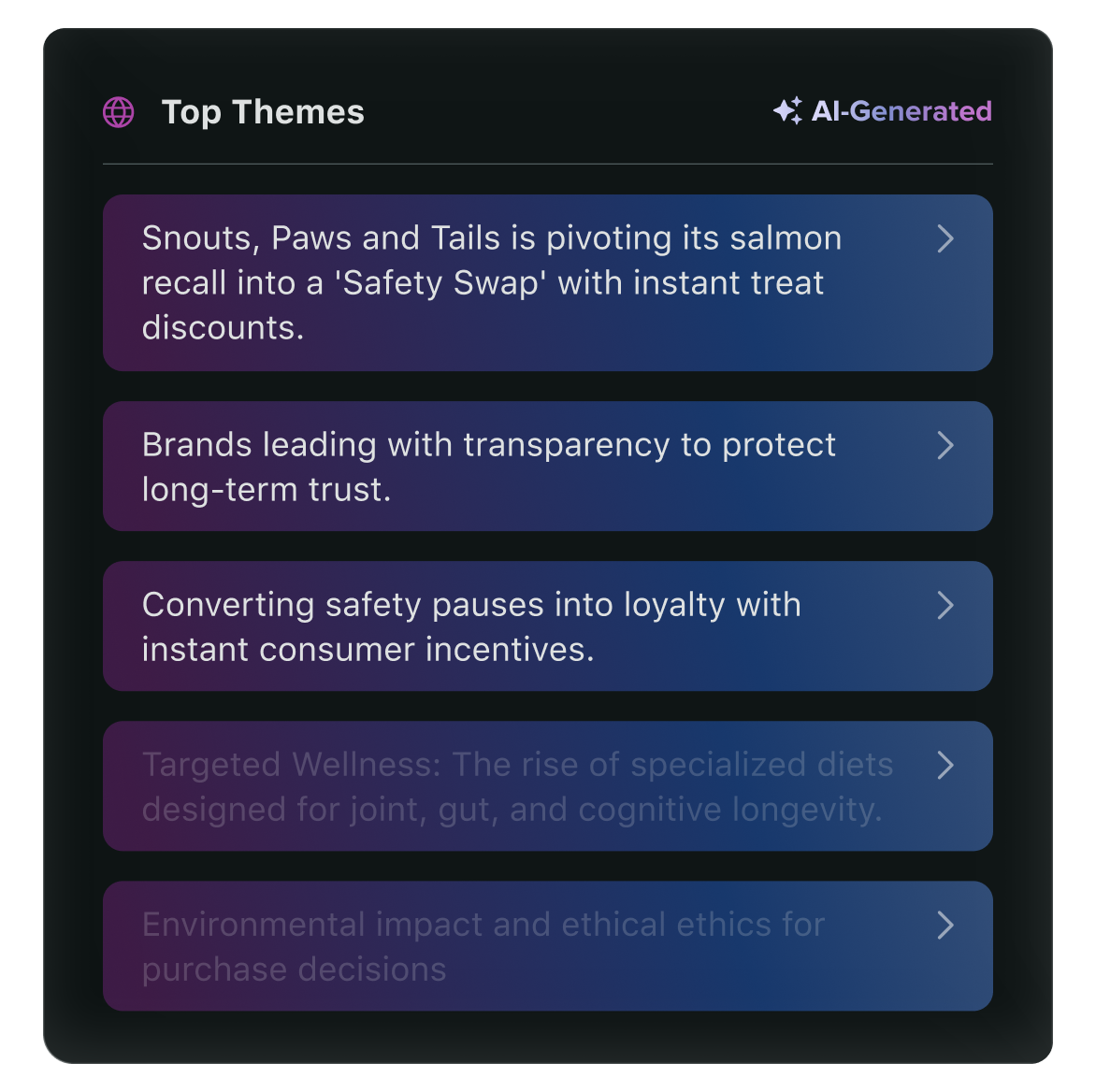
Paul Quigley emphasizes that the era of manually checking dashboards is effectively over. Data from NewsWhip indicates that 94% of monitoring data is now consumed "off-platform." Instead of analysts going to the data, the data—processed and summarized by AI—is pushed to the teams via Slack, Microsoft Teams, or email.
The Role of AI Agents in Data Synthesis
Sprout Social’s AI agent, Trellis, exemplifies this new frontier. Trellis acts as a conversational layer over billions of data points, allowing users to query their data using natural language. Instead of building a complex report to understand a drop in sentiment, a user can simply ask, "What are the primary drivers behind yesterday’s sentiment drop on Reddit?"
These agents are designed to handle the "heavy lifting" of data synthesis. By analyzing engagement patterns rather than just keyword volume, they can identify which narratives are actually resonating with an audience. This allows human teams to focus on high-level strategy and "judgment-dependent" tasks, such as crafting a nuanced response to a sensitive cultural issue or refining brand messaging for a new market.
Building Internal Pathways for Data Escalation
For cross-network monitoring to be effective, the insights it generates must reach the right people. This requires the creation of automated escalation pathways. If the monitoring system detects a recurring software bug mentioned on a niche forum, that information should be automatically funneled to the engineering and product teams. If a high-priority customer complaint surfaces on X, it should be escalated immediately to the customer care department.
Building these pathways breaks down the traditional "marketing silo." When data is shared across the organization, it becomes a strategic asset that informs everything from product development to investor relations. However, experts caution that these workflows must include strict parameters and "guardrails" to ensure compliance and prevent "alert fatigue" within the organization.
Analysis of Broader Impacts and Future Implications
The move toward agentic, cross-network monitoring has profound implications for corporate governance. In an environment where a single viral post can impact stock prices or consumer trust overnight, real-time digital intelligence is no longer a luxury—it is a fiduciary responsibility.
Furthermore, as AI continues to evolve, the "predictive" capabilities of these tools will become more pronounced. We are moving toward a future where monitoring systems will not just tell us what is happening, but what is likely to happen based on early signals across the web. This will allow brands to move from a defensive posture to a proactive one, shaping narratives before they even reach the mainstream.
In conclusion, the transformation of the news cycle into a social-first, real-time ecosystem necessitates a total overhaul of brand monitoring strategies. By moving toward a unified foundation, leveraging agentic AI for proactive insights, and building clear internal pathways for action, organizations can turn the "noise" of the digital world into a significant strategic advantage. The brands that succeed in the coming years will be those that can listen as fast as the internet speaks.