
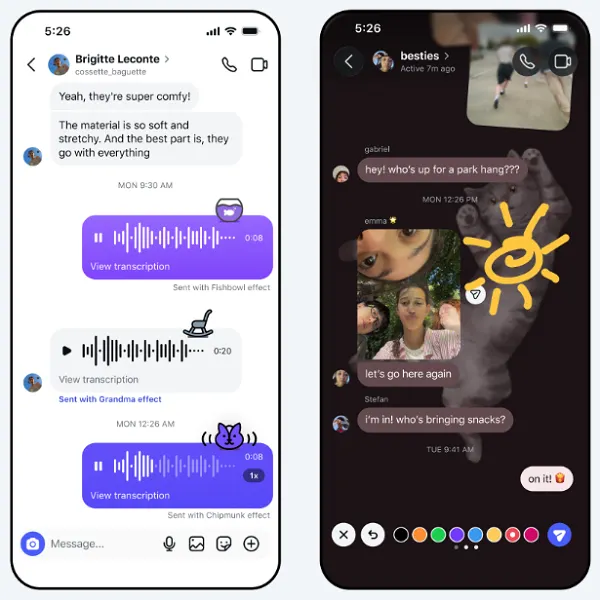
Meta Platforms is currently running regional tests on a standalone direct messaging application named Direct. The app is specifically designed to unbundle Instagram Direct Messages into an independent ecosystem tailored for teenage users. Featuring a suite of creative tools such as chat thread drawing, voice effects, inbox notes, and customizable stickers, the app mirrors youth-centric digital communication habits. While the product marks a fresh entry into the competitive mobile landscape, tech historians will note a distinct sense of déjà vu: Meta attempted an identical strategy nearly a decade ago.
The revival of the Direct brand arrives at a critical juncture for the social media giant. Governments worldwide are increasingly clamping down on adolescent digital consumption, implementing strict age-verification laws and blanket bans on traditional social media for minors. By positioning a standalone messaging app outside the definition of traditional social media, Meta is strategically targeting a regulatory loophole. Simultaneously, the company aims to capitalize on the decelerating user acquisition metrics of its primary rival, Snapchat, whose daily active user counts have plateaued or declined across key Western markets.
A Historical Precedent: The 2017 Direct Experiment
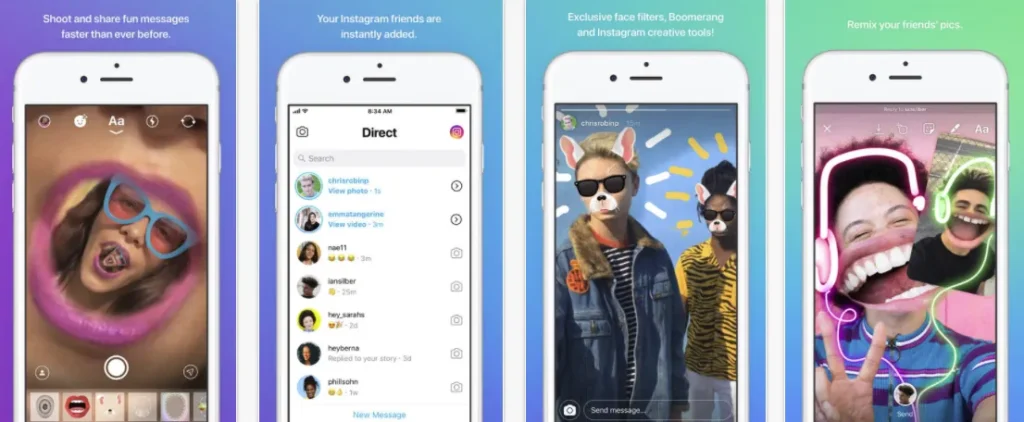
To understand the strategic calculation behind Meta’s current test phase, industry analysts must look back to December 2017. During this period, Instagram—then operating with a higher degree of structural independence under the leadership of co-founders Kevin Systrom and Mike Krieger—unveiled a standalone app also titled Direct.
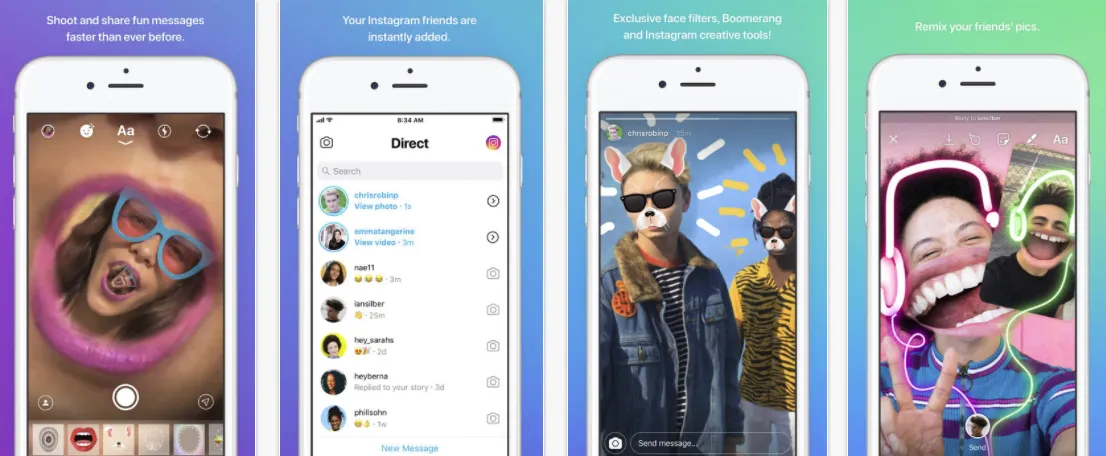
The original 2017 application was launched as a regional test in select markets, including Chile, Israel, Italy, Portugal, Turkey, and Uruguay. The premise of that initial rollout was strikingly similar to the current initiative: it forced users to open a separate app to access their Instagram direct messages, pushing the main Instagram app to function primarily as a content-consumption feed akin to a photo gallery. The interface relied heavily on ephemeral media, front-facing camera shortcuts, and visual manipulation tools designed to capture the attention of digital natives.
However, consumer response a decade ago was largely unfavorable. Users resented the forced fragmentation of their digital experience, viewing the requirement to switch between multiple applications merely to converse with friends as an unnecessary friction point. Instagram quietly sunsetted the experiment, reintegrating messaging capabilities seamlessly back into the core application.

Given this historical failure, Meta’s decision to resurrect the Direct concept might appear counterintuitive. However, the macro-environmental landscape of digital governance and competitive market dynamics have shifted dramatically since 2017, transforming what was once an ill-fated user experience tweak into a calculated defensive and offensive maneuver.
Navigating the Global Wave of Teen Social Media Bans
The most compelling driver behind the resurrection of Direct is the rapidly shifting global regulatory framework concerning minors and digital platforms. Governments are no longer content with voluntary age ratings; they are enforcing legislative bans that threaten to sever millions of young users from mainstream networks.
Turkey serves as the immediate testing ground for this new strategy. On November 1, Turkey enacted a sweeping legislative ban prohibiting social media access for children under the age of 15. The law targets foreign-originated social media applications that rely heavily on algorithmic feeds, public broadcasting, and viral content discovery. Crucially, however, the legislation explicitly carves out exemptions for dedicated private messaging services, classifying peer-to-peer communication channels differently from public broadcasting networks.
This regulatory distinction creates an immediate commercial opportunity. As teenagers across Turkey find themselves locked out of traditional platforms like Instagram, Facebook, and TikTok, Meta is positioning Direct as a compliant alternative. Because the app focuses strictly on private, closed-loop messaging rather than open feeds or algorithmic content discovery, it sits safely outside the statutory definition of targeted social media.
The Turkish test follows a broader international wave of regulatory tightening. In February, Australia made global headlines by enforcing strict age limits that resulted in Snapchat locking or disabling over 415,000 user accounts belonging to individuals under the age of 16. Australia’s population scale provided a stark preview of the churn rates facing youth-centric platforms. With Thailand and several European Union member states actively evaluating or drafting similar legislation, Meta is proactively building infrastructure to catch users who are inevitably displaced by compliance crackdowns.
Exploiting the Vulnerabilities of Snapchat
While regulatory arbitrage explains the timing of the app’s deployment, competitive aggression dictates its strategic intent. Meta’s primary target in the youth communication sector remains Snap Inc., the parent company of Snapchat, which has long dominated the teenage demographic through ephemeral messaging and augmented reality features.
Recent financial disclosures and market analytics indicate that Snapchat is experiencing a prolonged period of deceleration. Daily active user growth has not only stalled across the United States and Europe but has registered consecutive quarters of net declines in these lucrative advertising markets. Compounded by the aforementioned regulatory purges in Australia and tightening compliance enforcement elsewhere, Snapchat’s foundational user base is under severe existential pressure.
Meta recognizes that when teenagers are forced to migrate away from faltering or banned platforms, they seek out robust, highly populated ecosystems where their peer groups already maintain active accounts. By leveraging the immense promotional engine of Instagram and Facebook—networks boasting billions of global users—Meta can rapidly cross-promote Direct to demographics affected by regional bans.
If successful, this strategy allows Meta to absorb the departing user base of its competitors, neutralizing Snapchat’s historical stronghold on the youth demographic and consolidating its own near-monopoly over global interpersonal digital communication.
Features, Safety Measures, and Parental Controls
To appeal to the discerning preferences of modern teenagers who have grown up accustomed to rich media interfaces, Direct incorporates a robust suite of creative functionalities. Users can draw directly onto active chat threads, share temporary inbox notes reminiscent of Instagram’s broadcast features, and utilize advanced voice modulation effects alongside expansive sticker libraries.
At the same time, Meta is acutely aware that launching a youth-focused communication app in the current political climate invites intense scrutiny from child advocacy groups and lawmakers. To mitigate potential backlash regarding online safety, the company has confirmed that Direct will be integrated with its comprehensive suite of parental supervision tools and advanced minor-protection algorithms.
These safeguards include automatic restrictions on direct messaging from unknown adults, content filters designed to intercept explicit imagery, and time-management controls managed directly by legal guardians. By baking robust safety architectures into the foundation of the app rather than treating them as an afterthought, Meta hopes to stave off accusations that Direct is merely a tool designed to bypass child-protection legislation.
Economic Implications and Industry Outlook
From an enterprise perspective, the launch of Direct represents a fascinating structural dilemma. While the application provides an essential tactical shield to retain teen engagement amidst global platform bans, it offers limited direct monetization potential. Because Direct is centered entirely around private messaging, injecting traditional ad units into the interface would risk alienating the very demographic Meta is trying to capture. Consequently, the app will function primarily as a retention and acquisition funnel rather than a direct revenue generator.
Industry analysts suggest that local regulatory bodies may view the rollout of Direct with a degree of skepticism, potentially investigating whether the app constitutes a deliberate attempt to subvert the spirit of youth social media restrictions. Legal scholars note, however, that differentiating between broadcast social media and private communication channels remains a legitimate and durable legal distinction in most jurisdictions.
As Meta continues its regional trials in Turkey, Thailand, and potentially other markets evaluating age-gating laws, the performance of Direct will be closely monitored by the entire technology sector. If the application successfully captures users displaced by government bans and capitalizes on Snapchat’s stagnation, Meta will have proven that corporate agility and historical reinvention can turn regulatory hurdles into powerful competitive advantages.