
Mastering the robots.txt file has evolved from a standard technical SEO task into a critical business strategy for digital publishers, ecommerce enterprises, and platform developers. Historically deployed as a simple mechanism to manage search engine crawler access, this plain text file residing in a website’s root directory now dictates how modern automated architectures—ranging from traditional search engine spiders to resource-intensive artificial intelligence agents and large language model (LLM) scrapers—interact with digital properties. As the modern web expands to accommodate concurrent AI data retrieval, poorly configured robots.txt directives can inadvertently sever a brand’s connection to search engine results pages (SERPs) or leave servers vulnerable to infinite crawl loops triggered by faceted navigation and parameterized URLs.

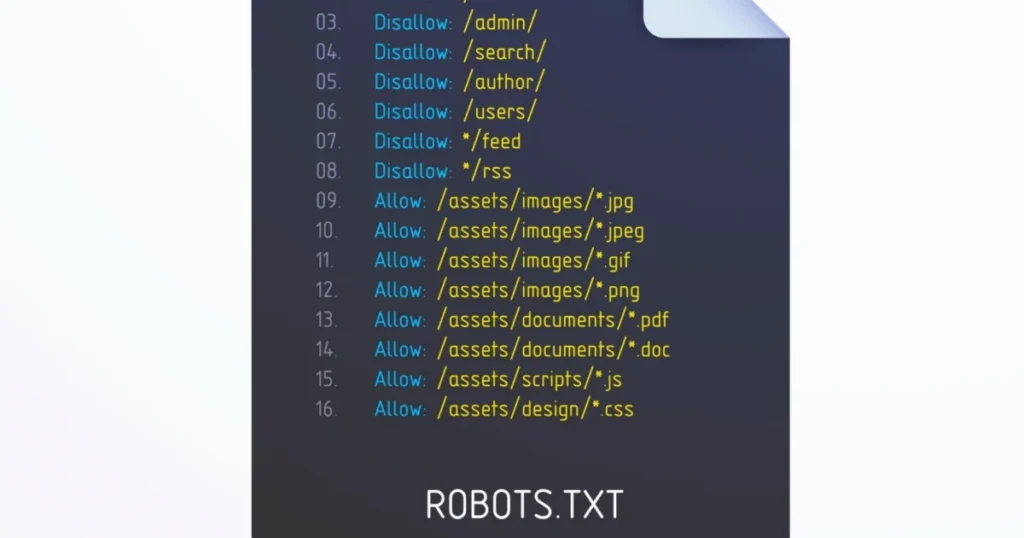
The operational foundation of the robots.txt file remains anchored in standardized web protocols, notably governed by RFC 9309. The fundamental syntax relies on straightforward directives: the User-agent token, which isolates specific crawlers or applies a global fallback using the asterisk wildcard (*); the Disallow directive, which instructs compliant crawlers to avoid specified URL paths; the Allow directive, which creates exceptions to broader disallow rules; and the Sitemap directive, which guides search engines to XML sitemap locations. Despite its simplicity, URL path matching is case-sensitive for parameters and paths while directive names remain case-insensitive. Furthermore, the file does not support full regular expressions, restricting pattern matching to basic wildcards. Understanding these mechanics is vital, especially when search engines resolve conflicts using strict hierarchy principles: the most specific rule—measured by the number of matching characters—takes precedence, followed by the least restrictive rule when specificities overlap.
The historical timeline of robots.txt usage traces back to the early days of automated web discovery, where webmasters utilized the protocol strictly to protect staging environments and administrative directories from public exposure. Over the subsequent two decades, its scope expanded significantly alongside the exponential growth of enterprise websites and massive ecommerce catalogs. As sites scaled to hundreds of thousands or millions of dynamic pages, managing crawl budget—the finite allocation of server resources and time that search engines dedicate to indexing a specific domain—became a core pillar of technical SEO. The emergence of automated filtering systems, infinite scroll parameters, and faceted product attributes transformed the file from a passive gatekeeper into an active resource-management tool.

By the mid-2020s, the digital landscape experienced a structural shift with the widespread integration of generative AI. Platforms began deploying autonomous agents to scrape training data, summarize content in real-time, and execute user-requested live searches. This evolution prompted industry bodies and search engine providers to issue updated compliance frameworks. In 2024, prominent search infrastructure updates and official communications from core search engineers placed renewed emphasis on blocking action URLs, such as add-to-cart and dynamic wishlist parameters, which historically drained server compute power and exhausted crawl budgets on large platforms. Concurrently, specialized user-agent tokens like Google-Extended and Applebot-Extended were introduced to give publishers granular control over whether their content could be utilized for foundational model training versus traditional search indexing and contextual grounding.
Empirical data underscores the urgency of these technical distinctions. According to industry analyses published in early 2026, approximately 79% of major news publications in the United States and United Kingdom actively blocked at least one AI training bot via robots.txt, while 71% restricted at least one live-search or retrieval bot. This sharp division highlights a complex strategic calculation for content creators: while restricting training bots safeguards intellectual property from unauthorized harvesting, blocking live-search retrieval bots can isolate a site from emerging AI-driven discovery ecosystems, potentially diminishing referral traffic as user behavior shifts toward conversational search interfaces.

Industry stakeholders, including representatives from major search engines and AI development firms, have consistently emphasized the limitations and capabilities of the protocol. Official guidance stresses that robots.txt is a request-and-response standard honored voluntarily by compliant bots. Consequently, malicious scrapers, rogue web harvesters, and certain user-triggered fetchers—such as OpenAI’s ChatGPT-User, Perplexity’s Perplexity-User, and Meta’s external fetchers—frequently bypass or ignore standard robots.txt directives. Search engine architects have repeatedly noted that blocking a page in robots.txt prevents crawling but does not guarantee its removal from indexation if external inbound links pass authority to the URL. For definitive exclusion, webmasters must pair robots.txt accessibility with direct indexing controls such as the noindex meta tag or HTTP response headers.
The broader implications of precise robots.txt management extend far beyond individual site performance, touching upon server efficiency, global computing sustainability, and digital rights enforcement. Unchecked automated crawlers generate massive volumes of HTTP requests, contributing to unnecessary energy consumption across data centers. By systematically blocking redundant query parameters, internal search result loops, and non-render-related JavaScript assets, organizations reduce carbon overhead while preserving optimal server response times for human users. Furthermore, as legal and regulatory bodies worldwide continue to scrutinize the boundaries of web scraping for artificial intelligence training, maintaining an auditable, well-structured robots.txt configuration serves as an essential baseline of digital governance.

Executing an effective robots.txt strategy requires a disciplined, methodical approach to troubleshooting and validation. Webmasters must routinely analyze server log files to verify bot behavior and utilize diagnostic tools such as the Robots.txt Report within Google Search Console to catch parsing errors or accidental blocks before they impact organic visibility. As digital architectures increasingly rely on multi-subdomain environments, centralized management strategies—such as cross-domain redirects to standardized robots.txt endpoints—can streamline maintenance across enterprise platforms. Ultimately, while robots.txt remains a foundational instrument in the technical SEO toolkit, its successful implementation depends on a comprehensive understanding of evolving search mechanics, adherence to web standards, and continuous alignment with broader organizational objectives in an increasingly automated web ecosystem.