
The landscape of mobile content creation has shifted dramatically over the last decade, transitioning from basic smartphone snapshots to professional-grade videography and high-fidelity audio production. On November 10, RØDE, a leader in the audio technology sector, announced the expansion of its RØDE Capture application to the Android platform, effectively bridging the gap between hardware-centric audio gear and software-driven video capture. Originally launched for iOS in 2023, the application serves as a unified interface designed to streamline the workflow for mobile journalists, vloggers, and independent creators who require granular control over their recording environment. By consolidating microphone settings and camera parameters into a single, cohesive interface, RØDE is addressing a significant pain point in the mobile production industry: the friction caused by toggling between multiple disparate applications to manage complex A/V setups.
A Chronology of RØDE’s Software Integration Strategy
The release of RØDE Capture for Android is the culmination of a multi-year effort by the Australian manufacturer to integrate its hardware ecosystem with mobile operating systems. Historically, RØDE built its reputation on studio-grade microphones and, later, the revolutionary Wireless GO series, which popularized compact wireless audio. However, the rise of "creator economy" platforms—such as TikTok, Instagram Reels, and YouTube Shorts—necessitated a change in strategy.
In 2023, RØDE released the initial version of RØDE Capture for iPhone. This move was widely interpreted by industry analysts as a defensive and offensive maneuver; while the hardware was top-tier, the company lacked the software layer to ensure a seamless "plug-and-play" experience for mobile users. The success of the iOS version, which gained traction for its intuitive "Direct Connect" feature, set the precedent for the Android expansion. The development process for the Android iteration was reportedly more complex due to the inherent fragmentation of the Android hardware market, which requires developers to account for a vast array of sensor specifications, processors, and proprietary camera APIs. The launch on November 10 signifies that RØDE has successfully navigated these compatibility hurdles, offering a standardized experience across a diverse range of Android devices.
The Technical Edge: Direct Connect and Audio Workflow
At the heart of the RØDE Capture value proposition is the "Direct Connect" technology. For years, mobile shooters using wireless microphone systems were tethered to a physical receiver plugged into their phone’s USB-C or Lightning port. This added bulk to the mobile rig, often complicating the ergonomics of handheld shooting. Direct Connect eliminates this requirement for specific RØDE transmitters, including the Wireless Micro, Wireless GO (3rd Gen), and Wireless PRO. By allowing the transmitter to communicate directly with the phone’s internal software via the app, RØDE has effectively reduced the hardware footprint of a professional mobile kit by approximately 50 percent.
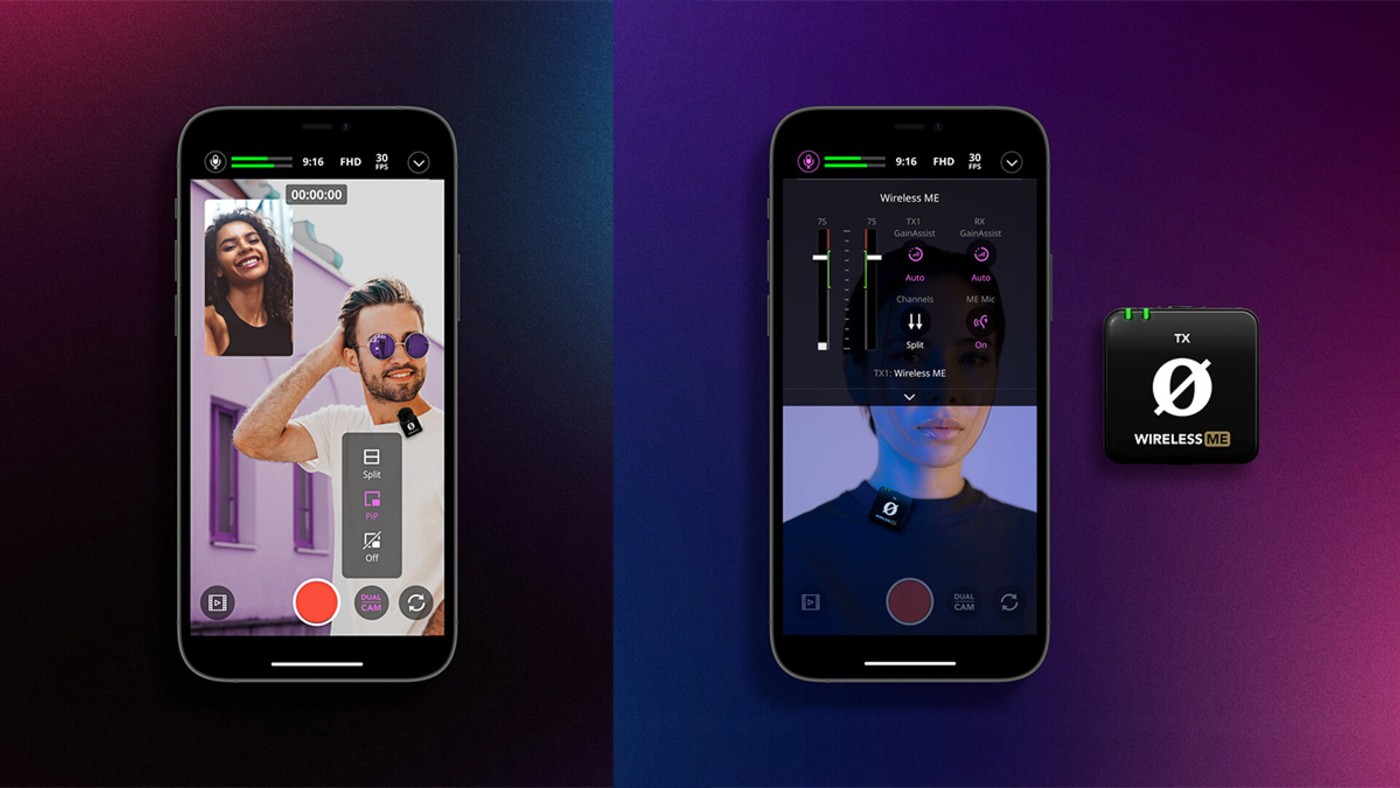
The audio suite within the app provides comprehensive control that is often absent in native camera applications. Users can manage gain levels, engage "Gain Assist"—a proprietary feature that uses intelligent compression to prevent clipping—and apply noise reduction or high-pass filters. The ability to toggle between split or merged audio tracks provides flexibility for post-production editing, allowing creators to balance ambient sound against voiceover tracks with precision. This depth of control is critical in professional environments, such as field interviews or documentary-style reporting, where audio quality is often the primary differentiator between amateur and professional output.
Dual-Camera Capabilities and Creative Versatility
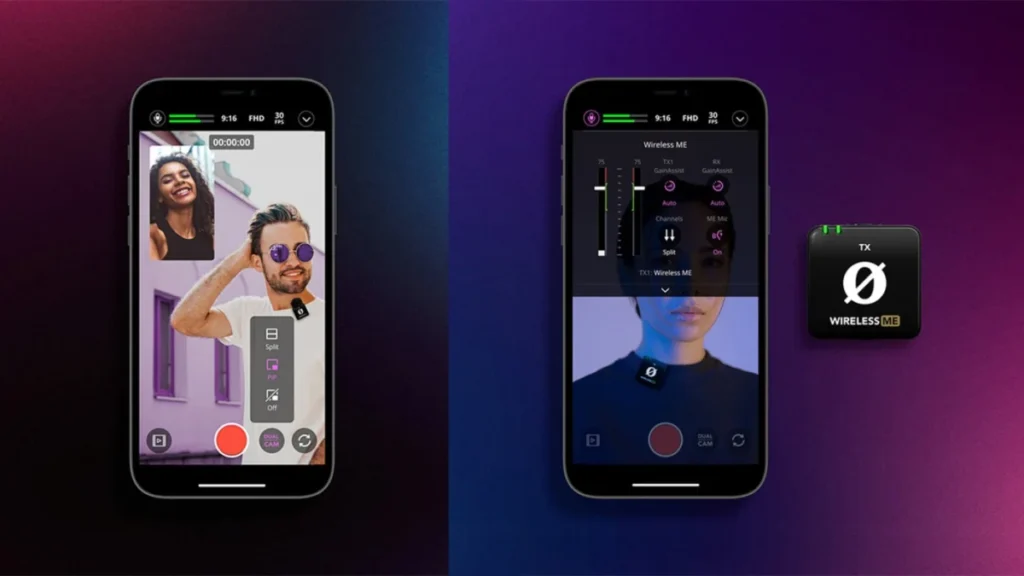
Beyond audio, the application offers sophisticated video control. One of the standout features is the dual-camera recording mode. As mobile creators increasingly rely on "reaction" or "interview" formats, the demand for simultaneous front-and-rear camera recording has spiked. RØDE Capture provides this functionality with customizable layouts, including picture-in-picture and split-screen configurations, which can be toggled in both portrait and landscape orientations.
When paired with RØDE’s Wireless ME microphone system, the app enables a multi-source audio capture setup that records audio from both the subject in front of the camera and the person behind the lens. This is particularly advantageous for "vox pop" interviews, where the interviewer’s and interviewee’s voices need to be captured with equal clarity. This feature set essentially turns a single smartphone into a two-person production studio, a technological capability that would have required a dedicated production team and external audio mixers less than a decade ago.
Professional Implications and Industry Impact
The release of RØDE Capture for Android carries significant implications for the broader content creation industry. Firstly, it democratizes high-end production tools. By offering a free, hardware-agnostic application (though optimized for RØDE products), the company is lowering the barrier to entry for high-quality audio and video. This move creates a "halo effect" for the RØDE brand, as users of the free app are more likely to invest in the company’s wireless hardware ecosystem as their production needs scale.
Secondly, the inclusion of NDI (Network Device Interface) connectivity is a noteworthy addition for modern broadcasting. By allowing an Android phone to act as a secondary video source for the RØDE RØDECaster Video series, the app becomes a viable tool for live streamers and small-scale broadcast operations. This functionality effectively transforms a smartphone into a professional-grade IP camera, capable of feeding live, low-latency video into a larger production network. For a budget-constrained studio, this provides a "free" B-cam, a factor that is expected to drive adoption among educational institutions, local news outlets, and independent streamers.
Analysis of the Android Market and Hardware Fragmentation
The challenge of developing for Android cannot be overstated. Unlike the iOS ecosystem, where hardware specifications are relatively controlled, Android phones utilize a massive spectrum of sensors and image processing pipelines. Industry benchmarks suggest that while RØDE Capture provides a uniform interface, the actual video output—such as the availability of specific frame rates or high-resolution modes—will remain hardware-dependent based on the user’s phone model.
Despite these variables, the app’s ability to standardize the "front-end" of the filming process—audio gain, metering, and interface controls—provides a necessary sense of order for creators. By centralizing these controls, RØDE is shifting the mobile shooting paradigm away from relying on the phone’s default camera app, which is often designed for casual snapshots rather than professional workflows.
Official Stance and Market Reception
While RØDE has not issued a formal press statement regarding its internal sales projections or user acquisition goals for the Android version, the company’s recent trajectory suggests a focus on software-led growth. RØDE’s strategy is clearly aligned with the "prosumer" market, where the line between hobbyist and professional content creator continues to blur.
Early feedback from the mobile creator community suggests that the app’s stability and the efficacy of the Direct Connect feature are the primary drivers of interest. The lack of a subscription fee for these features is a strategic choice that positions RØDE as a partner to the creator, rather than just a hardware vendor. In an industry increasingly cluttered with subscription-based creative software, the "free" status of RØDE Capture serves as a significant competitive advantage.
Conclusion and Future Outlook
RØDE Capture for Android represents a significant milestone in the evolution of mobile production. By addressing the core technical challenges of audio-video synchronization, hardware connectivity, and interface design, RØDE has provided a robust solution for the modern creator. Whether it is a solo journalist conducting a street interview or a vlogger managing a multi-cam setup, the application provides the necessary tools to maintain high production standards without the weight of a traditional broadcast rig.
As mobile hardware continues to advance—with improvements in low-light sensor performance and on-device processing—applications like RØDE Capture will likely become the standard for mobile videography. The shift toward software-defined production tools is already well underway, and with the release of this Android version, RØDE has cemented its role as a primary architect of this transition. For Android users, the ability to integrate professional audio controls with advanced video features is not merely an update; it is a fundamental shift in how mobile storytelling can be executed. As the application receives future updates, it is expected that RØDE will continue to expand its NDI capabilities and further optimize the interface for the diverse range of Android devices currently dominating the global market.