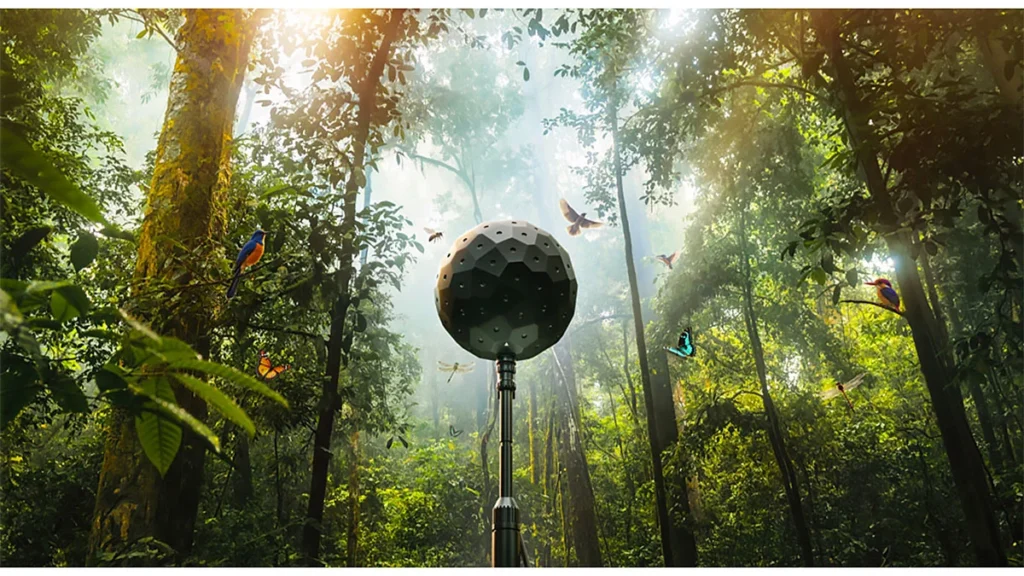

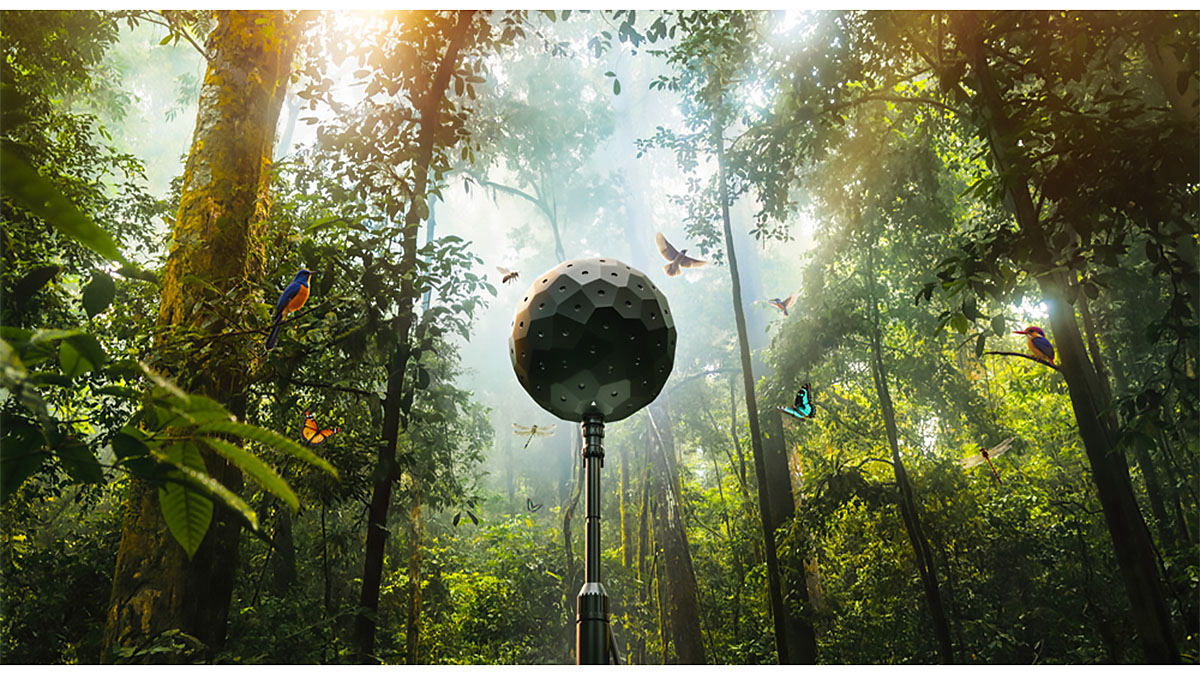
The landscape of immersive video production has undergone a significant transformation with the introduction of the Blackmagic Ambisonic Microphone. Announced by Blackmagic Design, this specialized hardware device represents a leap forward in spatial audio capture, utilizing 7th-order ambisonics (7OA) to deliver a full-sphere 3D sound field. Designed to integrate seamlessly with the growing ecosystem of immersive video hardware, the microphone aims to bridge the gap between high-fidelity 3D visuals and the complex audio requirements necessary for true presence in virtual and augmented reality environments.
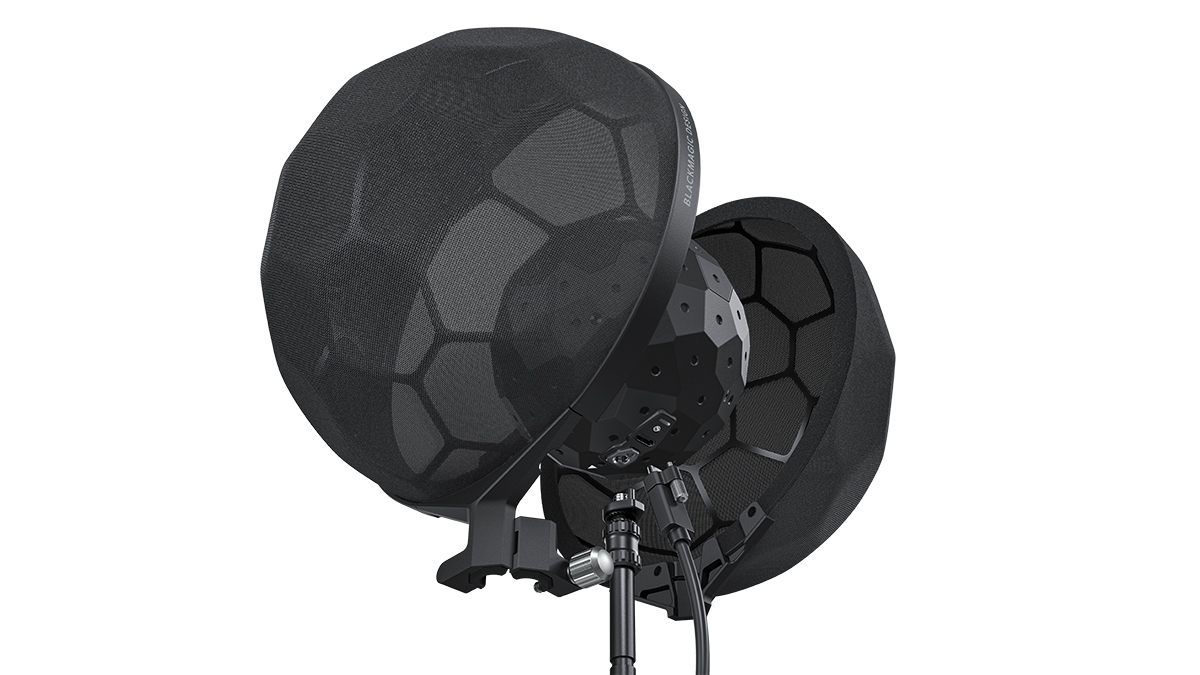
The device is built upon an array of 108 digital MEMS (Micro-Electro-Mechanical Systems) microphones housed within a compact, faceted metal chassis. By offloading the computational burden of real-time spatial encoding to an internal processor, Blackmagic Design has removed the historical barriers of entry—such as external breakout boxes and complex, high-latency software processing—that have traditionally hindered the widespread adoption of higher-order ambisonics in independent filmmaking.
Technical Architecture and the 7OA Standard
At the core of the device is its capacity for 7th-order ambisonics. In the field of spatial audio, the "order" of an ambisonic array refers to the mathematical precision with which a sound field is reconstructed. While first-order ambisonics (which typically utilize four capsules) provide a basic sense of directionality, they often suffer from poor spatial resolution, resulting in a "blurry" sound stage.
As the order increases, so does the spatial resolution. 7th-order ambisonics utilizes 64 distinct audio channels to represent the sound field. This high level of resolution allows for much sharper localization of sound sources, ensuring that when a viewer turns their head in a VR headset or a spatial audio-enabled display, the audio environment remains consistent and accurate. By employing 108 MEMS microphones, the device captures a dense, omnidirectional sound map, which the internal processor then down-mixes into the 64-channel 7OA format.
MEMS technology is critical to this achievement. These acoustic sensors are etched directly onto silicon, allowing for extremely small form factors without compromising sensitivity or signal-to-noise ratio. By flush-mounting 108 of these units into a single metal body, Blackmagic Design has managed to create a device that is roughly the size of a handheld camera accessory, yet capable of professional-grade studio performance.
The Evolution of Immersive Audio Workflows
The history of spatial audio capture has been marked by a transition from static mono and stereo formats toward dynamic, object-based, or scene-based audio. For years, capturing 3D sound meant utilizing complex microphone arrays that required significant calibration and post-production time.
In the early 2010s, ambisonics began to gain traction as the industry standard for virtual reality. However, high-order ambisonics remained the domain of specialized acoustic research labs and high-budget motion picture sound departments. The workflow typically involved capturing raw signals, importing them into a Digital Audio Workstation (DAW), and using third-party plugins to encode the sound field—a process that often introduced synchronization drift and computational lag.
The Blackmagic Ambisonic Microphone marks a shift toward "integrated capture." By performing the encoding internally, the microphone functions as a plug-and-play device. When connected via USB-C, the unit is class-compliant, meaning it operates without the need for proprietary drivers. This design philosophy aligns with the current trend toward streamlined production pipelines, where creators require immediate results for rapid content turnaround.
Integration with the URSA Cine Immersive Ecosystem
The primary catalyst for this development is the rise of immersive capture devices, specifically the Blackmagic URSA Cine Immersive camera. The emergence of Apple’s spatial video formats has created a demand for hardware that can keep pace with high-resolution stereoscopic 3D video.
Until now, professional cameras like the URSA Cine were often limited by their onboard stereo microphones, which could not provide the depth required for a fully immersive experience. By mounting the new ambisonic microphone directly to the camera, sound is captured in sync with the visual frame. The audio is recorded directly into the immersive file container, ensuring that the spatial sound map remains locked to the camera’s perspective. This eliminates the need to manually align audio tracks during post-production, a process that has historically been one of the most time-consuming aspects of immersive editing.
Beyond the dedicated cinema camera, the versatility of the USB-C interface allows for broader application. The microphone is compatible with the Blackmagic Camera app on iPhone, providing mobile journalists and content creators with the ability to record high-fidelity spatial audio in the field. Furthermore, the ability to connect to a computer and utilize Fairlight Live—Blackmagic’s integrated audio post-production software—enables live mixing and monitoring for broadcast environments.
Future Implications and Broadcast Standards
The announcement also teased future developments, specifically a USB to SMPTE-2110 converter. This is a significant indicator that Blackmagic Design is targeting the high-end broadcast market. SMPTE-2110 is the industry standard for transporting professional media over IP networks. By enabling this microphone to function within an IP-based broadcast infrastructure, Blackmagic is positioning 7OA not just as a tool for VR creators, but as a potential future standard for live immersive sports and event broadcasting.
The implications for the broader audio-visual market are substantial. Historically, the cost of entering the high-order ambisonic space was prohibitive, with specialized rigs often costing upwards of $10,000 to $20,000. By pricing this unit at $1,695, Blackmagic is following its traditional market-disruptor strategy. This price point effectively democratizes high-order spatial audio, making it accessible to independent studios, educational institutions, and mid-tier production houses.
Technical Specifications and Operational Context
From a technical standpoint, the microphone’s reliance on USB-C as a single-cable solution for both power and data is a strategic design choice. By utilizing the class-compliant audio-over-USB protocol, the device ensures compatibility across multiple operating systems, including macOS, Windows, and iOS. This reduces the friction typically associated with proprietary audio hardware.
The use of an internal processor to run Apple’s advanced encoding filters is also noteworthy. This suggests a deepening synergy between Blackmagic hardware and Apple’s ecosystem for spatial media. As the industry moves toward a more unified standard for immersive content, the ability to output directly into a format compatible with Apple’s spatial audio engine provides a clear path for creators who intend to distribute their work on platforms that support immersive playback.
Industry Analysis: The Value of Immersive Sound
Market analysts have long argued that audio is the "forgotten" half of the immersive experience. While visual resolution has reached 8K and beyond, the audio experience in many VR and 3D projects has remained limited to stereo or simple surround sound. This creates a cognitive dissonance for the viewer, where the visual depth of the image is not supported by a corresponding depth in the soundscape.
The introduction of this microphone addresses this fundamental flaw. By providing a relatively affordable and portable means to capture a 7th-order sound field, Blackmagic is essentially forcing a shift in production expectations. It is likely that in the coming years, audiences will increasingly expect 3D audio as a baseline requirement for any immersive or high-end video content.
Conclusion
The Blackmagic Ambisonic Microphone is scheduled for a December release. While its initial appeal will likely be limited to those already invested in the Blackmagic URSA ecosystem, its versatility and price point suggest a wider adoption curve. By removing the technical hurdles associated with 7th-order ambisonic capture, Blackmagic Design has provided a tool that could fundamentally alter how immersive audio is recorded, processed, and distributed.
As the industry continues to move toward spatial computing and immersive digital experiences, the demand for high-fidelity audio capture will only increase. With this launch, Blackmagic Design has established a new benchmark for accessible, professional-grade spatial audio, setting the stage for a new generation of immersive content that is as sonically complex as it is visually stunning. Whether for virtual reality, architectural visualization, or high-end documentary filmmaking, the device serves as a critical piece of the puzzle in creating truly believable and immersive digital worlds.