

The rapid evolution of generative artificial intelligence and high-resolution digital media has created an unprecedented demand for advanced image and video upscaling solutions. As content creators, developers, and enterprises increasingly rely on synthetic media, photographs, and digital illustrations, the limitations of traditional, one-size-fits-all upscaling algorithms have become glaringly apparent. Historically, developers attempting to build automated upscaling services would deploy a single, generalized model—such as the widely recognized Real-ESRGAN—and apply it uniformly across all visual inputs. However, empirical testing reveals a fundamental flaw in this universal approach: a neural network optimized for one visual medium inevitably compromises the integrity of another.
Recognizing these systemic limitations, developer and tech firm Aurora Capital recently engineered a specialized multi-model upscaling architecture designed to address the distinct mathematical and structural properties of various visual formats. Rather than forcing a single algorithm to process every conceivable type of media, the newly developed system integrates six distinct, highly specialized specialist models under a unified API endpoint. This architectural shift highlights a growing consensus within the computer vision community: achieving optimal resolution enhancement requires domain-specific intelligence rather than generalized brute force.
The Structural Limitations of Generalized Neural Upscaling
To understand the necessity of a multi-model architecture, one must examine the inherent mechanics of deep learning-based image restoration. Neural networks are trained on vast datasets containing specific types of visual information. Consequently, they learn to recognize patterns, textures, and edges unique to those training distributions. When a model trained primarily on photographic imagery encounters digital art or anime, it attempts to map unfamiliar synthetic textures onto a framework it does not understand.
The consequences of this mismatch are visually catastrophic. A model trained on photographs frequently produces blurry, softened edges when applied to crisp digital illustrations or vector-style graphics. Conversely, models optimized for anime or synthetic anime-style generation tend to aggressively smooth and smear organic skin textures when presented with realistic human portraits, stripping away vital micro-details such as pores, fine hair, and natural lighting gradients. Video introduces an entirely separate layer of complexity, requiring not just spatial resolution enhancement, but temporal consistency across consecutive frames to prevent flickering and visual jitter.
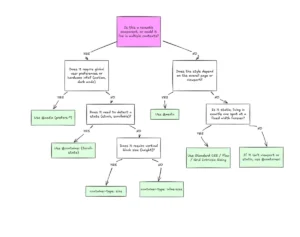
Faced with these technical hurdles, the development team conducted extensive empirical evaluations across dozens of open-source and proprietary architectures. Through rigorous trial and error, they isolated six core models, each possessing a distinct mathematical advantage for a specific visual category:
- Flare: Optimized specifically for standard photographs, excelling at preserving natural textures while introducing minimal artifacts.
- Prism: Tailored for synthetic AI-generated art, effectively preserving the unique textural artifacts produced by models like Stable Diffusion and DALL-E.
- Lumen: Designed explicitly for human portraits, focusing on accurate skin tone reproduction and the retention of fine hair detail.
- Mirage: Engineered for clean-edge illustrations and vector graphics, maintaining sharp boundaries and flat color fills without bleeding.
- Motion: Configured for video processing, handling frame interpolation and basic temporal consistency.
- Motion X: An enhanced, computationally intensive video model designed for maximum fidelity at the cost of processing speed.
Engineering a Unified Multi-Model API Architecture
Deploying multiple specialist models within a production-grade environment presents significant infrastructural challenges. Rather than requiring end-users to interface with six entirely separate services or manually configure complex machine learning pipelines, the development team centralized the ecosystem behind a single, streamlined API endpoint known as UpRes.
The operational workflow of the UpRes architecture is designed for developer simplicity and backend efficiency. A client initiates a processing request by submitting a standard Hypertext Transfer Protocol (HTTP) POST request to the API gateway. The payload requires an image URL, the designation of the chosen specialist model, and the desired scale factor.

curl -X POST https://api.upres.ai/v1/jobs
  -H "Authorization: Bearer YOUR_API_KEY"
  -d '"image_url":"https://example.com/photo.jpg","model":"flare","scale":4'
Upon receipt of the request, the backend system queues the job, dynamically allocates the necessary Graphics Processing Unit (GPU) resources based on the model requirements, and executes the upscaling task. Because video models such as Motion X demand substantially more computational overhead than static image models like Flare or Mirage, the queuing system dynamically manages resource allocation to prevent server bottlenecks. Once the processing is complete—with standard execution times ranging between 15 and 25 seconds depending on the model and input resolution—the system returns a secure output URL pointing to the high-resolution asset.
Technical Insights and Lessons from Deployment
The process of building, testing, and deploying a multi-model upscaling service yielded several critical takeaways regarding modern machine learning engineering, infrastructure management, and user experience design.
First and foremost, the assumption that users inherently know which underlying model best suits their media format proved false. Early iterations of the platform required users to manually select between Flare, Prism, Lumen, Mirage, Motion, and Motion X. User testing revealed that non-technical users frequently miscategorized their content—such as submitting AI-generated art to the photographic model—leading to suboptimal visual outputs and user frustration. This insight underscores the future necessity of incorporating an automated content-classification pre-processor that inspects incoming media, identifies its core visual characteristics, and dynamically routes it to the optimal specialist model without requiring manual intervention from the end-user.
Second, infrastructure cost management emerged as a primary engineering constraint. Running six distinct models simultaneously requires maintaining a diverse set of GPU memory configurations and containerized environments. Unlike a monolithic application where a single model can be loaded into persistent VRAM, a multi-model architecture forces engineering teams to balance the latency costs of cold-starting model weights against the financial overhead of keeping all six models continuously loaded in GPU memory. For independent developers and small startups, implementing intelligent auto-scaling and model-unloading policies is essential to maintaining viable profit margins.
Finally, the challenge of video temporal consistency remains an active area of research and development. While static image upscaling has achieved near-commercial maturity, video upscaling—even with advanced specialist models like Motion and Motion X—frequently suffers from micro-artifacts when scaling complex scenes involving rapid camera movements or occlusions. The disparity in processing time between standard image tasks (seconds) and enhanced video tasks (minutes) highlights the acute need for continued optimization in neural network pruning and hardware acceleration.
Broader Industry Implications and Future Outlook
The launch and refinement of multi-model upscaling architectures reflect a broader paradigm shift in the artificial intelligence and digital media industries. As generative tools become ubiquitous, the volume of digital assets requiring resolution enhancement will continue to grow exponentially. Enterprises ranging from e-commerce platforms and digital archiving institutions to Hollywood post-production studios are increasingly seeking automated tools capable of restoring legacy media and upscaling low-resolution synthetic outputs.
However, the industry’s reliance on specialized models points toward a future of composite AI pipelines. Rather than waiting for the hypothetical creation of a single "omnipotent" model capable of processing photos, vector art, portraits, and video streams with equal perfection, developers are finding greater pragmatic success in modular design. By orchestrating multiple narrow-AI models under a unified routing layer, engineers can achieve superior quality, lower error rates, and greater adaptability to emerging media formats.
As the development team behind the UpRes project continues to gather real-world usage data, community feedback will likely drive the integration of automated model selection and further algorithmic optimizations. For now, the core lesson remains definitive: in the realm of artificial intelligence upscaling, specialization is not merely an optimization—it is an absolute necessity.