

A Chronology of May Browser Milestones
The month began with the rollout of Chrome 148, followed closely by the introduction of Firefox 151 and Safari 26.5. These updates were not merely routine security patches; they represented the culmination of months of standardization efforts. By the end of the month, the web platform achieved several new "Baseline" statuses—a designation used by the web development community to indicate that a feature is supported across all major browser engines, thereby safe for use in production environments without the need for extensive polyfills.
The technical community observed a deliberate effort this month to move away from legacy syntax. For example, the emergence of the :open CSS pseudo-class, finalized in Safari 26.5, acts as a pivotal shift in how developers interact with interactive elements. By standardizing the state-management of elements like <details>, <dialog>, and <select>, browsers have effectively deprecated the need for cumbersome attribute-based selectors, such as details[open]. This change reflects a broader industry trend toward semantic HTML and more intuitive CSS, reducing the cognitive load on front-end engineers.
Advancements in CSS and Layout Control
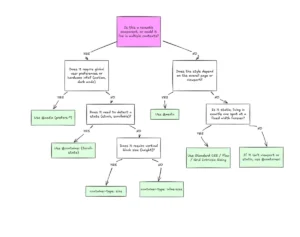
Perhaps the most significant development for design-heavy applications is the achievement of "Baseline" status for name-only container queries and container style queries for custom properties. The evolution of CSS container queries has been one of the most anticipated shifts in responsive web design over the last three years.
Previously, developers were required to define a container-type and a specific size constraint to trigger a layout shift. With the update in Chrome 148, developers can now query a container purely by its name. This capability simplifies the architecture of complex components, such as sidebars or modular dashboards, where the parent container’s state—rather than its physical dimensions—dictates the visual output.
Furthermore, the introduction of style queries in Firefox 151 for custom properties brings a long-awaited level of dynamic styling to the web. By enabling developers to apply styles based on CSS variables—such as shifting a component to a "dark" theme based on a parent container’s variable—browsers have unlocked a new tier of design token usage. Analysts suggest that this will significantly reduce the amount of JavaScript currently used to manage theme toggles and state-driven UI adjustments, leading to smaller bundle sizes and faster execution times.
Performance Optimization and Media Handling
Performance remains the primary objective for browser vendors in 2026. Chrome 148 addressed this by natively integrating lazy loading for <video> and <audio> elements. While native lazy loading for images and iframes has been standard for several years, the inclusion of media elements marks a critical improvement in "Largest Contentful Paint" (LCP) and "Cumulative Layout Shift" (CLS) metrics.
According to performance data published by web engineering teams at platforms like Squarespace, the implementation of standard HTML lazy loading for media can reduce initial page load bandwidth consumption by up to 30% on image- and video-heavy websites. This is a direct response to the global push for a more sustainable and accessible web, particularly for users on low-bandwidth mobile networks or those residing in regions where data costs remain a significant barrier to internet access.
Expanding the Scope of the Browser API
Firefox 151 has taken a bold step forward by introducing the Document Picture-in-Picture (PiP) API to desktop platforms. Unlike traditional video-only PiP, which restricted the user to viewing a single media stream, the Document PiP API allows developers to inject arbitrary HTML into an always-on-top window.

The implications for productivity software are substantial. Video conferencing tools, for example, can now provide a persistent, interactive grid of participants that remains visible while the user navigates between other tabs or applications. Similarly, financial dashboards can maintain live, interactive stock tickers in a separate, unobtrusive window. This feature transforms the browser from a static document viewer into a versatile workspace, effectively competing with native desktop applications.
Simultaneously, the Web Serial API has expanded its platform support. With Firefox 151 enabling the API on desktop and Chrome 148 extending support to Android, the bridge between the browser and physical hardware has never been shorter. Developers can now interface directly with 3D printers, microcontrollers, and specialized laboratory equipment via a web browser. To mitigate security risks, Firefox has implemented a user-permission model requiring an add-on, a safeguard that experts argue strikes the right balance between powerful functionality and user privacy.
Beta Releases and Future Trends
The beta cycles for Chrome 149 and Firefox 152 provide a window into the industry’s priorities for the second half of 2026. Chrome 149, in particular, is signaling a move toward more sophisticated CSS geometry and scroll management. The inclusion of path(), shape(), and rect() functions in the shape-outside property suggests that the web is preparing for a new era of non-rectangular, fluid typography and layout designs.
Additionally, the introduction of Promises for scroll methods like scrollTo() and scrollIntoView() addresses a long-standing grievance among developers who struggled to synchronize animations with completion callbacks. By allowing developers to await the completion of a scroll action, these browsers are facilitating smoother, more predictable user experiences.
Firefox 152’s focus on the field-sizing property is another noteworthy shift. This property allows form inputs to automatically resize based on their content, a task that has historically required intrusive JavaScript event listeners. By moving this logic into the browser engine, Firefox is once again prioritizing performance and reducing the reliance on client-side scripts.
Broader Implications and Analysis
The rapid evolution of these features highlights a shift in browser strategy: moving away from feature silos toward a unified, developer-first platform. The standardization of these tools allows for a "write once, run everywhere" philosophy that was once a pipe dream for the early web.
Industry analysts point out that these updates have a secondary, positive effect on the web ecosystem: the reduction of "dead code." As native browser capabilities expand, the reliance on third-party polyfills and massive framework-based workarounds decreases. This leads to cleaner, more maintainable codebases. However, there is a caveat: the speed at which these features are being rolled out necessitates a more rigorous approach to documentation and training for the global developer community.
As we look toward the remainder of 2026, the focus appears to be firmly set on two fronts: enhancing the interactive capabilities of the browser to match native desktop applications, and refining the performance of existing elements to meet the growing demands of modern, content-rich web pages. The collaboration between major browser engines is not just a technical victory; it is a vital component of a healthy, open, and competitive internet, ensuring that the web remains the primary medium for both information consumption and application delivery. By lowering the barrier to entry for complex UI patterns and hardware integration, these browser updates serve to empower developers, ultimately benefiting the end user through a faster, more capable, and more consistent digital experience.