
British luxury supercar manufacturer McLaren Automotive has officially announced the moniker for its highly anticipated next-generation vehicle, slated for a global market release in 2027. The upcoming flagship model will be designated the "McL 820," a choice that bridges the brand’s storied motorsport legacy with a modernized, performance-driven nomenclature. This announcement arrives on the heels of several major strategic shifts for the Woking-based company, including a sweeping modernization of its corporate visual identity and brand logo.
By introducing the McL 820, McLaren is signaling a departure from its traditional alpha-numeric naming conventions—such as the 720S, 750S, or Artura—in favor of a unified system that seamlessly connects its road-going vehicle division with its legendary racing pedigree. The unveiling was accompanied by a unique public activation in the heart of London, reinforcing the company’s deep-rooted heritage and its vision for the future of high-performance engineering.
Anatomy of a Name: The Strategy Behind the "McL 820"
The designation "McL 820" is far more than a random string of characters; it represents a deliberate restructuring of how McLaren classifies its vehicle lineup. According to the manufacturer, the new nomenclature is designed to create a clearer, more consistent, and easily recognizable taxonomy across both McLaren Automotive and McLaren Racing.
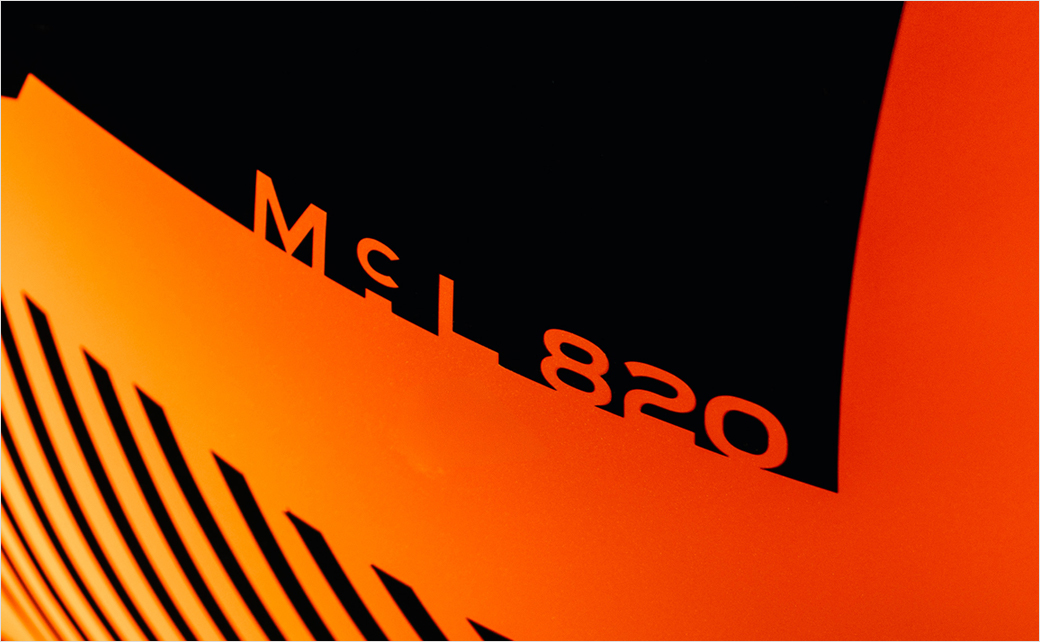
The prefix "McL" serves as an immediate nod to the company’s founder, Bruce McLaren, and its rich history in Formula 1 and endurance racing. For decades, the McLaren name has been synonymous with innovation, speed, and competitive dominance on global racing circuits. By incorporating the "McL" prefix directly into the vehicle names of its core production cars, the company is forging a tighter psychological and visual link between its track-day racers and its street-legal supercars.
Following the prefix is a numerical identifier that speaks directly to automotive enthusiasts: 820. In the case of the McL 820, the number denotes the vehicle’s staggering power output of 820 PS (metric horsepower, equivalent to approximately 809 mechanical horsepower). This transparent approach to naming ensures that prospective buyers and automotive aficionados instantly understand the performance capabilities of the vehicle simply by reading its badge. Industry analysts note that this shift will likely streamline McLaren’s marketing efforts, making it easier to scale future vehicle tiers—whether hybrid, fully electric, or internal combustion—without confusing consumers.
A Nod to Heritage: The Covent Garden Kiwi Bird Installation
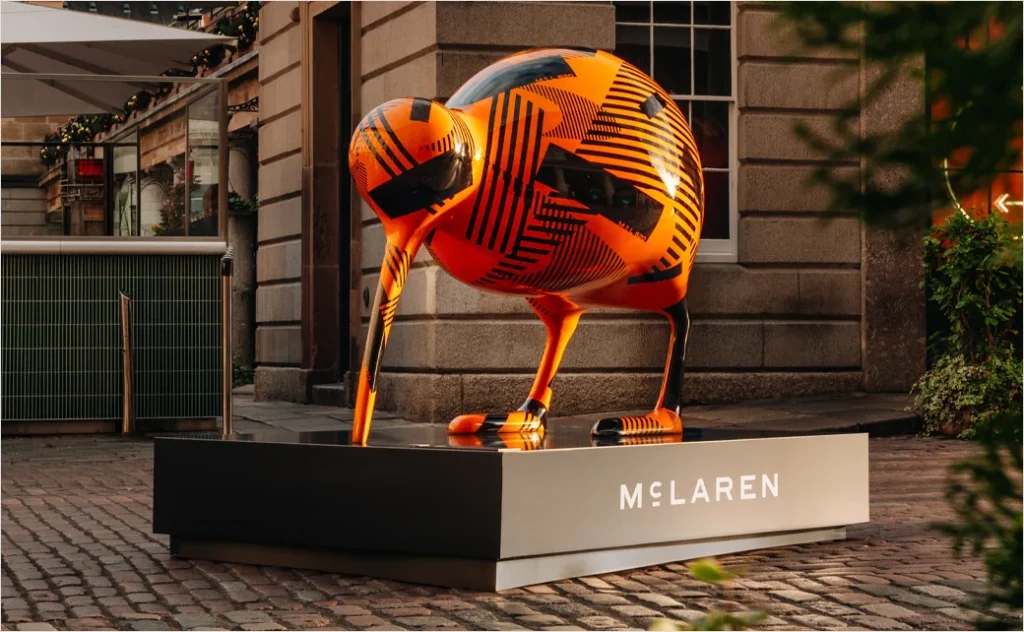
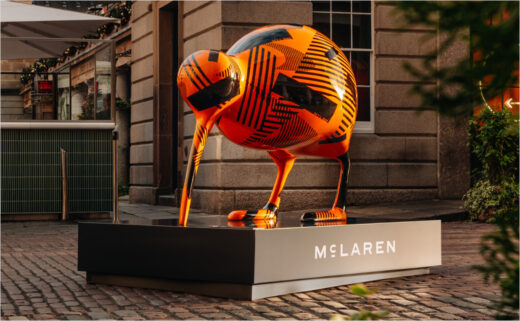
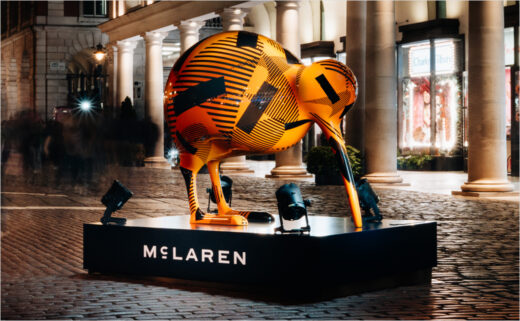
To generate public excitement and honor its foundational roots, McLaren chose an unconventional venue for the initial visual teaser of the McL 820. The company placed a striking kiwi bird statue in Covent Garden, central London, drawing crowds of commuters, tourists, and automotive journalists alike.
The flightless bird holds profound historical significance for the marque. New Zealand-born racing driver, engineer, and innovator Bruce McLaren adopted the kiwi as the emblem for his fledgling racing team in the 1960s. The symbol accompanied the team through its formative years in Formula 1 and Can-Am racing, serving as a reminder of the founder’s tenacity and pioneering spirit.
The Covent Garden statue was wrapped in a bespoke black and orange camouflage livery—a staple of prototype testing—subtly emblazoned with the new "McL 820" name. The camouflage pattern not only served to obscure the final aerodynamic body panels of the upcoming supercar from prying camera lenses but also offered a brilliant fusion of historical storytelling and modern automotive marketing. By tying the new vehicle directly to the kiwi bird symbol, McLaren underscored that despite its cutting-edge technological advancements, the brand remains fiercely proud of its origins.
Context and Chronology: The Road to 2027
The announcement of the McL 820 does not happen in a vacuum; it is the latest milestone in a carefully orchestrated multi-year transformation plan by McLaren Group. Understanding the trajectory of the brand requires examining the timeline of events leading up to this pivotal moment:
- Late 2024 to 2025: Amidst changes in executive leadership and shifting capital structures, McLaren initiated a comprehensive review of its global brand strategy. The objective was to modernize the company’s image to better compete in an evolving luxury automotive market characterized by electrification and digital integration.
- Mid-2026: McLaren officially rolled out a brand-new logo and visual identity system. This redesign updated the company’s iconic aesthetic, streamlining its typography and graphic assets to perform seamlessly across digital platforms, mobile applications, and physical dealership spaces worldwide.
- October 30, 2026: McLaren officially unveiled the name of its upcoming 2027 supercar as the "McL 820," accompanied by the public kiwi bird art installation in Covent Garden, London.
- 2027 (Projected): The official global debut, dynamic track testing reveals, and initial customer deliveries of the McL 820 are scheduled to take place, marking the true commercial commencement of this new product chapter.
Implications for the Supercar Market
The introduction of the McL 820 and its accompanying nomenclature carries significant implications for the high-end automotive sector. As legacy supercar manufacturers navigate the complex transition toward hybrid powertrains and alternative propulsion systems, establishing a clear, authoritative brand voice is paramount.
Competitors such as Ferrari, Lamborghini, and Aston Martin have similarly re-evaluated their naming conventions and brand identities to appeal to a younger, increasingly global demographic of tech-savvy ultra-high-net-worth individuals. By pivoting to a performance-indexed naming structure (such as pairing the brand identifier with exact metric horsepower figures), McLaren is attempting to demystify its lineup while elevating the prestige associated with every horsepower generated.
Furthermore, the integration of the "McL" prefix across both racing and road cars hints at a broader corporate synergy. In an era where motorsport success directly translates to road car desirability—particularly through platforms like Formula 1—solidifying this connection helps justify the substantial research and development investments poured into aerodynamics, lightweight carbon-fiber chassis construction, and powertrain optimization.
Broader Industry and Economic Impact
Beyond marketing and branding strategies, the development of the McL 820 represents a critical economic engine for McLaren Automotive and its supply chain. High-performance supercar development requires immense capital expenditure, specialized engineering talent, and precision manufacturing capabilities, primarily anchored in the United Kingdom.
By committing to a major new vehicle launch in 2027, McLaren is reaffirming its long-term manufacturing footprint in Surrey, England, sustaining high-skilled engineering jobs and supporting local and international tier-one automotive suppliers. The ability to command six-figure price tags for vehicles boasting 820 PS ensures strong profit margins per unit, which are essential for funding the ongoing research into sustainable materials, advanced battery chemistries, and synthetic fuels that will define the next decade of exotic car manufacturing.
Official Outlook and What Comes Next
While McLaren has kept the precise mechanical specifications, aerodynamic data, and interior architecture of the McL 820 tightly under wraps, the industry expects the vehicle to push the envelope of power-to-weight ratios—a hallmark of the Woking brand. Whether the 820 PS output is achieved via a heavily evolved twin-turbocharged V8 engine coupled with high-output hybrid assistance remains a subject of intense speculation among automotive journalists.
As the countdown to 2027 continues, the unveiling of the McL 820 and its striking London preview have successfully reset the narrative for McLaren. By honoring Bruce McLaren’s kiwi bird legacy while boldly projecting an 820-horsepower future, the company has proven that its storied past and ambitious future are inextricably linked. Automotive enthusiasts and prospective buyers now turn their attention toward the official prototype track tests, where the true capabilities of the McL 0820 will finally be put to the test.