
In March 2010, the Museum of Modern Art (MoMA) in New York City sent shockwaves through the curatorial world by announcing the acquisition of a symbol that had no physical manifestation: the @ sign. The announcement, spearheaded by Senior Curator Paola Antonelli, prompted an immediate, widespread debate regarding the nature of art, the definition of an object, and the evolving responsibilities of cultural institutions in an increasingly dematerialized world. For a museum traditionally built upon the bedrock of "object-based epistemology"—the study and collection of tangible artifacts—claiming ownership of a digital, public-domain symbol was a radical departure from established museological norms.

The acquisition was framed by the museum not as a purchase of property, but as a conceptual expansion of what constitutes a design object. By selecting the @ sign—an everyday typographic convention popularized for email by engineer Ray Tomlinson in 1971—MoMA challenged the necessity of physical possession. This move was quickly followed in 2011 by the accession of twenty-three digital typefaces, signaling a permanent shift in the museum’s collection policy. To understand the gravity of these decisions, one must examine the evolution of type production, the limitations of intellectual property law in a museum setting, and the existential question of what a museum becomes when it begins to collect the intangible.
A Chronology of Digital Accession
The institutional journey toward digital acquisition began with the realization that the traditional boundaries of the MoMA collection were creating a blind spot in the history of design. In 2007, the museum acquired a 36-point metal font of Helvetica Bold, a traditional physical object that fit neatly into the museum’s registration system as "lead and wood tray." However, as the 21st century progressed, the design world shifted almost entirely to digital workflows.

Following the 2010 announcement of the @ symbol, the museum curated the 2011–2012 exhibition Standard Deviations: Types and Families in Contemporary Design. This exhibition served as the public debut for the twenty-three digital typefaces acquired by the museum. Unlike the metal Helvetica font, these new acquisitions were registered with dimensions listed as "variable," a nod to the fact that digital code lacks the fixed spatial properties of lead or wood. This exhibition forced the museum to confront the reality that its "objects" were now software instructions rather than physical forms.
The Historical Context: The Dematerialization of Type
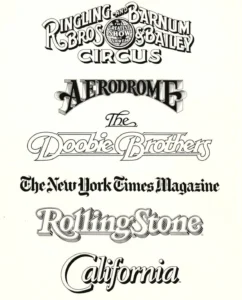
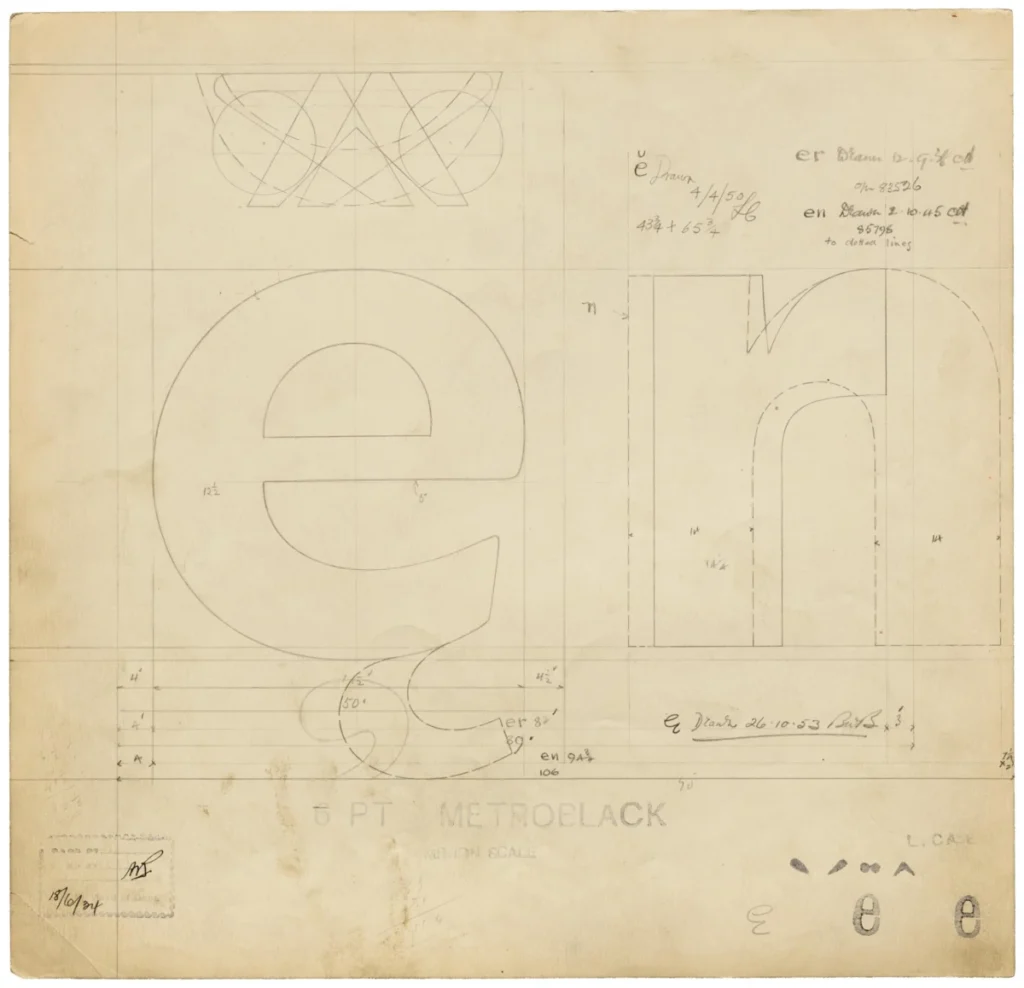
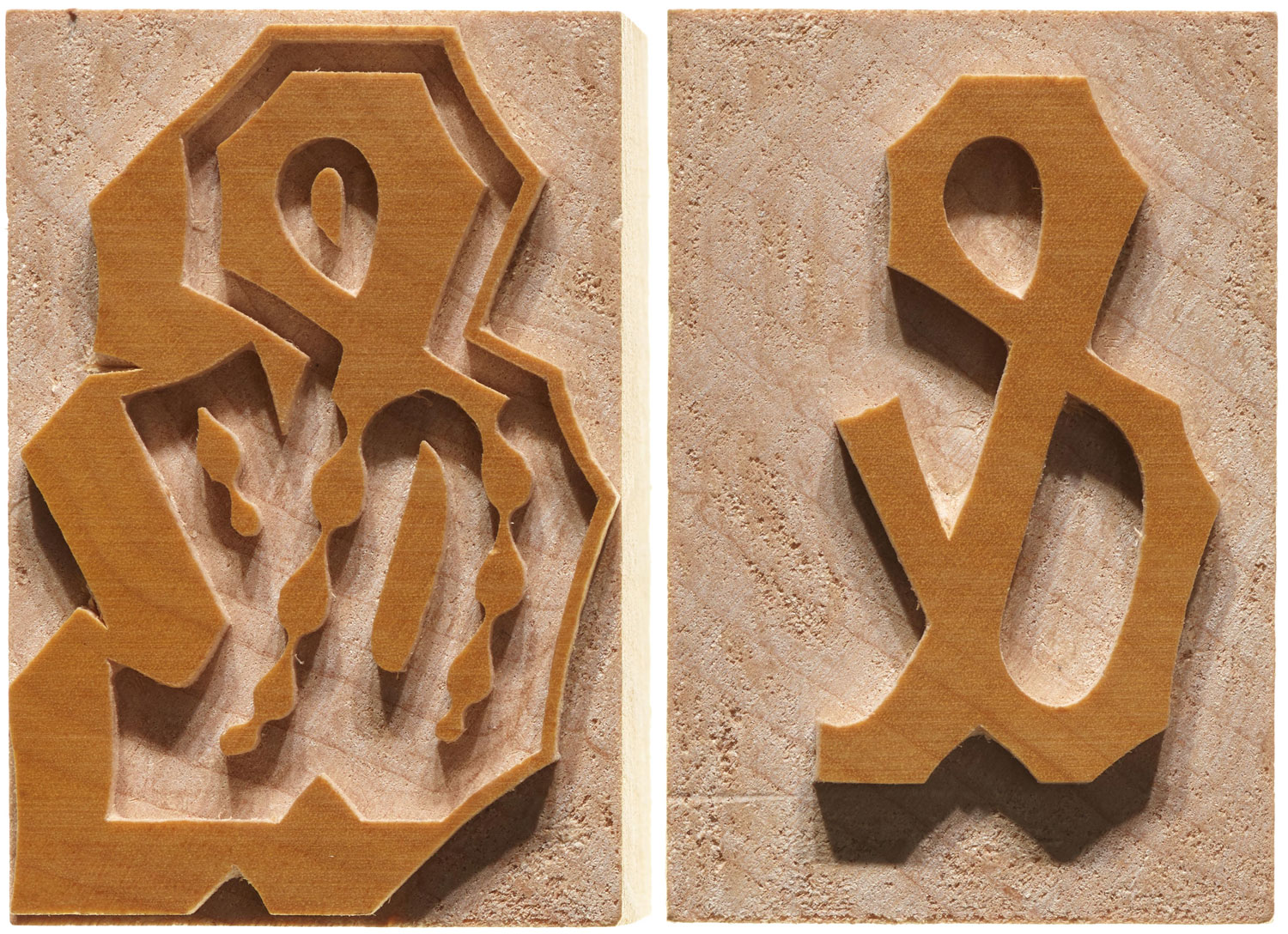
To understand why the collection of digital type is so complex, one must trace the history of typography, which is essentially a narrative of progressive dematerialization. In the era of Gutenberg, type was a physical, hand-carved object. The process began with the creation of steel punches, which were then struck into matrices to cast metal type. Each piece of type was a discrete, three-dimensional unit.

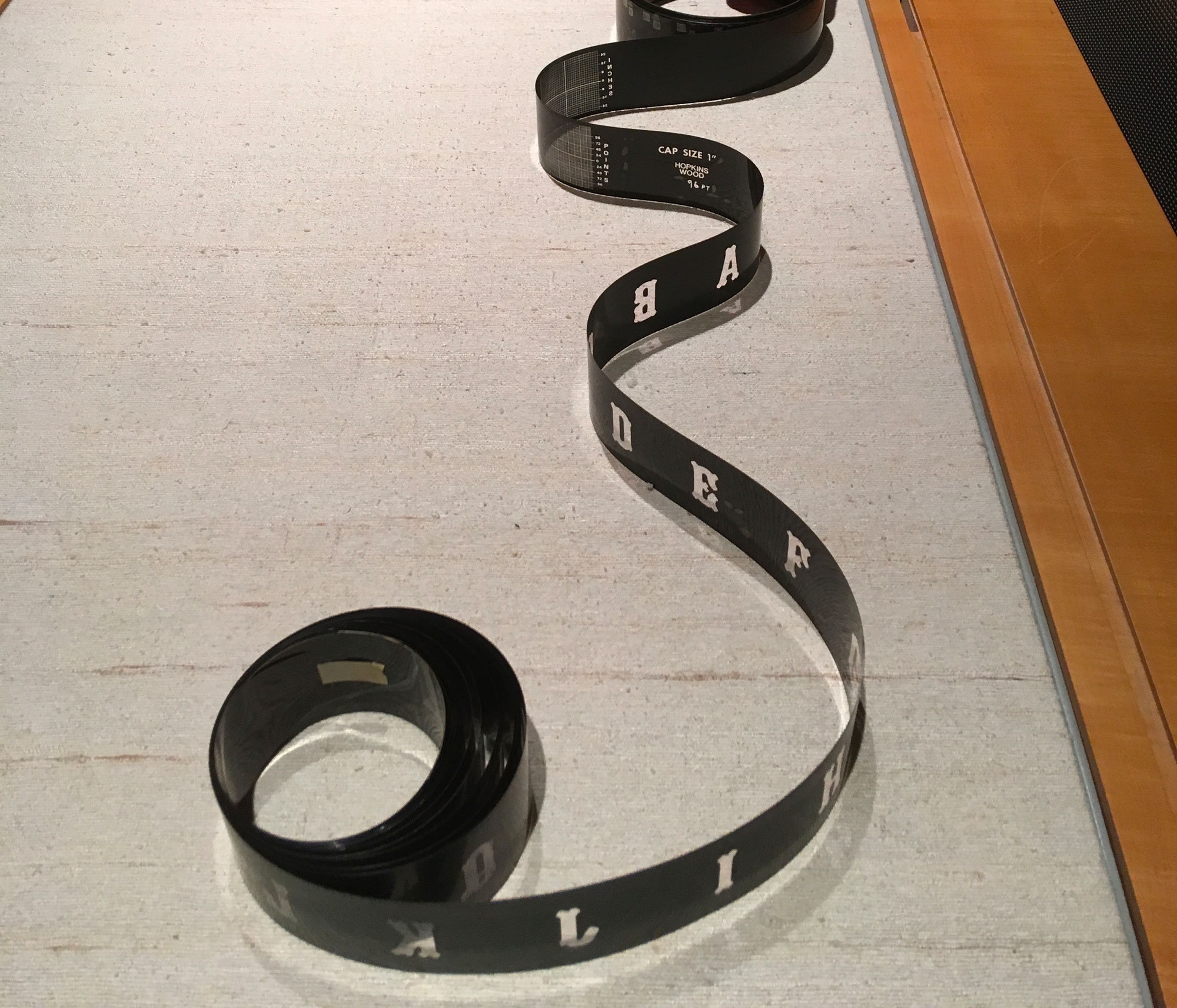
The 19th-century introduction of the pantograph allowed for the scaling of type designs through mechanical tracing, moving the industry away from the singular, hand-cut punch. The mid-20th-century advent of "hot-metal" casting machines, such as Linotype and Monotype, further reduced the permanence of type, as slugs were melted down and recast after each print job. The subsequent "optical" era of the 1960s and 70s saw the rise of phototypesetting, where characters were exposed onto film rather than pressed into ink. Finally, the digital revolution eliminated the physical substrate entirely. Today, a typeface is a set of mathematical instructions interpreted by a screen or a printer. By the time MoMA acquired these designs, the "object" had been reduced to a file—a stream of data that exists everywhere and nowhere simultaneously.
The Conundrum of Intellectual Property
A central issue in MoMA’s acquisition strategy is the legal tension between ownership and licensing. In the commercial world, a designer does not "own" a font in the traditional sense; they purchase a license to use it under the terms of an End User License Agreement (EULA). The intellectual property (IP) remains firmly with the creator or the foundry.

When MoMA sought to acquire these digital assets, it faced a significant hurdle: most standard EULAs include clauses that allow for the revocation of usage rights. To ensure the permanence of its collection, the museum had to negotiate bespoke, perpetual licenses for each of the twenty-three typefaces. As revealed by Paul Galloway, a collection specialist at MoMA, this process was arduous. For proprietary designs like Matthew Carter’s Walker, which was commissioned exclusively for the Walker Art Center, the museum had to secure consent from both the designer and the rights-holding institution.
This process highlights a fundamental contradiction: MoMA owns the right to display the digital files, but it does not own the intellectual property of the typefaces themselves. This is a marked departure from the acquisition of a painting, where the museum typically gains full ownership of the physical object and, in many cases, the copyright associated with it.
Institutional Implications and Preservation
Why, then, does a museum persist in using the language of "acquisition" for assets it does not fully own? The answer lies in the necessity of preservation. As digital standards evolve, font files are susceptible to technical obsolescence. A file format that works today may be unreadable by operating systems twenty years from now. By formally "acquiring" these typefaces, MoMA has committed itself to a custodial responsibility.
The museum acts as an archive, ensuring that even if a foundry closes or a software format is discontinued, the design remains accessible to future researchers and designers. This is a vital function. If museums restricted themselves only to physical objects, the history of 21st-century innovation—which is overwhelmingly digital—would be entirely excluded from the historical record. As noted by designer Jonathan Hoefler, digital obsolescence is as destructive to a design as a flood or earthquake is to a physical painting.
Broader Impact on Museology
The move toward collecting the intangible has forced a broader reassessment of the International Council of Museums (ICOM) definitions. For decades, a museum was defined by its role as a repository of "material evidence." In 2007, ICOM updated this to include "tangible and intangible heritage." This change reflects a broader shift across the global museum community, where institutions like the Holocaust Memorial Museum have already begun to prioritize the preservation of survivor testimonies—which, like the @ sign, have no physical form but hold immense cultural value.
However, the "object-oriented" language of the past remains deeply embedded in the museum’s DNA. When Paola Antonelli suggests that the museum might one day "tag" a Boeing 747 as part of its collection, she is pushing the boundaries of what a museum can "have." While this may strike some as a marketing stunt or a conceptual experiment, it underscores a serious shift in strategy. The museum is no longer just a warehouse for things; it is a curator of ideas, processes, and cultural markers.

Analysis: A Necessary Fiction
The acquisition of digital typefaces and symbols like the @ sign is a pragmatic, albeit imperfect, solution to the challenge of documenting the modern era. The "fiction of ownership" that MoMA employs provides a legal and administrative framework that allows for the long-term preservation of digital innovation. While the language of "acquisition" may be technically imprecise—given that the museum holds licenses rather than property titles—it remains the most effective way for the institution to signal the significance of these works to the public.
Ultimately, the primary responsibility of a modern museum is not to the "object," but to the discipline itself. By recognizing the @ sign and digital typefaces as worthy of institutional status, MoMA is asserting that design is not defined by its materiality, but by its cultural impact. Whether this approach can be sustained as technology continues to evolve remains an open question, but it is clear that the traditional, static model of the museum is undergoing a permanent, irreversible transformation. As we move further into the digital age, the museum’s role will increasingly become one of managing access, ensuring interoperability, and acting as a bridge between the ephemeral nature of digital code and the enduring history of human creativity.