
Black Friday and Cyber Monday represent the most significant retail phenomenon in the modern global economy, evolving from a post-Thanksgiving clearance event into a massive, multi-week digital commercial cycle. As consumer habits shift toward early-season procurement and digital-first shopping, business owners and marketing executives face the dual challenge of navigating extreme market saturation while attempting to capture a portion of the record-breaking spending projected for the 2026 holiday period.
The fiscal stakes are higher than ever. According to Adobe Analytics, Black Friday 2025 generated $11.8 billion in online sales, a 9.1 percent increase from the previous year, while Cyber Monday established a new benchmark with $14.25 billion in revenue. Collectively, the 2025 holiday shopping season accounted for $257.8 billion in online expenditure. With the National Retail Federation (NRF) forecasting that total holiday sales will exceed the $1 trillion threshold for the first time in 2026, the period between November 27, 2026—the date of Black Friday—and November 30, 2026—Cyber Monday—serves as the primary engine for annual retail growth.

The Evolution of the Retail Calendar
The traditional "doorbuster" model, characterized by physical store lines and single-day urgency, has been supplanted by a prolonged, omnichannel strategy. Modern retail data indicates that consumer behavior is increasingly fragmented; nearly 43 percent of shoppers initiate their holiday research and procurement before November. This shift is driven by a desire to spread out household budgets and the prevalence of early-access deals. Consequently, brands that wait until the official Thanksgiving weekend to initiate their campaigns often find themselves at a competitive disadvantage in an already crowded media landscape.
Strategic Media Relations and Affiliate Integration
For e-commerce brands, the editorial landscape remains a critical driver of traffic. Major lifestyle and news publications—such as Women’s Health, Cosmopolitan, and Good Housekeeping—now structure their editorial calendars around Black Friday months in advance. These outlets utilize affiliate links to provide curated product round-ups, creating a high-authority referral stream.
For businesses, securing placement in these guides provides two distinct advantages. First, it offers direct access to a high-intent audience already primed for purchasing. Second, the resulting backlinks from high-domain-authority websites serve as a powerful signal for search engine optimization (SEO), bolstering the brand’s organic search visibility long after the holiday season concludes. Effective outreach involves contacting editorial desks within specific niches, offering competitive commission structures on sales, and providing unique value propositions that align with the publication’s editorial standards.

The "Anti-Black Friday" Movement and Brand Values
A distinct segment of the market has emerged that challenges the ethos of hyper-consumerism. Brands like REI have gained significant market traction by opting out of traditional sales, encouraging consumers to "#OptOutside" instead. This strategy serves to solidify long-term brand loyalty by demonstrating that the company’s values—in this case, outdoor recreation and employee well-being—supersede short-term revenue spikes.
Patagonia’s historic "Don’t Buy This Jacket" campaign remains the gold standard for this approach. By explicitly discouraging unnecessary consumption, the brand reinforced its commitment to sustainability, ultimately fostering deeper trust with its core demographic. Similarly, Lush Cosmetics and Allbirds have utilized the date to facilitate social impact, with Lush donating proceeds from special-edition products to environmental charities and Allbirds temporarily increasing prices to fund climate initiatives. These actions effectively distinguish a brand in a market where consumers are increasingly selective about the companies they support.
Scarcity and Exclusivity as Conversion Drivers
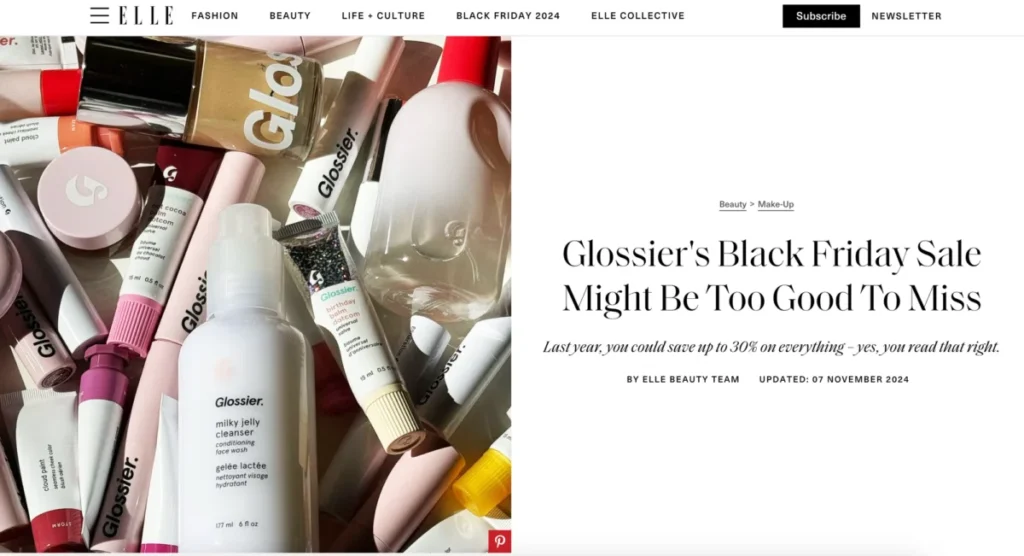
While some brands lean into values, others leverage the psychological trigger of exclusivity. Glossier, for instance, maintains a rigid promotional schedule, offering a site-wide discount only once annually during the Black Friday window. This scarcity creates a "newsworthy" event, resulting in significant organic buzz across social platforms like Reddit and dedicated beauty forums.

Other firms utilize invite-only sales models. By restricting access to high-value discount codes or early-access windows to established mailing list subscribers or top-tier customers, companies can drive higher conversion rates while rewarding existing brand advocates. This tactic reduces the noise of broad-spectrum marketing and fosters a sense of community, transforming a transactional event into an exclusive engagement opportunity.
Disruptive Marketing and "Mistake" Narratives
The use of disruptive, tongue-in-cheek marketing tactics has become a hallmark of digital-native brands. Cards Against Humanity has famously used Black Friday to subvert expectations, once charging customers for "nothing" and another time raising prices, both of which generated massive media coverage and record-breaking interest.
Similarly, the "accidental" marketing email or social media post—pioneered by brands like Brooklinen and occasionally employed by corporations like McDonald’s—relies on the perception of human error to cut through the digital clutter. These campaigns, while meticulously planned, succeed by appearing authentic and relatable. The implication of such strategies is clear: in an era of polished advertising, the appearance of vulnerability or humor can be a highly effective tool for capturing attention.

Leveraging User-Generated Content and Live Commerce
TikTok has rapidly ascended as the primary arena for Black Friday engagement, particularly for Gen Z and Millennial audiences. The platform’s algorithm favors authentic, low-production, and relatable content, making it an ideal environment for brands to deploy User-Generated Content (UGC). By incentivizing customers to share their own reviews or unboxing videos via giveaways or hashtag challenges, brands can amplify their reach through organic social proof.
Furthermore, the rise of live shopping has redefined real-time interaction. The MeUndies "Drawer Buster" event, which utilized live streaming to reveal incremental discounts, demonstrated the power of the format, achieving conversion rates significantly higher than standard social media advertisements. This approach transforms the passive act of scrolling into an active, immersive shopping experience. As platforms continue to integrate shopping features directly into their live-stream infrastructure, brands that adopt this model can capitalize on the urgency of the moment to drive immediate sales.
Long-Term Implications for the 2026 Season
As the retail industry approaches the 2026 holiday season, the divergence in strategy between value-led initiatives and aggressive, high-discount campaigns will continue to define the market. The NRF’s projection that 64 percent of consumers plan to complete the bulk of their shopping over the Thanksgiving weekend confirms that the event remains the critical anchor for retail performance.

However, the "long tail" of the season is equally important. With 62 percent of shoppers expecting to continue their purchasing into December, the most successful brands will be those that manage the transition from the frantic pace of Cyber Monday to the sustained engagement required for the remainder of the holiday period.
Ultimately, the most effective Black Friday marketing in 2026 will not rely on a single channel or tactic, but on a cohesive strategy that integrates brand values, leverages high-authority media partnerships, and utilizes the authentic, interactive nature of social media to turn temporary holiday shoppers into lifelong customers. As the market continues to expand and evolve, the emphasis on data-driven decision-making and genuine consumer connection will remain the defining factors in determining which brands succeed in the world’s most competitive retail window.