
As artificial intelligence increasingly mediates the discovery of professional services and commercial vendors, a critical question faces digital marketers and enterprise executives: when a prospective buyer asks an AI tool for a recommendation, what specific website elements influence that output? Recent empirical research sheds light on this shifting paradigm, challenging decades-old search engine optimization (SEO) dogmas and revealing that the path to AI visibility requires a fundamental pivot toward hyper-factual, conversion-oriented copywriting.
The digital marketing landscape has long been dominated by deterministic search algorithms that prioritize keyword density, backlink profiles, and general word counts. For over twenty years, search engine optimization strategies frequently dictated that longer pages correlate with higher rankings. However, the rise of probabilistic language models—such as ChatGPT, Google Gemini, and Perplexity—has transformed search engines from simple information-retrieval systems into generative recommendation engines.
To understand how these systems select businesses, researchers undertook a comprehensive empirical study in October 2026. The investigation examined 704 corporate websites across four distinct industries: web design agencies, IT managed service providers, CPA firms, and industrial manufacturers. Analysts executed 96 structured prompts across four major AI platforms, ultimately reviewing 8,771 distinct recommendations generated across 1,916 individual AI responses.
By filtering out top-tier enterprise brands with exceptionally high Domain Authority—entities whose market dominance allows them to bypass conventional copywriting constraints—the study focused on the remaining 75 percent of companies. These are organizations that must actively earn digital visibility through strategic content architecture.
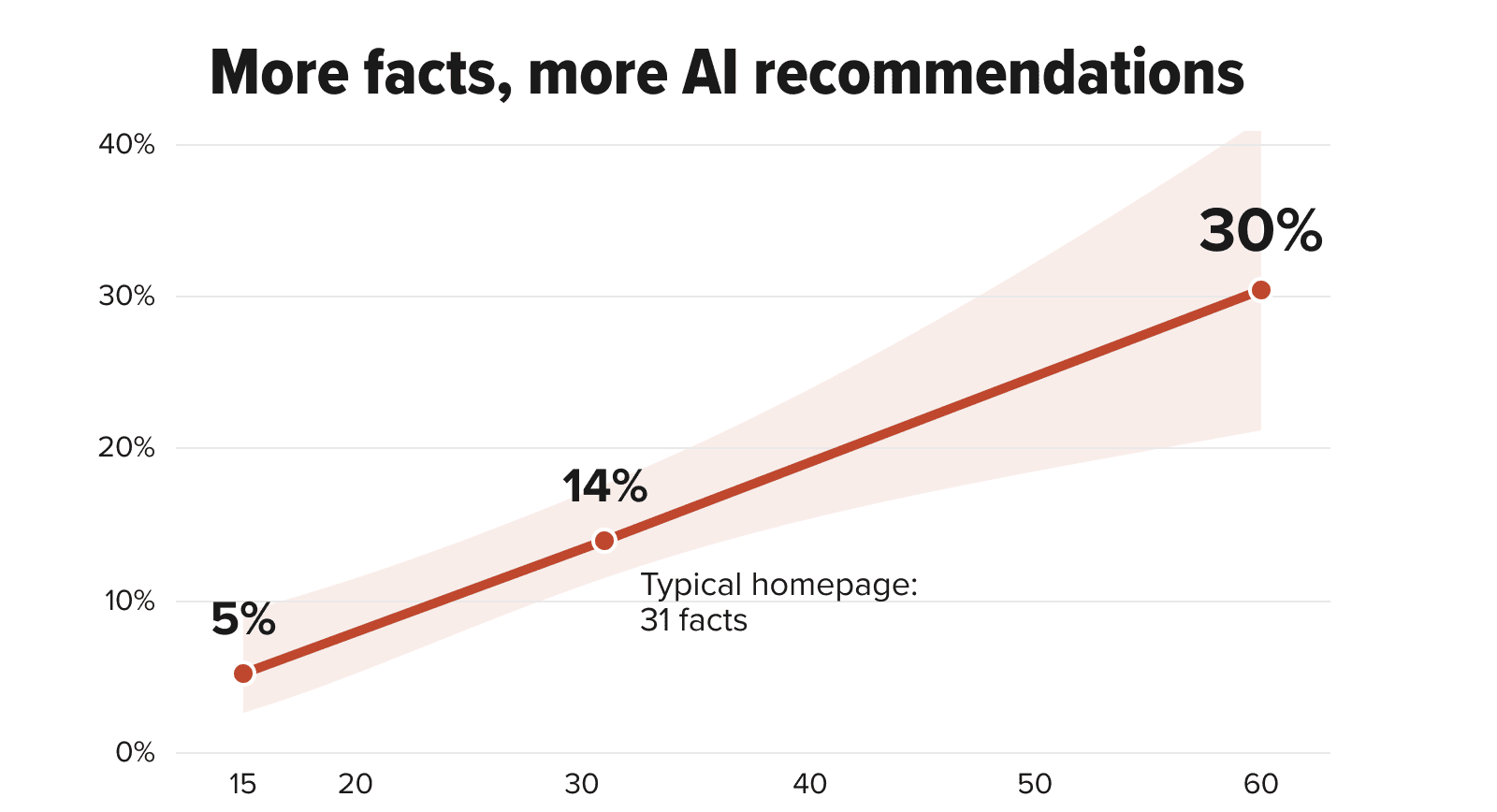
The core finding of the research is striking in its simplicity: there is a direct, robust correlation between the volume of factual information on a company’s homepage and its likelihood of being recommended by an AI tool. While traditional word count showed no meaningful connection to AI recommendations, the presence of verifiable facts dramatically altered outcomes.
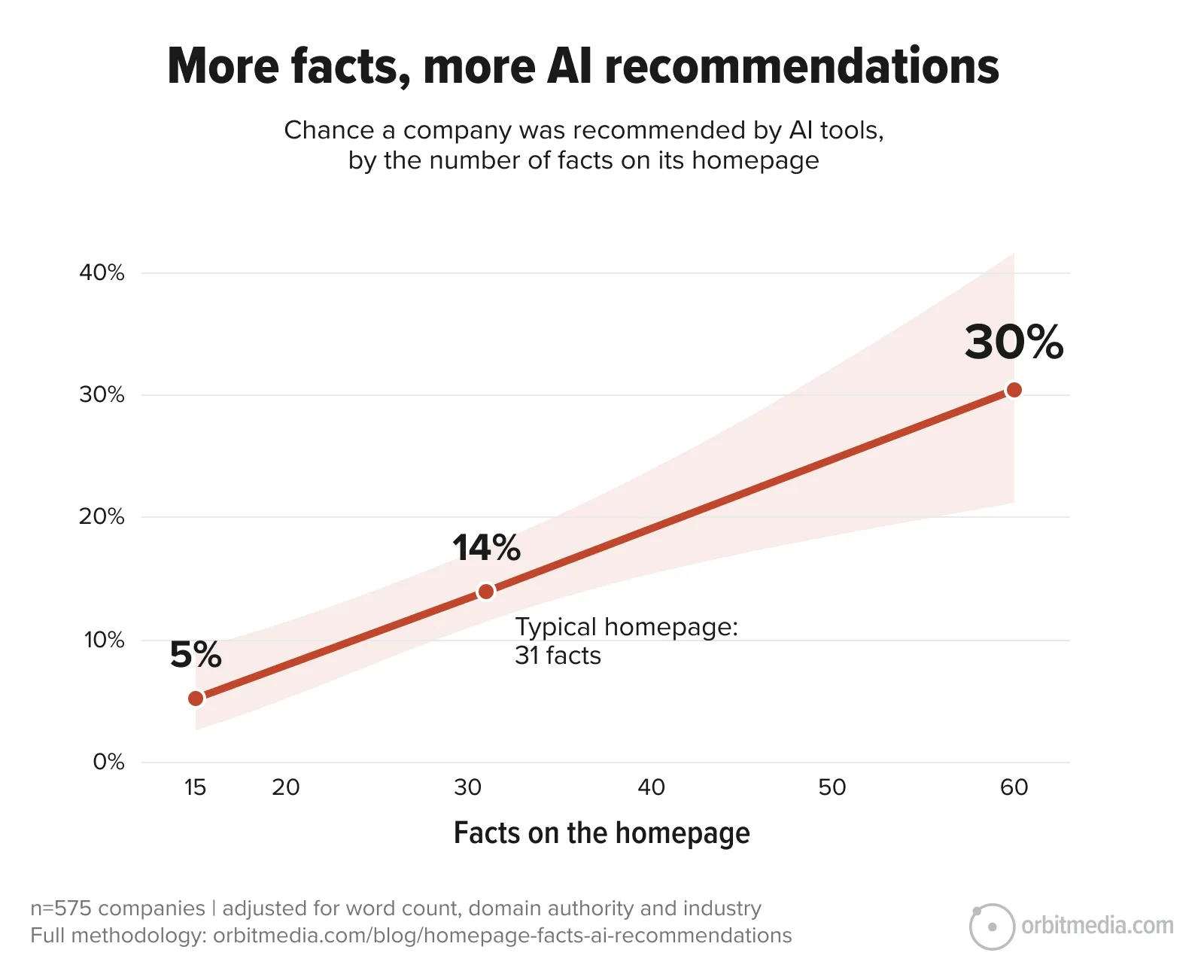
Data from the study illustrates that across homepages containing between 15 and 60 distinct facts, the probability of an AI tool recommending the brand rose sharply from 5 percent to 30 percent. The typical homepage analyzed in the dataset stated 31 verifiable facts.
Experts suggest this occurs because probabilistic language models require structured, low-ambiguity data to mitigate the risk of providing incorrect recommendations to users. Flint McGlaughlin, Founder of MECLabs, noted that machines consistently favor options characterized by high clarity, high corroboration, and low ambiguity. Generative tools bypass generic marketing copy and vague corporate claims, instead aggregating hard data points from corporate homepages to construct accurate, reliable shortlists for users.
The research further emphasizes that the homepage functions as the primary ingestion point for artificial intelligence. Prior analyses of Cloudflare data demonstrate that AI web crawlers request corporate homepages approximately 15 times more frequently than any other site architecture. Consequently, the homepage serves as the critical bridge between training datasets and real-time retrieval queries.

When AI tools successfully recommended a company, two-thirds of the supporting details cited by the model originated directly from the target company’s homepage, while only 5 percent derived from interior pages such as "About Us" or "Services" sections. This concentration of influence highlights the necessity of adopting a maximalist approach to homepage copywriting—ensuring that high-value facts are immediately accessible rather than buried deep within secondary subpages.
Furthermore, the study evaluated which specific categories of facts exert the greatest influence on AI recommendation rates. Facts were systematically grouped into distinct classifications, revealing significant variance in their operational weight:
- Named clients and verifiable case results
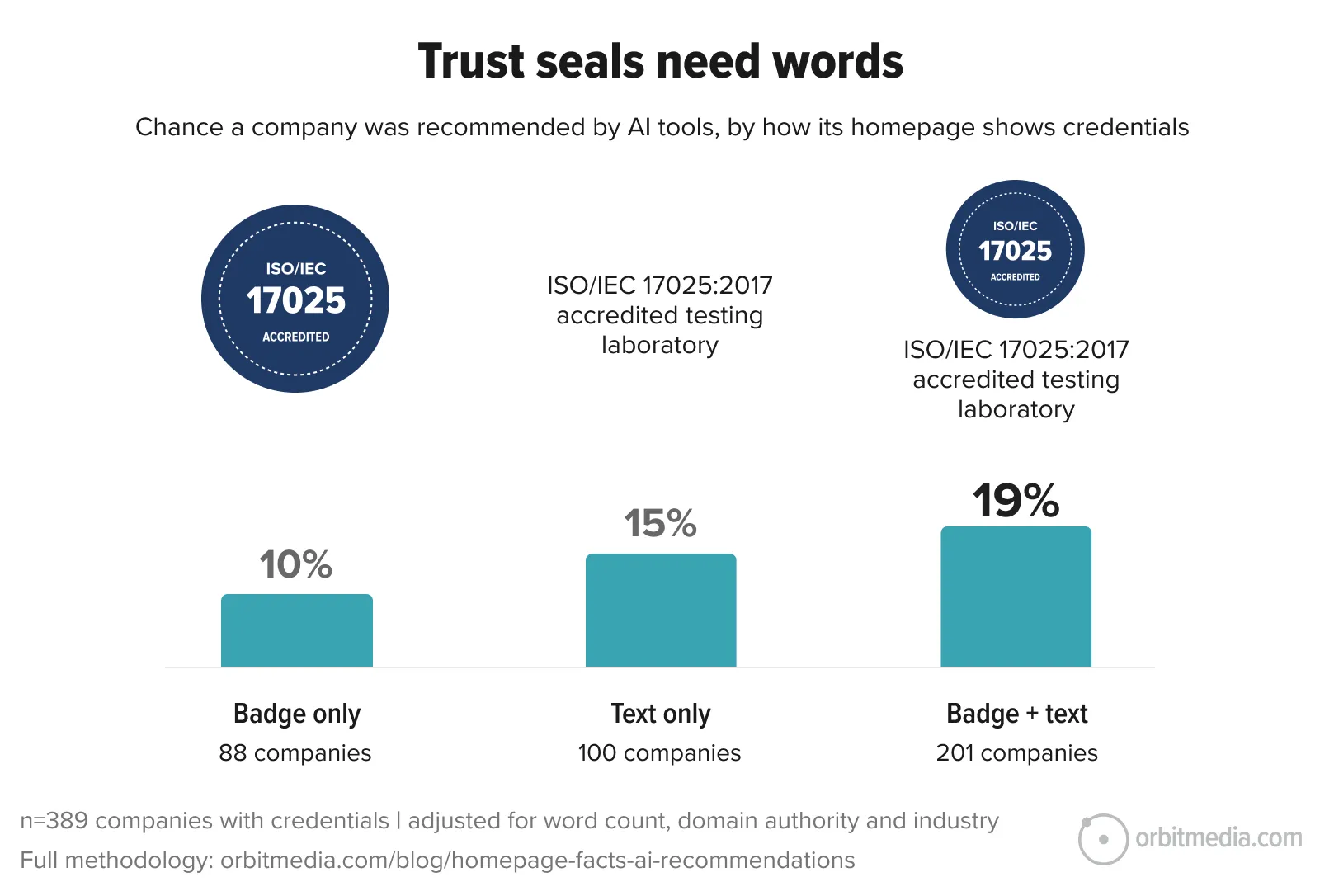
- Professional credentials, licenses, certifications, and staff qualifications
- Industry awards, third-party rankings, and press mentions
- Proprietary equipment, specialized facilities, and internal technical tools
- Clearly defined target industries and specific customer segments
Among these categories, named clients and concrete results demonstrated the highest correlation with positive AI recommendations, reaching a 30 percent correlation threshold. Conversely, the presence of heavy self-praise—such as superlatives like "best," "leading," "world-class," "innovative," or "seamless"—exhibited a negative correlation. Homepages heavily reliant on subjective marketing hype were recommended by AI tools only 10 percent of the time, compared to a 16 percent baseline across the broader dataset.
Industry analysts observe that this data bridges a historical divide between traditional SEO practitioners and conversion rate optimization (CRO) specialists. While SEOs traditionally focus on infrastructural mechanics and machine readability, CRO professionals concentrate on buyer intent, clarity, and friction reduction.
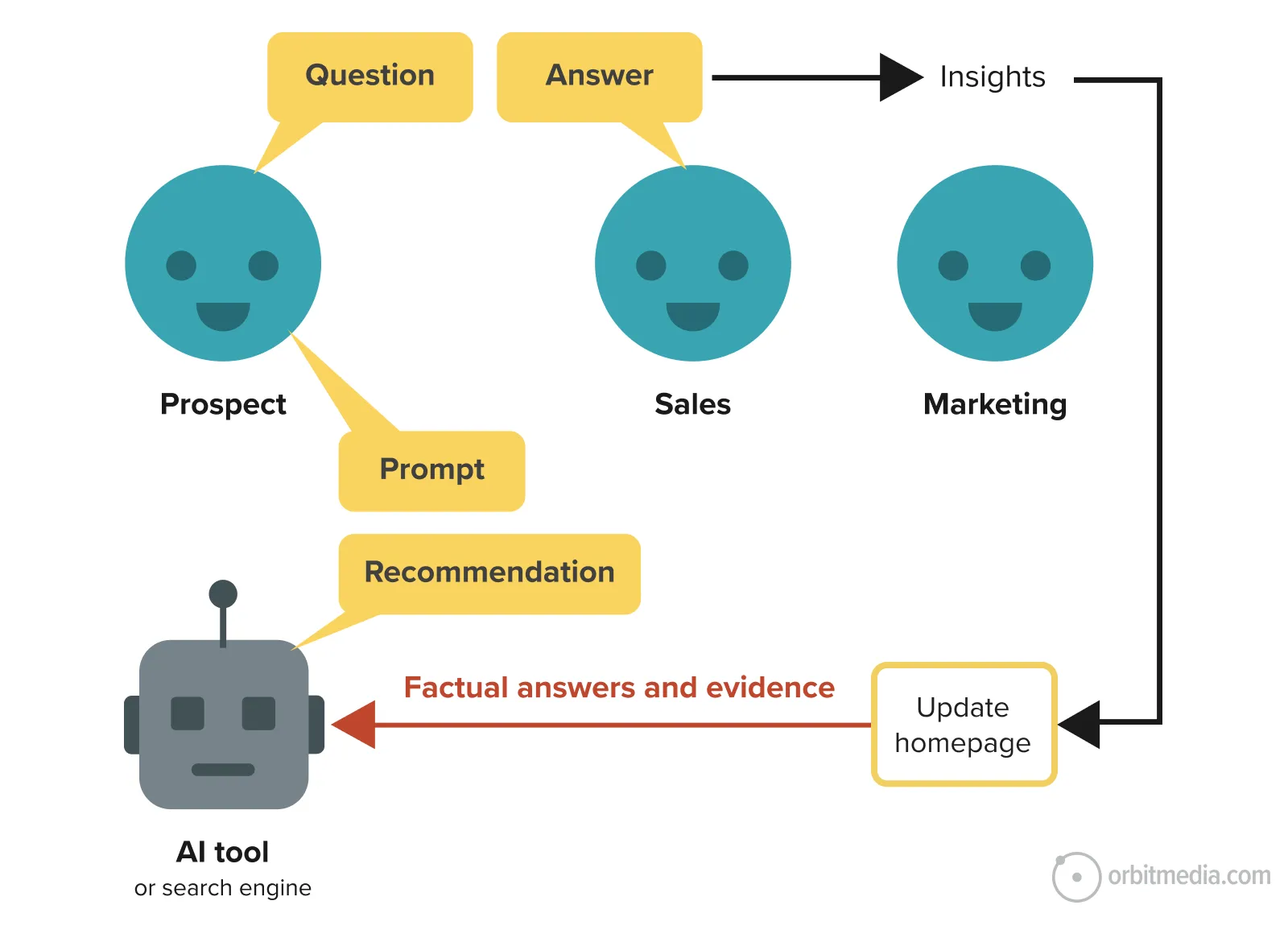
In the era of generative AI, these two disciplines converge. Melissa Graham, Senior SEO and CRO Strategist at Orbit Media, observed that SEOs typically analyze the gaps between a website and its competitors, whereas conversion optimizers examine the gaps between a website and its actual buyers. Because AI models evaluate corporate data through the prism of user intent, web pages optimized for human conversion—meaning those that directly answer specific buyer requirements with verifiable evidence—are inherently optimized for generative search discovery.
To assist organizations in evaluating their digital presence against these empirical findings, the study outlines a structured auditing methodology utilizing generative AI prompts. Digital teams can execute multi-step evaluations to score their homepages across several key performance indicators:
- Fact Score Evaluation: Counting and categorizing checkable statements while excluding slogans, navigation labels, and vague promotional claims.
- Buyer Prompt Alignment: Measuring how effectively homepage copy addresses specific criteria—such as industry, company size, and geographic constraints—extracted from actual sales calls or request-for-proposal (RFP) data.
- Competitive Benchmarking: Comparing corporate fact density and alignment metrics directly against primary industry competitors.
The implications of these findings suggest a permanent shift in enterprise digital strategy. As conversational search interfaces replace traditional keyword-driven query pages, corporate websites can no longer rely on aesthetic design, emotional branding, or superficial keyword stuffing to secure visibility. Sustainable digital authority in an AI-driven economy requires a deliberate commitment to factual transparency, rigorous documentation of professional credentials, and copy that speaks directly to the verifiable needs of the modern buyer.