
The Origins and Evolution of the Interop Initiative
The Interop program began as a direct response to a long-standing grievance in the software development community: the "it works in Chrome but not in Safari" syndrome. Historically, the disparate implementation of CSS, HTML, and JavaScript specifications by different browser engines meant that developers spent an inordinate amount of time on cross-browser testing and polyfilling.
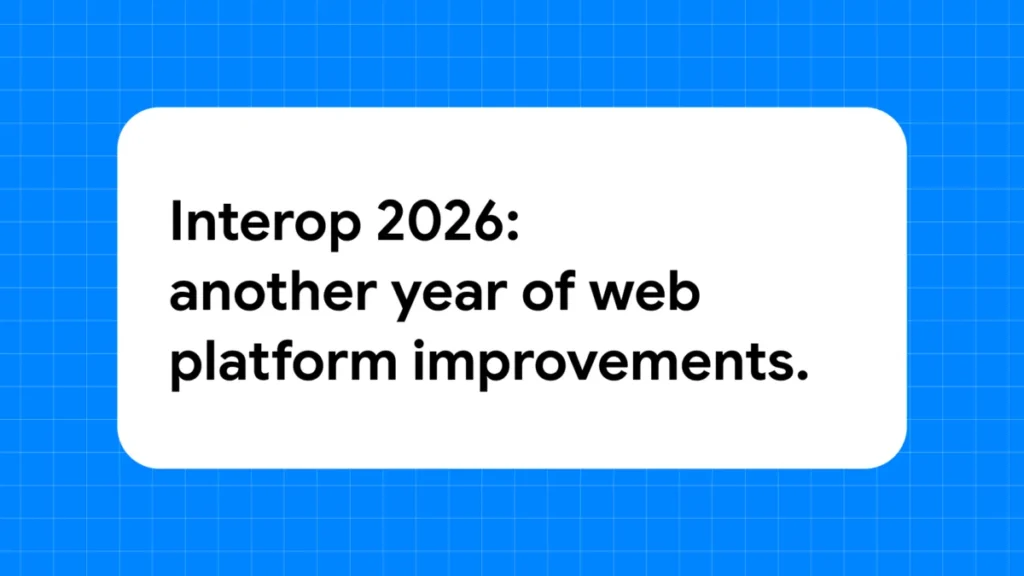
The initiative evolved from earlier, smaller-scale attempts at standardization into the structured, data-driven "Interop" series starting in 2021. By establishing a shared set of benchmarks—managed through the Web Platform Tests (WPT) project—the participating companies have successfully pushed browser engines toward higher compliance. The success of previous iterations, such as Interop 2023 and 2024, led to significant improvements in features like Subgrid, Container Queries, and Flexbox consistency. By 2025, the industry saw unprecedented alignment, and Interop 2026 aims to capitalize on this momentum by tackling both high-priority legacy issues and cutting-edge web features.
Strategic Focus Areas for 2026
The selection process for Interop 2026 was not arbitrary; it relied on extensive data collection from the "State of CSS" and "State of HTML" surveys, as well as the active "developer signals" repository on GitHub. This year’s focus areas are categorized into CSS capabilities, API improvements, and broader architectural enhancements.
Advancing CSS Capabilities
A major pillar of the 2026 roadmap involves the continued maturation of CSS layout and design tools. Anchor positioning, a feature that allows developers to tether elements to one another—essential for tooltips, menus, and overlays—returns from the 2025 agenda to ensure final implementation stability. Similarly, container style queries are slated for refinement. By allowing developers to query the computed values of custom properties on parent containers, this feature offers a more modular way to manage design systems.
Perhaps one of the most anticipated additions is the contrast-color() function. As the web moves toward more dynamic design systems, this function provides a programmatic way to ensure that text remains readable against any background, reducing the need for complex JavaScript-based contrast calculators. Furthermore, the shape() function and the attr() CSS function, which enables developers to extract attribute values directly into styles, represent a push toward more expressive, native CSS capabilities that reduce reliance on external libraries.
Modernizing Web APIs and Performance
Beyond styling, Interop 2026 addresses critical infrastructure for web performance and data handling. The focus on IndexedDB, specifically the introduction of getAllRecords() methods, is designed to enhance performance for data-intensive web applications. By allowing for batch retrieval of records, this improvement directly addresses common performance bottlenecks in offline-first web apps.
The inclusion of the JavaScript Promise Integration (JSPI) for WebAssembly (Wasm) is another milestone. JSPI is designed to bridge the gap between synchronous Wasm code and the asynchronous nature of the web’s JavaScript APIs. This is a critical development for high-performance applications like video editors, games, and complex computational tools that rely on Wasm.
The Fetch API is also undergoing updates to improve streaming capabilities. By focusing on ReadableStream within request bodies and enhancing FormData support, the initiative aims to simplify how large files are uploaded and processed, directly benefiting cloud-based file management and collaborative editing platforms.
Chronology and Operational Framework
The Interop 2026 cycle is managed through a transparent, automated testing infrastructure. Throughout the year, the WPT repository serves as the single source of truth. As browser vendors update their engines, the automated tests run continuously, with results pushed to the Interop 2026 dashboard.
This transparency is a hallmark of the program. It allows the developer community to track progress in real-time, providing accountability that was previously difficult to achieve in the closed-door standards bodies of the early 2000s. The timeline for 2026 is divided into quarterly reviews, where the progress of each feature is assessed, and resources are reallocated if certain areas encounter unexpected technical debt or implementation hurdles.
Broader Impact and Industry Implications
The implications of Interop 2026 extend far beyond technical documentation. For the average web developer, the initiative represents a reduction in the "tax" paid on cross-browser compatibility. When browser engines achieve high interoperability scores, the reliance on transpilers and heavy compatibility polyfills decreases. This leads to smaller bundle sizes, faster load times, and a more stable user experience for end-users on any device or browser.
From a business perspective, the unified standard reduces the cost of entry for new web services. Startups and established firms alike can commit to a single code path, knowing that the platform will behave as specified. This, in turn, fosters a healthier ecosystem where innovation is driven by feature sets rather than browser-specific workarounds.
Industry analysts note that this level of cooperation is rare in the tech sector. While companies like Apple, Google, and Microsoft are fierce competitors in the browser market, the "Web-first" philosophy ensures that the underlying platform remains a common, accessible utility. The collaboration is facilitated by organizations like the W3C and the WHATWG, but the execution of the Interop initiative itself is a unique, voluntary, and highly pragmatic demonstration of cross-industry alignment.
Challenges and Future Outlook
Despite the clear benefits, the path to full interoperability remains challenging. Implementing new specifications requires balancing the need for developer-friendly features against the risks of increased browser memory usage, security concerns, and legacy compatibility requirements.
For instance, the work on zoom and view transitions involves complex interactions with browser rendering pipelines. The zoom property, while useful, has historically been a source of significant visual inconsistencies between engines. Similarly, expanding view transitions to cover cross-document scenarios requires careful coordination between browsers to ensure that user privacy and security are not compromised during the page transition process.
Looking forward, the "investigation efforts" listed in the 2026 program hint at the future of the web. By focusing on these early-stage concepts, the browser vendors are essentially planting the seeds for Interop 2027 and beyond. This long-term planning ensures that the web does not stagnate, allowing the platform to evolve at a pace that keeps up with the demands of modern web applications.
Conclusion: A Collaborative Future
As the web platform enters the latter half of the 2020s, the Interop 2026 initiative stands as a testament to the maturation of the web ecosystem. By prioritizing the most requested features and holding themselves to a public, transparent standard, the major browser vendors are ensuring that the web remains a robust and reliable foundation for the future of digital content and application delivery.
For developers, the call to action is simple: keep engaging with the surveys, keep reporting issues on the developer signals repository, and keep monitoring the progress on the dashboard. The web is not a static technology; it is a living platform that requires the constant, collaborative effort of the entire community to remain relevant and effective in an increasingly competitive digital world. Through Interop 2026, the path toward a more consistent, performant, and developer-friendly web is clearer than ever, reinforcing the vision of a universal platform where code can truly be written once and run everywhere.