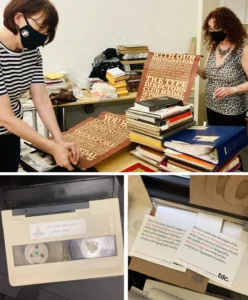

In 2020, the landscape of global professional organizations underwent a seismic shift, necessitated by the dual pressures of a global pandemic and a long-overdue demand for institutional inclusivity. Within the niche but highly specialized field of typography, this transformation was epitomized by the appointment of Carolina Laudon as the first female president of the Association Typographique Internationale (ATypI). Based in Gothenburg, Sweden, Laudon is a renowned typographer and educator who has spent her career bridging the gap between historical craft and the rapidly evolving digital future of font development. Her ascent to the presidency of ATypI, following two years of dedicated board service, marks a turning point for the organization, which has historically functioned as the primary international nexus for type designers, foundries, and academic researchers.
The Association Typographique Internationale, founded in 1957 by Charles Peignot, has historically served as a gatekeeper and a convener for the world’s most influential type practitioners. However, the organization’s traditional model—built upon massive, resource-heavy, in-person annual conferences held in diverse global cities—was rendered impossible by the COVID-19 pandemic. Under Laudon’s leadership, the association faced the immediate, existential challenge of pivoting to an entirely digital format while maintaining the cultural and professional intimacy that had defined its six-decade history.
A Digital Pivot: The 2020 Paradigm Shift
The 2020 iteration of the ATypI conference, rebranded as "ATypI All Over," served as the first major test for the new presidential administration. The logistical challenge was not merely technical; it was a matter of preserving the sense of community that members had come to expect from decades of face-to-face networking. Laudon, in her initial reflections on the transition, noted that the move to an online platform yielded surprising benefits that the organization had struggled to achieve in its physical form.

The digital transition allowed for a democratization of access. In previous years, attendance was limited by the prohibitive costs of international travel, visa restrictions, and the significant time commitment required for physical attendance. By moving the event to a virtual environment, ATypI successfully doubled its attendee count, attracting a global audience that included students, emerging designers, and enthusiasts who had previously been priced out of the organization’s flagship events. The introduction of scholarship tickets further ensured that financial barriers did not preclude participation, signaling a commitment to a more equitable distribution of knowledge.
Historical Context and Institutional Evolution
The appointment of a female president to lead an organization as steeped in tradition as ATypI is significant. For much of the 20th century, the professional type design field was heavily skewed toward male-dominated European foundries. The transition to a more diverse, gender-balanced board—which, under Laudon’s tenure, achieved an equal split of nine women and nine men—is a result of a conscious, multi-year effort to modernize the association’s internal governance.
This change follows a broader trend in the design industry, where institutional power structures are increasingly under scrutiny. For the ATypI, the shift in leadership is part of a larger strategy to align with the United Nations’ Sustainable Development Goals (SDGs), specifically those concerning gender equality and reduced inequality. Laudon’s administration has emphasized that sustainability is not limited to environmental concerns regarding conference waste and travel; rather, it encompasses the social and professional sustainability of the community. This includes the representation of diverse design cultures from outside the Western canon, particularly from Asia and Africa, regions where the association has historically had a lighter presence.
Tactical Inclusion and Global Outreach
To foster genuine geographic and ethnic diversity, the association has moved beyond simple representation, opting for collaborative projects that integrate local design traditions into the global discourse. A key milestone in this effort was the inclusion of the Pan Afrikan Dialogues during the 2020 conference. Facilitated by partnerships with organizations like the Pan Afrikan Design Institute (PADI) and experts such as Professor Saki Mafundikwa, the initiative provided a platform for indigenous African scripts and modern design movements that have been historically overlooked by mainstream Eurocentric typography curricula.

The board’s strategy for geographic expansion also involves the use of "country delegates," who act as conduits for local knowledge. By encouraging these delegates to produce localized video documentation of their typography communities, ATypI has managed to capture a more nuanced view of the global landscape. This bottom-up approach allows the organization to serve as a hub for cross-pollination, where the technical challenges of digital font development in Latin, Cyrillic, or CJK (Chinese, Japanese, Korean) scripts are shared in a truly international forum.
The Future of the Conference Model
Following the success of the virtual experiment, the leadership of ATypI has fundamentally restructured its long-term programming. The organization has announced a move to spring-based in-person conferences starting with Paris in 2022, while simultaneously maintaining a commitment to online events throughout the year. This hybrid approach is a strategic response to the realization that the "backbone" of the community remains rooted in physical interaction, yet the "reach" of the community is now permanently digital.
The decision to retain a strong online presence—including monthly hangouts and dedicated forums for type technology—indicates that ATypI is prioritizing accessibility over the exclusivity that defined its early years. This dual model serves as a template for other professional associations that struggle with the tension between regional specificity and global reach.
Defining Membership in the Modern Age
One of the most persistent questions regarding ATypI is who, exactly, the organization is for. Historically viewed as a club for established masters of the trade, the membership profile has shifted under the current administration. Laudon has been vocal in her assertion that the association is not merely a service provider that delivers specific perks to its members; rather, it is a living network defined by the input of its participants.

The organization currently caters to a broad spectrum of stakeholders, including:
- Academic Educators: Those teaching typography and design history at the university level.
- Type Developers: Professionals working on the technical implementation of fonts for global digital environments.
- Language Enthusiasts: Individuals focused on the intersection of linguistics and visual representation.
- Emerging Professionals: Students and early-career designers seeking mentorship and network access.
Laudon’s message to the membership is one of agency: the association is "movable." If a segment of the community feels underrepresented or ignored, the onus is on that group to engage, propose, and lead the charge for change. By fostering a culture where board roles are rotated and job descriptions are clarified, she aims to reduce the "complaint-driven" culture that can stagnate nonprofit organizations, replacing it with a "contribution-driven" model.
Implications for the Industry
The ongoing transformation of ATypI under Carolina Laudon serves as a case study for legacy professional organizations. The ability to pivot during a global crisis, while simultaneously addressing deep-seated issues of equity and representation, is a rare feat for an organization of its age. As the demand for more inclusive design practices grows, the association’s focus on the UN’s Agenda 2030 serves as a roadmap for innovation.
The shift toward a gender-balanced board and the intentional expansion into non-Western design spheres suggests that the association is preparing for a future where the "center" of typography is no longer fixed in Europe or North America. By treating its global membership as an active body of collaborators rather than passive consumers of conference content, the organization is positioning itself to remain relevant in a rapidly changing technological and social climate. Ultimately, the story of ATypI is a reflection of the industry it serves: one that is constantly re-evaluating its history while aggressively designing its future.