

The Evolution of the Immersive Chat Pattern
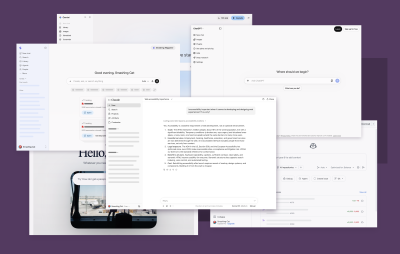
The rapid ascent of LLM-based interfaces began in earnest with the public release of generative AI tools in late 2022. By early 2023, the industry saw a wholesale shift toward the "immersive chat" model, characterized by full-screen, persistent conversational windows. Unlike traditional search engines that return static links, these interfaces function as dynamic, bidirectional state-driven applications.
This architectural shift presents a unique challenge for digital accessibility. While the Web Content Accessibility Guidelines (WCAG) provide a robust framework for static content, the real-time, streaming nature of AI output requires developers to adopt more sophisticated, reactive accessibility strategies. If an interface is built without these considerations, a user relying on a screen reader might be completely unaware that an AI has generated a response, as the content is often injected into the Document Object Model (DOM) dynamically without triggering standard focus updates.
The Social Model of Digital Disability
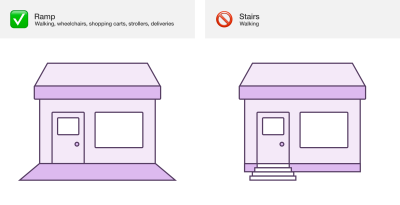
The urgency of this issue is best understood through the social model of disability. This framework posits that disability is not an inherent trait of an individual, but rather a product of the interaction between that person and their environment. In the context of the web, if a developer fails to provide a "ramp" for a screen reader user—such as properly configured live regions—the "stairs" of a inaccessible interface effectively exclude that user from the platform’s utility.
Statistical data from organizations like WebAIM consistently demonstrate that the most significant barriers to web access remain avoidable technical oversights. In the current landscape of AI, the loss of utility is significant: if a professional using a screen reader cannot navigate the history of their prompts or discern when a long-running code generation process has finished, they are effectively locked out of the efficiency gains offered by these powerful tools.
Technical Foundations for Inclusive Interaction
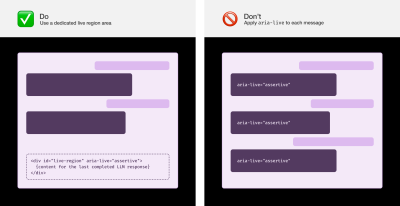
To bridge this gap, developers must move beyond basic semantic HTML and embrace advanced accessibility patterns. One of the most effective tools in this domain is the use of "live regions." By implementing an aria-live region—specifically one that is placed at the end of the DOM—developers can ensure that screen readers announce the completion of a generated response. However, it is essential to avoid the common pitfall of applying these labels to every individual message, which can cause excessive and confusing audio feedback. Instead, a centralized, stable live region for updates ensures that the user is informed of progress without being overwhelmed by technical clutter.

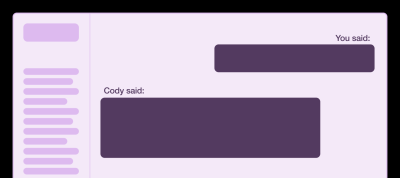
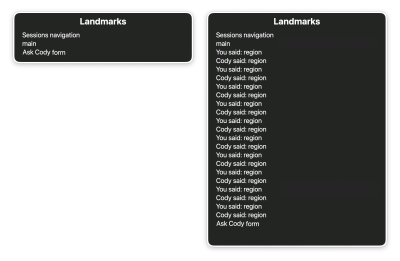
Furthermore, navigation within these chat applications must be intuitive. Headings are the primary method by which screen reader users navigate a page. By inserting visually hidden headings (using CSS-based hiding techniques) before each message, developers create a "map" of the conversation. This allows users to quickly jump between the user’s prompt and the AI’s response, effectively replicating the visual scanning process that sighted users perform when reviewing a chat history.

The Role of Landmarks and Keyboard Navigation
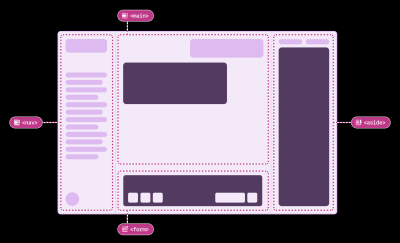
Landmark regions are equally vital for defining the layout of the application. Properly tagged <nav>, <main>, and <form> elements provide a structural skeleton that allows assistive technology to orient the user. However, developers must be careful not to "pollute" the landmark list. Over-segmenting a page with too many landmarks can make navigation more laborious for users who use assistive tools to jump between sections.

Keyboard accessibility is another cornerstone of inclusive design. For many users with motor disabilities, repetitive tabbing is physically taxing. Implementing "skip links"—which allow users to jump directly to the main conversation feed—and utilizing composite widget patterns can drastically reduce the effort required to interact with the application. By transforming conversation lists into composite widgets, developers can enable navigation via arrow keys, providing a more fluid, ergonomic experience that respects the user’s physical needs.

Future-Proofing with Preferences and Customization
As the complexity of LLMs grows, so does the need for user-defined preferences. Because no two users interact with AI in the same way, providing granular control over the interface is a hallmark of truly inclusive software. For instance, allowing users to toggle the verbosity of "secondary actions"—such as reasoning steps, tool calls, or web searches—can prevent information overload. Similarly, providing options to disable animations or sound effects is crucial for users with cognitive or attention-related disabilities.

The push for re-bindable keyboard shortcuts is also gaining traction. Just as professional video editors or coders customize their workspaces, users with specific accessibility requirements may need to reconfigure shortcuts to avoid conflicts with their screen readers or to suit different international keyboard layouts. By socializing these settings within an application’s menu, developers empower users to create a workspace that is tailored to their specific needs rather than a "one-size-fits-all" default.
The Standard of "Equivalent Experience"
The ultimate goal for any developer working on an LLM interface should be the "equivalent experience." This does not necessarily mean an identical interaction, but rather an outcome that provides the same level of utility, efficiency, and empowerment. For example, when an LLM generates a table or a complex block of code, simply outputting the raw text into a live region is often insufficient. Instead, providing a high-level summary—such as "Table containing 4 columns and 36 rows regarding performance metrics"—allows the user to decide whether they wish to drill down into the full, semantically structured data.
Conclusion and Call to Action
As LLM-based chat experiences continue to proliferate, they will increasingly become the primary way individuals interact with the internet. If these platforms remain inaccessible, the result will be a permanent digital exclusion for millions of people. The technical solutions—from structured headings and landmarks to optimized live region announcements—are well-documented and achievable.
The responsibility now lies with the engineering and product teams leading the AI revolution to prioritize these accessibility patterns during the initial design phase, rather than treating them as a post-launch add-on. By centering inclusive user research and engaging with the disabled community as experts in their own lived experiences, the tech industry can ensure that the promise of artificial intelligence is shared by everyone, regardless of their physical or sensory capabilities. The standard for success is clear: a digital environment that is as accessible as it is innovative.