

A Chronology of May 2026 Browser Milestones
The month began with a flurry of updates that addressed long-standing requests from the developer community. By May 15, Chrome 148 had completed its rollout to the stable channel, bringing critical performance optimizations. Firefox 151 followed shortly thereafter, focusing heavily on API expansion and cross-platform compatibility. Finally, Safari 26.5 concluded the month’s major releases with a targeted suite of fixes and the inclusion of the highly anticipated :open pseudo-class. These staggered releases provided a window for developers to test and deploy features in a controlled manner, reflecting a mature and predictable release cadence that has become the industry standard.
Standardization and the Baseline Initiative
The push to reach "Baseline" status—a designation indicating that a feature is supported across all major browser engines—remains the primary driver for modern web development. In May 2026, the :open CSS pseudo-class reached this milestone. By allowing developers to style elements such as <details>, <dialog>, and <select> specifically when they are in an active, expanded state, the web platform has moved away from attribute-based selectors like details[open]. This shift is more than cosmetic; it represents a transition toward a more semantic, predictable CSS model that is easier for assistive technologies to interpret and for browsers to render efficiently.
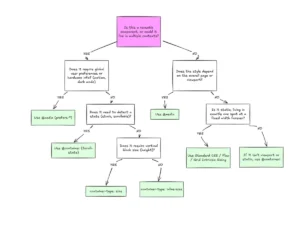
Similarly, name-only container queries have reached Baseline status, marking a departure from the requirement to define container-type properties for every nested element. By allowing developers to query by name alone, the CSS Working Group has significantly reduced the boilerplate code required for responsive design. This change is expected to lower the barrier to entry for developers implementing complex, modular layouts, as it removes the strict inheritance requirements that previously complicated responsive architecture.
Enhancing Media Performance and Interaction
One of the most impactful changes in Chrome 148 is the introduction of native lazy loading for <video> and <audio> elements via the loading="lazy" attribute. Industry data indicates that media assets account for over 60% of total page weight on the average e-commerce site. By delaying the loading of these resources until they enter the viewport, developers can drastically improve Largest Contentful Paint (LCP) metrics and reduce unnecessary data consumption. This feature aligns the handling of audio and video elements with the existing <img> and <iframe> standards, creating a unified performance optimization strategy across the web.
Parallel to this, the Document Picture-in-Picture API, now supported in Firefox 151 on desktop, represents a significant expansion of multitasking capabilities. While standard Picture-in-Picture has long been limited to video streams, the new API allows for the spawning of an always-on-top window containing arbitrary HTML. This is particularly relevant for productivity applications, video conferencing platforms, and real-time data dashboards, which can now offer persistent, interactive interfaces that remain visible even as a user navigates between different tabs or applications.
The Expansion of Web Serial Connectivity
The integration of the Web Serial API into Firefox 151 on desktop and Chrome 148 on Android addresses a critical gap in the "Internet of Things" (IoT) ecosystem. By enabling direct communication between a browser and peripheral hardware such as 3D printers, microcontrollers, and laboratory equipment, the web platform is increasingly positioned as a viable alternative to dedicated native applications.

To mitigate security risks, Firefox has implemented a site-permission add-on requirement. This approach balances the need for hardware access with the browser’s mandate to protect user privacy. Experts suggest that this dual-platform expansion will accelerate the development of browser-based hardware configuration tools, potentially simplifying the user experience for hobbyists and professionals alike.
Beta Previews and Future Trajectories
Looking toward the next quarter, the beta releases for Chrome 149 and Firefox 152 provide a roadmap for upcoming capabilities. Chrome 149 is set to introduce "gap decorations," a feature that allows developers to apply styles directly to the gutters within flex and grid layouts. This addresses a frequent pain point where developers were previously forced to create complex workarounds to style the whitespace between grid items.
Furthermore, Firefox 152 beta introduces the field-sizing property, which enables form controls to dynamically resize based on their contents. This is a critical development for internationalization and responsive design, where text length can vary significantly between languages. The ability for a form element to "self-size" without JavaScript intervention promises to make forms more accessible and visually cohesive across diverse linguistic environments.
Analysis of Broader Web Impact
The cumulative effect of these updates is a more robust, performant, and interoperable web. By standardizing container queries and pseudo-classes, the browser vendors are essentially reducing the "tax" developers pay to support multiple engines. The shift toward native browser support for complex tasks—such as lazy loading media or hardware serial communication—signifies that the web platform is becoming increasingly "native-like."
However, this increase in complexity brings a corresponding need for rigorous testing. As browsers introduce more granular control over layout and hardware, the potential for regression in older, legacy systems increases. Organizations are encouraged to leverage the beta release cycles, such as the current Chrome 149 and Firefox 152 betas, to ensure their architectures are compatible with these evolving specifications.
The synchronization of these features also hints at a broader industry trend: the prioritization of the "Developer Experience" (DX). By removing hurdles like specific container-type definitions or custom JavaScript for form resizing, browser vendors are acknowledging that the developer’s productivity is directly linked to the quality and speed of the web. As we move into the second half of 2026, the focus appears to be shifting from "what the browser can do" to "how easily the developer can make the browser do it."
Conclusion
The updates introduced in May 2026 underscore a period of maturity for the web platform. With major players like Chrome, Firefox, and Safari reaching consensus on essential CSS and API features, the fragmentation that once defined web development is steadily diminishing. As these features move from the experimental stage to Baseline, the resulting stability provides a solid foundation for the next generation of web applications. For developers and stakeholders, the mandate remains clear: keeping pace with these changes is no longer optional but essential for maintaining competitive performance and accessibility in an increasingly demanding digital landscape. Through the lens of these latest releases, it is evident that the web continues to evolve as a unified, powerful, and remarkably resilient ecosystem.