
Renowned photographer Rania Matar has unveiled a poignant and timely body of work that addresses the generational echoes of conflict, displacement, and survival in contemporary Lebanon. Her solo exhibition, titled 50 Years Later – Where Do I Go?, is currently on view at the Sidney and Lois Eskenazi Museum of Art through August 2, 2026. The exhibition coincides with the release of a photobook of the same name, compiling approximately 128 striking color portraits of young women navigating an increasingly uncertain future.
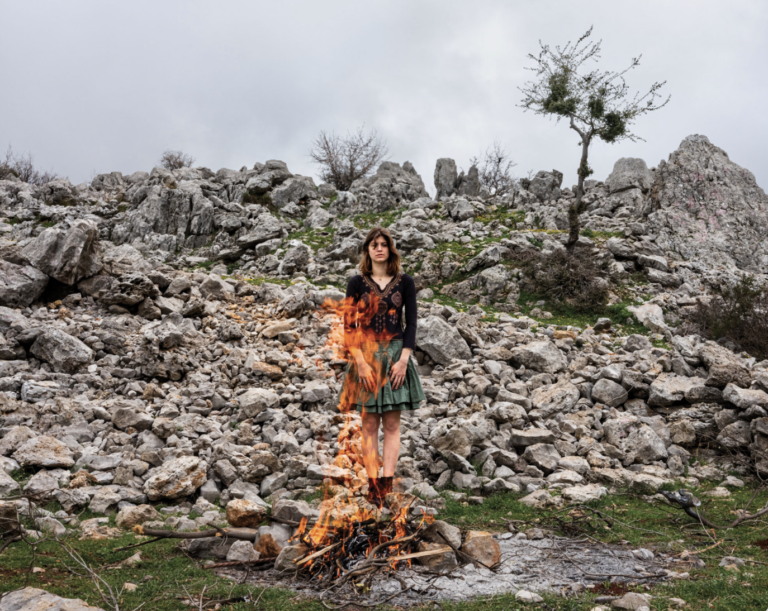
The project finds its emotional catalyst in a phrase scrawled onto a wall in Beirut: "Where do I go?" For the participants—and for Matar herself—this query is far from an abstract philosophical contemplation. It represents an urgent, lived dilemma born from the compounded pressures of economic collapse, chronic political instability, and the enduring trauma of war. Through a deeply collaborative photographic process, Matar’s latest series transcends traditional documentary approaches, offering a nuanced, intimate look at a generation standing at a familiar and harrowing historical crossroads.
Main Facts and Artistic Framework
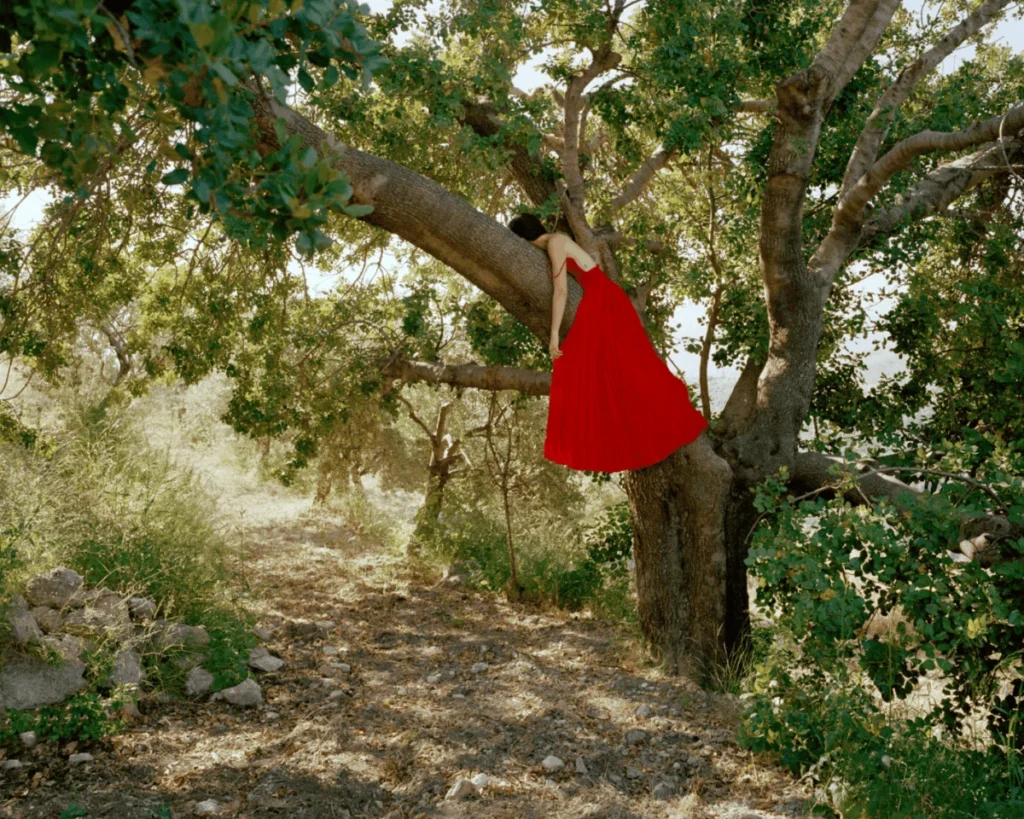
At its core, 50 Years Later – Where Do I Go? brings together portraits of young women living in Lebanon, captured primarily through open calls on social media and organic community networks. Eschewing traditional location scouting and pre-arranged staging, Matar engages her subjects as active co-creators of their visual narratives. The resulting images are layered with rich symbolism—utilizing natural light, mirrors, architectural rubble, and lush Mediterranean flora—to articulate the duality of destruction and resilience.

The project is structured around the psychological and physical weight carried by young women in Lebanon, who balance universal coming-of-age milestones—such as pursuing education, building careers, and falling in love—with the heavy burdens of regional conflict and national reconstruction. Rather than portraying her subjects merely as passive victims of circumstance, Matar’s lens highlights their agency, grit, and enduring hope.
Chronology and Historical Context
To fully understand the genesis of Matar’s work, one must examine the historical timeline that frames the project. The exhibition was initially conceived to commemorate the fiftieth anniversary of the onset of the Lebanese Civil War, a devastating conflict that lasted from 1975 to 1990 and left deep infrastructural, political, and psychological scars across the country.

In 1984, at the height of the civil war and at the same age as the women she now photographs, Matar faced her own life-altering choice: to remain in a fracturing Lebanon or to leave in search of safety. She ultimately chose to emigrate to the United States, expecting a brief absence, yet built a life abroad spanning decades.
The immediate catalyst for the current series, however, was far more recent. On August 4, 2020, massive explosions at the Port of Beirut killed over 200 people, injured thousands, and devastated vast swaths of the capital. In the immediate aftermath of the blast, Matar observed young women stepping forward to clear debris, rebuild neighborhoods, and lead grassroots relief efforts. This display of raw determination inspired the photographer to return to her homeland to document a new generation confronting the exact same existential questions she had faced decades prior. Tragically, as the exhibition opened in 2026, a resurgence of regional warfare and widespread displacement rendered the project’s central question even more harrowing.

Supporting Data and Societal Implications
The implications of Matar’s work resonate deeply against current socio-economic and geopolitical data concerning Lebanon. Years of severe financial crisis, widely cited by the World Bank as one of the worst economic depressions globally since the mid-nineteenth century, have eroded basic public services, devalued the national currency, and plunged a vast majority of the population into poverty.
Compounding this financial ruin, escalating military conflicts in recent years have led to the internal displacement of approximately a quarter of Lebanon’s population. Many of the young women featured in Matar’s portraits hail from South Lebanon—regions heavily impacted by ongoing bombardments and military occupation.

From a sociological perspective, the exhibition serves as a vital counter-narrative to standard media coverage, which frequently reduces complex humanitarian crises to numerical statistics and casualty reports. By humanizing the displaced and the resilient through detailed individual portraits, Matar’s work provides a crucial visual archive of human endurance. Analysts and arts critics note that projects of this nature play an essential role in preserving cultural memory and psychological resilience during periods of national disintegration.
Perspectives and Official Reactions
Reflecting on the uncanny and tragic timing of the exhibition’s release, Matar has expressed profound heartbreak over seeing a new generation forced to endure the horrors of war.

"The question at the heart of this project… is being raised again and again as a quarter of Lebanon’s population is currently displaced," Matar remarked in discussions surrounding the exhibition. "When I was working on this book and the exhibition was being planned, my goal was to commemorate the 50th anniversary of the Lebanese Civil War. Little did I know that a year later, we would be living through something like it all over again."
Despite the bleak backdrop, Matar emphasizes the extraordinary resilience displayed by her models, many of whom have transitioned from subjects of art to active humanitarian relief workers. Following recent escalations, these same young women have been documented organizing grassroots aid networks—cooking meals, sourcing mattresses, and distributing supplies to the newly homeless.

"They are showing up in the most concrete and human ways possible," Matar stated, noting her deep admiration for their continued efforts. "These images are my love letters to them. This project is for us all: the ones who stayed and the ones who have left but can never leave."
Broader Impact and Legacy
As 50 Years Later – Where Do I Go? continues its run at the Sidney and Lois Eskenazi Museum of Art through August 2026, alongside its companion publication, its cultural footprint extends far beyond the gallery walls. The exhibition bridges geographic and generational divides, connecting the diaspora to the homeland through shared empathy and visual storytelling.

By capturing the quiet strength, vulnerability, and defiance of Lebanon’s young women, Matar has constructed a powerful testament to a society that refuses to relinquish its identity. The portraits stand not only as a documentation of crisis, but as an enduring monument to human dignity, proving that art can offer both a mirror to suffering and a beacon of hope for the future.