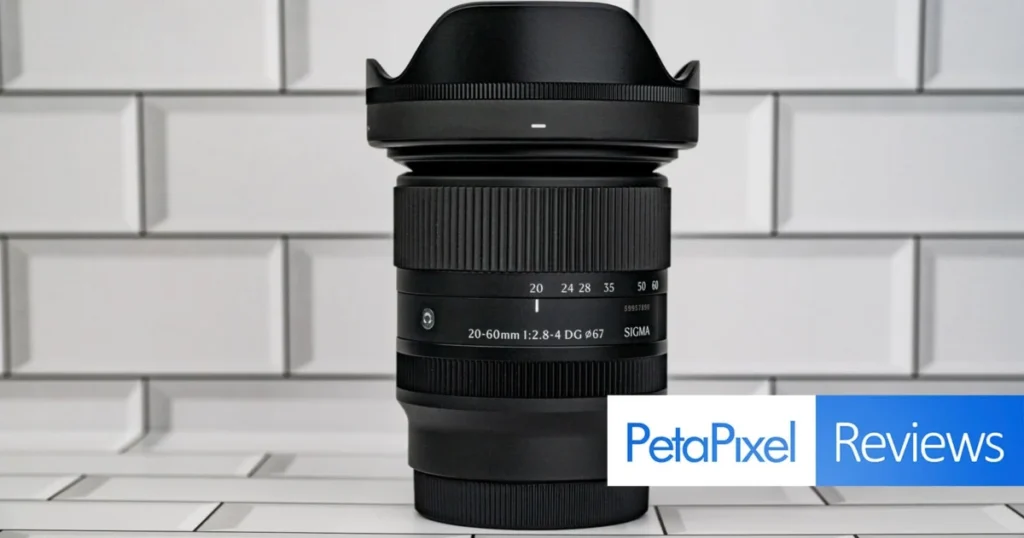

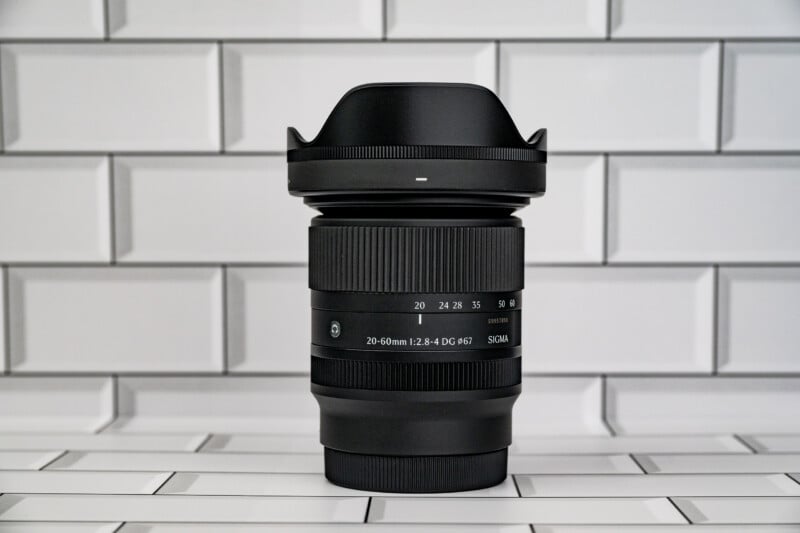
The optical industry has witnessed a significant shift in recent years, moving away from the "bigger is better" philosophy toward a focus on portability and practical versatility. Sigma Corporation has officially addressed this market demand with the launch of the Sigma 20-60mm f/2.8-4 DG Contemporary lens. Available for both Sony E-mount and L-mount systems, this new addition to the Contemporary lineup aims to balance the professional requirement for a wide-aperture optic with the necessity for a lightweight, travel-friendly design. Priced at $849, the lens is positioned as a competitive alternative to established manufacturer-branded optics, offering a unique focal range that bridges the gap between ultra-wide-angle needs and standard zoom requirements.

The development of this lens follows a broader industry trend where manufacturers are prioritizing "carry-everywhere" versatility. The 20mm starting focal length is increasingly viewed as the "sweet spot" for modern creators who prioritize environmental portraiture, architectural photography, and vlogging. By opting for a variable aperture of f/2.8 to f/4, Sigma has managed to keep the physical footprint remarkably small, weighing in at just 375 grams (13.2 ounces). This puts it in direct contention with the Sony 20-70mm f/4 G, which has previously dominated this niche, and the Panasonic 20-60mm f/3.5-5.6, a popular kit lens known for its cost-effectiveness.
Chronology of the Release and Industry Positioning
The announcement follows months of speculation regarding Sigma’s strategy for its mirrorless lens ecosystem. Historically, Sigma’s Contemporary line has been defined by high-performance optics housed in smaller, more affordable barrels compared to their Art series counterparts. The introduction of the 20-60mm f/2.8-4 signals a strategic move to capture the middle-market segment—users who require better light-gathering capabilities than a standard kit lens but cannot justify the weight or price of a heavy-duty 24-70mm f/2.8 professional zoom.
The timeline of this release aligns with the increasing integration of full-frame mirrorless cameras into video production workflows. By optimizing the lens for both stills and video, Sigma is responding to feedback from hybrid shooters who demand fast autofocus and minimal balance shifts when using camera gimbals. The official product debut, which featured field testing at the 2026 Sony Kando event, demonstrated the lens’s ability to handle dynamic environments, from low-light event coverage to outdoor landscape photography.

Technical Specifications and Design Architecture
From an engineering perspective, the Sigma 20-60mm f/2.8-4 DG Contemporary is built around a complex optical formula designed to suppress chromatic aberrations and flare. Despite its compact nature, the lens features a 67mm filter thread, a standard size that allows for the easy attachment of circular polarizers and neutral density filters—a common requirement for landscape and video professionals.
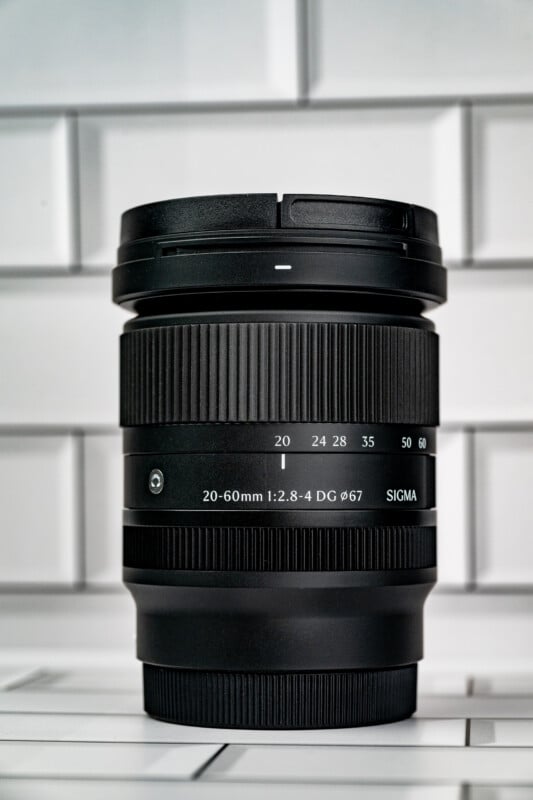
The chassis construction reflects the balance between durability and weight. While it lacks the magnesium alloy bulk of more expensive "Pro" lenses, the barrel incorporates weather-resistant seals around the mount and key control points, providing a level of environmental protection consistent with modern mirrorless standards. Internally, the lens utilizes a high-speed linear motor, a component choice that ensures rapid, quiet autofocus performance suitable for the advanced tracking capabilities of modern Sony and Panasonic cameras.
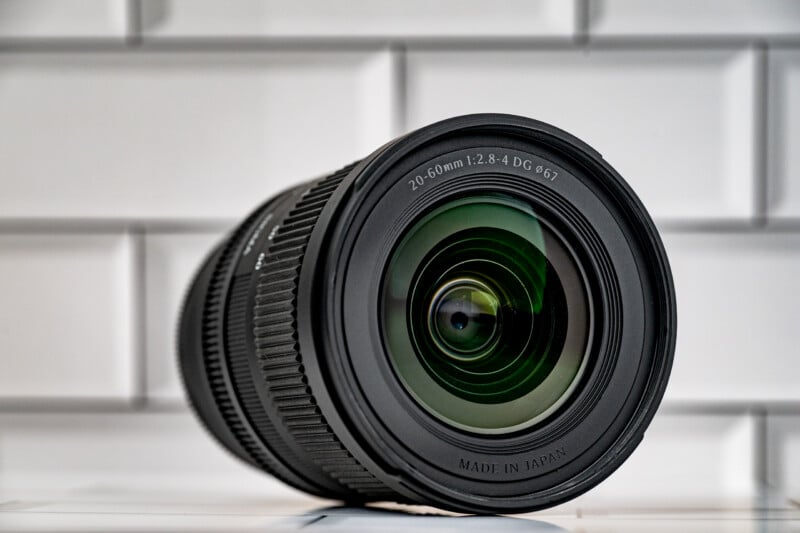
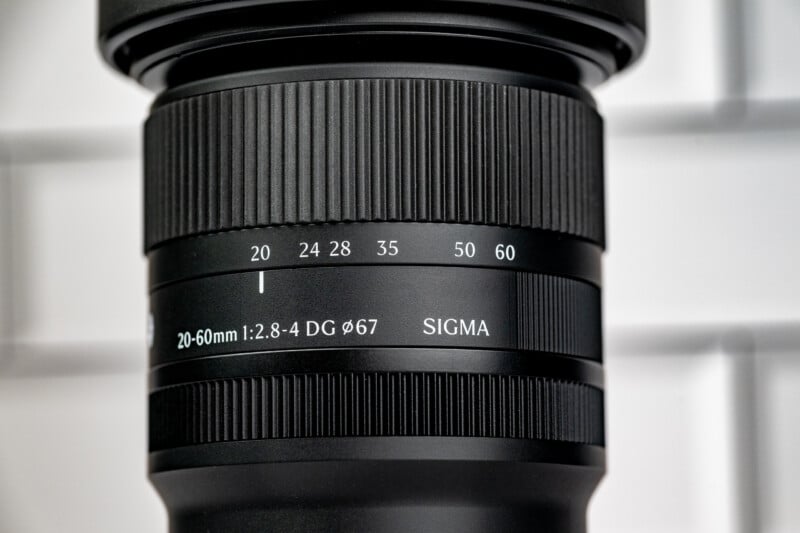
One of the notable design trade-offs is the absence of a dedicated physical AF/MF toggle switch on the lens barrel. Sigma has opted for a minimalist aesthetic to maintain the compact dimensions. While some professional users may find this lack of tactile control a drawback, the internal software implementation and the responsive manual focus ring provide a sufficient, albeit different, experience. The focus ring is dampened to allow for smooth manual pulls, though it may feel slightly less weighted than a high-end cine lens.
Performance Analysis: Optics and Utility
In empirical testing, the lens demonstrates a high level of sharpness across the frame. At the 20mm end, the center sharpness at f/2.8 is commendable, providing sufficient resolution for high-megapixel sensors. While some edge softness is present at the widest aperture, it dissipates rapidly as the lens is stopped down to f/5.6. The 60mm end exhibits impressive consistency, with the center and corners showing a more uniform performance profile than many zoom lenses in this price category.
The lens also excels in close-up photography. With a maximum macro ratio of 1:2.3, achieved most effectively at the 35mm focal length, the lens provides utility that standard zooms often lack. This capability allows photographers to capture tight, detailed shots of flowers, insects, or small mechanical components without needing a dedicated macro lens.

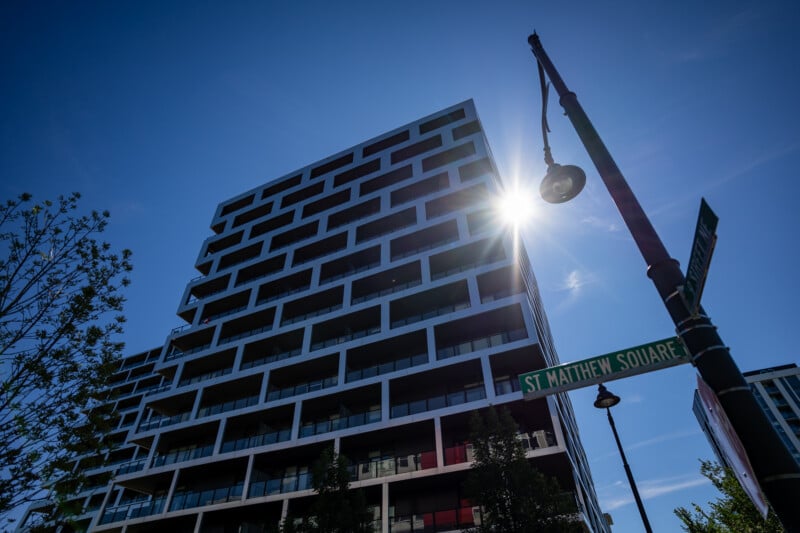
Regarding flare and ghosting, the proprietary multi-layer coating applied to the lens elements shows its value. In high-contrast, back-lit scenarios—such as shooting directly into a sunset or bright artificial light—the lens manages stray light effectively. While some minor purple ghosting may appear at the extreme edges of the frame under specific aperture settings, the overall contrast remains high, maintaining the vibrancy of the image. The bokeh quality, characterized by circular specular highlights with faint "onion-ring" patterns, is functional and aesthetically pleasing for general use, though it lacks the creamy, ultra-smooth character of high-end f/1.4 primes.

Market Impact and Competitive Landscape
The market entry of the Sigma 20-60mm f/2.8-4 presents a complex decision for users of the E-mount and L-mount systems. For Sony users, the primary comparison is the Sony 20-70mm f/4 G. The Sony lens offers a longer telephoto reach and a consistent aperture, which is an advantage for some; however, the Sigma offers a stop-and-a-half advantage in light-gathering at the 20mm end and a lower price point. The decision, therefore, rests on whether the user prioritizes the 70mm reach or the increased low-light capability of the f/2.8 aperture.

For Panasonic L-mount users, the Sigma 20-60mm f/2.8-4 represents a significant upgrade over the existing, albeit much cheaper, kit lens options. By offering a brighter aperture in a similarly sized package, Sigma has effectively created a premium "everyday" zoom for the L-mount alliance. Analysts suggest that this move is intended to solidify the attractiveness of the L-mount system, providing users with a "goldilocks" lens that performs well enough for professional work but remains accessible to enthusiasts.

Broader Implications for Hybrid Creators
The rise of "vlogging" and independent content creation has fundamentally altered the requirements for lens design. Features like focus breathing—the change in field of view when focusing—are critical for cinematographers. While the Sigma 20-60mm does exhibit some breathing, it is within acceptable ranges for non-broadcast cinema applications. The lens’s weight distribution is also an important factor; because the physical length of the lens remains relatively stable during the zoom process, it is an ideal candidate for gimbal-mounted video production, where re-balancing the camera is a time-consuming nuisance.

Furthermore, the lens represents a broader trend of "democratized performance." By pricing this optic at $849, Sigma is ensuring that features previously reserved for flagship optics—such as advanced internal motor technology and sophisticated weather sealing—are becoming standard in the mid-tier segment. This puts pressure on camera manufacturers to continue innovating within their own lens lineups, ensuring that the consumer receives higher value for their investment.

Conclusion and Purchasing Considerations
The Sigma 20-60mm f/2.8-4 DG Contemporary is an objectively strong performer that meets the needs of a diverse range of photographers and videographers. Its primary strengths—portability, a versatile focal range starting at 20mm, and a fast maximum aperture—make it a highly functional tool for travel, street, and event photography.

For those considering the purchase, the decision should be framed by the specific requirements of their workflow. If the priority is a lightweight setup that reduces the need to carry multiple prime lenses, the Sigma 20-60mm is arguably one of the most compelling options currently on the market. It successfully mitigates the "kit lens" stigma by providing a level of sharpness and optical control that rivals more expensive, heavy-duty glass. As the market for mirrorless cameras continues to evolve, lenses like the 20-60mm serve as a reminder that innovation is not always about the widest aperture or the longest zoom, but about the intelligent application of optical design to serve the modern, mobile creator.

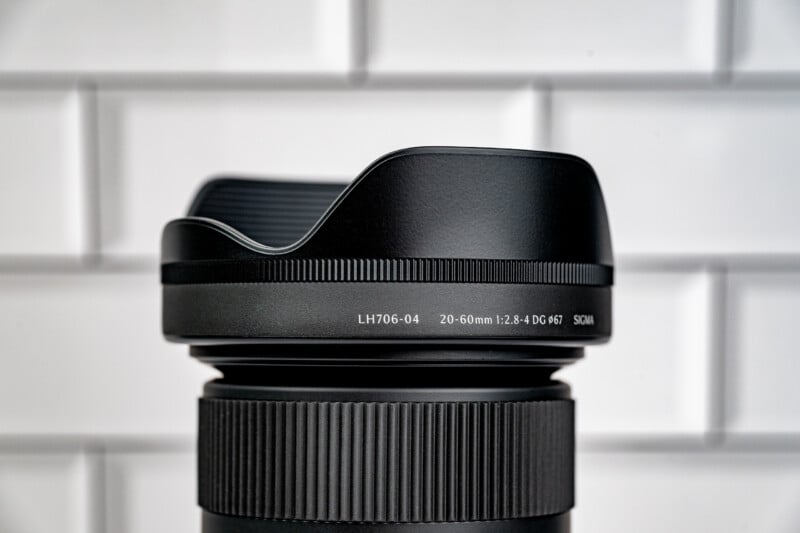
The inclusion of a standard lens hood and the lens’s overall build quality suggest that Sigma intends for this to be a workhorse lens, capable of surviving the rigors of daily use. While it may not replace the specialized, high-end prime lenses for portraiture or the long-range telephoto zooms for sports, it occupies the essential space in between, providing a balanced solution that serves the majority of photographic scenarios with efficiency and technical proficiency.