
For decades, the digital landscape has been defined by the point-and-click paradigm, a rigid structure that forces users to navigate complex menus, multi-step forms, and endless browser tabs to accomplish simple tasks. However, the industry is currently undergoing a fundamental transformation as artificial intelligence and large language models (LLMs) move web design away from manual interaction and toward a philosophy of intent-driven experiences. In this new era, the value of a digital tool is no longer measured by its visual flair or the number of clicks it generates, but by its ability to render the interface itself obsolete.
The Origins of the Graphical User Interface
To understand the magnitude of this shift, one must examine the legacy of the Graphical User Interface (GUI). In the 1970s and 1980s, pioneering systems like the Xerox Star and the Apple Macintosh established a standard for human-computer interaction. These platforms relied on metaphors—desktops, folders, and trash cans—that translated physical world habits into digital actions. While revolutionary for its time, this model necessitated a "user-as-operator" approach.

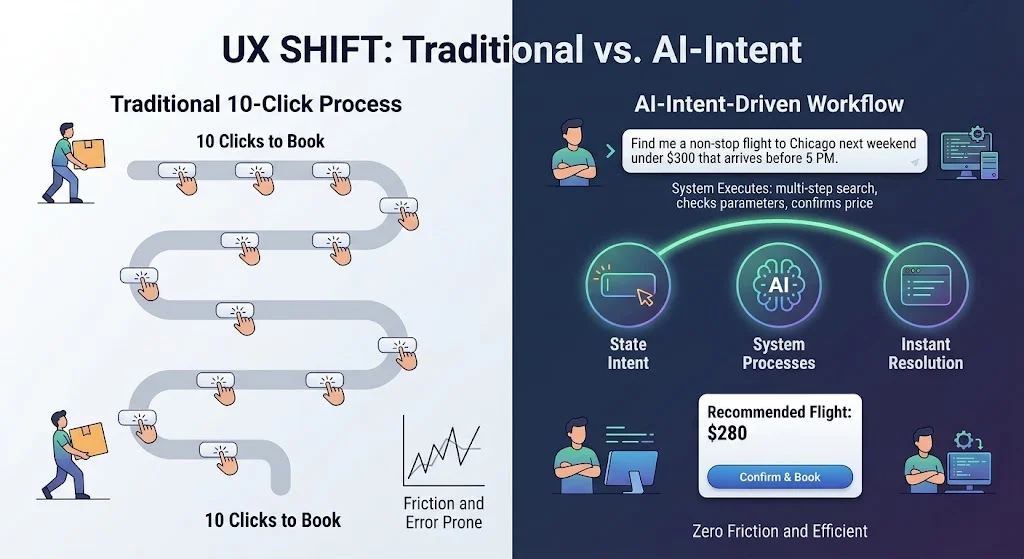
For forty years, software design has been tethered to this paradigm. Whether booking a flight or managing a project, users have been expected to act as the primary orchestrators of data. This required the manual navigation of sales funnels, the adjustment of range sliders, and the careful selection of checkboxes. The digital economy thrived on this friction, as metrics such as "time spent in app" and "page views per session" became the primary indicators of success. Today, however, these metrics are increasingly viewed as symptoms of poor design, representing lost time rather than meaningful engagement.
The Emergence of Intent-Driven Design
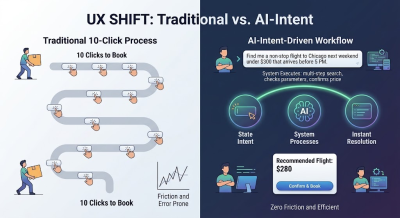
The shift toward intent-driven design began in earnest with the integration of generative AI into consumer-facing web tools. Rather than asking users to "drive" the software through a series of inputs, these systems invite users to state their objectives. By capturing high-level intent—such as "find me a budget-friendly flight to Chicago this weekend"—the software leverages background processing to perform the necessary search, comparison, and verification steps autonomously.
This transition mirrors the evolution of Human-Computer Interaction (HCI) theory. Visionaries like Golden Krishna, author of The Best Interface Is No Interface, have long argued that the ultimate goal of design is to remove barriers between the user and their goal. Similarly, Don Norman’s principles of human-centered design suggest that technology should be a tool that empowers, not a labyrinth that requires constant maintenance.
Key Pillars of the New Paradigm
Modern platforms are replacing traditional, static layouts with dynamic, generative structures. This shift is characterized by three core pillars:
-
High-Level Goal Alignment: Instead of relying on manual dropdowns or filters, interfaces now prioritize natural language processing to interpret user intent. This reduces the cognitive load on the user, who no longer needs to understand the backend architecture of a service to get a result.
-
Generative UI: In traditional web design, every user interacts with the same pre-built layout. Under the new paradigm, interfaces are rendered on the fly. If a user needs a financial projection, the system generates a custom calculator widget; once the calculation is complete, the widget recedes, decluttering the screen.
-
Autonomous Execution: AI agents are shifting the burden of execution from the user to the machine. Where legacy systems relied on intrusive confirmation modals to prevent error, modern interfaces focus on "easy reversibility," providing users with simple ways to roll back automated actions if the AI misinterprets an instruction.
Real-World Implementation and Case Studies
Several platforms are already demonstrating the efficacy of this model, proving that the transition is not merely theoretical.
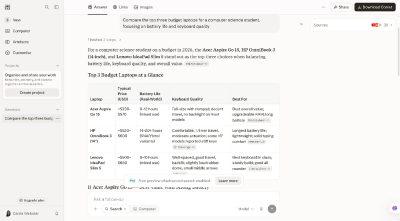
Perplexity AI serves as a primary example of this shift in the information-retrieval sector. Unlike traditional search engines that provide a list of blue links—thereby forcing the user to open multiple tabs and synthesize the information themselves—Perplexity uses LLMs to aggregate data into a single, cohesive response. This bypasses the need for the "ten-click" research process, providing immediate value to the user.
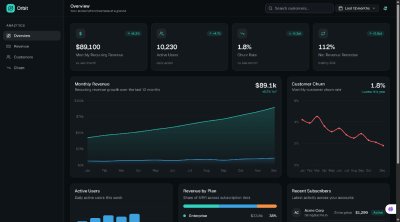
In the design space, Vercel v0 has automated the creation of web components. Where designers once spent hours manually drawing rectangles and writing CSS, they can now prompt an AI to generate a functional, responsive dashboard. The system creates the layout in real-time, allowing the human designer to move from "creator" to "editor."
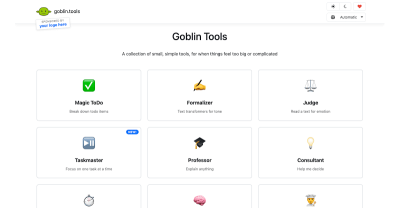
In the productivity sector, Goblin.tools has applied this logic to assist neurodivergent users. By breaking down overwhelming, multi-step tasks into manageable, bite-sized checklists, the tool handles the "grunt work" of organization, allowing the user to focus exclusively on execution.
Data and Institutional Response
Research from the Nielsen Norman Group confirms that the industry is in the midst of a "new UX paradigm." Their analysis suggests that the shift from command-based interaction to outcome-specification is the most significant change in computing since the introduction of the mouse.
Furthermore, institutional frameworks like the Google PAIR (People + AI Research) Guidebook are providing the necessary guardrails for this transition. The focus has moved toward creating "feedback loops" that allow users to see how the AI interpreted their intent. This transparency is critical for maintaining user trust in a system that performs actions behind the scenes.
Broader Implications and Ethical Risks
While the elimination of friction is broadly considered a positive development, it introduces significant ethical challenges. The "Black Box" problem remains a concern; when software acts on inferred intent, users may find it difficult to diagnose why a system produced a specific result. To mitigate this, developers are increasingly required to provide "audit logs" or clear summaries of how an AI reached a particular conclusion.
Additionally, there is the "Illusion of Control." As highlighted by the Center for Humane Technology, designers must ensure that automation does not become manipulative. High-stakes actions, such as financial transactions or privacy setting changes, must still require explicit human confirmation. The challenge for the modern UX designer is no longer just about aesthetics; it is about building systems that are transparent enough to be trusted, yet autonomous enough to be invisible.
The Future of Digital Interaction
The digital industry is approaching a watershed moment. For years, the success of a website was measured by the volume of interactions it could command. In the future, the most successful platforms will be those that achieve the goal with the fewest interactions possible.
The shift is clear: we are moving away from designing buttons and forms and toward designing experiences that anticipate human needs. As these technologies mature, the "interface" will likely fade into the background of our daily lives, transforming software from a task to be managed into a partner that facilitates completion. The ultimate test of modern design is no longer how beautiful an app is, but how effectively it can disappear, leaving the user with the result they desired and the time they saved.