
The digital marketing landscape is undergoing its most profound structural shift in decades as traditional search engine optimization (SEO) converges with artificial intelligence. With audiences rapidly migrating toward conversational answer engines, optimizing web assets for generative AI has emerged as a top-tier priority for digital strategists. According to recent comprehensive research from Wix Studio, monthly unique visitors to major answer engines surged from 634 million in the first quarter of 2025 to 904 million in the first quarter of 2026, marking an unprecedented expansion of over 40% within a single year.
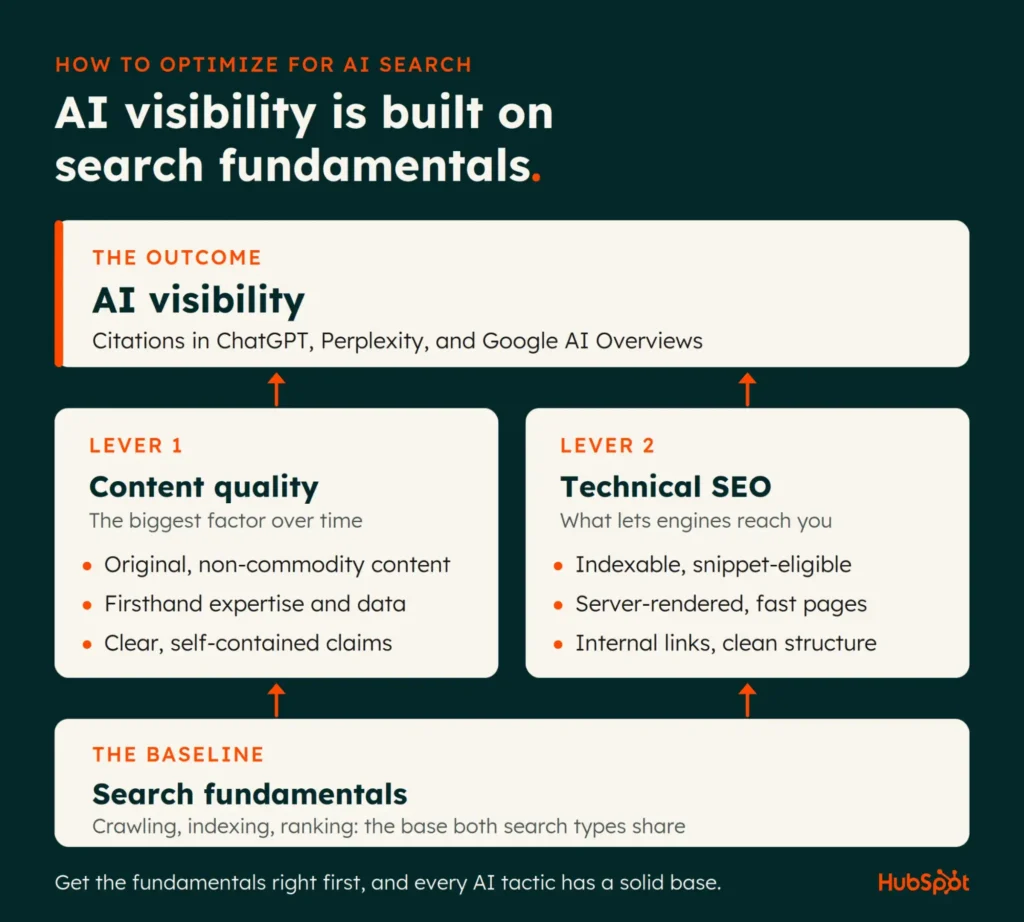
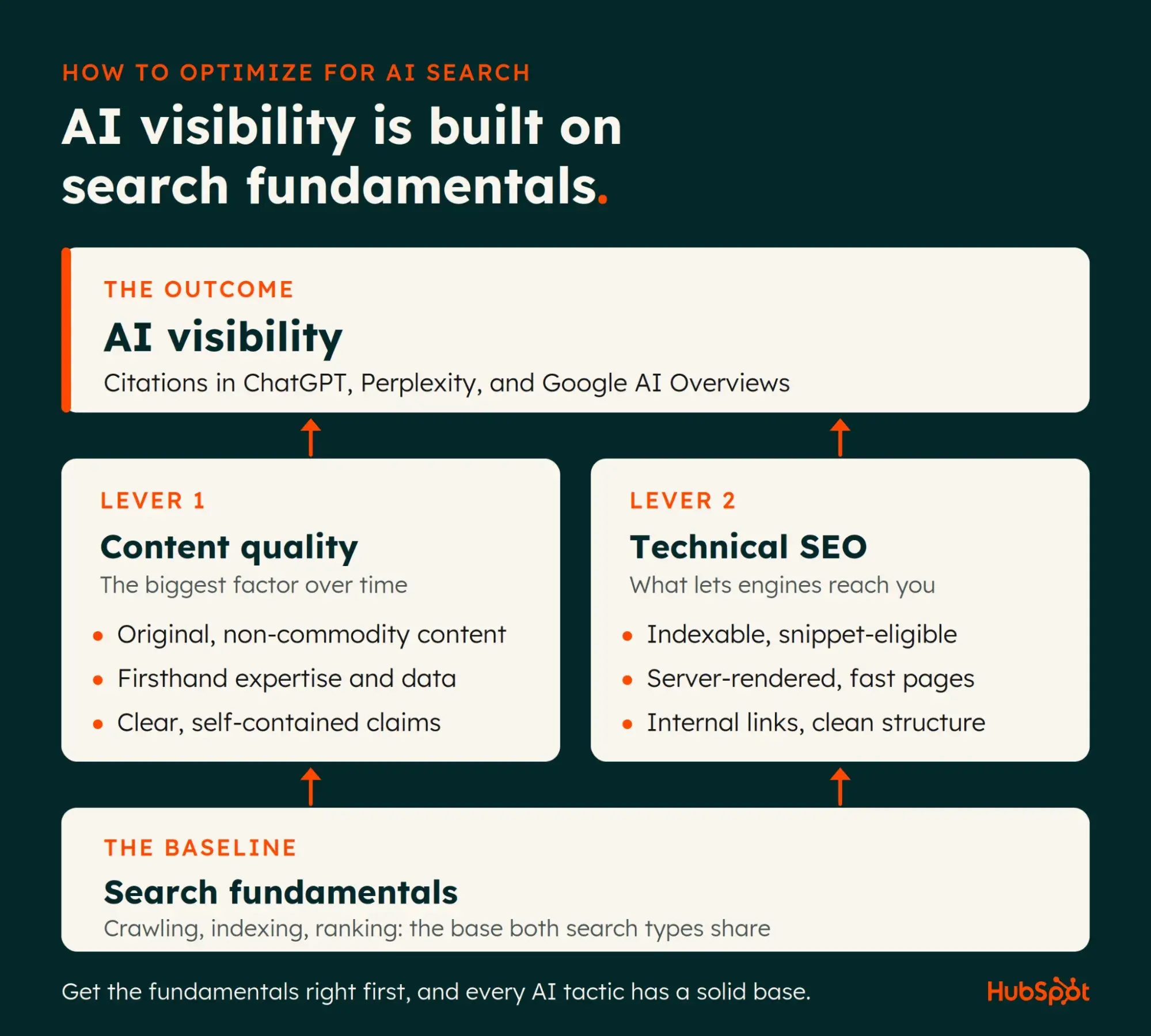
This rapid acceleration has transformed Answer Engine Optimization (AEO) from an experimental tactic into an absolute commercial necessity. However, industry analysts emphasize that AEO does not operate in a vacuum, nor has it rendered traditional SEO obsolete. Rather, the two methodologies remain deeply intertwined. The core technical and qualitative fundamentals that secure traditional search rankings are precisely the mechanisms that unlock visibility within AI citations. Because contemporary consumers fluidly pivot between classic search engines and advanced conversational models during their decision-making processes, businesses must cultivate a dual-presence strategy to capture targeted traffic across both ecosystems.
Understanding the Mechanics of AI Search and Traditional SEO
To comprehend why legacy SEO principles still dictate AI search visibility, one must examine the underlying infrastructure of modern answer engines. Platforms like Google AI Overviews and ChatGPT Search do not operate entirely independently of the traditional web index; they fundamentally rely on the same foundational architecture of crawling, rendering, and indexing.
Google has repeatedly clarified that its AI Overviews run on a customized iteration of the Gemini model operating synchronously with its existing web-ranking systems. Similarly, ChatGPT search retrieves real-time web data through integrated providers that frequently incorporate Microsoft Bing into their search pipelines. Consequently, any web page that suffers from foundational crawling blocks, poor indexing eligibility, or sluggish server response times will invariably fail to secure citations in conversational AI summaries.
Data compiled by SE Ranking underscores the direct correlation between technical performance and AI visibility. Empirical analyses reveal that pages boasting a First Contentful Paint under 0.4 seconds average roughly 6.7 ChatGPT citations—nearly triple the 2.1 citation average observed for pages taking longer than 1.13 seconds to render. Furthermore, while sophisticated search engines like Googlebot are capable of executing complex JavaScript to parse client-side content, many third-party AI crawlers rely exclusively on raw HTML. Sites failing to serve their primary content via server-side rendering risk appearing as completely blank pages to models like Perplexity and OpenAI’s search agents.
The Shift Toward People-First, Non-Commodity Content
Beyond technical hygiene, content quality remains the single most influential variable governing long-term AI search visibility. In official optimization guidelines, Google emphasizes that "unique, compelling, and useful" content heavily dictates a site’s footprint in generative environments. Industry experts distinguish between commodity content—which merely repackages publicly available consensus—and non-commodity content, which is anchored in verifiable expertise, proprietary research, and firsthand human experience.
Large language models possess little incentive to cite web pages whose text can be synthetically generated from their pre-existing training parameters. Consequently, original data points, subject-matter expertise, and distinct analytical perspectives dramatically elevate citation potential. SE Ranking’s cross-sectional evaluation of more than 216,000 pages demonstrated that content featuring explicit expert commentary averaged 4.1 ChatGPT citations compared to just 2.4 for uncredited text. Furthermore, pages incorporating 19 or more discrete data points averaged 5.4 citations, sharply outperforming data-light alternatives.
To maximize extractability, modern content architects must structure insights as clear, self-contained assertions. When an answer engine scans a document, it actively seeks concise, definitive claims that can be directly mapped to user queries without requiring convoluted contextual translation.
Divergent Behaviors Across Leading Answer Engines: Perplexity Versus ChatGPT
A critical challenge facing modern digital marketers is the distinct behavioral divergence observed across different conversational search platforms. Empirical studies conducted by platforms such as Fan Out indicate that the same URL rarely performs identically across competing ecosystems. In fact, fewer than 8% of cited URLs successfully appear across multiple major answer engines, proving that optimization cannot follow a uniform blueprint.
Perplexity acts as a prolific citer, supplying roughly 59% of off-site citations in recent B2B SaaS evaluations and drawing on an average of 10.8 sources per generated answer. Furthermore, Perplexity exhibits a distinct preference for conversational discussion boards and community-driven knowledge hubs—such as LinkedIn, Reddit, and G2—which collectively account for over 17% of its citation volume. In contrast, ChatGPT maintains a highly selective curation standard, averaging approximately 3.3 citations per query while heavily favoring authoritative, long-form journalistic and editorial articles.

Temporal dynamics also vary significantly. Controlled experiments conducted by search marketing researchers reveal that Perplexity indexes and promotes newly published digital assets within 24 to 72 hours, often surfacing supporting documentation before official brand domains fully stabilize. ChatGPT, meanwhile, exhibits a more deliberate assimilation timeline, gradually strengthening its citation confidence over weeks as brand authority compounds.
Structuring Content for Maximum Extraction and Machine Readability
Achieving consistent visibility in answer engines requires deliberate adjustments to textual formatting and structural markup. Analytical data from conversion optimization studies reveals that the vast majority of AI Overview citations originate from the upper third of a referenced web page, while the bottom 40% accounts for a negligible fraction of citations. Consequently, content creators must adopt an "answer-first" methodology, placing the core response within the first 40 to 60 words of any given section before expanding upon secondary details.
Question-led subheadings (H2 and H3 elements framed as direct user inquiries) serve as powerful navigational hooks for large language models. Research into ChatGPT citation patterns indicates that cited passages are twice as likely to contain a question mark, with headings accounting for the vast majority of question-linked references. By matching the exact phrasing of a user’s mental query, a web page provides automated systems with an immediate semantic pairing.
Additionally, structured formatting dramatically improves machine comprehension. A recent academic preprint on structural processing found that organized bulleted lists and data tables yielded a 43% higher extraction accuracy than equivalent information presented in dense, continuous prose.
Technical Guardrails: Schema Markup and Snippet Controls
While structured data cannot salvage fundamentally flawed or superficial content, validated schema markup functions as a machine-readable roadmap that minimizes interpretive ambiguity for answer engines. Official guidelines mandate that structured data must accurately reflect the visible text consumed by human visitors; deploying hidden or deceptive markup constitutes cloaking, which can result in severe algorithmic penalties.
Simultaneously, webmasters must carefully manage snippet controls—including robots meta tags, the X-Robots-Tag HTTP header, and inline data-nosnippet attributes. Because answer engines rely on the same snippet eligibility criteria as traditional search snippets, applying restrictive directives like max-snippet:0 or zero-character limits will inadvertently banish a page from both traditional search results and generative AI overviews.
Multimodal Integration and the Future of Search Strategy
As conversational search continues its rapid evolution, generative AI results increasingly incorporate multimodal assets, including images, video, and localized merchant data. Video content, in particular, commands significant visibility; studies rank YouTube as a leading off-site citation source for conversational platforms. However, because AI systems cannot natively watch video files in real-time, optimization depends heavily on surrounding metadata, including comprehensive transcripts, descriptive summaries, and precise timestamp markers.
Ultimately, building a resilient AI search strategy requires shifting away from one-off optimization tricks toward a continuous, repeatable operational framework. By combining rigorous technical foundations, server-side rendering, rigorous data points, and answer-first structural formatting, organizations can secure enduring visibility across an increasingly automated digital marketplace.